
The best virtual reality educational kit for most families is Bill Nye’s VR Science Kit because its broad STEM focus offers more room for continued learning than a single-subject set. Abacus Brands’ 4 in 1 Deluxe VR Lab is the stronger premium choice for buyers who want maximum subject variety, while Professor Maxwell’s VR Dinosaurs provides a more approachable entry point for children aged seven and up. The main choice is between broad coverage and deeper subject focus, followed by phone compatibility, activity quality, and age fit. Topic-led kits can hold a child’s attention more effectively, but they may have less replay value once that interest fades. Continue reading for my full breakdown of which kit suits each learner and where the tradeoffs lie.

Play games on Amazon Luna for your next adventure, included with Prime
- A rotating selection of games, no download needed
- Play on TV, laptop or phone
- Fast, free delivery for your gear, too
Key Takeaways
- Bill Nye’s VR Science Kit ranks first because its general STEM positioning serves more learning interests than the narrower body, animal, space, transport, and dinosaur sets.
- The 4 in 1 Deluxe VR Lab is my premium pick: its wider scope makes sense for siblings or varied interests, though focused learners may prefer a single-topic kit.
- Abacus Brands’ Dinosaurs Gift Box offers the strongest value proposition for an eight-plus learner who already loves paleontology and does not need several unrelated subjects.
- Professor Maxwell’s VR Dinosaurs is the clearest beginner choice because its stated minimum age of seven is lower than the age-eight guidance attached to most of the lineup.
- Subject fit matters more than branding: Body Lab, Space Lab, Animals, and Transport each beat the broader kits when a child has a strong, lasting interest in that specific field.
| Bill Nye’s Science Squad: Body Lab VR |  | Best for Human Anatomy | Recommended age: 8 years and up | Subject: Human anatomy | Book length: 40 pages | VIEW LATEST PRICE | See Our Full Breakdown |
| Abacus Brands Virtual Reality Dinosaurs Gift Box |  | Best for Dinosaur Fans | Recommended age: 8 years and up | Subject: Dinosaurs and paleontology | Book length: 80 pages | VIEW LATEST PRICE | See Our Full Breakdown |
| Abacus Brands Virtual Reality Animals STEM Science Kit |  | Best for Content Depth | Recommended age: 8–99 years | Subject: Animals and wildlife | Book length: 96 pages | VIEW LATEST PRICE | See Our Full Breakdown |
| Abacus Brands Virtual Reality Discovery Box Transport |  | Best for Young Builders | Brand: Abacus Brands | Recommended age: 8 years and up | Subject: Transport and vehicles | VIEW LATEST PRICE | See Our Full Breakdown |
| Bill Nye’s VR Science Kit |  | Best Overall | Recommended age: 8–12 years | Subjects: Chemistry and physics | Number of experiments: 30 | VIEW LATEST PRICE | See Our Full Breakdown |
| Abacus Brands Bill Nye’s VR Space Lab |  | Best for Space Exploration | Number of Pieces: 85 | Book Length: 92 pages | VR Experiences: 128 | VIEW LATEST PRICE | See Our Full Breakdown |
| Abacus Brands Virtual Reality 4 in 1 Deluxe VR Lab |  | Best Multi-Topic Kit | Number of Projects: 4 | Piece Count: 50 | Recommended Age: 8 years and up | VIEW LATEST PRICE | See Our Full Breakdown |
| Professor Maxwell’s VR Dinosaurs |  | Best for Younger Dinosaur Fans | Piece Count: 60+ pieces | Book Length: 40 pages | VR Experiences: 20+ | VIEW LATEST PRICE | See Our Full Breakdown |
| virtual reality educational kit | Recommended age | Book length | Tablet compatibility | VR goggles |
|---|---|---|---|---|
| Bill Nye’s Science Squad: Body | 8 years and up | 40 pages | Not supported | Hands-free smartphone viewer included |
| Abacus Brands Virtual Reality | 8 years and up | 80 pages | Not supported | Smartphone-compatible viewer included |
| Abacus Brands Virtual Reality | 8–99 years | 96 pages | — | Hands-free viewer included |
| Abacus Brands Virtual Reality | 8 years and up | 96 pages | — | Smartphone-compatible viewer included |
| Bill Nye’s VR Science Kit | 8–12 years | 80 pages | Not supported | Included |
| Abacus Brands Bill Nye’s VR Sp | 8-12 years | 92 pages | Not compatible | — |
| Abacus Brands Virtual Reality | 8 years and up | — | Not compatible | — |
| Professor Maxwell’s VR Dinosau | 7 years and up | 40 pages | Not compatible | — |
More Details on Our Top Picks
Bill Nye’s Science Squad: Body Lab VR
I rank Bill Nye’s Science Squad: Body Lab VR as the strongest anatomy-specific kit because it connects three learning modes: a 40-page guide, a 30-piece body model, and guided VR. The working stethoscope gives children a real observation task, making this more tactile than Abacus Brands Virtual Reality Animals and more focused than Bill Nye’s VR Science Kit. I see that narrow scope as both its advantage and its limit: children fascinated by organs get a coherent learning path, while kids seeking chemistry, physics, or repeatable experiments may outgrow it sooner. The hands-free goggles keep the phone mounted during viewing, but they are only a shell for a compatible smartphone. No tablet support and app-store dependence make device access the main hurdle.
Pros:- Combines VR lessons with a 30-piece anatomy model
- Working stethoscope adds a practical observation activity
- Focused human-body theme creates a clear learning path
- Hands-free goggles allow easier viewing
Cons:- VR content requires a compatible smartphone and app access
- Goggles do not support tablets
- Anatomy-only scope offers less variety than general STEM kits
Best for: Children ages 8 and up who are fascinated by anatomy and learn best through a mix of reading, model building, and physical observation
Not ideal for: Households without a compatible smartphone, or children who want a broad science kit covering several disciplines
- Recommended age:8 years and up
- Subject:Human anatomy
- Book length:40 pages
- Anatomy model:30 pieces
- Stethoscope:Working model included
- VR goggles:Hands-free smartphone viewer included
- Device compatibility:Smartphones with Google Play or Apple App Store access
- Tablet compatibility:Not supported
Our verdict“I recommend this for anatomy-focused learners who will value the model and stethoscope as much as the VR content.”
Abacus Brands Virtual Reality Dinosaurs Gift Box
I place Abacus Brands Virtual Reality Dinosaurs Gift Box high for children whose interest in prehistoric life can carry an entire learning session. Its 80-page book provides more reading material than Body Lab VR, while the 10-inch fossil dig adds a physical discovery task that Abacus Brands Virtual Reality Animals lacks. Compared with Professor Maxwell’s VR Dinosaurs, this set is aimed at slightly older learners, starting at age eight rather than seven. The tradeoff is specialization: a committed dinosaur fan may revisit the book and dig activity, but a child with shifting interests could get more mileage from Bill Nye’s broader VR Science Kit. I also factor in the usual phone barrier. The goggles require a compatible smartphone, cannot hold a tablet, and depend on continued access to the relevant app store.
Pros:- Eighty-page book supports deeper dinosaur study
- Ten-inch fossil dig adds a tactile STEM activity
- Included excavation tools make the activity ready to start
- Smartphone goggles provide an immersive view of prehistoric subjects
Cons:- Narrow dinosaur theme may have limited appeal outside dedicated fans
- VR viewing requires a compatible smartphone and app-store access
- Tablets cannot be used with the goggles
Best for: Dinosaur enthusiasts ages 8 and up who enjoy factual reading paired with a fossil excavation activity
Not ideal for: Children with rapidly changing interests or families that cannot dedicate a compatible smartphone to VR sessions
- Recommended age:8 years and up
- Subject:Dinosaurs and paleontology
- Book length:80 pages
- Fossil size:10 inches
- Excavation activity:Dig-out rock included
- Tools:Fossil-dig tools included
- VR goggles:Smartphone-compatible viewer included
- Tablet compatibility:Not supported
Our verdict“I recommend this set for committed dinosaur fans who want a substantial book and fossil activity alongside smartphone VR.”
Abacus Brands Virtual Reality Animals STEM Science Kit
I give Abacus Brands Virtual Reality Animals the content-depth role because its 96-page DK book and more than 40 VR experiences create the widest guided tour among these single-subject kits. Compared with Bill Nye’s Science Squad: Body Lab VR, it covers far more species and habitats, making it better for children who prefer variety over a tightly focused anatomy lesson. Its weakness is the hands-on side. Scratch art offers a creative break, but it does not teach through physical mechanisms as directly as Body Lab’s anatomy model, the dinosaur kit’s fossil dig, or the Transport set’s wooden racecar. I would rank this below Bill Nye’s VR Science Kit for experimental learning, yet above it for animal-focused reading and virtual exploration. A compatible smartphone remains mandatory, so the included goggles are not a self-contained headset.
Pros:- More than 40 VR experiences provide strong content variety
- Ninety-six-page DK book supports extended reading
- Animal coverage is broader than narrowly focused anatomy or dinosaur kits
- Hands-free goggles are included
Cons:- Scratch art offers less scientific depth than a model, build, or experiment
- A compatible smartphone and app access are required
- The kit may not hold children who dislike reading-led learning
Best for: Animal-loving readers ages 8 and up who want many guided VR scenes and a substantial reference book
Not ideal for: Children who learn mainly by building or conducting physical experiments, since scratch art is the primary off-screen activity
- Recommended age:8–99 years
- Subject:Animals and wildlife
- Book length:96 pages
- VR experiences:More than 40
- VR goggles:Hands-free viewer included
- Compatible devices:Smartphones
- Supported operating systems:Android and iOS
- Listed display resolution:1080p
- Listed display size:6 inches
Our verdict“I recommend this kit for animal enthusiasts who value a long-form book and numerous virtual scenes over complex hands-on experiments.”
Abacus Brands Virtual Reality Discovery Box Transport
I assign Abacus Brands Virtual Reality Discovery Box Transport the builder-focused role because its 32-piece wooden pull-back racecar turns vehicle study into a construction task. That gives it a clearer make-and-play cycle than Abacus Brands Virtual Reality Animals, whose scratch art is less connected to how its subject works. Compared with Bill Nye’s VR Science Kit, however, the educational range is much narrower: this box explores transport, while the Bill Nye set supplies 30 chemistry and physics experiments. The 96-page book gives the Transport kit enough reading depth for vehicle enthusiasts, but reported engagement with the VR portion is mixed. I would choose it for a child already absorbed by machines, not as a general introduction to science. It also requires a smartphone with app access, so the goggles cannot work independently.
Pros:- Wooden pull-back racecar ties construction to the transport theme
- Ninety-six-page book provides substantial subject coverage
- Mixes reading, VR viewing, building, and play
- Goggles work with smartphones that have app access
Cons:- Transport focus is much narrower than a general science kit
- Some customer feedback describes the VR portion as less engaging
- Smartphone access is required for every VR session
Best for: Vehicle-obsessed children ages 8 and up who enjoy assembling a working model while learning how transport systems developed
Not ideal for: Families seeking broad STEM coverage or children unlikely to engage with a transport-only theme
- Brand:Abacus Brands
- Recommended age:8 years and up
- Subject:Transport and vehicles
- Book length:96 pages
- Construction project:32-piece wooden pull-back racecar puzzle
- VR goggles:Smartphone-compatible viewer included
- Model number:43386
- UPC:850054243386
Our verdict“I recommend this box for dedicated vehicle fans who will get more value from the racecar build than from VR alone.”
Bill Nye’s VR Science Kit
I rank Bill Nye’s VR Science Kit as Best Overall because it balances virtual lessons with 30 hands-on experiments, 50 activity pieces, and an 80-page book. That breadth makes it a better first purchase than Body Lab VR, the Animals kit, or the Transport box, all of which depend on a child’s lasting interest in one subject. Compared with Abacus Brands Virtual Reality 4 in 1 Deluxe VR Lab, this set has a simpler chemistry-and-physics focus rather than four themed tracks, which may feel less expansive but easier for an eight- to twelve-year-old to follow. Its main costs are preparation and device dependence: some experiments need household supplies, while every VR segment requires a compatible smartphone. I still see it as the strongest all-round choice because the experiments can remain useful even when the headset novelty fades.
Pros:- Thirty experiments provide more hands-on depth than topic-led kits
- Fifty activity pieces support chemistry and physics learning
- Eighty-page book offers structured guidance
- Broad subject mix suits children without one fixed science interest
Cons:- Some experiments require extra household materials
- VR activities need a compatible smartphone and app access
- Included goggles do not support tablets
Best for: Families buying a first VR learning kit for an 8- to 12-year-old who wants both chemistry and physics experiments
Not ideal for: Buyers seeking a self-contained headset or a kit that includes every material needed for each experiment
- Recommended age:8–12 years
- Subjects:Chemistry and physics
- Number of experiments:30
- Activity pieces:50
- Book length:80 pages
- VR goggles:Included
- Compatible devices:Smartphones with Google Play or Apple iOS access
- Tablet compatibility:Not supported
Our verdict“I recommend this as the most balanced first kit for families that want experiments to carry as much weight as the VR component.”
Abacus Brands Bill Nye’s VR Space Lab
I rank Bill Nye’s VR Space Lab as the strongest space-focused choice because its 128 VR experiences, 92-page book, and 85-piece activity set support both guided learning and physical experimentation. Compared with the Virtual Reality 4 in 1 Deluxe VR Lab, it sacrifices subject variety but offers far more depth within astronomy. The hands-free goggles also leave a child’s hands available for projects, making the virtual material feel connected to the kit rather than tacked on. I would choose this for a child already fascinated by planets, spacecraft, or astronomy. The main compromise is its reliance on a compatible smartphone; tablets cannot substitute, and some children may dislike wearing the goggles. Its large activity count may also be more than casual learners want.
Pros:- 128 VR experiences provide unusually broad coverage of space topics
- 85-piece set connects digital lessons with physical projects
- 92-page book supports longer-term, guided learning
- Hands-free goggles allow children to interact with activities while viewing content
Cons:- VR activities require a compatible smartphone
- Goggles do not support tablets
- The headset may feel uncomfortable for some children
Best for: Space-enthusiastic children ages 8-12 who enjoy switching between guided reading, smartphone VR, and hands-on STEM projects
Not ideal for: Families without a compatible smartphone or children who prefer sampling several science subjects instead of studying space in depth
- Number of Pieces:85
- Book Length:92 pages
- VR Experiences:128
- Goggle Style:Hands-free
- Device Compatibility:Smartphones
- Tablet Compatibility:Not compatible
- Recommended Age:8-12 years
- Learning Formats:VR, AR, reading, and hands-on projects
Our verdict“I recommend this kit for young astronomy fans who will use its deep mix of virtual lessons, reading, and physical experiments.”
Abacus Brands Virtual Reality 4 in 1 Deluxe VR Lab
I place the Virtual Reality 4 in 1 Deluxe VR Lab here for children whose interests change quickly. Its four themes—space, dinosaurs, volcanoes, and crystals—offer broader subject variety than Bill Nye’s VR Space Lab or Professor Maxwell’s VR Dinosaurs. That range makes it a useful sampler before a family commits to a narrowly focused kit. The 50-piece set also gives learners more to handle than a book-and-headset package. Breadth is the tradeoff: each topic receives less room than the Space Lab’s 92-page program, and this set does not include physical models representing its subjects. I would also check phone access before buying, since the VR content needs a smartphone with an app store and the goggles reject tablets. It suits curious generalists better than children seeking a sustained course in one subject.
Pros:- Four science themes offer more variety than single-subject kits
- 50-piece activity set adds tactile work to the digital content
- Included VR goggles create an immersive entry point for each topic
- Broad subject mix works well for children with changing interests
Cons:- Each subject receives less depth than in a dedicated kit
- A smartphone with access to Google Play or Apple’s App Store is required
- No physical models are included for the featured subjects
Best for: Children ages 8 and up who want to sample several STEM subjects before choosing a deeper area of interest
Not ideal for: Focused learners wanting an in-depth astronomy or paleontology course, or households limited to tablets
- Number of Projects:4
- Piece Count:50
- Recommended Age:8 years and up
- Included Headset:VR goggles
- Featured Topics:Solar system, dinosaurs, volcanoes, and crystals
- Required Device:Smartphone
- App Access:Google Play or Apple App Store
- Tablet Compatibility:Not compatible
Our verdict“I would pick this set for a young science generalist who values variety more than detailed coverage of one field.”
Professor Maxwell’s VR Dinosaurs
I favor Professor Maxwell’s VR Dinosaurs for younger paleontology fans because its age-seven starting point, 40-page book, and 12 hands-on projects create a more approachable path than the age-eight Virtual Reality Dinosaurs Gift Box. It is also more focused than the Virtual Reality 4 in 1 Deluxe VR Lab: instead of treating dinosaurs as one of four themes, it pairs over 20 VR experiences with AR videos and physical activities devoted to the subject. That concentration can hold a dinosaur enthusiast’s attention, while the 60-plus pieces give the lessons a practical component. I would skip it for children who want wider STEM coverage, and its shorter book offers less reading depth than Bill Nye’s VR Space Lab. A compatible iOS or Google Play smartphone remains mandatory, while tablet-only households cannot access the headset content.
Pros:- Age-seven recommendation makes it more accessible to younger learners
- More than 20 VR experiences keep the dinosaur theme immersive
- Twelve hands-on projects reinforce concepts beyond the headset
- 60-plus pieces provide substantial physical activity content
Cons:- Single-subject focus offers little variety beyond dinosaurs
- Smartphone access is required for VR and AR material
- The 40-page book provides less reading depth than larger kits
Best for: Dinosaur-focused children ages 7 and up who learn best through short reading sections, immersive media, and guided physical projects
Not ideal for: Tablet-only households or children who would rather explore several unrelated STEM fields in one kit
- Piece Count:60+ pieces
- Book Length:40 pages
- VR Experiences:20+
- Hands-On Projects:12
- Goggles Included:Yes
- Device Compatibility:Smartphones with Google Play or Apple iOS
- Tablet Compatibility:Not compatible
- Recommended Age:7 years and up
- Learning Formats:VR, AR videos, reading, and hands-on activities
Our verdict“I recommend this kit for a younger dinosaur devotee who wants physical projects alongside focused VR and AR lessons.”
How We Picked
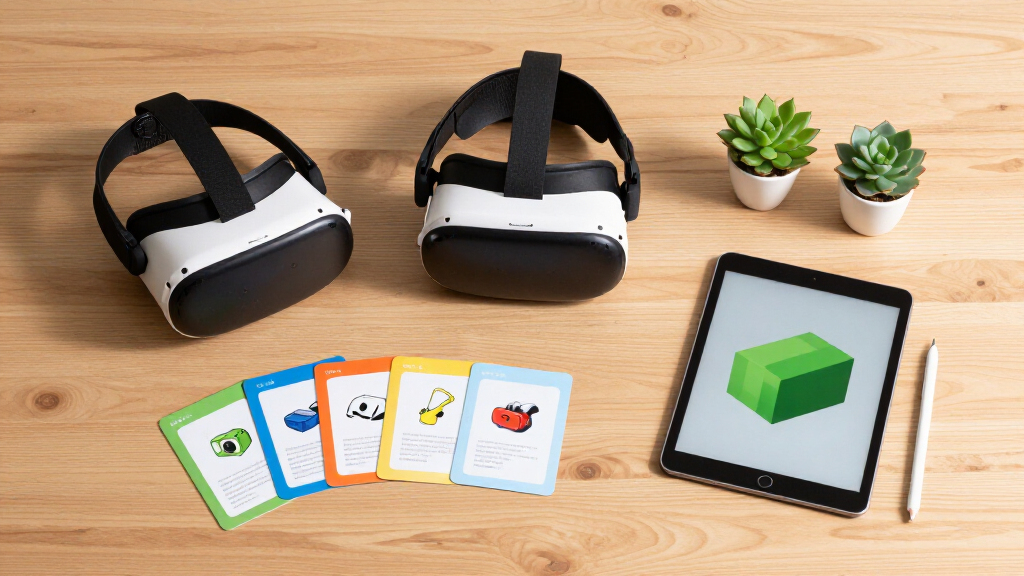
I ranked these kits using their stated age range, subject coverage, physical activity component, book support, headset inclusion, and likely usefulness after the first VR session. I gave the most weight to learning breadth and activity integration, since a headset experience alone offers limited educational value. I also examined ease of entry, including whether the package description clearly identifies goggles, a book, or hands-on materials. Focused kits earned credit when their theme could support sustained study, but they lost ground for serving a narrower audience. I did not treat a larger package or famous presenter as an automatic advantage.
1. Bill Nye’s VR Science Kit — Best Overall; 2. Abacus Brands 4 in 1 Deluxe VR Lab — Best Premium. 3. Bill Nye’s Science Squad: Body Lab VR — Best for Human Biology; 4. Abacus Brands Bill Nye’s VR Space Lab — Best for Space. 5. Abacus Brands Virtual Reality Dinosaurs Gift Box — Best Value; 6. Abacus Brands Virtual Reality Animals — Best for Wildlife. 7. Abacus Brands Virtual Reality Discovery Box Transport — Best for Transport and Engineering; 8. Professor Maxwell’s VR Dinosaurs — Best for Beginners. The final order favors broad usefulness near the top, then sorts specialized picks by audience clarity, while the beginner kit ranks eighth only because it is less versatile rather than less suitable for its intended learner.
| virtual reality educational kit | Subject | VR goggles | Tablet compatibility |
|---|---|---|---|
| Bill Nye’s Science Squad: Body | Human anatomy | Hands-free smartphone viewer included | Not supported |
| Abacus Brands Virtual Reality | Dinosaurs and paleontology | Smartphone-compatible viewer included | Not supported |
| Abacus Brands Virtual Reality | Animals and wildlife | Hands-free viewer included | — |
| Abacus Brands Virtual Reality | Transport and vehicles | Smartphone-compatible viewer included | — |
| Bill Nye’s VR Science Kit | — | Included | Not supported |
| Abacus Brands Bill Nye’s VR Sp | — | — | Not compatible |
| Abacus Brands Virtual Reality | — | — | Not compatible |
| Professor Maxwell’s VR Dinosau | — | — | Not compatible |
Factors to Consider When Choosing Virtual Reality Educational Kits
I recommend choosing a kit by working backward from the child, the available phone, and the kind of learning the household wants to support. A familiar theme can spark immediate interest, but the activities determine whether that interest lasts beyond the headset novelty. Broad kits offer variety, while focused sets can build a more coherent understanding of one subject. The factors below help separate a short-lived VR attraction from a kit that can support repeat learning.
Check Phone And App Compatibility Before Comparing Subjects
Many entry-level educational VR kits use a smartphone as the display and processing device, so the included viewer may not function independently. I would check the current app listing for supported operating-system versions, phone dimensions, storage needs, and any account requirement before buying. A phone that fits physically may still lack the sensors or software support needed for every scene. Older handsets can also struggle with heat, battery drain, or motion tracking during longer lessons. If several children will share the kit, I would favor a device setup that adults can repeat quickly without removing a bulky case each time. Compatibility deserves attention before theme or package size because an unsupported phone turns the VR portion into dead weight.
Match The Cognitive Load To The Child
The printed minimum age is only a starting point because reading ability, attention span, and comfort with headsets vary widely. I would choose shorter, clearly guided sessions for a younger learner and reserve denser explanations for a child who can connect the virtual material to the book or experiments. A dinosaur fan aged seven may engage more deeply with a focused beginner set than with a larger kit filled with unfamiliar subjects. Children who already read science books independently may benefit from broader vocabulary and less adult direction. I also recommend checking whether an adult must handle the phone or read instructions, especially when the kit is intended as a gift. The best age match is the one that lets the child understand the activity rather than merely watch the VR scene.
Decide Between Breadth And Subject Depth
A multi-subject package makes sense for siblings, classrooms, or children whose interests change frequently. The tradeoff is that each topic may receive less space than it would in a dedicated body, space, animal, transport, or dinosaur set. I would choose broad coverage for exploration and a focused kit for a learner who repeatedly returns to one subject. Focused themes also make it easier to pair the kit with library books, museum trips, or school assignments. Buying several narrow kits can create duplicated viewers and accessories, so families planning a collection should compare what is repeated. In that case, one broad starter kit followed by carefully chosen specialist material may provide better long-term use.
Look Beyond The Number Of Included Pieces
A large piece count can reflect small consumables rather than a richer learning sequence. I place more value on whether the book, VR scenes, and physical activities ask the child to observe, predict, build, record, or explain. Kits that connect those stages can turn passive viewing into active learning. I would also check which activities can be repeated and which require replacement household materials after one attempt. Clear instructions and manageable preparation often matter more than elaborate packaging because they affect how often the kit returns to the table. For sustained use, prioritize replayable activities and connected lesson design over the biggest number printed on the box.
Plan For Shared Use, Comfort, And Ongoing Cost
Headset fit, lens cleaning, phone setup, and adult supervision shape how practical a kit feels in a busy household. I recommend short sessions with breaks, particularly for children who report eye strain, dizziness, headache, or nausea. A wipe-clean viewer and adjustable fit are useful when siblings or classmates share the equipment. Families should also account for app access, replacement experiment materials, and a compatible phone rather than judging value from the box price alone. If the VR software later loses device support, a strong book and reusable activities can preserve some educational value. That makes useful non-digital content a sensible hedge against the shorter lifespan of phone-based software.
Frequently Asked Questions
Do These Educational VR Kits Work Without A Smartphone?
I would not assume that the included goggles are a self-contained headset. Kits in this price category commonly use a compatible smartphone inserted into the viewer, with an app supplying the virtual scenes. Buyers should verify the current product and app requirements because phone size and operating-system support can change. The physical book and experiments may remain usable without the VR component, but that removes a major reason to choose these sets. If no suitable phone is available, I would favor a conventional science kit or a dedicated-headset learning app instead.
Is A Broad VR Science Kit Better Than A Single-Subject Kit?
I favor a broad kit for a first purchase when the child’s interests are still developing or several children will share it. A general science or four-subject package gives more chances to find a topic that sticks. A focused kit is the better choice when the learner already reads, watches, and asks questions about dinosaurs, space, animals, anatomy, or machines. Narrow scope can support stronger connections between the VR scenes and hands-on work, even if it offers fewer unrelated activities. My rule is breadth for discovery and depth for an established interest.
Which Kit Is Better For A Seven-Year-Old?
Professor Maxwell’s VR Dinosaurs is the most straightforward match on paper because its stated age guidance begins at seven, while most other choices start at eight. That does not mean every seven-year-old will be comfortable reading the material or wearing the viewer. I would check the child’s reading level, interest in dinosaurs, and ability to follow multi-step directions with adult help. Short, supervised sessions are a better starting point than extended headset use. For a mature seven-year-old with broader science interests, an age-eight kit may be worth saving for later rather than rushing the fit.
How Should I Choose Between The Two Dinosaur Kits?
I would choose Abacus Brands’ Virtual Reality Dinosaurs Gift Box for an eight-plus learner who is ready for a book-and-activity STEM package and wants a more gift-oriented presentation. Professor Maxwell’s VR Dinosaurs makes more sense for a younger beginner because its stated age range starts at seven. The decision should hinge on reading level and learning independence rather than choosing solely by packaging. Families should compare the current contents and app requirements, since two kits sharing a theme may offer different physical activities. Neither dinosaur option is as flexible as the general science or four-in-one picks, so I would skip both for a child whose interests change quickly.
Is The 4 In 1 Deluxe VR Lab Worth Paying More For?
I see the 4 in 1 Deluxe VR Lab as the better premium buy for siblings, homeschool use, or a child who enjoys several science areas. Its value comes from subject variety rather than from a single lesson being stronger than every focused kit. The added scope is less useful when the learner has one dominant interest or loses patience with switching themes. Before paying more, I would compare the current package contents for duplicate materials and check whether all included digital experiences support the household phone. If only one topic will receive regular use, a focused kit is the more economical choice.
Conclusion
For most buyers, I recommend Bill Nye’s VR Science Kit as the best overall choice because its broad STEM identity offers the safest balance of variety and continued usefulness. Buyers seeking the largest subject spread should move up to Abacus Brands’ 4 in 1 Deluxe VR Lab, my premium pick, particularly for siblings or mixed interests. For a lower-commitment themed purchase, Abacus Brands’ Virtual Reality Dinosaurs Gift Box is my value choice. Younger first-time learners are better matched with Professor Maxwell’s VR Dinosaurs, the beginner pick, provided dinosaurs already hold their attention.
For specific interests, I would choose Body Lab VR for anatomy and Bill Nye’s VR Space Lab for astronomy. The Virtual Reality Animals kit is the clearest match for wildlife-focused learners, while the Discovery Box Transport suits children drawn to vehicles and how things move. Those specialized kits can beat the higher-ranked options when subject fit matters more than variety. My final decision rule is simple: choose general science for uncertain interests, the deluxe package for shared use, and a focused kit when the child’s enthusiasm is already clear.
Halloween Picks

MGparty 10FT Halloween Inflatable Archway with LED Lights

Panefright Halloween Window Projector – Scary Projector for Spooky Decor

Vexalify 11-Inch Halloween Pumpkin Fog Machine with 12-Color Lights
As an affiliate, we earn on qualifying purchases.