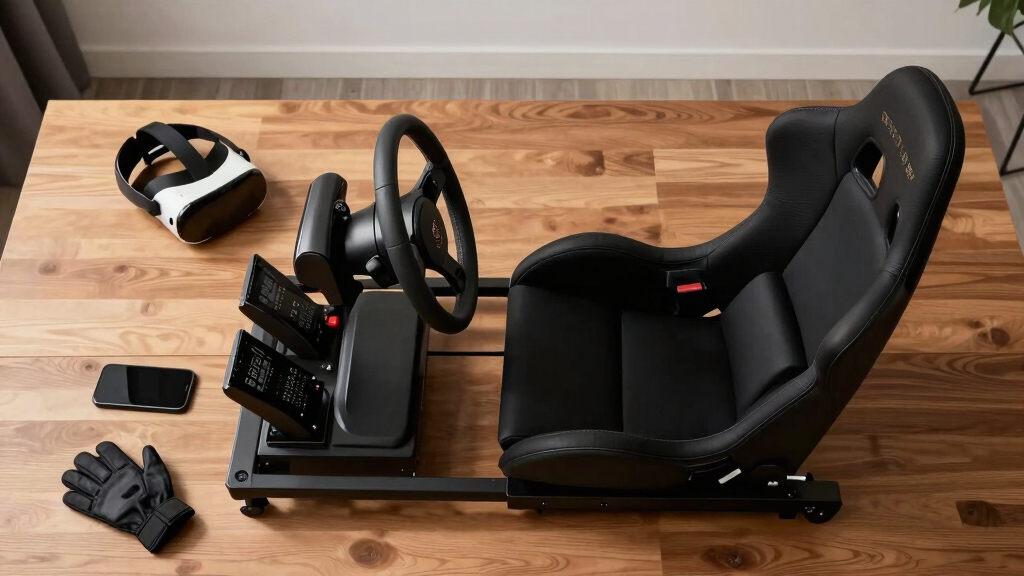
For VR racing enthusiasts, choosing the right sim racing rig can significantly enhance immersion and realism. The best overall pick for 2026 is the ARES WING Sim Racing Cockpit, praised for its sturdy build and versatility. The Foldable ARES WING Cockpit stands out for small spaces and portability, while the Marada Aluminum Profile Rig offers unlimited adjustability for serious sim racers. However, buyers often face tradeoffs between budget, space, and customization. Continue reading for a detailed breakdown of these options and how to pick the right rig for your setup.
Key Takeaways
- Sturdy construction and compatibility with multiple wheels are key for long-term durability.
- Space-saving designs like foldable rigs suit smaller setups but may compromise on stability.
- Adjustability levels vary; higher customization often comes with increased complexity and cost.
- Cable management features help keep the rig organized, especially for VR setups with multiple peripherals.
- Price ranges widely; balancing budget with desired features is essential for a satisfying purchase.


More Details on Our Top Picks
ARES WING Sim Racing Cockpit, Racing Wheel Stand with Seat, Formula and GT Racing Simulator Cockpit Compatible with Fanatec, Thrustmaster, Logitech, Moza Racing Games on PS5, PS4, Xbox and PC
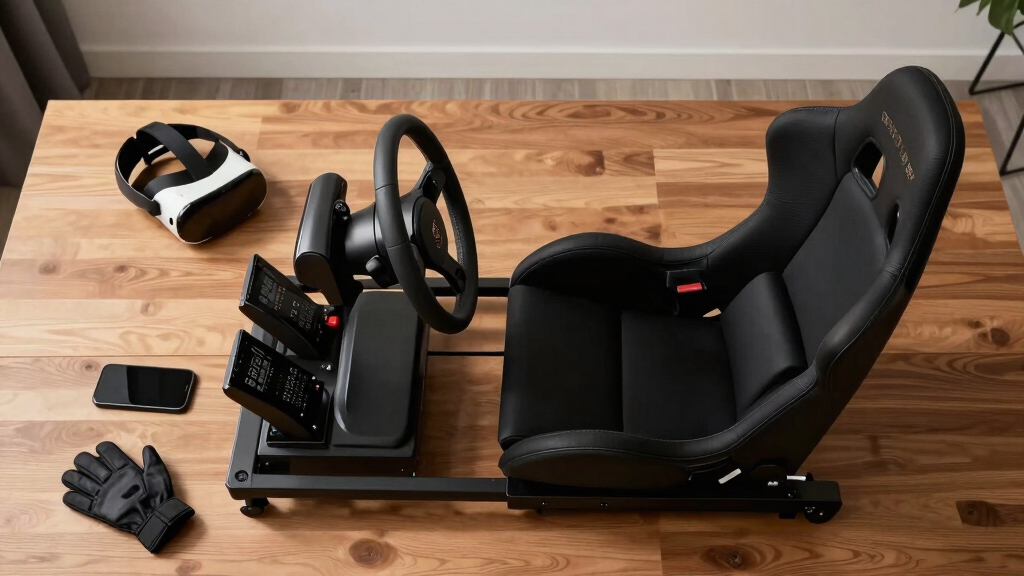
This model stands out for its rock-solid, stable structure that can support high-torque wheels like Fanatec Pro, making it ideal for serious sim racers. Compared with the ARES WING Folding Cockpit, it offers more ergonomic adjustments and a more durable steel frame, though it involves a more complex setup process. The adjustable seat, tilting back from 90° to 150°, and full customization of wheel, pedal, shifter positions ensure a tailored driving experience. Its stability features—such as 8 non-slip feet and a scratch-resistant powder-coated frame—reduce vibrations and drifting during aggressive turns. Cable management keeps your setup tidy, which is critical for VR immersion, especially over long sessions. Tradeoffs include slightly higher cost and a larger footprint than more compact options.
Pros:- Supports high-torque direct drive wheels like Fanatec Pro
- Fully adjustable seat and wheel positions for custom fit
- Heavy-duty steel frame with scratch resistance
Cons:- Requires more assembly time and space
- Higher price point compared to simpler stands
Best for: Advanced sim racers who want a durable, highly customizable cockpit compatible with all major consoles and PC VR setups.
Not ideal for: Casual players or those with limited space, as its size and complexity might be overkill.
- Support for high-torque wheels:Supports Fanatec Pro
- Adjustable seat tilt range:90° to 150°
- Material:Powder-coated steel frame
- Cable management:Includes 6 clips
- Compatibility:PS5, PS4, Xbox, PC
- Seat padding:Widened soft foam
- Feet support:8 non-slip support feet
- Assembly:Moderate complexity
- Durability:Wear-resistant finish
Bottom line: This cockpit makes the most sense for dedicated racers seeking durability, stability, and full customization in their VR sim racing setup.
ARES WING Racing Simulator Cockpit with Racing Seat, Fully Adjustable 8040 Aluminum Profile Sim Racing Cockpit Compatible with Thrustmaster/Fanatec/Moza/Logitech, Not Included Wheel, Pedals & Shifter
This pick makes the most sense for racers who prioritize ergonomic comfort and full adjustability during long VR sessions. Compared with the ARES WING Cockpit, it boasts a robust 8040 aluminum profile base that offers superior stability and support for various accessories via T-nuts. Its seat, rated for 287 lbs, features adjustable slides and tilts for a perfect fit, reducing fatigue in extended races. The professional co-developed design ensures immersive, realistic positioning—essential for VR. However, this unit lacks included wheels, so you’ll need to purchase a steering wheel separately, unlike the ARES WING Cockpit. Its comprehensive customization options, including tilt adjustments for wheel and pedals, make it ideal for serious sim racers who want a high-end, modular setup.
Pros:- Constructed with 8040 aluminum profile for stability
- Supports up to 287 lbs weight capacity
- Highly adjustable seat, wheel, and pedal positions
Cons:- Does not include wheel, pedals, or shifter
- Requires separate purchase of accessories
Best for: Experienced racers seeking a sturdy, ergonomic, and fully customizable VR racing cockpit with flexible accessory mounting.
Not ideal for: Beginners or casual players who prefer an all-in-one package with included wheel and pedals.
- Material:8040 aluminum profile
- Seat weight capacity:287 lbs
- Adjustments:Seat slides 8.7 inches, tilt ±6°, wheel tilt -8° to 32°, pedal tilt 8° to 53°
- Compatibility:Supports most major racing wheels
- Assembly:Fully adjustable
- Support for accessories:T-nuts for easy mounting
- Dimensions:54.9 x 32.3 x 43.9 inches
- Weight:Approximately 54.9 inches wide
- Design:Broad, stable frame
Bottom line: Ideal for advanced VR racers who want a durable, customizable, and professional-grade cockpit tailored to their ergonomic needs.
Steering Wheel Sim Rig Profile Mount For NRG Moza/Simagic/Works/D1 Sim Racing Quick Release
This mount makes the most sense for users with 8020-style aluminum rigs who want a reliable quick release support for top steering wheels like NRG, Moza, or Simagic. Compared with the full cockpit setups, this component offers easy integration with existing rigs, making it ideal for those wanting to upgrade or customize their VR setup gradually. Its carbon fiber-reinforced PETG construction ensures high strength without adding weight, which is perfect for VR environments where balance matters. The support for both horizontal and vertical mounting provides flexibility, but it lacks the overall stability of a full cockpit frame. Hardware for installation is included, simplifying setup. This product is best suited for experienced builders who want a modular, space-efficient solution for VR racing.
Pros:- Designed specifically for 8020-style rigs
- Supports top brands like Moza, D1, and Works
- Includes hardware for quick installation
Cons:- Requires existing rig for use
- Does not include a seat or full frame
Best for: VR enthusiasts who already own or plan to build a custom aluminum rig and need a sturdy, quick-release wheel mount.
Not ideal for: Beginners or those seeking an all-in-one cockpit solution with integrated seat and frame.
- Material:Carbon fiber-reinforced PETG
- Compatibility:NRG, Moza, Simagic, D1, Works
- Mounting orientation:Horizontal and vertical support
- Hardware included:Yes
- Designed in:USA
- Support for quick release:Yes
- Weight:Lightweight
- Support for accessories:8020 profile
- Build type:Profile mount
Bottom line: Best suited for experienced builders looking for a reliable, modular steering wheel mount compatible with VR setups.
Cable Management Clip for 8020 and 8040 Sim Racing Rigs Secure Fit Silent Motion Rig Safe (20, Standard)
This product makes the most sense for VR racers who want to keep their setup organized and quiet, especially on motion platforms. Compared with bulkier cable clips, this tool-free, secure-fit clip offers a tight, noise-free hold that prevents rattling during intense VR sessions. Its easy side installation allows quick upgrades or adjustments without disassembling your entire rig, making it ideal for frequent reconfigurations. Made in the USA, it’s durable enough to withstand long-term use. However, it’s a simple accessory and doesn’t improve the core stability or adjustability of your VR cockpit. Its primary value is in cable routing and noise reduction in a high-vibration environment, which is critical for immersive VR racing.
Pros:- Secure fit into 8020 and 8040 profiles
- Prevents wobble and rattling noise
- Tool-free, easy installation
Cons:- Limited to cable organization, not structural support
- Requires profiles compatible with the clip
Best for: VR racers with motion rigs or complex setups needing effective cable management and noise reduction.
Not ideal for: Casual VR players or those with minimal cabling, as it offers limited functional benefit beyond organization.
- Material:Durable plastic
- Compatibility:8020 and 8040 profiles
- Installation:Tool-free side push and rotate
- Supports:Cables and small accessories
- Noise reduction:Yes
- Made in:USA
- Dimensions:Small, profile-specific
- Durability:Long-term
- Use case:Cable organization and silent operation
Bottom line: Ideal for VR racers who want a professional-grade cable routing solution that maintains a quiet, clutter-free environment.
ARES WING Foldable Racing Simulator Cockpit, Racing Wheel Stand with Seat, Space Saving Sim Racing Rig for Small Spaces with Fanatec, Driving Simulator Compatible with Moza Games on PS5 and PC
This pick makes the most sense for VR racers with limited space who want easy foldability and quick storage. Compared with larger, fixed cockpits, the ARES WING Foldable Cockpit offers a compact, space-saving design that folds without removing accessories, ideal for small rooms or shared spaces. Its reliable stability is provided by a reinforced steel frame and retractable stabilizer bar, making it suitable for intense VR racing. The adjustable steering tilt from -50° to +50°, and multiple pedal and shifter positions, provide important ergonomic flexibility. However, it lacks an integrated seat, relying on a separate chair, which might impact comfort during long sessions. Its quick folding mechanism ensures it’s perfect for casual or intermittent VR racers who need fast storage without sacrificing support.
Pros:- Folds quickly for storage
- Supports major brands like Fanatec and Moza
- Steel reinforced frame with stabilizer bar
Cons:- Requires a separate chair for seating
- Limited integrated features compared to full cockpits
Best for: VR racers with tight spaces seeking a foldable, easy-to-store cockpit that still offers solid support and adjustability.
Not ideal for: Dedicated sim racers who prefer full enclosures or more immersive cockpit environments, as this is primarily a stand with a seat option.
- Foldable:Yes
- Material:Reinforced steel
- Tilt range:-50° to +50°
- Compatibility:Fanatec, Moza, PS5, PC
- Assembly:Simple, quick
- Support for accessories:Supports wheel, pedals, shifter
- Designed for small spaces:Yes
- Weight:Lightweight
- Support for long sessions:Moderate, depends on separate chair
Bottom line: This space-saving, foldable rig is perfect for VR racers needing quick setup and storage in small environments.
Marada Aluminum Profile Racing Simulator Cockpit with Seat, Unlimited Adjustment, Fit for Thrustmaster, for Fanatec, for Logitech G29 GPro, Sim Frame 8040, Not Include Steering Wheel Pedals Handbrake
This cockpit stands out thanks to its robust 40×80mm solid aluminum profile structure, offering exceptional stability during aggressive turns, especially compared to the more compact ARES WING Foldable Racing Simulator Cockpit. Its infinite adjustability for seat, wheel, and footrest ensures a tailored fit, making it versatile for different driving styles, unlike the more fixed setup of the foldable stand. While the aluminum frame supports stronger force feedback motors without wobble, it involves a more complex assembly process and a higher price point. This model caters well to serious sim racers who value durability and custom fit but may be overkill for casual users or space-constrained setups.
Pros:- Exceptional stability with a solid aluminum frame
- Unlimited adjustability for seat, wheel, and footrest
- Supports stronger force feedback motors without wobble
- Compatible with most popular wheel brands
Cons:- Requires more complex assembly and tools
- Higher cost compared to simpler stands
Best for: Dedicated sim racers seeking a highly customizable, stable, and durable cockpit for long sessions.
Not ideal for: Casual gamers or those with limited space who prefer something simple and easy to store.
- Material:40×80mm aluminum profile
- Adjustability:Infinite, sliding rails and embedded slots
- Compatibility:Supports Logitech G29, Thrustmaster T300RS, Fanatec, Moza R5, and more
- Seat:Ergonomic, breathable, adjustable back
- Supports:Force feedback motors
- Assembly:Standard parts for easy setup
Bottom line: This cockpit is best suited for serious enthusiasts who prioritize stability and customization over convenience.
ARES WING Sim Racing Wheel Stand, Foldable Racing Simulator Cockpit, Formula and GT Sim Racing Cockpit Compatible with Fanatec, Thrustmaster, Logitech, Moza, Racing Games on PS5, PS4, Xbox and PC
The ARES WING stand offers a highly adaptable and space-efficient solution, especially compared to larger, aluminum profile rigs like the Marada cockpit. Its foldable design makes it ideal for gamers with limited room, allowing quick storage without sacrificing compatibility with popular brands such as Fanatec, Thrustmaster, and Logitech. The customizable pedal angles and tilt-adjustable steering wheel provide ergonomic comfort for long sessions, rivaling the more permanent setups but with much greater convenience. However, this stand is limited to stand-alone use and does not include hardware like pedals or shifters, which could be a downside for complete setups. It’s perfect for space-conscious gamers who want high flexibility and quick setup, but less so for those seeking a full cockpit experience.
Pros:- Foldable, easy to store and transport
- Highly adjustable steering and pedal angle
- Supports multiple platforms and brands
- Easy to assemble in about 15 minutes
Cons:- Does not include pedals, shifter, or wheel
- Less sturdy than aluminum profile cockpits for aggressive forces
Best for: Gamers needing a portable, space-saving solution that maintains high compatibility and ergonomic customization.
Not ideal for: Players looking for a full, fixed cockpit with additional structural stability or those who want a complete package with pedals and shifter included.
- Material:Premium steel frame
- Adjustments:-15° to +15° tilt, four pedal angles
- Foldable:Yes
- Compatibility:Supports Fanatec, Thrustmaster, Logitech, Moza, and more
- Assembly:Approximately 15 minutes
- Supports:Wheel, pedals, shifter (hardware not included)
Bottom line: This stand is ideal for space-limited racers who prioritize flexibility and quick setup over maximum stability.
Steering Wheel Sim Rig Profile Mount for Simucube Quick Release Sim Racing
This profile mount excels in offering a dedicated solution for storing and displaying your high-end wheel, especially if you use a Simucube quick release system. Unlike larger cockpits, this mount provides a precise fit for 4040 profile rigs, ensuring stability and organization for your setup. It’s a clear choice for those who want a clean, professional look and quick access to their wheel between races, compared to bulkier rigs like the Marada cockpit. However, its limited scope means it doesn’t provide the full driving position or structural stability of a complete rig, making it unsuitable as a primary racing frame. It’s best for enthusiasts who already have a rig and want a dedicated wheel mount, not for those starting from scratch.
Pros:- Precise fit for 4040 aluminum extrusion rigs
- Supports Simucube Quick Release system
- Durable carbon fiber-reinforced PETG construction
- Easy to install with included hardware
Cons:- Limited to wheel storage and display, not a full rig
- Requires existing rig setup for use
Best for: Owners of custom 4040 profile rigs who need a secure, organized, and quick-release compatible wheel mount.
Not ideal for: Beginners or casual racers looking for a full cockpit or immersive setup, as this is a specialized accessory rather than a full rig.
- Material:Carbon fiber-reinforced PETG
- Compatibility:Simucube Quick Release
- Fitment:40mm hole spacing on 4040 profile
- Mounting:Horizontal or vertical
- Hardware:Includes M6 bolts and T-nuts
- Designed:USA, Pro Sim Racing
Bottom line: This mount is perfect for advanced users wanting a dedicated, sturdy wheel display and quick release support for their custom rig.
How We Picked
I evaluated each sim racing rig based on build quality, compatibility with popular VR setups, adjustability, space efficiency, and value for money. Ease of assembly and cable management features were also considered, as these impact overall usability. Rigs that offered broad compatibility with major racing wheel brands and included features suited for VR immersion ranked higher. Products were compared based on their ability to meet the needs of different types of users, from casual racers to serious sim enthusiasts, ensuring a balanced and practical ranking.Factors to Consider When Choosing Best Sim Racing Rigs For VR
Choosing the best sim racing rig for VR involves understanding several key factors that influence performance, comfort, and compatibility. Beyond selecting the most feature-rich model, buyers should consider how the rig fits their space, their budget, and their specific racing setup. Making informed decisions helps avoid common pitfalls like overpaying for unnecessary features or buying a rig incompatible with their VR hardware. Here are the main considerations to guide your choice:Compatibility with VR Hardware and Racing Wheels
Ensuring your chosen rig supports your VR headset and racing wheel is critical. Many rigs are designed for specific brands like Fanatec or Thrustmaster, so verify compatibility before purchasing. A rig that accepts quick-release mounts can future-proof your setup, allowing easy swaps of wheels and pedals without fuss. Ignoring this can lead to frustration and additional costs if you need adapters or replacements later.
Space and Portability
Consider your available space and whether a fixed or foldable rig best suits your environment. Compact designs like foldable or space-saving rigs help maximize limited areas, but sometimes at the expense of stability. Conversely, larger, fixed rigs often deliver better rigidity but require dedicated space. Balance your space constraints against your desire for a stable, immersive experience.
Adjustability and Customization
High adjustability allows you to fine-tune your driving position for comfort, which is vital when using VR for extended periods. Look for rigs with adjustable seat height, pedal positions, and wheel angles. However, more adjustable rigs tend to be more complex to set up and may cost more, so consider your comfort needs versus your willingness to spend time on configuration.
Build Quality and Materials
Durability matters, especially for VR racing where stability enhances immersion. Steel frames and aluminum profiles typically offer better rigidity and longevity than plastic components. Cheaper rigs may wobble under intense racing sessions, diminishing the experience and risking damage. Investing in quality ensures your rig remains stable and reliable over time.
Cable Management and Accessories
Organized cables prevent clutter and accidental disconnections, which can be disruptive in VR. Many rigs include clips or channels to route wires neatly. Additionally, check if the rig includes or supports accessories like shifters, handbrakes, or additional mounts, as these can significantly expand your setup’s realism and versatility. Overlooking cable management can lead to frustration and a messy workspace.
Frequently Asked Questions
Can I use a regular racing wheel with a VR sim racing rig?
Yes, most rigs are designed to support a variety of racing wheels, especially those with quick-release mounting systems. However, verify your specific wheel model’s compatibility with the rig before purchase. Some rigs support multiple wheel types via adapters, making them versatile for different brands. Ensuring compatibility upfront can save you time and prevent disappointment later.
Is a foldable rig suitable for serious sim racing?
Foldable rigs are excellent for those with limited space or who need portability. However, they often compromise on rigidity compared to fixed rigs, which can impact the realism and precision of your racing experience. For casual or occasional VR racing, a foldable rig may suffice, but dedicated racers might prefer a sturdier, non-folding model for maximum stability.
How important is adjustability for VR racing?
Adjustability directly affects comfort and ergonomics, which is especially important in VR where extended sessions are common. Being able to customize seat height, pedal position, and wheel angle helps reduce fatigue and improves immersion. While highly adjustable rigs tend to cost more and need more setup time, they are often worth the investment for serious racers.
Should I prioritize build quality or price when choosing a rig?
Building a solid, durable rig often requires a higher initial investment but pays off in long-term usability and stability. Cheaper rigs may be tempting but can wobble or break down quickly, ruining the VR experience. If you’re serious about sim racing, it’s generally better to invest in a higher-quality rig that offers stability and durability, especially for immersive VR sessions.
What features can improve the realism of VR racing with a rig?
Features like adjustable wheel and pedal positions, sturdy construction, and compatibility with shifters and handbrakes significantly enhance realism. Cable management and quick-release mounts also contribute to a seamless experience. The more your rig can mimic real-world driving ergonomics, the more immersive and satisfying your VR racing sessions will become.