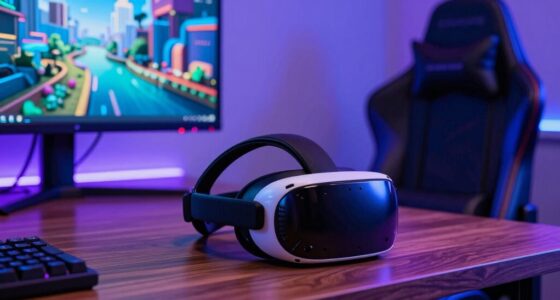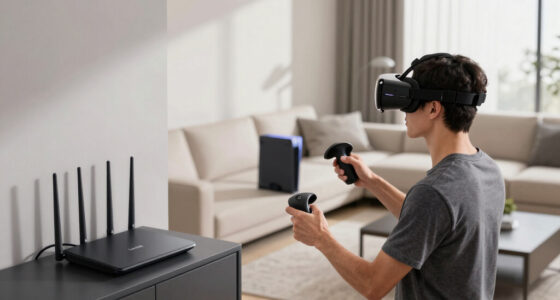
When choosing the best 2TB SSDs for VR, speed, reliability, and compatibility are key. The Samsung 980 PRO stands out for its blazing fast PCIe Gen 4 performance, ideal for demanding VR experiences. For budget-conscious gamers, SATA options like the TEAMGROUP AX2 offer decent speed at a lower cost, but may not handle the most intense VR workloads. NVMe drives such as the Silicon Power and fanxiang models strike a balance between speed and affordability, making them versatile choices. The main tradeoffs often involve balancing price against maximum transfer speeds and compatibility with your VR setup. Continue reading for a detailed breakdown of each option to find the best fit for your needs.
Key Takeaways
- NVMe drives, especially PCIe Gen4 models, deliver the fastest VR data transfer rates, but come at a higher price point.
- SATA SSDs like the TEAMGROUP AX2 are budget-friendly but may bottleneck high-end VR systems that demand rapid load times.
- The Samsung 980 PRO is the best overall pick for users seeking top performance with reliable thermal management.
- External drives like the Glyph Atom Pro suit VR users who prioritize portability and quick plug-and-play setup.
- Tradeoffs between speed, price, and compatibility mean buyers should clearly define their VR system’s demands before choosing.


More Details on Our Top Picks
Silicon Power 2TB NVMe M.2 PCIe Gen3x4 2280 SSD Solid State Drive (SP002TBP34A60M28)
This Silicon Power NVMe SSD stands out for offering reliable performance at a lower price point compared to high-end options like the Samsung 980 PRO. With read speeds up to 2,200MB/s and 1200 TBW, it provides a solid upgrade for VR users who want fast load times without overspending. Compared to the Samsung 980 PRO, it sacrifices some of the raw speed but still delivers a noticeable performance boost over SATA drives. The main tradeoff is that PCIe Gen 3×4 limits future upgrade potential and slightly reduces peak throughput, which may matter for the most demanding VR games. This pick makes the most sense for budget-conscious gamers who prioritize value over absolute top-tier speed.
Pros:- Affordable price for NVMe speeds
- Decent TBW for longevity
- Compatible with most M.2 slots with M key
Cons:- Limited to PCIe Gen 3×4 speeds, slower than PCIe 4.0 options
- Speed may bottleneck in extremely demanding VR scenarios
- No included heatsink, potential thermal throttling in prolonged sessions
Best for: VR gamers on a tight budget seeking a reliable NVMe drive
Not ideal for: Power users who demand maximum throughput for future-proofing or intensive multitasking
- Digital Storage Capacity:2 TB
- Interface:PCIe Gen 3×4
- Sequential Read Speed:2200 MB/s
- Sequential Write Speed:1600 MB/s
- TBW:1200 TB
- Form Factor:2280 M.2
Bottom line: This SSD is ideal for budget-conscious VR players who want solid NVMe performance without paying a premium.
Samsung 980 PRO SSD 2TB PCIe NVMe Gen 4 Gaming M.2 Internal Solid State Drive Memory Card
This Samsung 980 PRO is distinguished by its blazing read speeds up to 7,000MB/s, making it a top choice for VR enthusiasts who want the fastest load times and minimal lag. It outperforms the fanxiang 2TB NVMe SSD in raw speed, thanks to its PCIe 4.0 interface and advanced Elpsis controller, which together support demanding VR titles and large asset loading. The nickel coating and heat spreader ensure thermal stability during extended gaming sessions, a critical feature for sustained high performance. The tradeoff is its higher cost and the need for a PCIe 4.0 compatible system to unlock its full potential, which might limit compatibility for some users. Overall, this pick is best for tech-savvy gamers aiming for maximum speed and future-proofing.
Pros:- Unmatched read speeds up to 7000MB/s
- Excellent thermal management features
- Manufactured entirely by Samsung for reliability
Cons:- Premium price point
- Requires PCIe 4.0 support to realize full capabilities
- Potential overkill for less demanding VR titles
Best for: VR gamers with PCIe 4.0 systems seeking top-tier speed
Not ideal for: Users with older PCs or laptops lacking PCIe 4.0 support who won’t benefit from its speeds
- Digital Storage Capacity:2 TB
- Interface:PCIe 4.0 NVMe
- Sequential Read Speed:7000 MB/s
- Sequential Write Speed:5100 MB/s
- Thermal Control:Nickel coating and heat spreader
- Form Factor:2280 M.2
Bottom line: This SSD is perfect for high-end VR users with compatible hardware who prioritize the fastest load times possible.
fanxiang 2TB NVMe SSD PCIe Gen4 M.2 SSD for PS5, Up to 5000 MB/s, Internal Gaming 3D NAND SLC Cache
This fanxiang 2TB NVMe SSD offers impressive speeds up to 5000MB/s, making it a strong candidate for VR setups that double as PS5 upgrades. It is comparable in speed to the RAOYI 2TB SSD but slightly slower than the Samsung 980 PRO, yet it still delivers excellent performance for VR load times and game streaming. Its compatibility with PlayStation 5 also makes it appealing for gamers who want a versatile drive for both console and PC VR. The main tradeoff is that it lacks the thermal management features of higher-end options, which could lead to throttling during prolonged VR sessions. This makes it ideal for users who want a reliable, high-speed NVMe drive for VR and PS5 gaming without the premium price of the Samsung model.
Pros:- Speeds up to 5000MB/s
- Compatible with PS5 and PCs
- Includes an installation kit
Cons:- Lacks advanced thermal cooling features
- Potential throttling in intensive VR use
- Limited to PCIe Gen 4×4 speeds without further speed margins
Best for: VR gamers who also play on PS5 and need a versatile, fast SSD
Not ideal for: High-end PC users seeking maximum thermal stability during extended VR sessions
- Digital Storage Capacity:2 TB
- Interface:PCIe Gen 4×4 NVMe
- Sequential Read Speed:5000 MB/s
- Sequential Write Speed:3800 MB/s
- Form Factor:2280 M.2
- Compatibility:PS5, PC
Bottom line: This SSD is excellent for PS5 gamers and VR users who want speedy performance at a reasonable price point.
RAOYI 2TB NVMe Internal Solid State Drive M.2 2280 PCIe Gen4x4 SSD, Up to 5000MB/s
The RAOYI 2TB NVMe SSD provides speeds up to 5000MB/s, matching the fanxiang model but with a slight edge in warranty duration at 5 years. Its compatibility across desktops, laptops, and PS5 makes it versatile for VR users who need a drive that performs well in multiple systems. Compared to the Samsung 980 PRO, it offers competitive speeds at a lower cost, but it may lack the same level of thermal management and durability features, which could impact sustained VR gaming. The absence of advanced cooling means users should ensure adequate airflow during long VR sessions. This drive is well-suited for gamers who want a balanced mix of speed, reliability, and affordability across various platforms.
Pros:- Speeds up to 5000MB/s
- 5-year warranty
- Broad compatibility
Cons:- Less advanced cooling features
- Potential thermal throttling in prolonged VR use
- No included heatsink
Best for: VR users on a budget needing a reliable, multi-platform NVMe SSD
Not ideal for: High-end gamers with PCIe 4.0 systems demanding the ultimate thermal stability
- Digital Storage Capacity:2 TB
- Interface:PCIe 4.0 NVMe
- Sequential Read Speed:5000 MB/s
- Sequential Write Speed:4500 MB/s
- Warranty:5 years
- Form Factor:2280 M.2
Bottom line: This SSD is a solid choice for VR gamers seeking speed and versatility without the premium price of top-tier brands.
Seagate BarraCuda 2TB Internal Hard Drive HDD – 3.5 Inch SATA 6Gb/s 7200 RPM 256MB Cache
This Seagate BarraCuda HDD provides a cost-effective option for VR users who prioritize storage capacity over speed. While it cannot match the load times or responsiveness of NVMe SSDs like the Samsung 980 PRO or fanxiang models, it offers high capacity at a very affordable price, making it suitable for storing large VR libraries and backups. Compared to SSDs, its slower read/write speeds can cause longer load times and potential lag during VR gameplay, but it remains reliable for less intensive use. Its 7200 RPM and 256MB cache help mitigate some latency issues, yet it’s still not ideal for fast-paced VR titles. This drive is best for budget-conscious users who need mass storage and are willing to accept slower performance.
Pros:- High capacity at low cost
- Reliable for storage and backups
- Standard SATA 6Gb/s interface
Cons:- Much slower than SSDs, causing longer load times
- Not suitable for latency-sensitive VR gaming
- Requires SATA port, larger physical size
Best for: VR users needing large storage on a tight budget
Not ideal for: Gamers seeking quick load times or smooth VR experience in fast-paced titles
- Digital Storage Capacity:2 TB
- Interface:SATA 6Gb/s
- RPM:7200 RPM
- Cache:256MB
- Form Factor:3.5 inch
- Warranty:Not specified
Bottom line: This HDD is best for VR users prioritizing storage space over speed and responsiveness.
TEAMGROUP AX2 2TB 3D NAND TLC 2.5 Inch SATA III Internal Solid State Drive SSD
This affordable SATA SSD stands out for offering solid performance at a lower price point compared to NVMe options like the Glyph Atom Pro. Its maximum read speed of 540 MB/s is enough for most VR applications, but it can’t match the blazing speeds of external NVMe drives, which are better suited for data-intensive VR workflows. The AX2’s reliability features—wear-leveling, ECC, and TRIM—help maintain consistent performance over time, yet it’s limited by the SATA interface, resulting in slower data transfer compared to NVMe options. This makes it an ideal upgrade for users seeking faster load times without the premium cost, especially those upgrading older laptops or desktops without NVMe slots. However, it’s less suitable for power users running VR with very large assets or frequent file transfers, where NVMe drives excel.
Pros:- Cost-effective upgrade over traditional HDDs
- Reliable wear-leveling and error correction features
- Decent performance for everyday VR applications
Cons:- Limited by SATA interface, slower than NVMe drives
- Read/write speeds capped at 540/490 MB/s
- Not suitable for data-intensive VR workflows
Best for: Budget-conscious VR enthusiasts upgrading older systems or seeking a reliable internal drive for general VR use.
Not ideal for: VR professionals or power users who need ultra-fast data transfer for large VR project files, as SATA limits transfer speeds.
- Storage Capacity:2TB
- Interface:SATA III 6Gb/s
- Max Read Speed:540 MB/s
- Max Write Speed:490 MB/s
- Form Factor:2.5 Inch SATA
- Warranty:3-year limited
Bottom line: Best suited for users upgrading older systems or seeking reliable internal storage without breaking the bank.
Glyph Production Technologies Atom Pro 2, External NVMe Solid State Drive (SSD), Thunderbolt 3 (2TB)
This external NVMe drive makes a compelling case for VR professionals and media creators with its blistering speeds of up to 2,800 MB/s read and 2,600 MB/s write. Compared to the TEAMGROUP AX2, which is limited by SATA, the Atom Pro’s Thunderbolt 3 interface provides dramatically faster data transfer, reducing load times and accelerating large VR asset workflows. Its rugged, MIL‑STD‑810F-compliant design ensures durability in portable scenarios, making it ideal for on-the-go VR production. The compact 2.5-inch form factor and bus-powered operation mean no extra cables or power supplies are needed, streamlining mobile editing setups. The tradeoff is that it comes at a higher price and requires a Thunderbolt 3 port, limiting compatibility to newer machines.
Pros:- Exceptional data transfer speeds up to 2800 MB/s
- Rugged, shock and vibration-resistant build
- Portable, bus-powered design with included cable
Cons:- Higher cost compared to internal SSDs
- Requires Thunderbolt 3 port for peak performance
- Less suitable for budget or entry-level systems
Best for: VR content creators and professionals needing ultra-fast external storage for editing large 4K/8K/VR media on the go.
Not ideal for: Casual VR users or those with older laptops lacking Thunderbolt 3 ports, as they won’t harness the drive’s full speed potential or may face compatibility issues.
- Capacity:2TB
- Interface:Thunderbolt 3
- Sequential Read Speed:2800 MB/s
- Sequential Write Speed:2600 MB/s
- Form Factor:2.5 Inch External
- Durability:MIL‑STD‑810F
Bottom line: Ideal for VR professionals and media creators who need portable, fast external storage with durability in demanding environments.

How We Picked
We evaluated these 2TB SSDs based on performance metrics such as sequential read/write speeds, input/output operations per second (IOPS), and compatibility with VR headsets and gaming PCs. Usability factors like installation ease, thermal management, and durability were also considered, since VR setups often run for extended periods. Value was assessed through price-to-performance ratio, ensuring options cater to different budgets without sacrificing essential features. The ranking reflects a balance of high-speed capability, reliability, and practical usability for VR gaming, prioritizing drives that deliver consistent performance under sustained load.Factors to Consider When Choosing Best 2TB SSDs For VR
Choosing the best 2TB SSD for VR involves understanding several critical factors. Not all drives are created equal, and the right choice depends on your specific VR setup, budget, and performance expectations. Here are the main considerations to keep in mind to avoid common pitfalls and ensure your VR experience is smooth and responsive.Performance and Speed
VR applications demand rapid data transfer to minimize latency and prevent lag. NVMe drives, especially PCIe Gen4 models, offer the highest sequential read/write speeds, often exceeding 5000 MB/s, which is ideal for large VR game files and quick load times. SATA SSDs, while more affordable, typically max out around 540 MB/s, which can be acceptable for less demanding VR experiences but may cause bottlenecks in high-end setups. Matching your drive’s speed to your VR hardware’s capabilities is key to avoiding performance issues.
Compatibility
Ensure the SSD is compatible with your VR system, whether it’s an internal M.2 NVMe drive or an external Thunderbolt or USB-C SSD. Some VR headsets and gaming PCs have strict requirements or limited slots, so double-check your hardware’s specifications. External SSDs can offer plug-and-play convenience but may introduce additional latency, so consider your setup’s connectivity options carefully.
Reliability and Endurance
VR gaming sessions can be lengthy, so durability and consistent performance matter. Look for SSDs with good endurance ratings (TBW – terabytes written) and reliable thermal management systems. Drives prone to overheating can throttle performance, leading to lag or crashes during intensive VR use. Choosing a drive with built-in cooling or a heatsink can help maintain peak performance over time.
Price-to-Performance Ratio
While high-end PCIe Gen4 NVMe drives are tempting, they come with a premium price. Budget drives like SATA SSDs provide decent performance at lower costs but might not fully meet the demands of advanced VR applications. Consider your budget and performance needs carefully—sometimes investing a bit more ensures smoother gameplay and fewer frustrations.
Form Factor and Size
The physical size of the SSD matters, especially for internal drives. M.2 drives are compact and easy to install, but ensure your motherboard supports PCIe Gen4 if you want maximum speeds. External drives come in various form factors; portability and ease of connection can influence your choice if you frequently move your VR setup or travel with your gear.
Frequently Asked Questions
Is a PCIe Gen4 SSD worth it for VR gaming?
For most VR users, a PCIe Gen4 SSD offers significant speed advantages, reducing load times and potentially increasing responsiveness in demanding titles. However, whether it’s worth the extra cost depends on your overall system and VR demands. If your PC supports PCIe Gen4 and you run large, graphics-intensive VR applications frequently, investing in a Gen4 drive can improve your experience. For casual or less demanding VR use, a high-quality PCIe Gen3 or SATA drive may suffice without breaking the bank.
Can I use an external SSD for VR, or do I need an internal one?
External SSDs, especially those with Thunderbolt 3 or USB-C interfaces, are a convenient option for VR, offering easy setup and portability. They can work well if your VR system and headset support external drives with minimal latency. However, internal drives typically provide lower latency and higher transfer speeds, which can be advantageous for high-end VR experiences. The choice depends on your setup, mobility needs, and whether you prioritize convenience over absolute performance.
Are SATA SSDs suitable for high-end VR gaming?
SATA SSDs like the TEAMGROUP AX2 are suitable for entry-level VR gaming or less demanding titles, offering faster load times than traditional HDDs. However, they often fall short for high-end VR setups that require rapid data streaming, especially for large open-world or graphically intensive games. If your system can support NVMe drives, opting for one will provide a smoother, more responsive VR experience overall.
How important is endurance and thermal management in choosing a VR SSD?
Endurance and thermal management are vital for sustained VR use, where drives may operate continuously for hours. Drives with higher TBW ratings can handle more data writes over their lifespan, reducing the risk of failure. Good thermal design prevents overheating, which can cause throttling and lag. Look for SSDs with heat sinks or those designed for high-performance workloads to avoid performance dips during long VR sessions.
Should I prioritize maximum speed or cost when choosing a 2TB SSD for VR?
The decision depends on your VR use case and budget. If you’re a serious gamer or content creator running complex VR applications, investing in a high-speed PCIe Gen4 NVMe drive is justified for the performance gains. Conversely, if your VR activities are more casual or you’re on a tight budget, a quality SATA SSD or PCIe Gen3 drive can still deliver a satisfying experience without the higher price tag. Balancing performance needs with your budget ensures you get the best value for your investment.
Conclusion
For most users seeking the best overall experience, the Samsung 980 PRO offers unmatched speed and reliability. Budget-conscious gamers will appreciate the TEAMGROUP AX2 for its affordability and decent performance. Those looking for premium, high-end VR performance should consider external options like the Glyph Atom Pro for portability and quick setup. Beginners or casual users can start with SATA drives without sacrificing much, while enthusiasts demanding the fastest load times should prioritize PCIe Gen4 NVMe options. Ultimately, your choice hinges on your system compatibility, budget, and how demanding your VR sessions are.