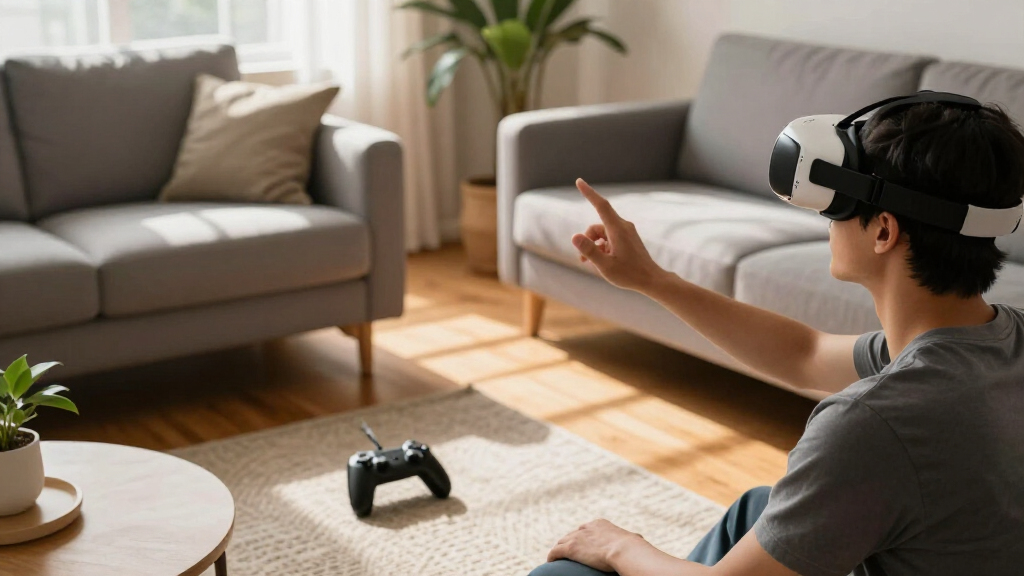
The best wireless VR headsets combine untethered play with a clear library of games and apps; for most buyers, I’d start with the Meta Quest 3 512GB for its standalone use and mixed-reality features. The Meta Quest 3S is a lower-cost route into standalone VR, while the HTC Vive XR Elite suits buyers who want a more flexible premium system. Phone-based viewers from TECKNET and DESTEK cost less to try, but they rely on a smartphone and offer a different, more limited VR experience. The key tradeoffs are standalone convenience versus PC capability, display quality versus headset cost, and a complete headset versus a phone accessory. Read on for the full breakdown of all 13 options and help choosing the right fit.

Get VR and gaming gear delivered free — and shop member deals
- Fast, free delivery on millions of items
- Access to Prime Big Deal Days deals on October 6–7
- Prime Video, Amazon Music and more included
Complete the kit


Key Takeaways
- Standalone capability separates the main choices: Meta Quest 3, Quest 3S, and Quest 2 models run without a phone or PC, while the TECKNET, DESTEK, and kids’ viewers depend on a compatible smartphone.
- Quest 3 is the strongest all-round direction in this lineup: it combines standalone VR with mixed-reality features; the Quest 3S trades some display refinement for a more accessible entry point.
- HTC’s headsets target a different buyer: the Vive XR Elite and Focus Vision offer PC-VR and mixed-reality routes, but buyers should check their preferred connection method and setup needs before choosing.
- Renewed listings need extra scrutiny: the Quest 3 Renewed Premium and Quest 2 256GB Renewed may suit buyers seeking a particular configuration, but condition, included accessories, and seller terms matter.
- Phone viewers are accessories, not direct Quest substitutes: TECKNET, DESTEK, and the kids’ headset can offer basic phone-based viewing, but they do not provide the same standalone software experience as a dedicated VR headset.
| TECKNET Smartphone VR Headset with Bluetooth Controller |  | Best Smartphone Starter | Compatible screen size: 4.7–7.2 inches | Field of view: 90°–110° | Weight: 268 g | VIEW LATEST PRICE | See Our Full Breakdown |
| HTC Vive XR Elite Mixed Reality and PC VR Headset with Deluxe Pack and Controllers | 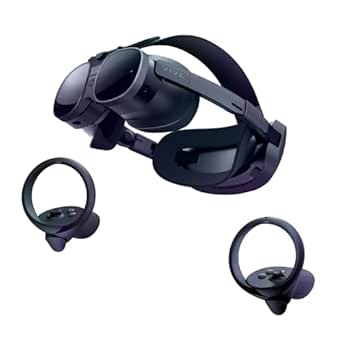 | Best for Flexible PC and Mixed Reality | Resolution: 3840 × 1920 combined | Display: 6-inch LCD | Field of view: Up to 110° | VIEW LATEST PRICE | See Our Full Breakdown |
| Meta Quest 3 512GB VR Headset with Gorilla Tag Monkenaut Bundle |  | Best Overall Wireless VR | Storage: 512 GB | Memory: 8 GB RAM | Processor: Snapdragon XR2 Gen 2 | VIEW LATEST PRICE | See Our Full Breakdown |
| Meta Quest 2 All-in-One VR Headset, 128 GB |  | Best for First-Time Standalone VR | Storage: 128 GB | Display: LCD | Resolution: 1832 × 1920 | VIEW LATEST PRICE | See Our Full Breakdown |
| Meta Quest 3 512GB Mixed Reality VR Headset (Renewed Premium) |  | Best Renewed Quest 3 Option | Condition: Renewed Premium | Storage: 512 GB | Processor: Snapdragon XR2 Gen 2 | VIEW LATEST PRICE | See Our Full Breakdown |
| HTC VIVE Focus Vision XR Headset with DisplayPort Wired PC VR Streaming Bundle |  | Best for PC VR and Mixed Reality | Resolution: 2448 × 2448 pixels per eye | Field of view: Up to 120 degrees | Refresh rate: 90 Hz | VIEW LATEST PRICE | See Our Full Breakdown |
| TECKNET Smartphone VR Headset with Adjustable Lenses |  | Best for Casual Phone-Based VR | Compatible devices: Smartphones with 4.7–7.2-inch screens | Field of view: 90°–110° | Weight: 268 g | VIEW LATEST PRICE | See Our Full Breakdown |
| Meta Quest 3S 128GB VR Headset (Renewed Premium) |  | Best Renewed Standalone Pick | Storage: 128 GB | Processor: Snapdragon XR2 Gen 2 | Memory: 8 GB RAM | VIEW LATEST PRICE | See Our Full Breakdown |
| Meta Quest 3S 128GB VR Headset with Gorilla Tag Bundle |  | Best for Gorilla Tag Fans | Storage: 128 GB | Processor: Snapdragon XR2 Gen 2 | Memory: 8 GB RAM | VIEW LATEST PRICE | See Our Full Breakdown |
| 3D VR Headset for Kids with Android Remote – Compatible with iPhone and Android Phones |  | Best Starter Gift for Kids | Brand: REALITEX | Compatibility: iPhone and Android smartphones | Controller type: Remote control | VIEW LATEST PRICE | See Our Full Breakdown |
| HTC VIVE Focus Vision Mixed Reality and PC VR Headset with Controllers |  | Best for PC VR and Standalone Flexibility | Resolution: 2448 × 2448 pixels per eye | Field of view: Up to 120 degrees | Refresh rate: 90 Hz | VIEW LATEST PRICE | See Our Full Breakdown |
| Meta Quest 2 All-in-One VR Headset, 256 GB (Renewed) |  | Best Renewed Standalone Pick | Model: Meta Quest 2 | Storage: 256 GB | Display: LCD | VIEW LATEST PRICE | See Our Full Breakdown |
| DESTEK V5 VR Headset with Controller for Smartphones |  | Best Lightweight Phone-Based Viewer | Compatible phone screen size: 5.5–7.2 inches | Field of view: 110 degrees | Lens light transmission: 92% | VIEW LATEST PRICE | See Our Full Breakdown |
| wireless VR headset | Field of view | Refresh rate | Connectivity | Resolution |
|---|---|---|---|---|
| TECKNET Smartphone VR Headset | 90°–110° | — | Bluetooth | — |
| HTC Vive XR Elite Mixed Realit | Up to 110° | 90 Hz | USB Type-C | 3840 × 1920 combined |
| Meta Quest 3 512GB VR Headset | — | 120 Hz | Bluetooth and USB Type-C | 2064 × 2208 pixels per eye |
| Meta Quest 2 All-in-One VR Hea | — | 90 Hz | Wi-Fi and USB Type-C | 1832 × 1920 |
| Meta Quest 3 512GB Mixed Reali | — | 120 Hz | Wi-Fi | — |
| HTC VIVE Focus Vision XR Heads | Up to 120 degrees | 90 Hz | DisplayPort, USB, Wi-Fi | 2448 × 2448 pixels per eye |
| TECKNET Smartphone VR Headset | 90°–110° | — | — | — |
| Meta Quest 3S 128GB VR Headset | 96 degrees | 90 Hz | — | 2064 × 2208 pixels |
| Meta Quest 3S 128GB VR Headset | 110 degrees | 60 Hz | — | 1832 × 1920 per eye |
| 3D VR Headset for Kids with An | — | — | — | — |
| HTC VIVE Focus Vision Mixed Re | Up to 120 degrees | 90 Hz | DisplayPort, USB, Wi-Fi | 2448 × 2448 pixels per eye |
| Meta Quest 2 All-in-One VR Hea | 90 degrees | 90 Hz | — | 1832 × 1920 pixels per eye |
| DESTEK V5 VR Headset with Cont | 110 degrees | — | Bluetooth | — |
More Details on Our Top Picks
TECKNET Smartphone VR Headset with Bluetooth Controller
I’d pick the TECKNET Smartphone VR Headset for someone who wants a low-complexity way to view phone-compatible VR apps and panoramic videos, rather than a self-contained gaming system. Its 4.7–7.2-inch phone compatibility, adjustable lenses, and included Bluetooth controller make it more flexible than a basic viewer, while the 268 g design and padded face area suit shorter sessions. Compared with the Meta Quest 2, it depends on your phone for both content and processing, so it cannot offer the same standalone library or tracking experience. That tradeoff keeps setup simple but limits what counts as VR: ordinary photos do not become 3D, and compatible apps or panoramic video are required. Larger phones may also need the screen frame removed.
Pros:- Works with smartphones measuring 4.7–7.2 inches
- Includes a Bluetooth button controller
- Adjustable pupil distance, focal length, and headband
- Lightweight 268 g construction with soft foam padding
Cons:- Requires compatible VR apps or panoramic videos; standard images are not converted to 3D
- Phones with screens 6.2 inches or larger require removing the screen frame
- Relies on the phone for the display and experience rather than providing standalone VR
Best for: Phone owners who want an affordable-feeling introduction to compatible VR videos and simple app-based experiences without buying a standalone headset.
Not ideal for: Buyers seeking room-scale tracking, a substantial VR game library, or a headset that works without a smartphone and compatible content.
- Compatible screen size:4.7–7.2 inches
- Field of view:90°–110°
- Weight:268 g
- Connectivity:Bluetooth
- Controller:Button control
- Adjustments:Headband, pupil distance, and focal length
- Compatibility:Smartphones
- Dimensions:7.28 × 3.94 × 3.35 inches
Our verdict“Choose this for simple phone-based VR viewing, but pick the Meta Quest 2 if you want a complete wireless headset with its own apps and controls.”
HTC Vive XR Elite Mixed Reality and PC VR Headset with Deluxe Pack and Controllers
The HTC Vive XR Elite earns its place for buyers who want one headset to cover standalone VR, mixed reality, and PC VR. Its full-color passthrough, depth sensor, and inside-out tracking let virtual content share space with the room, while adjustable IPD and diopter settings offer more fit control than the Meta Quest 2. PC streaming does not require base stations, though a USB streaming cable is sold separately, so wireless flexibility is not the same as having every connection included. The main compromise is its up-to-2-hour battery life; the replaceable hot-swappable battery helps, but longer sessions call for a swap or a power plan. I’d favor it over the phone-based TECKNET when PC and MR capability matter, not when simplicity does.
Pros:- Supports standalone VR, mixed reality, and PC VR
- Full-color passthrough with a depth sensor
- Adjustable IPD and diopter settings
- Replaceable hot-swappable battery and included Deluxe Pack accessories
Cons:- Battery life is listed at up to 2 hours
- VIVE USB Streaming Cable is sold separately
- Hand-tracking support depends on the VR title
Best for: PC VR users and mixed-reality enthusiasts who want standalone play, room passthrough, and base-station-free tracking in one headset.
Not ideal for: Buyers prioritizing long uninterrupted sessions, a complete PC streaming kit in the box, or a simpler entry-level headset.
- Resolution:3840 × 1920 combined
- Display:6-inch LCD
- Field of view:Up to 110°
- Refresh rate:90 Hz
- Battery life:Up to 2 hours
- Storage:128 GB
- Tracking:Inside-out tracking with 4 wide field-of-view cameras
- Connectivity:USB Type-C
- Included accessories:Face Gasket 2.0, Deluxe Strap, Temple Clips, and MR Gasket
Our verdict“Choose the Vive XR Elite if you want mixed reality and PC VR options in a convertible headset and can plan around its short battery life.”
Meta Quest 3 512GB VR Headset with Gorilla Tag Monkenaut Bundle
I rank the Meta Quest 3 512GB first for buyers who want wireless VR without giving up a broad range of standalone games and mixed-reality features. Its Snapdragon XR2 Gen 2 processor, 8 GB of RAM, and 2064 × 2208 resolution per eye give it a stronger technical footing than the Quest 2, while 512 GB leaves more room for a growing app library. Full-color passthrough and dual RGB cameras add room-aware experiences that the older Quest 2 does not match. The tradeoff is familiar for a standalone headset: listed battery life is about 2.2 hours, so longer play may require a break or external power. This bundle adds Gorilla Tag items and a three-month Horizon+ trial, but buyers uninterested in those extras should compare the Renewed Premium Quest 3 instead.
Pros:- Standalone wireless VR and mixed reality
- 512 GB storage and 8 GB RAM
- Full-color passthrough with dual RGB cameras
- Includes Gorilla Tag items and a three-month Meta Horizon+ trial
Cons:- Listed battery life is about 2.2 hours
- The included game items and trial add little value for buyers uninterested in those offerings
- Standalone use depends on Meta Horizon OS and compatible apps
Best for: Wireless VR buyers who want a current standalone headset for games and mixed reality, along with ample storage and the included Gorilla Tag and Horizon+ extras.
Not ideal for: People who need long sessions away from a charger, or buyers who do not value the bundle’s Gorilla Tag items and trial.
- Storage:512 GB
- Memory:8 GB RAM
- Processor:Snapdragon XR2 Gen 2
- Display:LCD
- Resolution:2064 × 2208 pixels per eye
- Refresh rate:120 Hz
- Battery life:2.2 hours
- Connectivity:Bluetooth and USB Type-C
- Platform:Standalone; Meta Horizon OS
Our verdict“Pick this bundle for a capable all-around wireless headset with room for many apps, unless its limited battery runtime or included extras do not suit you.”
Meta Quest 2 All-in-One VR Headset, 128 GB
The Meta Quest 2 remains a straightforward starting point for wireless VR because it runs games, fitness apps, and social experiences without a PC or console. Its Touch controllers and hand tracking give newcomers more ways to interact than the phone-based TECKNET viewer, and casting to a compatible screen can make it easier to share what the wearer sees. Against the newer Meta Quest 3, however, its listed 1832 × 1920 display resolution and 90 Hz refresh rate are more modest, and it lacks the Quest 3’s full-color mixed-reality features described in this lineup. The 128 GB capacity also leaves less space for an expanding app collection. A designated play area is required, so this is not a take-anywhere viewing accessory; it makes most sense for buyers who value standalone basics over newer hardware.
Pros:- Standalone wireless operation requires no PC or console
- Includes two Touch controllers and supports hand tracking
- Covers gaming, fitness, social experiences, and entertainment
- Can cast experiences to a compatible screen
Cons:- 128 GB storage offers less room than the 512 GB Quest 3 options
- Listed display resolution and refresh rate are lower than those of the Quest 3
- Requires a designated play space, and some apps may target more mature audiences
Best for: First-time VR buyers who want games, fitness, and social apps in a self-contained wireless headset and have a suitable play area.
Not ideal for: Buyers seeking newer mixed-reality features, higher listed display resolution, or extra storage for a large app library.
- Storage:128 GB
- Display:LCD
- Resolution:1832 × 1920
- Refresh rate:90 Hz
- Connectivity:Wi-Fi and USB Type-C
- Operating platform:Standalone
- Included controllers:2 Touch controllers
- Battery capacity:3640 mAh
- Casting:Compatible screen support
Our verdict“Choose the Quest 2 for self-contained wireless VR basics, but move to the Quest 3 if newer mixed reality and more storage matter more.”
Meta Quest 3 512GB Mixed Reality VR Headset (Renewed Premium)
This Renewed Premium Meta Quest 3 offers the same headline platform strengths buyers seek in a Quest 3: standalone wireless use, full-color passthrough, Snapdragon XR2 Gen 2 processing, and 512 GB of storage. It suits someone who wants current mixed-reality features but does not need the Gorilla Tag items and Horizon+ trial included with the other Quest 3 listing. Compared with that bundle, the core specs are presented more selectively here, so the product data does not give the same per-eye resolution detail or list a refresh rate beyond 120 Hz. Its Renewed Premium condition is also a distinct purchase consideration: this is not the same listing as a new headset. Battery life remains around 2.2 hours, and a compatible account is required, so I’d skip it if extended untethered sessions are the priority.
Pros:- Standalone design supports untethered use
- Mixed reality uses full-color passthrough
- Snapdragon XR2 Gen 2 processor and 8 GB RAM
- 512 GB storage and access to immersive apps
Cons:- Battery life is about 2.2 hours
- Renewed Premium condition may not suit buyers seeking a new headset
- Requires a compatible account and is listed for ages 10+
Best for: Buyers who want Quest 3 standalone and mixed-reality features with 512 GB of storage, and are comfortable choosing a Renewed Premium unit without the other listing’s bundle extras.
Not ideal for: Shoppers who require a new unit, want the Gorilla Tag bundle and Horizon+ trial, or need long battery life away from power.
- Condition:Renewed Premium
- Storage:512 GB
- Processor:Snapdragon XR2 Gen 2
- Memory:8 GB RAM
- Display resolution:4K+
- Refresh rate:120 Hz
- Battery life:2.2 hours
- Connectivity:Wi-Fi
- Operating system:Meta Horizon OS
Our verdict“Choose this Renewed Premium Quest 3 if you want its standalone mixed-reality features without the other Quest 3 listing’s bundle extras and accept the renewed condition.”
HTC VIVE Focus Vision XR Headset with DisplayPort Wired PC VR Streaming Bundle
I’d choose the VIVE Focus Vision when wireless standalone use matters, but PC VR image quality and tracking flexibility matter just as much. Its 2448 × 2448 pixels per eye and up-to-120-degree field of view set it apart from the Meta Quest 3S, while DisplayPort provides a wired PC connection when a stable, high-detail feed takes priority over freedom of movement. Eye and hand tracking add options for interaction, and the hot-swappable battery helps reduce interruptions during longer sessions.
The tradeoff is that this is a more involved setup than the standalone Quest 3S: wireless PC streaming needs the PC connected directly to the router by Ethernet, and some tracking capabilities require optional accessories. I’d pick it for PC-focused users who want both modes, not for buyers seeking the simplest all-in-one headset.
Pros:- High-resolution display with up to a 120-degree field of view
- Supports standalone use and wired DisplayPort PC VR
- Built-in eye and hand tracking, with support for optional body trackers
- Hot-swappable main battery and MicroSD storage expansion
Cons:- Wireless PC streaming requires a direct Ethernet connection from the PC to the router
- Some tracking features depend on separately obtained accessories
- DisplayPort PC use requires a wired connection, limiting untethered play in that mode
Best for: PC VR enthusiasts who want a standalone headset as well as a high-resolution DisplayPort connection, with room to add tracking accessories.
Not ideal for: Beginners who want uncomplicated wireless PC streaming or buyers who do not want to purchase optional accessories for expanded tracking.
- Resolution:2448 × 2448 pixels per eye
- Field of view:Up to 120 degrees
- Refresh rate:90 Hz
- Memory:12 GB RAM
- Tracking:Eye and hand tracking; supports face and body trackers
- Connectivity:DisplayPort, USB, Wi-Fi
- Storage expansion:Up to 2 TB via MicroSD
- Battery:Hot-swappable main battery with reserve front battery
Our verdict“Choose the VIVE Focus Vision if you want one headset for standalone VR and high-resolution wired PC VR, and can accommodate its setup and accessory needs.”
TECKNET Smartphone VR Headset with Adjustable Lenses
The TECKNET Smartphone VR Headset is the simplest entry here for someone who already owns a compatible phone and mainly wants to view VR videos, virtual tours, or basic phone-based experiences. Its 268 g weight and soft foam mask make it easier to wear casually than a standalone headset such as the Meta Quest 3S, and adjustable pupil distance and focal length give users more scope to tune the view. It fits phones with screens from 4.7 to 7.2 inches, so buyers are not tied to one handset size.
That simplicity comes with a major limitation: the headset has no built-in display or VR library. You need compatible apps or panoramic video, and ordinary video does not become 3D automatically. I’d treat this as an inexpensive way to view suitable phone content, not as a substitute for the Quest 3S’s self-contained games and mixed reality.
Pros:- Fits smartphones with screens from 4.7 to 7.2 inches
- Lightweight 268 g design with a soft foam mask
- Adjustable pupil distance and focal length
- Supports myopia correction up to 600 degrees
Cons:- Requires a smartphone and compatible VR apps or panoramic videos
- Does not turn regular videos into 3D content
- Lacks the built-in processing and tracked controls of the Meta Quest 3S
Best for: Phone owners who want a lightweight viewer for compatible VR apps, panoramic videos, and virtual tours without buying a standalone system.
Not ideal for: Buyers who want built-in games, mixed reality, motion-tracked controllers, or a headset that works without a smartphone and compatible content.
- Compatible devices:Smartphones with 4.7–7.2-inch screens
- Field of view:90°–110°
- Weight:268 g
- Lens features:Blue-light protection; adjustable pupil distance and focal length
- Myopia support:Up to 600°
- Warranty:36 months for registered users
- Color:White
Our verdict“Pick the TECKNET for casual viewing with a compatible phone, but choose the Meta Quest 3S if you want a complete wireless VR system.”
Meta Quest 3S 128GB VR Headset (Renewed Premium)
For buyers set on a self-contained wireless headset, this Meta Quest 3S offers the same general appeal as the Gorilla Tag bundle version: standalone gaming, exercise, hand tracking, controllers, and full-color passthrough without a PC or phone. Its Snapdragon XR2 Gen 2 chip and 8 GB of RAM support a broad range of headset experiences, while dual RGB cameras make mixed-reality views of the room more useful than simple monochrome passthrough.
Compared with the higher-resolution HTC VIVE Focus Vision, the Quest 3S is less suited to demanding PC VR and prioritizes convenient standalone use. Its stated battery life is about three hours, and the renewed condition may vary, so the purchase involves more uncertainty about the unit than a new headset. I’d choose this listing for buyers comfortable with renewed electronics who want Quest access without the bundled Gorilla Tag extras.
Pros:- Standalone wireless operation for gaming, exercise, and immersive media
- Snapdragon XR2 Gen 2 processor and 8 GB RAM
- Dual RGB cameras provide full-color passthrough
- Includes hand tracking and Touch Controllers
Cons:- Battery life is rated at about three hours
- Renewed Premium condition may vary
- 128 GB storage can limit how many large games are installed at once
Best for: Renewed-electronics buyers who want a standalone Meta Quest for games, fitness, and mixed reality without needing a gaming PC.
Not ideal for: Buyers who want predictable new-condition hardware, longer sessions without recharging, or the higher-resolution PC VR capabilities of the VIVE Focus Vision.
- Storage:128 GB
- Processor:Snapdragon XR2 Gen 2
- Memory:8 GB RAM
- Display:LCD
- Resolution:2064 × 2208 pixels
- Refresh rate:90 Hz
- Field of view:96 degrees
- Battery life:Average 3 hours
- Operating system:Meta Horizon OS
Our verdict“Choose this renewed Quest 3S if standalone access to Meta Horizon OS matters more than new-condition certainty or PC-focused features.”
Meta Quest 3S 128GB VR Headset with Gorilla Tag Bundle
This Quest 3S bundle makes the most sense for someone who already wants Meta’s standalone wireless platform and is especially interested in Gorilla Tag. The headset uses a Snapdragon XR2 Gen 2 processor, 8 GB of RAM, and full-color passthrough, so it can handle more than the included game extras: it also supports broader gaming, exercise, and mixed-reality use. Compared with the renewed Quest 3S listing, this bundle adds exclusive in-game items and a three-month games catalog trial, rather than asking buyers to accept renewed condition.
The headset’s stated 2.5-hour battery life can cut sessions short, and the bundle’s appeal depends on whether you value its Gorilla Tag content. Its listed resolution and 60 Hz refresh rate also make it a different fit from the VIVE Focus Vision, which targets higher-resolution PC VR. I’d choose this version for fans of the included game, not as a reason to buy the headset if the extras do not matter to you.
Pros:- Wireless standalone headset with no PC required
- Full-color passthrough supports mixed-reality experiences
- Includes Gorilla Tag suit, helmet, and 2,000 shiny rocks
- Includes a three-month trial for a games catalog
Cons:- Battery life is about 2.5 hours
- The bundle extras have limited value for buyers uninterested in Gorilla Tag
- Listed 60 Hz refresh rate is lower than the renewed Quest 3S listing’s 90 Hz specification
Best for: Gorilla Tag fans who want a standalone Quest headset and will use the exclusive in-game items and included games catalog trial.
Not ideal for: PC VR buyers, people who do not play Gorilla Tag, or anyone who prioritizes longer sessions and higher listed refresh rates.
- Storage:128 GB
- Processor:Snapdragon XR2 Gen 2
- Memory:8 GB RAM
- Display:LCD
- Resolution:1832 × 1920 per eye
- Refresh rate:60 Hz
- Field of view:110 degrees
- Battery life:2.5 hours
- Bundle contents:Gorilla Tag exclusive suit, helmet, and 2,000 shiny rocks; three-month games catalog trial
Our verdict“Buy this Quest 3S bundle if you want standalone VR and will use its Gorilla Tag extras; otherwise, compare it with the renewed Quest 3S listing.”
3D VR Headset for Kids with Android Remote – Compatible with iPhone and Android Phones
The REALITEX 3D VR headset is aimed at children and first-time users who need a guided introduction rather than a full gaming system. It fits a range of iPhone and Android smartphones, and its included apps, videos, and tutorial link give a beginner somewhere to start. Larger lenses and face padding are intended to make phone-based viewing more comfortable. Compared with the TECKNET Smartphone VR Headset, this model emphasizes ready-to-open starter content instead of highlighting adjustable lens settings and a stated range of phone screen sizes.
It remains a phone viewer, not a standalone headset: the smartphone supplies the screen and processing, so content and compatibility depend on that device. The included remote is not the same as tracked VR controllers, and the provided information does not specify detailed phone dimensions or display adjustments. I’d choose it as a simple gift for a child with a compatible phone, but pick the Meta Quest 3S for a more capable, self-contained VR experience.
Pros:- Compatible with a range of iPhone and Android smartphones
- Includes VR apps, videos, and a tutorial link for getting started
- Larger lenses and face padding are designed for comfortable viewing
- Remote control is included
Cons:- Requires a compatible smartphone and uses its display
- Does not provide the standalone games or mixed-reality functions of the Meta Quest 3S
- A remote control does not provide the tracked interaction of VR motion controllers
Best for: Parents or gift buyers introducing a child to basic phone-based VR who already have a compatible iPhone or Android smartphone.
Not ideal for: Families seeking standalone VR, tracked controller gameplay, or a headset that supplies its own display and processing.
- Brand:REALITEX
- Compatibility:iPhone and Android smartphones
- Controller type:Remote control
- Included content:VR apps and videos
- Design:Larger lenses and face padding
- Color:Baby Blue
- Return guarantee:30 days
Our verdict“Choose the REALITEX as a guided phone-VR gift for a child with a compatible smartphone, not as a replacement for a standalone headset.”
HTC VIVE Focus Vision Mixed Reality and PC VR Headset with Controllers
The VIVE Focus Vision is the most capable hybrid in this group: it can run standalone experiences or connect to a PC, while its DisplayPort option gives PC VR users a wired alternative to streaming. Its 2448 × 2448 resolution per eye and up-to-120-degree field of view provide a more expansive visual setup than the Meta Quest 2, though the 90 Hz refresh rate is not a higher-refresh advantage. Built-in eye and hand tracking add interaction options, and the hot-swappable battery can keep longer sessions going without waiting for a recharge. The tradeoff is a more involved setup: some PC streaming arrangements need wired Ethernet, and full-body tracking requires separate trackers. Choose it over a simpler standalone headset if PC connectivity and tracking features matter more than plug-and-play ease.
Pros:- Supports both standalone VR and PC VR
- DisplayPort connectivity offers a wired PC VR option
- High resolution per eye and a field of view up to 120 degrees
- Hot-swappable battery supports longer play sessions
Cons:- Some PC streaming setups require a wired Ethernet connection to the router
- Full-body tracking requires separately supported trackers
- Its connectivity and tracking options can mean more setup than a basic standalone headset
Best for: PC VR players who also want standalone use, high-resolution visuals, and the option to add eye, hand, or full-body tracking.
Not ideal for: Buyers seeking the simplest wireless setup or full-body tracking out of the box, since some streaming setups need Ethernet and trackers are separate.
- Resolution:2448 × 2448 pixels per eye
- Field of view:Up to 120 degrees
- Refresh rate:90 Hz
- Storage:128 GB; expandable up to 2 TB via MicroSD
- Memory:12 GB RAM
- Connectivity:DisplayPort, USB, Wi-Fi
- Tracking:Eye and hand tracking; supports optional full-body trackers
- Battery:Detachable, hot-swappable battery
Our verdict“Choose the VIVE Focus Vision if you want one headset for standalone and PC VR and are prepared for a more involved setup.”
Meta Quest 2 All-in-One VR Headset, 256 GB (Renewed)
This renewed Meta Quest 2 suits buyers who want a self-contained gaming and entertainment headset without needing a PC for everyday use. Its 256 GB storage gives more room for downloaded content than the 128 GB VIVE Focus Vision, while its included motion controllers make it a more complete VR setup than the phone-dependent DESTEK V5. The LCD panel runs at 1832 × 1920 pixels per eye and 90 Hz, so it offers a straightforward standalone experience, but its 90-degree field of view is narrower than the Focus Vision’s stated maximum. The key compromise is condition: this is a renewed unit with a 90-day limited warranty, not a new headset. I’d favor it for a storage-rich standalone library, but skip it if you want a new device or advanced tracking features.
Pros:- Standalone operation for gaming and entertainment
- 256 GB storage for installed content
- 90 Hz LCD display with 1832 × 1920 pixels per eye
- Includes motion controllers, adjustable knuckle straps, and silicone grip covers
Cons:- Renewed condition may not suit buyers seeking a new device
- 90-day limited warranty is shorter than the one-year support listed for the DESTEK V5
- Its 90-degree field of view is narrower than the VIVE Focus Vision’s stated maximum
Best for: Buyers who want a standalone gaming and entertainment headset with 256 GB of storage and are comfortable purchasing a renewed device.
Not ideal for: Shoppers who want a new headset, a wider field of view, or built-in eye and hand tracking like the VIVE Focus Vision.
- Model:Meta Quest 2
- Storage:256 GB
- Display:LCD
- Resolution:1832 × 1920 pixels per eye
- Field of view:90 degrees
- Refresh rate:90 Hz
- Weight:1.8 pounds
- Warranty:90-day limited warranty
Our verdict“Pick this renewed Quest 2 for a self-contained library and generous storage if its used-renewed status and limited warranty work for you.”
DESTEK V5 VR Headset with Controller for Smartphones
The DESTEK V5 takes a simpler route than the Meta Quest 2: it holds a compatible smartphone to show VR videos and apps, rather than running games on its own. That keeps the headset lightweight at 4.8 ounces and makes it a better fit for casual viewing than for buyers seeking the more complete standalone experience of the Quest 2. Its 110-degree field of view is broad for this phone-based format, and the touch buttons and Bluetooth controller offer some interaction. There are limits, though: you need a phone with a 5.5–7.2-inch screen, and the controller’s full interactive functions require Android; iOS users get limited controls. The listed app and movie access may appeal to viewers, but this is not a substitute for a dedicated wireless headset with built-in displays and processing.
Pros:- Lightweight 4.8-ounce design with soft, breathable padding
- 110-degree field of view
- Touch buttons and a Bluetooth controller are included
- Supports compatible phones with screens from 5.5 to 7.2 inches
Cons:- Requires a compatible smartphone to provide the display and content
- Full interactive controller functions are limited to Android
- Does not provide the standalone operation of the Meta Quest 2
Best for: Casual viewers with a compatible smartphone who want a lightweight way to watch VR videos and try phone-based apps.
Not ideal for: Buyers seeking a standalone gaming headset, or iPhone users who expect full controller interaction.
- Compatible phone screen size:5.5–7.2 inches
- Field of view:110 degrees
- Lens light transmission:92%
- Weight:4.8 ounces
- Dimensions:3.5 × 6.5 × 4 inches
- Connectivity:Bluetooth
- Compatibility:Smartphones; full interactive controller functions on Android, limited controls on iOS
- Warranty:1-year support
Our verdict“Choose the DESTEK V5 for casual phone-based viewing, but opt for the Meta Quest 2 if you want a self-contained VR system.”
How We Picked
I ranked these wireless VR headsets by how well their design matches the needs implied by a wireless setup: independent operation, ease of getting started, access to VR software, and flexibility for gaming or mixed reality. I also separated dedicated standalone and PC-capable headsets from smartphone viewers, since a phone accessory is not a like-for-like alternative to a self-contained VR system. Storage capacity, the stated bundle, and whether a listing is renewed also affect the fit for different buyers.
The ranking favors options with a broader range of uses and fewer dependencies, which places the Meta Quest 3 ahead of simpler or older standalone choices for most readers. The Quest 3S and Quest 2 models serve different budget and configuration needs, while HTC’s Vive systems rank for buyers who value PC-VR or mixed-reality flexibility and can accommodate their setup requirements. Smartphone viewers appear later because they rely on a phone and offer a narrower experience; among those, fit and phone compatibility matter more than standalone performance.
| wireless VR headset | Connectivity |
|---|---|
| TECKNET Smartphone VR Headset | Bluetooth |
| HTC Vive XR Elite Mixed Realit | USB Type-C |
| Meta Quest 3 512GB VR Headset | Bluetooth and USB Type-C |
| Meta Quest 2 All-in-One VR Hea | Wi-Fi and USB Type-C |
| Meta Quest 3 512GB Mixed Reali | Wi-Fi |
| HTC VIVE Focus Vision XR Heads | DisplayPort, USB, Wi-Fi |
| TECKNET Smartphone VR Headset | — |
| Meta Quest 3S 128GB VR Headset | — |
| Meta Quest 3S 128GB VR Headset | — |
| 3D VR Headset for Kids with An | — |
| HTC VIVE Focus Vision Mixed Re | DisplayPort, USB, Wi-Fi |
| Meta Quest 2 All-in-One VR Hea | — |
| DESTEK V5 VR Headset with Cont | Bluetooth |
Factors to Consider When Choosing Wireless VR Headsets
Before choosing a headset, I’d first decide what “wireless” needs to mean for your setup. The points below help distinguish a self-contained VR system from a headset that uses a phone or can connect to a PC, and they can prevent a mismatch between the product and the games or apps you want.
Decide Whether You Need Standalone VR or Phone-Based Viewing
A standalone headset has its own computing hardware and can run supported apps without a phone in the viewer or a PC nearby. Smartphone viewers use your phone as the display and processing source, so the experience depends on the phone’s size, compatibility, and available apps. A common mistake is assuming that every product called a VR headset offers the same kind of games and tracking. If your goal is interactive gaming, check the headset’s own software library and controllers before buying. If you want simple phone-based viewing, a smartphone viewer may fit, but it is not a substitute for a Quest or Vive system.
Separate Wireless Use From Wireless PC Streaming
“Wireless” can mean a headset operates on its own, or that it can connect to a gaming PC without a video cable. Those are different capabilities, and some PC-VR setups still need a powerful computer, network configuration, or a cable for particular connection modes. Before paying for PC-focused features, check whether the specific games you want run directly on the headset or require a computer. Also verify the connection method supported by the exact model and bundle. Buyers who want the fewest setup steps should favor standalone use; PC-VR buyers should plan for the extra hardware and configuration.
Match Display and Comfort Priorities to Your Play Sessions
Resolution and lens design influence how clear text and fine details appear, while weight distribution and face fit affect how long a headset feels comfortable. These traits matter more during longer sessions than during a quick demonstration. A lighter design is not automatically comfortable for every face, and glasses compatibility or adjustment range can change the fit. If possible, check the headset’s fit guidance and whether optional facial interfaces or straps are available. Buyers should avoid choosing on headline specifications alone when a poor fit could make the headset unpleasant to use.
Choose Storage for the Way You Build a Library
Storage affects how many larger apps and games you can keep installed at once, not the headset’s visual quality. Buyers who regularly switch between several games may value more onboard space, while someone who keeps only a few apps installed may not need the largest configuration. Do not assume storage can be expanded; check the exact model’s available storage options and management features. Bundles can add content or accessories, but the bundle name does not tell you whether the hardware configuration suits your needs. Decide how you plan to use the headset before treating extra storage as a must-have.
Check Renewed Condition, Included Parts, and Support
A renewed headset can be a way to access a specific model or capacity, but the product name alone does not describe its condition. Read the seller’s explanation of the refurbishment process, return terms, warranty coverage, and included accessories. Pay particular attention to controllers, chargers, facial interfaces, and any cables required for your intended setup. A missing accessory can add hassle even when the headset itself works as expected. Compare the renewed listing with a new alternative by looking at the full package and support terms, not just the model name.
Treat Phone Compatibility and Age Suitability as Separate Checks
For phone viewers, confirm that the headset accommodates your phone’s dimensions and that your device supports the apps or viewing formats you plan to use. A Bluetooth controller does not turn a phone viewer into a dedicated VR gaming platform; app support and tracking still set the limits. For children, check the manufacturer’s age guidance, fit, supervision recommendations, and the content being used. Do not assume that a product marketed for kids is suitable for every child or every phone. If the goal is a fuller interactive experience, compare a dedicated headset with the phone-based options before deciding.
Frequently Asked Questions
Can a smartphone VR viewer replace a Meta Quest headset?
Not for most interactive VR gaming. A phone viewer depends on a compatible smartphone and the apps available for that device, while a Quest headset runs supported software on its own and is designed around dedicated VR controls. Phone viewers can suit basic viewing or a first, limited introduction to phone-based VR. Before buying one, check phone fit and app compatibility rather than assuming it will offer the same tracking or game library. If you want a self-contained system, choose a standalone headset instead.
Should I choose the Meta Quest 3 or Quest 3S?
Choose between them by weighing display experience and features against your budget and intended use, rather than assuming the newer model name tells the whole story. The Quest 3 is the stronger fit in this roundup for buyers who want a more capable all-round standalone and mixed-reality option. The Quest 3S is a sensible entry point for someone who wants standalone VR without prioritizing the same level of display refinement. Check the exact storage and bundle, since these listings are not all packaged alike. If you expect frequent use and value the broader feature set, the Quest 3 is the more natural choice.
Do I need a gaming PC to use an HTC Vive headset?
Not every use case requires a PC, but the answer depends on the model, the software, and the connection mode you want. HTC Vive products in this roundup include PC-VR and mixed-reality capabilities, so buyers should check which functions run on the headset and which depend on a computer. The Focus Vision listing that mentions DisplayPort streaming also calls for careful attention to its wired PC connection, even if you want to use the headset wirelessly at other times. Confirm the required PC specifications and accessories before purchase. If you want VR with minimal setup, a standalone-focused headset may be a better match.
Is a renewed VR headset a sensible choice for a first-time buyer?
It can be, if the renewed listing clearly states the condition, return window, warranty, and included parts. First-time buyers should check that controllers and charging equipment are included and that the headset can be returned if fit or function is unsuitable. Renewed products in this lineup include different models and storage capacities, so compare the precise listing rather than treating them as equivalent. A new entry-level headset may be easier to evaluate when support and condition details are unclear. I’d choose renewed only when the package and seller terms are transparent.
What should I check before buying a VR headset for a child?
Start with the manufacturer’s age guidance and recommendations for adult supervision, then check whether the headset fits the child and whether its content is appropriate. For phone-based models, confirm that the child’s phone fits securely and supports the intended apps; the included remote does not guarantee access to a broad VR game library. Also plan session length and play space, since comfort and safe movement matter as much as the headset label. A kids’ product name alone does not establish that it is right for a particular child. If the aim is interactive gaming, compare the software and controls of dedicated systems as well.
Conclusion
For most buyers, my best overall choice is the Meta Quest 3 512GB, thanks to its standalone use and mixed-reality capability. I’d pick the Meta Quest 3S as the best value direction for buyers who want a dedicated standalone headset and can accept a more entry-level display experience; it is also my best for beginners if ease of starting without a PC is the priority. The HTC Vive XR Elite is the best premium fit for shoppers drawn to flexible PC-VR and mixed-reality use, while the Focus Vision suits buyers who have checked its specific streaming and connection requirements. For basic phone-based viewing, choose a TECKNET or DESTEK option only after confirming phone fit and app support; the kids’ viewer is a niche pick for families who have checked age guidance. If a renewed Quest catches your eye, let its condition terms, included accessories, and storage determine whether it is the right listing.
Fall Picks
fall essentials
As an affiliate, we earn on qualifying purchases.