
Controller issues often start with environmental factors rather than hardware faults because elements like temperature, humidity, and electromagnetic interference can disrupt signals, cause calibration drift, or create input lag. External devices such as Wi-Fi routers or cordless phones can interfere with wireless communication, making controls unresponsive or laggy. Ensuring a stable environment and staying updated with firmware can often fix these problems. Keep exploring to discover how all these factors influence your gaming experience.

Play games on Amazon Luna for your next adventure, included with Prime
- A rotating selection of games, no download needed
- Play on TV, laptop or phone
- Fast, free delivery for your gear, too
Key Takeaways
- Environmental factors like temperature, humidity, and electromagnetic interference can disrupt controller signals without causing hardware damage.
- Calibration drift due to environmental changes can make inputs feel unresponsive, mimicking hardware issues.
- External electromagnetic sources, such as Wi-Fi routers or cordless phones, interfere with wireless controller signals.
- Maintaining a stable environment prevents environmental fluctuations from affecting controller responsiveness.
- Firmware updates address environmental interference issues and improve overall controller stability.
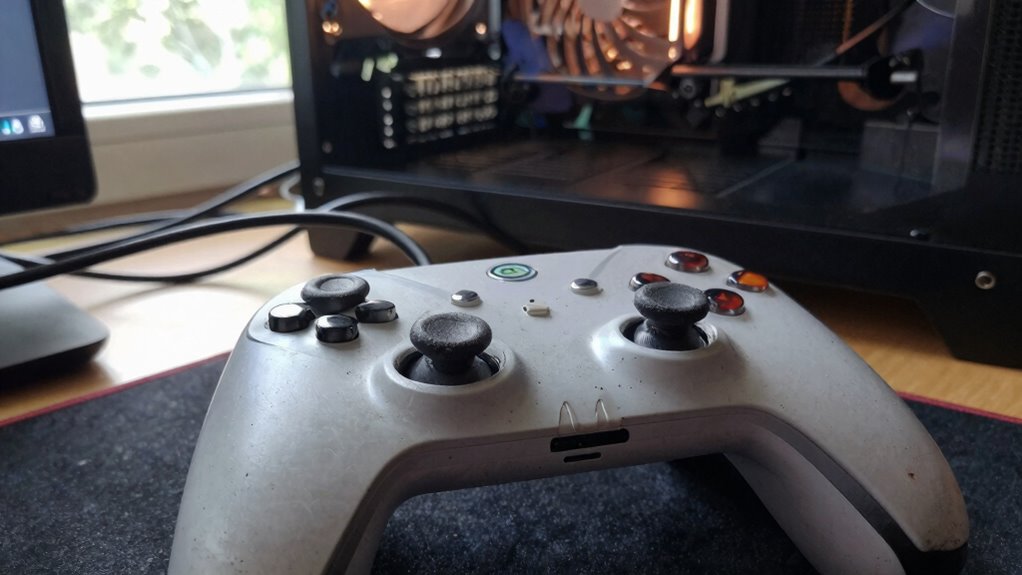
Your gaming experience can quickly decline when environmental factors disrupt your controller’s performance. Often, what seems like hardware failure is actually a result of external influences affecting how your controller functions. Before jumping to conclusions about replacing parts or buying a new controller, it’s worth considering how your surroundings might be interfering with its operation. Small changes in your environment—like temperature, humidity, or electromagnetic interference—can cause issues that appear to be hardware problems. These factors can lead to inconsistent responses, input delays, or unresponsive controls, all of which frustrate gameplay. Additionally, biodiversity in your environment can influence electronic devices through natural electromagnetic fluctuations, further impacting controller performance. One common culprit is the sensitivity calibration of your controller. Over time, or with shifts in environment, the sensitivity settings may drift, causing your inputs to feel off. Fine-tuning this calibration can often restore proper responsiveness without any hardware adjustments. Many controllers or their companion apps allow you to reset or recalibrate sensitivity, ensuring your inputs match your intentions. Taking the time to check and adjust these settings can solve problems that seem hardware-related but are actually environmental in origin. Firmware updates also play a critical role in maintaining your controller’s performance. Manufacturers regularly release firmware updates to fix bugs, enhance compatibility, and improve overall responsiveness. If your controller is behaving erratically, an outdated firmware might be the cause. Staying current with these updates ensures your controller can better handle environmental variability and minimizes issues caused by outdated software. Updating firmware is typically straightforward, often involving connecting your controller to a PC or using a dedicated app. These updates can resolve bugs that might have been triggered by environmental factors, such as interference or temperature fluctuations, which can cause signal drops or input lag. Additionally, electromagnetic interference from nearby devices—like Wi-Fi routers, cordless phones, or other wireless electronics—can also disrupt your controller’s signals. These interferences can cause lag, double inputs, or complete disconnections. Moving away from such devices or turning them off temporarily can help identify if they’re causing issues. Moreover, physical factors like extreme heat or moisture can affect controller performance without damaging the hardware outright. Ensuring your gaming setup is in a stable environment minimizes these risks and helps maintain consistent controller operation.
Products Worth Considering

Bose QuietComfort Ultra Wireless Noise-Cancelling Over-Ear Headphones with Spatial Audio, White Smoke

Amazon Kindle Paperwhite (2024), 16 GB, 7-inch Display, Black

Samsung Odyssey G55C 32-Inch QHD Curved Gaming Monitor
As an affiliate, we earn on qualifying purchases.
Frequently Asked Questions
How Do I Identify Environmental Factors Causing Controller Problems?
To identify environmental factors causing controller problems, check for poor air circulation around your device, which can cause overheating. Examine surface stability—if your controller sits on an uneven or vibrating surface, it might malfunction. Make certain the area is free of dust and debris, and keep vents clear. Adjusting these factors helps prevent environmental issues from affecting your controller’s performance, keeping it running smoothly.
Can Software Updates Fix Environment-Related Controller Issues?
Yes, software updates can fix environment-related controller issues, but only if they address specific problems like controller calibration or wireless interference. Updating firmware can improve how your controller communicates, reducing lag or disconnects caused by interference. However, if the root cause is environmental, such as electromagnetic interference, software alone might not be enough. You’ll need to optimize your environment alongside updates for the best results.
Are Certain Gaming Environments More Prone to Controller Malfunctions?
Yes, certain gaming environments are more prone to controller malfunctions. If your gaming room has high humidity, dust, or fluctuating temperatures, it can affect controller performance. Poor controller placement, like placing it on uneven or cluttered surfaces, also increases the risk of damage or connectivity issues. Keeping your gaming area clean, maintaining stable conditions, and placing controllers properly can prevent many environment-related problems, ensuring smoother gameplay.
How Does Humidity Affect Controller Performance?
Humidity impact on your controller can cause malfunctions, as moisture gets into the internal components. High humidity creates environmental triggers like condensation, which can lead to corrosion or short circuits. You might notice unresponsive buttons or drifting controls. To prevent this, keep your gaming area dry and store your controller in a cool, low-humidity environment. Proper care minimizes humidity-related issues and helps your controller perform smoothly.
What Are Quick Environmental Fixes for Controller Connectivity Issues?
To quickly fix controller connectivity issues, start by reducing wireless interference—move away from other electronics or Wi-Fi routers. Check for surface obstructions like walls or furniture blocking the signal; clear or reposition the controller and receiver for a better line of sight. You can also restart your devices to refresh connections. These simple steps often restore proper connectivity without the need for hardware repairs.
Conclusion
Remember, the environment is like the stage where your controller performs. A cluttered, dusty, or humid setting can subtly set the scene for trouble, even before you notice any signs of trouble. Keep your gaming area tidy and dry—think of it as giving your controller a comfortable, nurturing home. When the stage is just right, your controller can shine without interruption, allowing you to enjoy a smooth, seamless gaming experience.