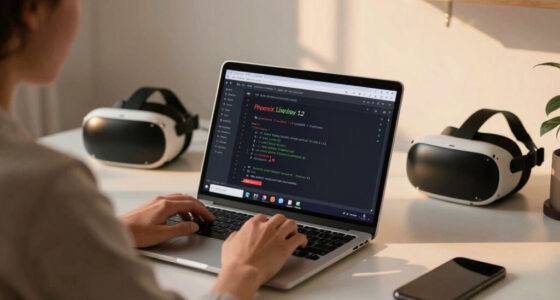
To share VR captures without revealing your location, first remove embedded metadata that contains GPS, timestamps, and environment details. Use free tools like ExifTool or check your editing software’s options to strip out this data before sharing. Adjust privacy settings in your VR apps to prevent location info from being stored, and consider cropping or blurring environmental cues. If you keep these steps in mind, you’ll better protect your privacy—more tips lie just ahead.

Play games on Amazon Luna for your next adventure, included with Prime
- A rotating selection of games, no download needed
- Play on TV, laptop or phone
- Fast, free delivery for your gear, too
Key Takeaways
- Use tools like ExifTool to remove GPS and location metadata from VR files before sharing.
- Enable privacy settings in your VR app to disable automatic location data embedding during recording.
- Export or save VR captures in formats that do not include metadata, such as compressed or anonymized versions.
- Edit videos to crop or blur environment details that could reveal your location.
- Regularly verify and clean files to ensure no residual location information is present before sharing.

Virtual reality captures can reveal more than just your immersive experiences—they can also expose your location data. When you record or share VR content, the metadata embedded within these files often contains detailed information about where and when the capture took place. This can pose serious privacy concerns, especially if you want to share your experiences without revealing your exact location. Fortunately, there are ways to protect your privacy while still enjoying the benefits of sharing your VR content.
VR captures can reveal your location data, so always remove metadata before sharing to protect your privacy.
One of the most effective methods is to perform metadata removal before sharing your recordings. Metadata, the hidden data stored within your files, includes GPS coordinates, timestamps, device information, and other identifying details. Removing this data ensures that anyone viewing your VR captures cannot trace the location or other sensitive details related to your environment. Several tools and software options are available that facilitate metadata removal. For example, you can use free tools like ExifTool or built-in options in some editing software to strip out location data from your videos or images. Before uploading or sharing, make it a habit to run your files through these tools to safeguard your privacy.
Additionally, some VR recording platforms and apps now offer built-in privacy settings that allow you to disable location tracking or metadata embedding. By configuring these settings, you can ensure that your captures are stripped of any location-related information right at the source. Always check the privacy options in your VR app or device settings to see if metadata removal is supported or if there are ways to prevent location data from being recorded in the first place.
Another tip is to be cautious about sharing raw files. Instead, consider exporting your recordings as compressed or anonymized versions that don’t include metadata. You might also want to edit your VR captures using video editing software to obscure any visual cues that could hint at your location. For instance, blurring or cropping out identifiable surroundings can add another layer of privacy protection.
Furthermore, understanding the contrast ratio of your VR content can help you better control how your environment appears in shared captures, minimizing unintended revealing details. Ultimately, protecting your privacy when sharing VR captures hinges on understanding what metadata is stored and taking deliberate steps to remove it. By routinely stripping location data, using privacy-conscious tools, and managing your sharing settings, you can enjoy sharing your VR experiences without risking unwanted exposure of your location. This proactive approach allows you to connect with others and showcase your adventures while maintaining control over your personal information and respecting your privacy concerns.
ExifTool metadata removal software
As an affiliate, we earn on qualifying purchases.
As an affiliate, we earn on qualifying purchases.
Frequently Asked Questions
Can I Share VR Captures Privately Without Any Metadata Loss?
Yes, you can share VR captures privately without losing any data, but you’ll need to address privacy concerns first. Use data anonymization tools to remove or obscure sensitive information, ensuring your location metadata stays private. When sharing, opt for encrypted file transfers or private links. This way, you maintain control over your VR captures, protect your privacy, and prevent unintended data sharing or exposure.
What Software Tools Are Best for Stripping Location Data From VR Files?
Did you know over 60% of VR users are concerned about privacy? To effectively strip location data from your VR files, rely on top privacy tools like MetaImage or ExifTool. These software tools excel at metadata removal, ensuring your captures stay private. Simply upload your VR files, select metadata removal options, and safeguard your location info before sharing. It’s quick, simple, and keeps your privacy intact.
Does Anonymizing VR Captures Affect the Quality or Usability?
Anonymizing your VR captures might slightly impact their quality or usability, but it’s a worthwhile step to address privacy concerns. When you strip location metadata, you help protect your data integrity and personal privacy. However, confirm you use reliable tools that maintain the core quality of your recordings. Overall, the privacy benefits outweigh minor quality adjustments, allowing you to share your VR captures confidently without risking sensitive information.
Are There Legal Considerations When Removing Metadata From VR Content?
Removing metadata from VR content can help address privacy concerns, but you should also consider legal compliance. Laws vary by region, and some jurisdictions may have strict rules about data removal or anonymization. You’re responsible for ensuring that your actions meet applicable privacy regulations, especially if your VR content involves sensitive or personal information. Always stay informed about legal requirements to avoid potential liabilities or violations.
How Can I Verify That My Shared VR Captures Contain No Location Info?
Think of metadata as hidden footprints in your digital landscape. To verify your VR captures contain no location info, check their metadata through tools like ExifTool or your VR platform’s privacy settings. You can also remove metadata altogether using editing software. By doing this, you guarantee privacy, keeping your virtual journey’s location details safe from prying eyes, just as a well-shielded path remains unseen.
As an affiliate, we earn on qualifying purchases.
Conclusion
Think of sharing your VR captures like passing a beautifully wrapped gift—what’s inside matters most, not the box it came in. By removing location metadata, you’re safeguarding your privacy, like hiding your home address in a secret pocket. You get to share the wonder without revealing where it was created. So, go ahead, share your virtual adventures freely—your stories shine brightest when their origins stay a mystery, letting your art speak without revealing your hidden map.
video editing software for blurring
As an affiliate, we earn on qualifying purchases.
As an affiliate, we earn on qualifying purchases.
As an affiliate, we earn on qualifying purchases.
Fall Picks
fall essentials
As an affiliate, we earn on qualifying purchases.