After rearranging furniture, you need to recalibrate your tracking system to guarantee accuracy. Start by accessing your system’s calibration settings through its interface or manufacturer instructions. Follow the specific process to recognize the new room layout, adjusting detection zones if necessary. Conduct movement tests to verify everything works correctly, and tweak sensitivity or thresholds to match the environment. For detailed steps that help optimize your setup smoothly, keep going to learn more tips.
Key Takeaways
- Access the system’s calibration settings through the device interface or manufacturer instructions.
- Follow the calibration procedure, using markers or setup guides to recognize the new room layout.
- Re-tune detection sensitivity and zones to account for relocated furniture and environmental changes.
- Conduct movement tests to verify detection accuracy and adjust settings as needed.
- Perform regular recalibration after significant furniture repositioning or environmental modifications for optimal performance.
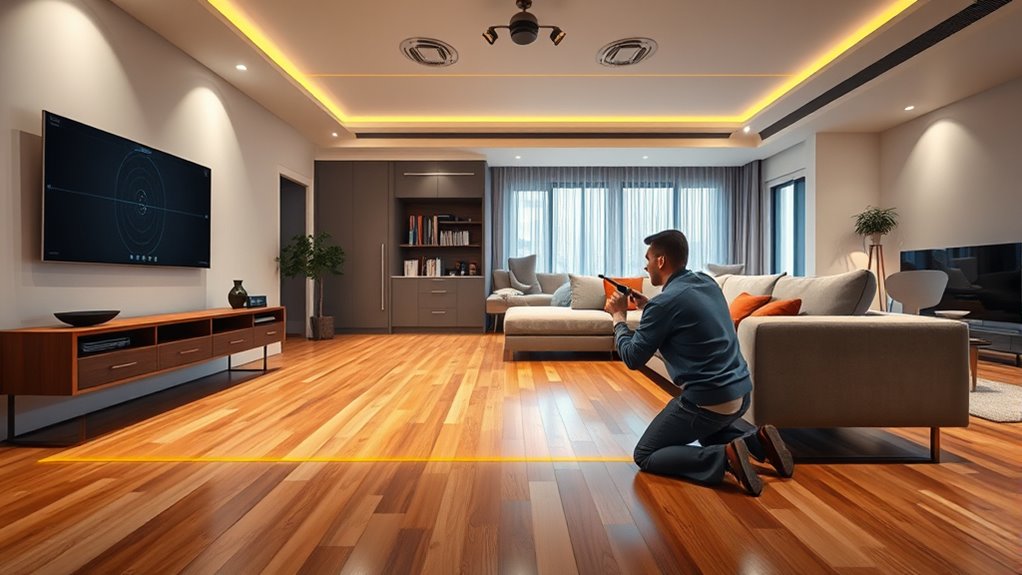
After moving furniture, your tracking system may no longer be accurate, leading to missed or false detections. This is because the sensors that monitor movement and position rely on precise calibration to function correctly. When furniture shifts, it can obstruct sensor view, change reflection patterns, or alter the environment in ways that throw off the system’s ability to track accurately. To restore proper function, you’ll need to perform sensor calibration and make necessary software adjustments to adapt to the new layout.
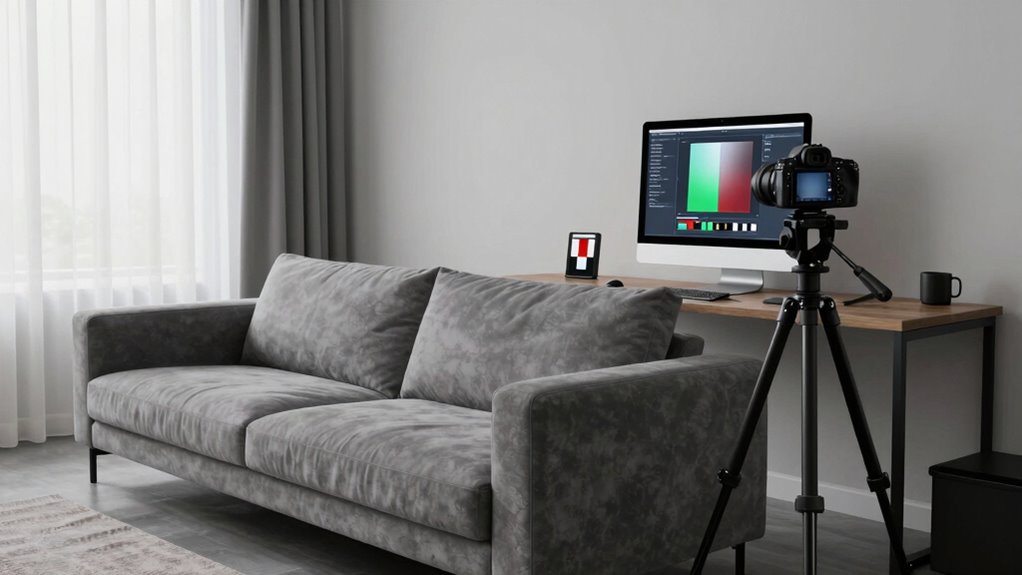
Start by checking your system’s calibration settings. Many tracking systems include a calibration process that involves guiding the sensors to recognize specific points or areas in your space. Follow the manufacturer’s instructions to recalibrate the sensors, ensuring they are aligned with the current environment. This often involves placing calibration markers or running a setup process that helps the system learn the new room layout. Proper sensor calibration is essential because it resets the system’s understanding of space, allowing it to interpret signals correctly despite the furniture changes. Additionally, understanding the sensor technology involved can help optimize calibration procedures for better accuracy.
Check your calibration settings and follow the manufacturer’s instructions to reset sensors after furniture moves.
Once the sensors are calibrated, focus on software adjustments. Most modern tracking systems include software that allows you to fine-tune detection sensitivity, filter out false positives, or recalibrate detection zones. Adjust the detection thresholds to account for new obstacles or changes in ambient lighting, which can interfere with sensor performance. If your system includes a visual interface, review the detection zones and update them to match the new furniture arrangement. Removing or redefining zones ensures that the system isn’t wasting resources on areas now obstructed or irrelevant, and it improves overall accuracy.
It’s also a good idea to run a test after calibration and adjustments. Walk through the area as the system monitors movement, and observe whether it accurately detects your presence and movement patterns. If inaccuracies persist, revisit the calibration and software settings. Sometimes, environmental factors like reflective surfaces or new objects can cause false detections, so consider repositioning sensors or adjusting their angles if your system allows.
Regular maintenance and periodic recalibration help maintain ideal performance, especially after significant changes to your environment. Keep your system’s firmware updated, as manufacturers often release improvements that enhance calibration procedures and detection algorithms. By staying proactive with sensor calibration and software adjustments, you ensure your tracking system remains reliable and precise, even after furniture moves. This diligent approach minimizes missed detections and false alarms, keeping your setup working smoothly in its new configuration.
Frequently Asked Questions
How Often Should I Recalibrate My Tracking System?
You should recalibrate your tracking system whenever you notice sensor alignment issues or tracking inaccuracies. Typically, calibration frequency depends on your usage, but a good rule of thumb is to check monthly or after moving furniture. Regular recalibration guarantees your sensors stay aligned and your system functions smoothly. Don’t wait for problems—perform calibration when you see deviations or after significant changes in your setup.
Can Moving Furniture Affect Tracking Accuracy Permanently?
Did you know that sensor drift can cause tracking accuracy to decline by up to 30% over time? Moving furniture can temporarily affect tracking accuracy, but it usually isn’t permanent if you recalibrate your system promptly. Regular calibration frequency helps counteract sensor drift and guarantees your tracking remains precise. So, after moving furniture, it’s best to recalibrate quickly to maintain ideal performance and avoid long-term accuracy issues.
Do I Need Special Tools for Recalibration?
You don’t need special tools for recalibration; typically, your device’s built-in calibration tools will suffice. Focus on sensor alignment by carefully following the instructions provided, ensuring that sensors are properly positioned and clean. Use the calibration tools included with your device or recommended by the manufacturer. Proper sensor alignment is vital for accurate tracking, so take your time to follow the calibration process precisely.
How Long Does the Recalibration Process Typically Take?
Recalibrating your tracking usually takes about 10 to 20 minutes. You’ll need to guarantee proper sensor alignment, which is vital for accurate tracking. During this process, you might also need to perform software updates to optimize performance. Keep your device steady, follow the calibration prompts carefully, and avoid moving furniture during this time. This quick step ensures your system functions smoothly after rearranging your space.
What Signs Indicate Tracking Needs Recalibration?
Ever notice your device acting out of sync? That’s a clear sign you need to check your sensor alignment and consider calibration frequency. If your cursor jumps unexpectedly or tracking becomes inconsistent, it’s time to recalibrate. Poor sensor alignment can cause erratic behavior, so keep an eye on these signs. Regular recalibration guarantees your system stays precise, especially after moving furniture that might shift your setup.
Conclusion
Recalibrating your tracking after moving furniture is quick and essential—almost 60% of users notice improved device accuracy once they do it. By following these simple steps, you guarantee your gadgets stay precise, no matter how often you rearrange your space. Don’t let misplaced calibration slow you down; a quick recalibration keeps everything running smoothly. Stay proactive, and your devices will always perform at their best, even after a furniture shuffle!