TL;DR

Get VR and gaming gear delivered free — and shop member deals
- Fast, free delivery on millions of items
- Access to Prime Big Deal Days deals on October 6–7
- Prime Video, Amazon Music and more included
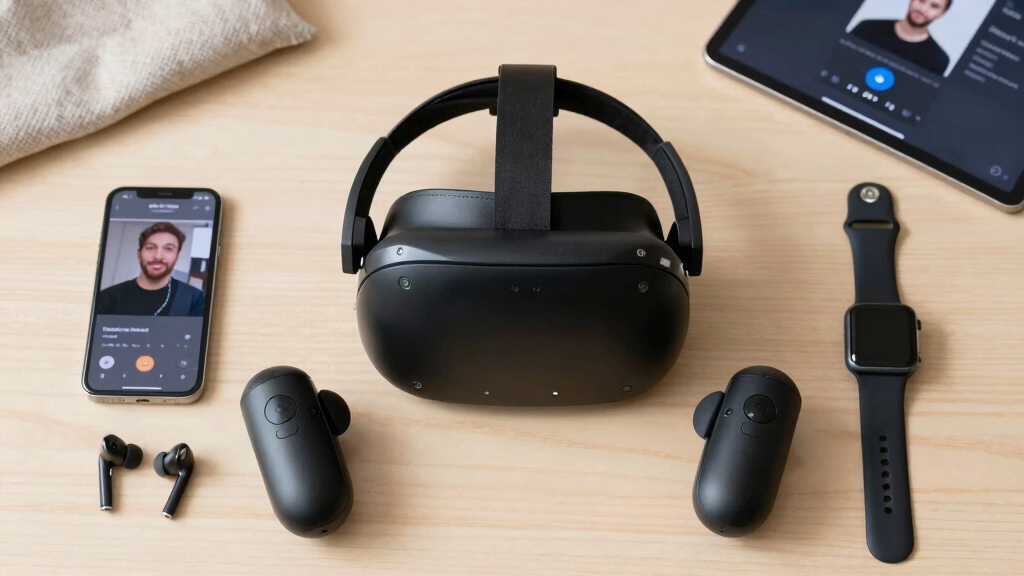
VirtualGo has announced a mixed reality multiplayer system that enables remote players to join your physical play space in real time. The technology transforms your real environment into an in-game shared space, allowing collaborative gameplay across distances. This development could significantly advance social experiences in XR gaming.
VirtualGo has introduced a new mixed reality multiplayer system that allows remote players to join your physical play space in real time. This technology, showcased at AWE and the UploadVR Summer Showcase, transforms your real-world environment into a shared virtual space, enabling collaborative gameplay across distances. The system is designed to work with existing XR devices like Meta Quest, aiming to bridge the gap between VR and AR social experiences, making multiplayer interactions more immersive and accessible.
According to VirtualGo, the system captures a scanned version of the player’s real environment, converting it into an in-game asset that remote players can see and interact with during gameplay. The technology leverages continuous scene meshing, similar to features in Quest 3, to ensure real-time updates and minimal latency, which VirtualGo claims to be negligible. The system is not limited to horror or shooter genres but is designed to be adaptable across various game types, including RPGs and cozy titles.
VirtualGo’s CEO, David Montecalvo, confirmed that the multiplayer experience is intended to expand beyond their current projects, which include Hauntify, Mission Rift, and FPS Enhanced Reality, all available on Meta Quest. The company plans to roll out multiplayer updates for these titles in 2027. The system removes the need for multiple XR headsets in a household, enabling users to share a mixed reality space without extensive hardware requirements.
While the technology has shown promising visuals and low latency in demonstrations, actual performance in live sessions remains to be tested, as the company has not yet provided detailed timing metrics or user experience data.
This development marks a significant step toward making shared mixed reality experiences more accessible and social. By enabling remote players to see and interact within a scanned real environment, VirtualGo’s system could bridge the social gap currently present in XR gaming, which often relies on individual experiences or co-location. If successful at scale, this technology could expand multiplayer gaming beyond VR headsets, fostering more inclusive and collaborative XR environments that do not require all players to be physically co-located.
Furthermore, the ability to incorporate user-generated content in mixed reality spaces opens new avenues for creative expression and community-driven content creation, potentially transforming how multiplayer experiences are designed and experienced across genres.
As an affiliate, we earn on qualifying purchases.
Evolution of Multiplayer and Mixed Reality Technologies
Current XR multiplayer experiences are largely limited to co-located or asymmetrical VR interactions, such as Demeo or Spatial Ops, which require multiple headsets or specialized hardware. While some applications like Soul Assembly’s Last Stand or Grokit utilize portal-based or asset-driven shared spaces, they are confined to individual play spaces with limited real-time interaction. The adoption of mixed reality has been slower, partly due to hardware limitations and the challenge of synchronizing real-world environments across distances.
VirtualGo’s approach builds on recent advances in scene understanding and continuous scene meshing, previously used in titles like Espire: MR Missions and Drop Dead: The Cabin, but applies them to a multiplayer context that emphasizes remote participation. The system aims to overcome the hardware and social barriers that have hindered broader adoption of MR and AR multiplayer experiences, especially outside specialized or enterprise settings.
“Our system allows remote players to see and interact within your real-world environment in real time, making shared mixed reality experiences more accessible than ever.”
— VirtualGo CEO David Montecalvo
mixed reality multiplayer VR system
As an affiliate, we earn on qualifying purchases.
As an affiliate, we earn on qualifying purchases.
Performance and User Experience in Real-World Use
While VirtualGo demonstrated promising visuals and claimed negligible latency, detailed metrics on performance, stability, and user experience in live multiplayer sessions remain unavailable. It is not yet clear how well the system will perform in varied environments or with multiple remote participants, and whether it will be scalable for large groups or complex scenes.
As an affiliate, we earn on qualifying purchases.
Upcoming Rollout and Developer Support
VirtualGo plans to release multiplayer updates for Hauntify, Mission Rift, and FPS Enhanced Reality in 2027, with broader adoption expected to follow. The company is also exploring additional genres and applications beyond gaming, including social and creative experiences. Further demonstrations and user testing are anticipated to validate the technology’s real-world capabilities and scalability.
As an affiliate, we earn on qualifying purchases.
Key Questions
Can I use VirtualGo’s system with any XR device?
Currently, VirtualGo’s system is designed for Meta Quest devices, including Quest 3, but future compatibility with other XR hardware is not yet confirmed.
Will this technology work for non-gaming applications?
Yes, VirtualGo states that the system is adaptable across genres, including social, creative, and educational experiences, beyond just gaming.
When will multiplayer features be available to the public?
VirtualGo plans to roll out multiplayer updates for their existing titles in 2027, with ongoing development and testing beforehand.
Does this require multiple headsets in the same household?
No, the system enables remote participation without the need for multiple XR headsets, making shared experiences more accessible.
What are the technical challenges remaining?
The main uncertainties involve performance in diverse environments, latency in large multiplayer sessions, and user experience during live gameplay, which are still being evaluated.
Source: UploadVR
Halloween Picks
halloween
As an affiliate, we earn on qualifying purchases.