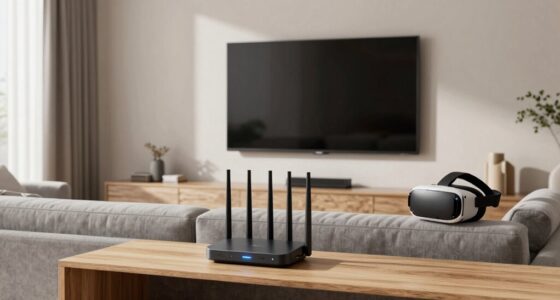
Choosing between wired and wireless PCVR depends on your home Wi-Fi setup, space, and movement needs. If your Wi-Fi is strong and stable, wireless can give you freedom of movement and easier setup. But if your Wi-Fi is weak or crowded, a wired connection offers more reliability and lower latency for better performance. To find the best fit, consider your environment and future plans—more details can help you make the right choice.
Key Takeaways
- Wired PCVR offers reliable, low-latency connections ideal for homes with unstable or weak Wi-Fi signals.
- Wireless PCVR provides greater freedom and comfort, suitable for homes with strong, well-placed Wi-Fi networks.
- If your Wi-Fi environment has interference or overcrowded channels, wired setup minimizes lag and disconnections.
- Limited space or safety concerns from cables favor wireless options, especially in cluttered or small areas.
- Assess your Wi-Fi strength and home layout to choose the setup that ensures a smooth, immersive VR experience.
Understanding Your Home Wi-Fi Environment
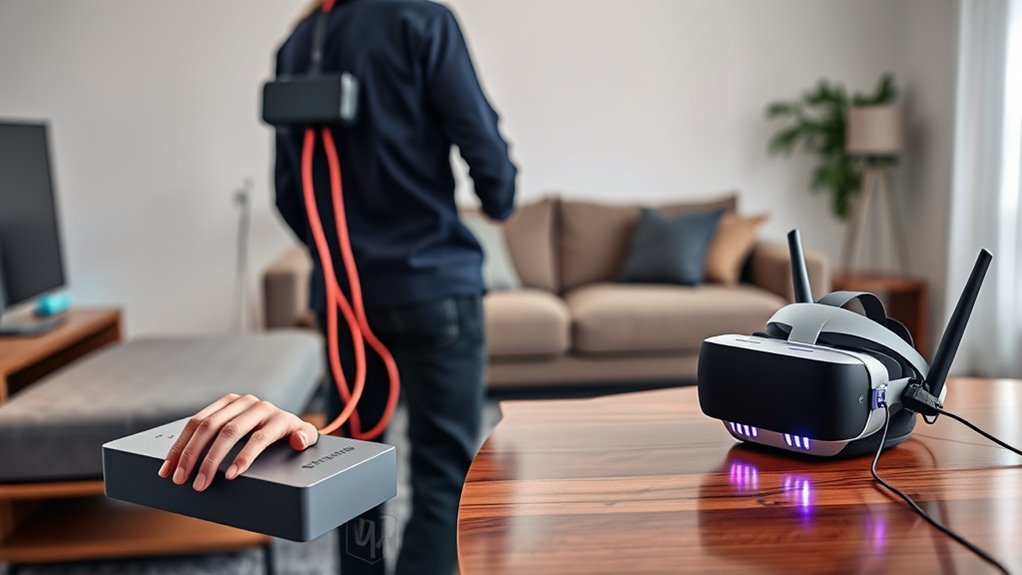
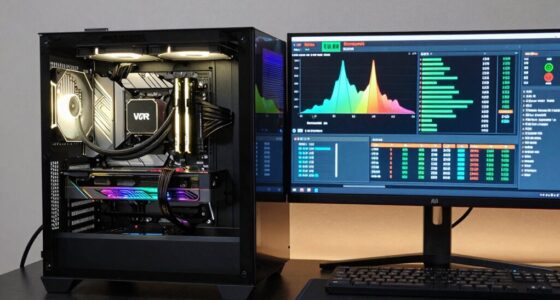
To get the most out of your PCVR experience, it is vital to understand your home Wi-Fi environment. Start by testing your Wi-Fi speed using online tools to determine if your connection can handle high data transfer rates. Check your router’s placement—central and elevated locations reduce interference and improve signal strength. Identify potential sources of interference, like microwaves, cordless phones, or thick walls, which can weaken your Wi-Fi signal. Use a Wi-Fi analyzer app to see how strong and stable your network is across different areas of your home. If your Wi-Fi is slow or inconsistent, it may cause lag or disconnections during VR sessions. Understanding your environment helps you decide whether your Wi-Fi setup supports wireless PCVR or if improvements are necessary. Additionally, be aware that support for breakfast options in your area can influence your overall home environment and comfort during extended gaming or VR sessions. Evaluating your network’s signal stability and bandwidth capacity ensures a smoother and more immersive VR experience, especially when considering wireless connectivity options to enhance freedom of movement. Furthermore, reviewing network security can help prevent interruptions and maintain optimal performance during your VR sessions.
Advantages of Wired PCVR Systems

Wired PCVR systems offer several significant advantages that can enhance your virtual reality experience. The primary benefit is a stable, low-latency connection, which minimizes lag and ensures smoother gameplay. With a wired setup, you don’t have to worry about interference or signal drops that can disrupt immersion. This reliability is especially important during fast-paced or precise VR activities, like shooting games or fitness routines. Additionally, wired connections typically provide higher data transfer rates, allowing for richer graphics and better tracking accuracy. You won’t need to worry about battery life constraints, as your headset draws power directly from the cable. Overall, a wired system delivers consistent, high-quality performance, making it ideal if you prioritize reliability and seamless VR experiences. Incorporating European cloud infrastructure can further enhance data security and reduce latency in your VR setup. Moreover, the thermal behavior of wired systems is generally more predictable, helping maintain optimal performance during extended play sessions. Considering local network optimization can also improve overall stability and reduce potential interference from other devices. Ensuring your network is configured for high bandwidth can make a noticeable difference in VR responsiveness and quality. Additionally, understanding the power management of your setup can prevent overheating issues that might affect performance over time.
Benefits of Going Wireless With PCVR
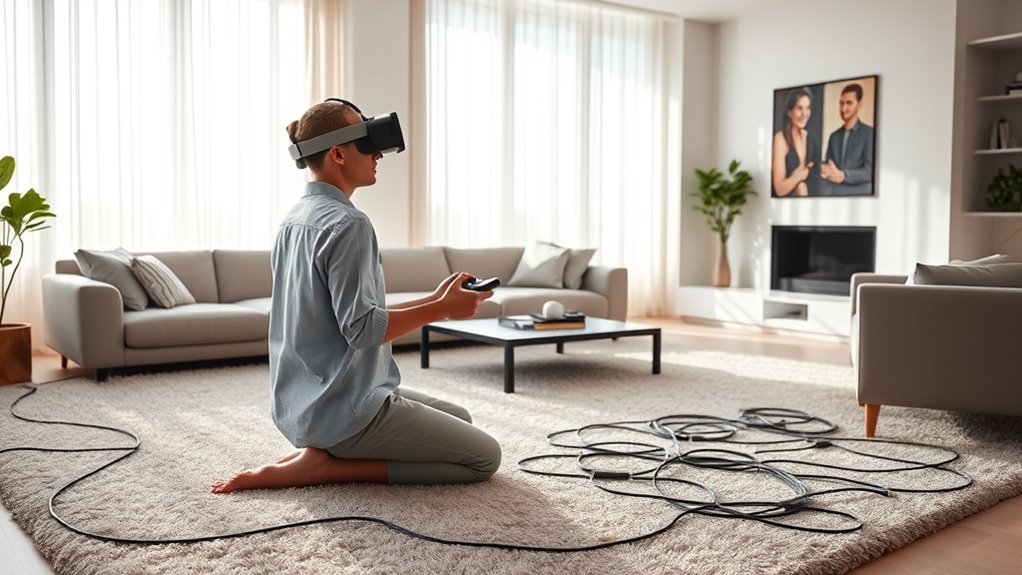
Going wireless with your PCVR headset gives you greater freedom of movement, so you can move naturally without being tethered. It also makes the setup process quicker and easier, saving you time and frustration. Overall, wireless options offer a more seamless and immersive VR experience. Additionally, understanding cleaning appliances and systems can help you maintain your equipment and ensure optimal performance over time. Cultivating attention to detail in your maintenance routines can prevent issues and extend the lifespan of your VR hardware. Recognizing market trends in the Gold IRA sector can also help you make more informed investment decisions. Staying informed about technology advancements can further enhance your VR setup and user experience. Regularly updating your hardware components ensures compatibility and optimal performance as technology evolves.
Enhanced Freedom of Movement
Switching to wireless PCVR substantially enhances your freedom of movement, allowing you to navigate virtual spaces without being tethered by cables. You can move naturally, dodge obstacles, and explore without restrictions. This freedom reduces the risk of tripping or pulling equipment, making immersive experiences more comfortable. It also encourages spontaneous gestures and full-body interaction, boosting immersion and realism. To understand the impact better, consider this table:
| Movement Aspect | Wired VR | Wireless VR | Impact on Experience |
|---|---|---|---|
| Range | Limited by cable | Unlimited | Greater exploration |
| Safety | Cables pose tripping | No cables, safer | Reduced accidents |
| Comfort | Cable drag reduces comfort | No cable drag | Enhanced comfort |
| Spontaneity | Restricted by cables | Fully spontaneous | More natural actions |
| Immersion | Slightly limited | Fully immersive | Better engagement |
This highlights how wireless boosts your freedom and immersion.
Simplified Setup Process
Choosing wireless PCVR simplifies your setup by eliminating the need for multiple cables and complex arrangements. Without tangled cords, you save time and reduce frustration during installation. You won’t have to worry about tripping over cables or managing long wires across your room. Instead, all you need is a stable Wi-Fi connection and a compatible headset. Setting up becomes straightforward: connect the headset to your network, follow simple pairing instructions, and you’re ready to go. This streamlined process lets you focus on enjoying your VR experience rather than troubleshooting technical issues. Plus, future updates and adjustments are easier without a maze of cables. Overall, wireless PCVR offers a quick, hassle-free setup, making it more accessible for users of all experience levels. Additionally, a retro-inspired tech aesthetic can enhance your setup’s visual appeal, blending vintage charm with modern convenience.
Challenges and Limitations of Wired Connections
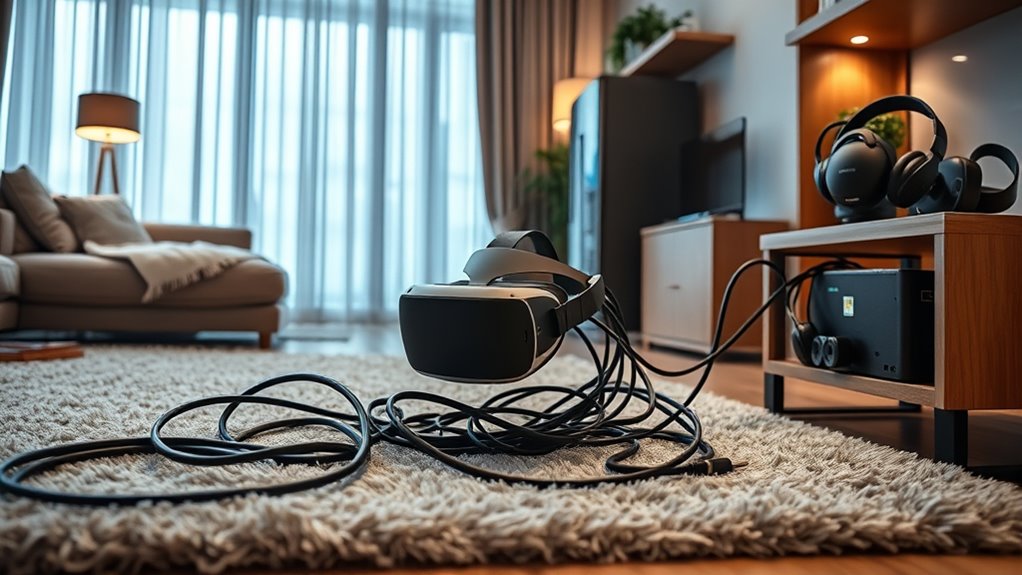
Wired connections can create tangled cables and clutter that hinder your movement and immersion. You might also find your mobility limited by the cable’s length, restricting how freely you can move around. Additionally, setting up and maintaining these connections can be time-consuming and frustrating. The physical constraints of wires can also impact the overall oral health and comfort during extended VR sessions.
Tangled Cables and Clutter
Cables can quickly become a tangled mess, turning your play space into a cluttered obstacle course. As you move around, cords can snag, pull, or drag across the floor, increasing the risk of tripping or damaging equipment. Managing multiple cables for sensors, headsets, and controllers demands constant organization, which can distract from gameplay. Over time, tangled cords can create frustration, forcing you to pause and untangle before continuing. You might find yourself limited by the length of the cables, restricting your movement or forcing you into awkward positions. The clutter not only hampers your experience but also increases the risk of accidents or equipment damage. These challenges make wired setups less practical for active, immersive VR sessions in a dynamic home environment. Additionally, the limited horsepower of wired connections can hinder high-performance experiences when compared to wireless options.
Limited Mobility Range
Tangled cords not only create clutter but also impose physical limits on your movement. You might feel trapped, unable to fully explore your virtual world without risking a trip or pull. Wired connections restrict your range, making you feel confined and frustrated. The table below shows how mobility varies with wired setups:
| Limitation | Impact | Emotional Effect |
|---|---|---|
| Short cable length | Restricts movement distance | Feel confined and frustrated |
| Cable tangles | Causes interruptions | Feel annoyed and distracted |
| No freedom to roam | Limits physical engagement | Feel restricted and trapped |
These restrictions can turn immersive experiences into frustrating limitations, cutting into your fun and freedom. Limited mobility can significantly reduce the sense of immersion and enjoyment during your virtual sessions. Additionally, cable management becomes a constant concern, requiring extra effort to maintain a tidy and safe environment. Moreover, the physical constraints of wired setups can lead to discomfort during extended play sessions. Without proper wireless technology, these issues may persist, further impacting your overall VR experience.
Setup and Maintenance Challenges
Setting up a wired PCVR system can be more complicated and time-consuming than it seems, often requiring careful planning and troubleshooting. You’ll need to run cables through walls or along ceilings, which can involve drilling, cable management, and ensuring safety. Finding the right ports and avoiding interference or signal loss demands attention. Maintenance also poses challenges; cables can wear out, become damaged, or disconnect unexpectedly, leading to interruptions. Troubleshooting connection issues often involves rechecking connections, updating drivers, or repositioning hardware. Additionally, physical clutter from cables can restrict movement or create hazards in your play area. Overall, wired setups demand more effort upfront and ongoing maintenance, which might be frustrating if you prefer a simple, clean gaming space. Proper cable management is essential to maintain safety and optimal performance in a wired PCVR setup.
Common Wireless Interference and Connectivity Issues
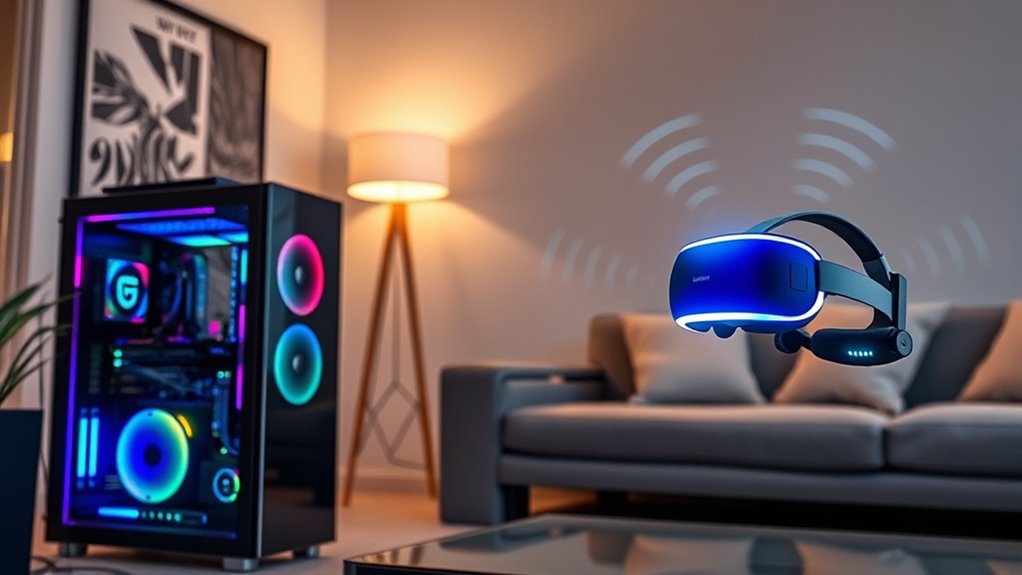
Wireless connectivity in PCVR can be disrupted by various interference sources, which often cause lag, disconnections, or degraded performance. Common culprits include Wi-Fi networks on the same frequency, Bluetooth devices, cordless phones, and microwave ovens. These signals can compete for bandwidth, leading to latency spikes or dropped connections. Physical obstacles like walls, furniture, and metal objects also weaken wireless signals, reducing stability. Overcrowded Wi-Fi channels, especially in densely populated areas, increase interference, making it harder to maintain a smooth VR experience. Environmental factors such as thick walls or electronic devices emitting electromagnetic interference can further impair your connection. Identifying and minimizing these sources helps improve reliability, ensuring your wireless PCVR setup remains responsive and enjoyable during gameplay.
Matching VR Setup to Your Space and Wi-Fi Capabilities
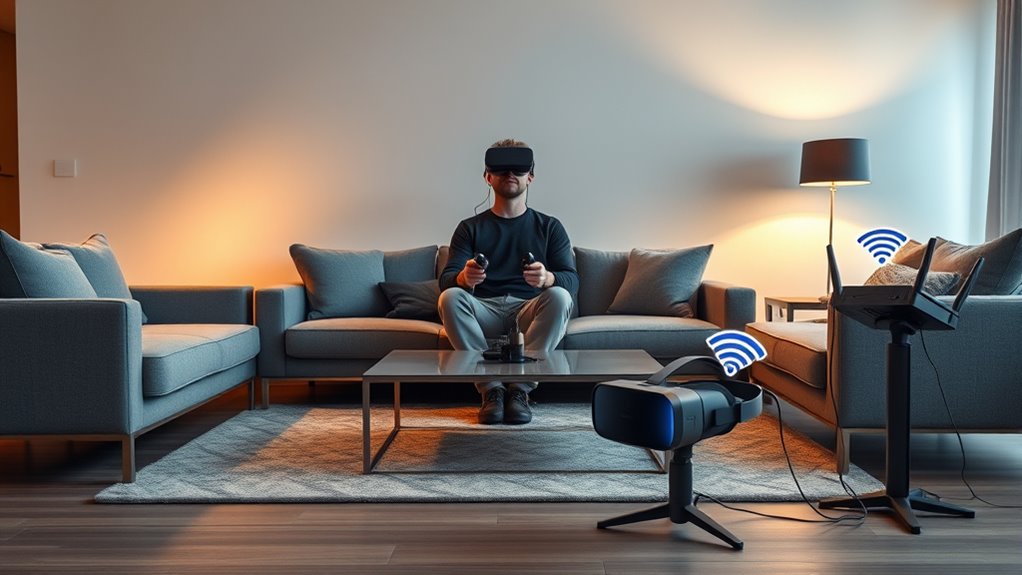
Before choosing a VR setup, assess your available space and Wi-Fi capabilities to guarantee ideal performance. Measure the play area to ensure it’s large enough for safe movement, and note any obstacles or furniture that could restrict your play. For wireless setups, check your Wi-Fi signal strength in the intended gaming area—weak signals cause lag and disconnections. If your space is tight, wired VR might be better, as it doesn’t rely on Wi-Fi stability. Conversely, a spacious room with strong Wi-Fi can fully support a wireless headset, giving you freedom of movement. Consider your router’s placement too; a central location improves coverage. Ensuring your home environment is organized and free of clutter can also enhance your VR experience by providing a clear, safe space. Matching your VR system to your space and Wi-Fi setup ensures smoother gameplay and reduces frustrations.
Making the Best Choice for Your VR Experience
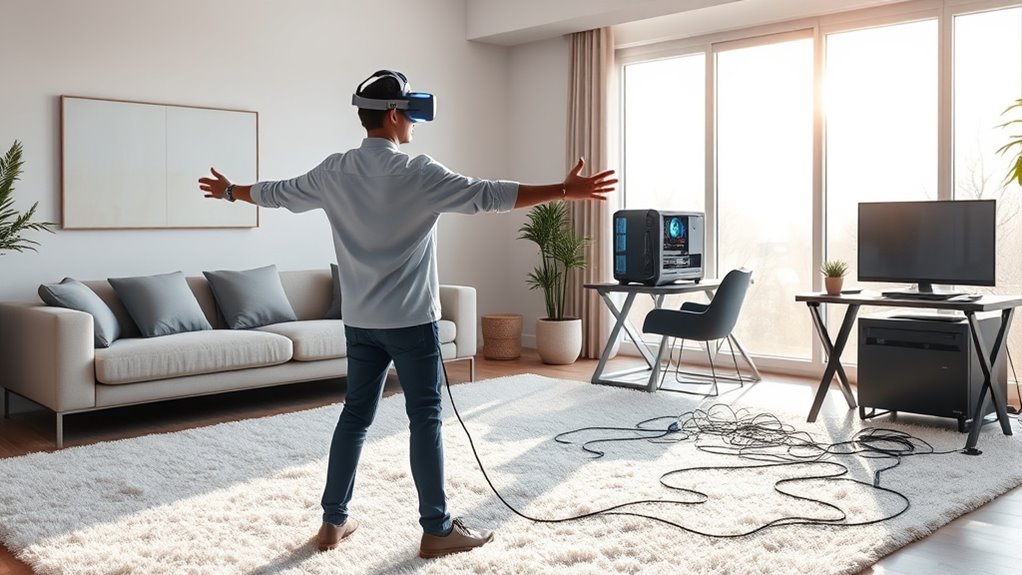
Choosing the right VR setup depends on your specific gaming habits, space, and priorities. If you crave immersive, untethered freedom and have a strong Wi-Fi connection, wireless VR might be your best choice. It offers mobility and comfort, letting you move naturally without cables dragging behind you. However, if you prefer a stable, high-fidelity experience or have limited Wi-Fi bandwidth, wired VR guarantees minimal latency and consistent performance. Consider your environment: a small room or a space with many obstacles might benefit from wired setups to avoid connectivity issues. Ultimately, assess what matters most—freedom of movement versus stability—and choose accordingly. Your ideal setup aligns with your gaming style, home layout, and Wi-Fi quality, ensuring a seamless and enjoyable VR experience.
Frequently Asked Questions
How Does My Home’s Wi-Fi Speed Affect VR Performance?
Your home’s Wi-Fi speed directly affects your VR performance. If your connection is slow or unstable, you’ll experience lag, stuttering, or disconnections in your VR experience. A faster, reliable Wi-Fi guarantees smooth streaming and minimizes latency, making your gameplay more immersive. For best results, use a high-speed connection, preferably with a wired setup or a strong 5GHz Wi-Fi network, to enjoy seamless, high-quality VR sessions.
Can Existing Wi-Fi Routers Support High-Quality Wireless PCVR?
Your existing Wi-Fi router might support high-quality wireless PCVR if it’s a modern, dual-band or tri-band model with strong signal strength and high data transfer rates. However, older or basic routers may struggle with the bandwidth needed for smooth VR experiences. To guarantee the best performance, consider upgrading to a router with Wi-Fi 6 or mesh technology, which can better handle the demanding data streams of wireless VR.
What Safety Precautions Are Needed for Wired VR Setups?
You should always double-check your wiring to prevent a catastrophe! Secure all cables, use cable management clips, and keep pathways clear to avoid tripping or damaging your setup. Use surge protectors to guard against power surges and guarantee your VR equipment is properly grounded. Regularly inspect cables for wear and tear, and avoid overloading power outlets. These precautions keep your immersive experience safe and interruption-free.
How Do I Upgrade My Wi-Fi for Better VR Experiences?
To upgrade your Wi-Fi for better VR experiences, start by upgrading to a high-speed router that supports the latest standards like Wi-Fi 6 or Wi-Fi 6E. Place the router centrally in your home, away from interference, and connect your PC with an Ethernet cable for a stable connection. Consider upgrading your internet plan for higher bandwidth, and reduce device congestion to make certain of smoother VR streaming.
Are There Specific Router Features That Improve VR Connectivity?
Yes, you should look for routers with dual-band or tri-band capabilities, which help reduce congestion by splitting traffic across multiple channels. Prioritize routers that support Wi-Fi 6 or Wi-Fi 6E for faster speeds and lower latency. Features like QoS (Quality of Service) allow you to prioritize VR traffic, ensuring smoother experiences. Additionally, a router with multiple antennas and beamforming can strengthen signals directly to your headset, improving overall connectivity.
Conclusion
Choosing between wired and wireless PCVR is like picking the right shoes for a hike—you want comfort, reliability, and freedom to explore. I once tried a wired setup during a game, only to trip over the cord and fall—lesson learned! Your home Wi-Fi is the trail you’re on, so pick what fits best. Whether wired or wireless, the right choice will keep you immersed and moving smoothly through your virtual adventures.