
TL;DR

Get VR and gaming gear delivered free — and shop member deals
- Fast, free delivery on millions of items
- Access to Prime Big Deal Days deals on October 6–7
- Prime Video, Amazon Music and more included
Some desktop motherboards support Thunderbolt add-in cards, letting users add high-speed connectivity without buying a board that has Thunderbolt ports built in. Compatibility depends on the exact motherboard, card, header and sometimes graphics-card connections; a USB-C port by itself is not proof of support.
Some desktop motherboards can add Thunderbolt connectivity with a compatible PCIe add-in card, even if they lack Thunderbolt ports on their rear panels, according to an Oct. 4 report from XDA Developers. The upgrade can connect a desktop to docks, displays and fast external storage, but a USB-C port alone does not establish support: buyers must check the motherboard’s specifications and required connections.
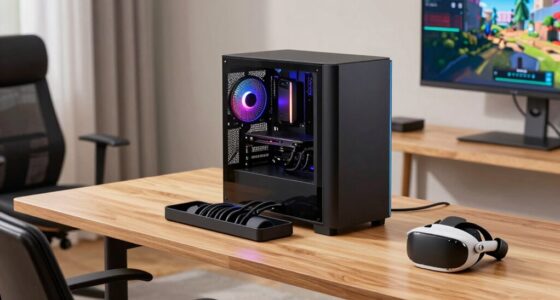
The upgrade path relies on a motherboard designed to support a Thunderbolt add-in card (AIC). The card occupies a PCIe slot and, on supported boards, connects to a dedicated internal motherboard header. Some setups also require a DisplayPort cable from the graphics card to the add-in card so it can carry video over Thunderbolt. The exact requirements depend on the board and card.
With a compatible dock, one Thunderbolt cable can connect a range of devices, potentially including monitors, Ethernet, USB accessories and external drives. That can reduce the number of cables running to the desktop. The dock remains necessary for the particular ports and connections it provides; the expansion card supplies the high-speed connection between the computer and that dock.
XDA cautions that support is not universal. A board may accept only an add-in card from its own manufacturer, or support an earlier Thunderbolt generation rather than Thunderbolt 4. Buyers need to verify the specific card, header and PCIe slot requirements in the motherboard manual, rather than assume any card will work because the board has USB-C.
A New Connection Path for Desktops
For people whose desktops lack Thunderbolt, this option may offer a way to add a connection used for docks, displays and high-speed peripherals without replacing the motherboard. It also shows why rear-panel ports do not tell the whole story: internal headers and supported expansion cards can add capabilities that are not visible from the outside of the system.
The practical payoff depends on the equipment a user owns. A Thunderbolt-capable dock can consolidate several connections into one cable, but the card does not make every dock or feature work automatically. Users should match the board, add-in card and dock to their actual needs, and account for any required video pass-through connection.
Thunderbolt add-in card for desktop
As an affiliate, we earn on qualifying purchases.
As an affiliate, we earn on qualifying purchases.
USB-C Does Not Define the Features
USB-C describes a connector shape, not a single set of capabilities. A Type-C port can support different data standards and display functions, so its appearance cannot confirm that it supports Thunderbolt or USB4. XDA’s report focuses on a less visible route: some motherboard makers provide a dedicated header and compatibility for a separate Thunderbolt card.
Manufacturers can omit built-in Thunderbolt ports while retaining support for an optional card, potentially keeping the board’s standard configuration simpler. That possibility is not a general feature of USB-C motherboards. It depends on the design and documented support of each model, which is why the manual and compatibility notes matter more than the connector’s appearance.
Motherboard Thunderbolt expansion card
As an affiliate, we earn on qualifying purchases.
As an affiliate, we earn on qualifying purchases.
Compatibility Depends on the Board
The source does not identify a complete list of supported motherboard models, add-in cards or docks, and compatibility cannot be inferred across brands. It also does not provide prices, performance testing or a comparison of Thunderbolt generations. Readers should treat the upgrade as an option only where the manufacturer documents support.
Whether a specific setup can carry video, which PCIe slot is required, and whether a DisplayPort connection is needed are also implementation-dependent. Those details must be checked in the manuals for the exact motherboard and card; the presence of a USB-C port is not enough to settle them.
As an affiliate, we earn on qualifying purchases.
Check Manuals Before Buying
Anyone considering the upgrade should first find the motherboard’s exact model and revision, then consult its manual and manufacturer support pages for a Thunderbolt AIC header, supported cards and slot requirements. They should also check whether the card needs a DisplayPort input from the graphics card and whether the board limits support to a particular brand or Thunderbolt generation.
After confirming the card works with the motherboard, buyers should verify that their dock and connected devices support the features they want. The source describes an existing expansion option, not a newly announced product or a universal upgrade. The next useful step for an individual system is a model-by-model compatibility check.
As an affiliate, we earn on qualifying purchases.
Key Questions
Does a USB-C port mean my motherboard supports Thunderbolt?
No. USB-C is a connector type, and the port may support different standards and functions. Check the motherboard specifications for explicit Thunderbolt or add-in-card support.
What does a Thunderbolt add-in card require?
Requirements vary, but a supported setup may need a PCIe slot and a dedicated motherboard header. Some cards also need a DisplayPort connection from the graphics card to pass video through.
Can I use any Thunderbolt card with a compatible-looking motherboard?
No. The manufacturer may limit support to specific cards or its own brand, and boards can support different Thunderbolt generations. Confirm the exact pairing in the motherboard manual or manufacturer documentation.
Will the card replace a Thunderbolt dock?
Not by itself. The card adds the computer’s Thunderbolt connection, while a dock supplies its own ports and connections. A dock is still needed for the ports and one-cable setup the user wants.
Source: XDA Developers
Halloween Picks
halloween
As an affiliate, we earn on qualifying purchases.