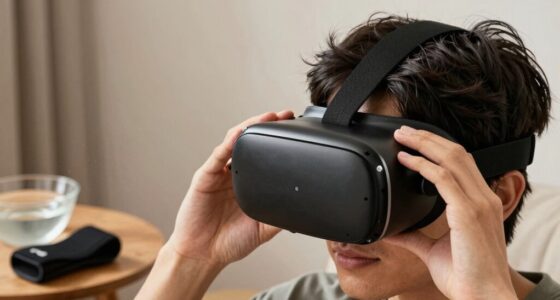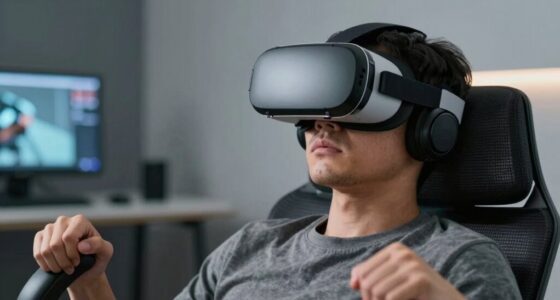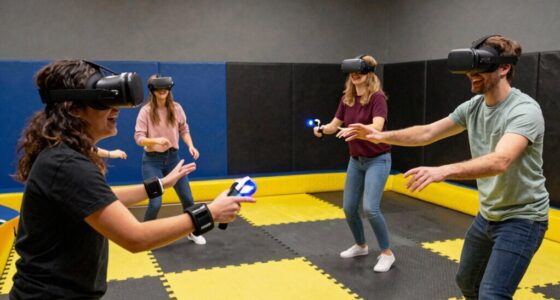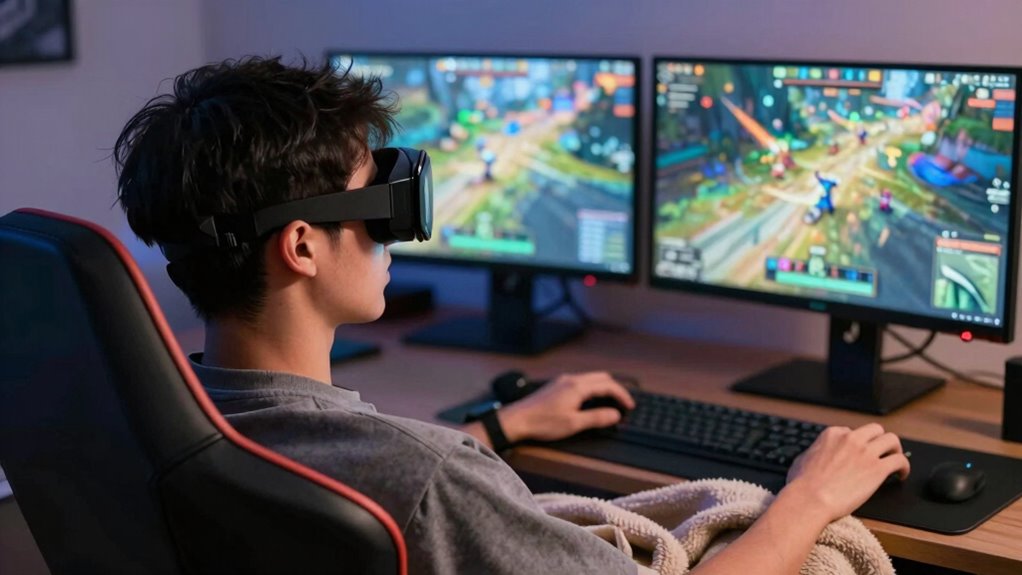
To safely return after weeks away, start by customizing your controls to make them more intuitive and less frantic. Lower your camera sensitivity and disable shaky effects to reduce disorientation. Focus on stabilizing your view with fixed or slow-moving camera angles. Gradually ease back into gameplay, taking breaks whenever you feel discomfort. Prioritizing these adjustments will help prevent motion sickness and make your comeback smoother—stay tuned for more tips to optimize your experience.
Key Takeaways
- Gradually reintroduce gameplay with short sessions, increasing duration as comfort improves.
- Customize control schemes to intuitive layouts, reducing disorienting movements and aiding muscle memory.
- Adjust camera sensitivity and disable shake for steadier visuals and less nausea.
- Use fixed or stabilized camera views to maintain a consistent perspective and prevent motion sickness.
- Prioritize comfort by listening to bodily responses and pausing to reconfigure settings if symptoms appear.
If you’ve been away from your game for weeks, it can feel overwhelming to get back into the groove. One of the biggest hurdles is avoiding motion sickness, which can hit hard if you’re not careful. The good news is, adjusting your control scheme and camera settings can make a significant difference. When you jump back in, start by customizing your control scheme. Switch to a layout that feels intuitive and comfortable, reducing the need for frantic button presses or awkward thumbstick movements. A familiar or simplified control scheme helps your brain adapt faster, minimizing disorienting movements that can trigger nausea. Don’t be afraid to experiment with different setups—sometimes, a slight tweak can make all the difference.
Next, focus on your camera settings. Camera movement is often the main culprit behind motion sickness in games. If your game offers adjustable camera sensitivity or stabilization options, take advantage of them. Lower the sensitivity to prevent rapid, jerky movements that can make your stomach churn. Some games also let you disable or reduce camera shake, which can be incredibly helpful. If you’re prone to motion sickness, consider switching to a fixed or more stable camera view. This can help you maintain a sense of control and reduce the disorienting feeling of rapid perspective shifts. Also, look for options like field of view (FOV). A wider FOV can help you see more of your surroundings and reduce tunnel vision, which often contributes to nausea. Conversely, a very narrow FOV can make the environment feel claustrophobic or disorienting, so find a balance that works for you. Additionally, understanding the concept of Free Floating in camera mechanics can help you customize your view for maximum comfort.
As you re-engage with your game, take it slow. Use these settings to create a more stable, less nauseating experience. Keep your sessions short initially—15 to 20 minutes—and gradually extend them as you feel more comfortable. During gameplay, pay attention to how your body responds. If you start feeling queasy, pause and adjust your settings again. Sometimes, simply reducing camera movement or switching to a different control layout can make a noticeable difference. Remember, your comfort is key to enjoying your game again after a break. With the right control scheme and camera settings, you can ease back into your gaming routine without the dreaded motion sickness, making your return both enjoyable and pain-free.
Frequently Asked Questions
How Long Should I Wait Before Restarting My Gaming Routine?
You should wait at least a few days to a week before restarting your gaming routine, especially if you’ve been away for a while. Make sure to stay well-hydrated and take breaks to prevent motion sickness. Adjust your screen refresh rates to comfortable levels and avoid long gaming sessions initially. This approach helps your eyes and body readjust, ensuring a smoother, more enjoyable gaming experience without discomfort.
What Are the Signs of Motion Sickness to Watch For?
Imagine your mind as a ship steering through turbulent waters—motion sickness signals stormy seas. You’ll notice sensory conflicts like dizziness, nausea, or sweating, alongside vestibular symptoms such as vertigo or imbalance. These signs warn you to pause, reduce gameplay, and give your senses time to realign. Ignoring them risks sinking into discomfort, so stay attentive, take breaks, and listen to your body’s signals before continuing your gaming voyage.
Can Specific Game Genres Help Prevent Motion Sickness?
Certain game genres, like puzzle or turn-based strategy games, can help prevent motion sickness. They typically involve less rapid movement, reducing VR safety concerns. Make sure to calibrate your screen properly before playing and take regular breaks. These steps help minimize discomfort, making it easier to ease back into gaming without feeling dizzy or nauseous. By choosing the right genres and maintaining proper setup, you can enjoy your gaming sessions comfortably.
Are There Any Recommended Accessories to Reduce Discomfort?
You should consider using controller grips to improve your hold and reduce hand fatigue, which can lessen discomfort during gameplay. Screen filters, especially anti-glare or blue light filters, also help minimize eye strain and motion sickness symptoms. Combining these accessories creates a more comfortable gaming experience, making it easier to enjoy your sessions without feeling dizzy or overwhelmed. Always take regular breaks for the best results.
How Can I Gradually Rebuild My Stamina for Gaming Sessions?
To rebuild your gaming stamina, start with short, focused sessions and gradually increase their length. Use resting strategies like taking breaks every 30 minutes to prevent fatigue. Incorporate nutrition tips such as staying hydrated and eating balanced snacks to maintain energy levels. Listen to your body, stay consistent, and prioritize quality rest to enhance endurance and reduce discomfort during longer gaming sessions.
Conclusion
So, are you ready to jump back into your favorite games without feeling sick or overwhelmed? Remember, easing in gradually and taking breaks can make all the difference. Don’t let motion sickness keep you from enjoying what you love. With a little patience and these tips, you’ll be back in the game in no time. Isn’t it worth giving yourself that extra space to enjoy gaming again? The thrill’s waiting—are you prepared to take that first step?