
📊 Full opportunity report: Factory VR Trainer on IdeaNavigator AI — validation score, market gap, and execution plan.

Play games on Amazon Luna for your next adventure, included with Prime
- A rotating selection of games, no download needed
- Play on TV, laptop or phone
- Fast, free delivery for your gear, too
TL;DR
A factory-focused VR training module is entering a pilot phase at a mid-sized manufacturing plant. It aims to improve onboarding speed and safety performance using standalone headsets and cloud tracking. Success could lead to broader adoption across the industry.
A factory VR training module is currently being tested in a pilot program at a mid-sized manufacturing plant, marking a significant step toward integrating immersive technology into industrial workforce development. The initiative aims to address critical challenges such as labor shortages, safety incidents, and inconsistent training outcomes, with early results expected within the next three months.
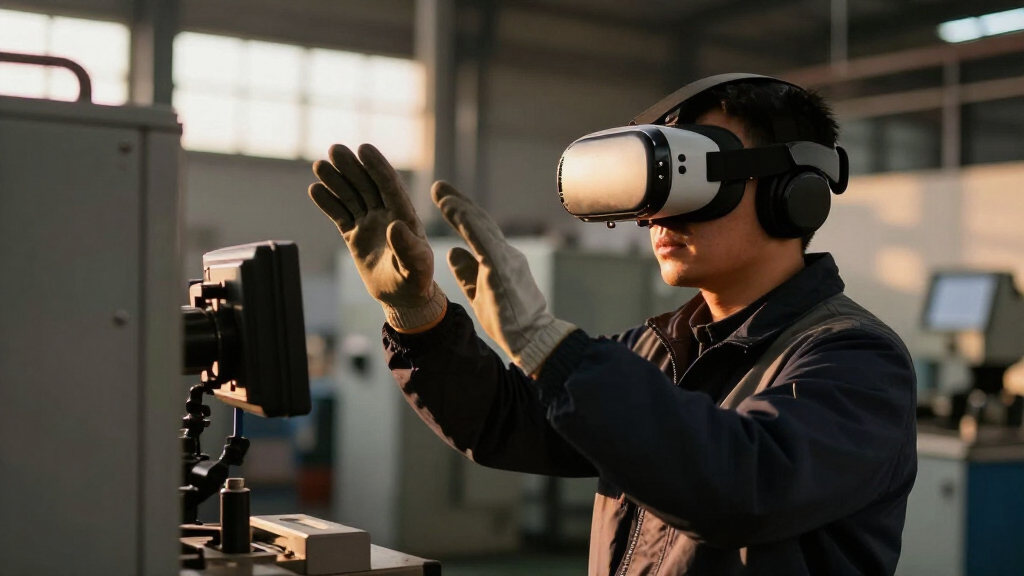
The VR training solution, developed specifically for manufacturing environments, focuses on high-risk procedures such as lockout/tagout (LOTO) and forklift safety. It involves deploying 5-10 standalone Meta Quest headsets to a single plant, where workers complete scenario-based modules tracked via a cloud dashboard. This dashboard monitors completion rates, hazard recognition accuracy, and quiz scores, providing real-time data to EHS managers.
Manufacturers face a pressing need to accelerate onboarding processes due to an ongoing labor shortage—there were approximately 409,000 unfilled manufacturing positions in August 2025, with estimates suggesting the sector will require 3.8 million new workers by 2033. Traditional classroom and on-the-floor training methods are slow, often inconsistent, and pose safety risks when conducted on live machinery. The VR module aims to provide a standardized, scalable, and safer alternative.
The pilot program will compare the VR cohort’s time-to-competency and hazard recognition scores against those from existing classroom training. Success will be measured by statistically significant improvements in these metrics and a commitment from the plant’s EHS or L&D leadership to expand the program to additional procedures or facilities.
Potential Industry Impact of VR Safety Training
If successful, this VR training pilot could transform how manufacturing companies approach workforce onboarding and safety training. It offers a scalable, cost-effective way to standardize training across multiple plants, reduce safety incidents, and speed up new hire ramp-up times. As the manufacturing sector faces increasing labor shortages and a widening skills gap, immersive training solutions could become vital for maintaining productivity and safety standards.
Moreover, the integration of cloud-based tracking and analytics allows companies to measure training effectiveness quantitatively, enabling data-driven decisions for workforce development. This approach aligns with broader trends toward digital transformation in industrial settings, where immersive technologies are increasingly seen as essential tools for operational excellence.
Products Worth Considering

Samsung 27-inch Odyssey OLED G6 QD-OLED QHD Gaming Monitor

LG UltraGear 27-Inch QHD OLED Gaming Monitor, 240Hz, 0.03ms, G-SYNC Compatible, FreeSync Premium Pro, HDMI 2.1

Jackery Solar Generator 1000 V2 with 200W Solar Panel
As an affiliate, we earn on qualifying purchases.
Manufacturing Workforce Challenges and VR Adoption Timeline
The manufacturing industry has been grappling with a significant labor shortage, with 409,000 unfilled positions reported in August 2025. The sector is expected to need millions of new workers over the next decade, driven by retirements and attrition. Traditional training methods—classroom instruction and on-the-floor demonstrations—are proving inadequate to meet these demands, especially given the safety risks associated with live machinery.
In recent years, advances in XR (extended reality) technology, including affordable standalone headsets like Meta Quest and Pico, have lowered hardware costs and simplified deployment. The immersive training market is growing rapidly, with estimates reaching USD 14.55 billion in 2025 and a CAGR of approximately 20%. Early pilot programs across various industries suggest VR can improve safety awareness, reduce training time, and enhance retention, but widespread adoption remains limited pending proven results.
The current pilot at a single plant will serve as a proof of concept, with the goal of validating whether VR can deliver measurable improvements over traditional methods within a 60-90 day window.
Uncertainties Around Pilot Outcomes and Scalability
It is not yet clear whether the VR training will produce statistically significant improvements in onboarding speed or hazard recognition compared to existing methods. The pilot’s success depends on various factors, including user engagement, hardware reliability, and the accuracy of tracking and assessment tools. Additionally, questions remain about the cost-effectiveness of scaling this solution across multiple plants and procedures.
Further, long-term retention of safety knowledge gained via VR and its impact on incident reduction are still unconfirmed at this stage. The industry awaits results from the pilot to assess whether VR can be a sustainable, scalable alternative to traditional training.
Next Steps for Pilot Evaluation and Broader Adoption
The pilot program is expected to run for 60-90 days, after which results will be analyzed to determine improvements in training efficiency and safety metrics. If the outcomes are positive, the manufacturer involved plans to expand the VR program to include additional procedures and possibly other plants within their network. They will also evaluate the potential for customizing scenarios further and integrating VR training into their broader workforce development strategy.
Industry observers anticipate that successful validation could lead to broader adoption, with more manufacturers exploring VR solutions for safety and onboarding. Vendors are likely to develop more specialized modules, and hardware providers may introduce more robust, cost-effective headsets tailored for industrial use.
Overall, this pilot represents a critical step toward mainstreaming immersive training in manufacturing, with potential implications for safety, efficiency, and workforce development across the sector.
Key Questions
What specific procedures will the VR training cover?
The initial pilot focuses on high-risk procedures such as lockout/tagout (LOTO) and forklift safety, which are critical for preventing accidents in manufacturing environments.
How will the effectiveness of the VR training be measured?
Effectiveness will be assessed through metrics like time-to-competency, hazard recognition accuracy, quiz scores, and supervisor evaluations comparing VR-trained workers to those trained via traditional methods.
What hardware is used for the VR training?
The pilot employs standalone Meta Quest headsets, which are cost-effective and easy to deploy without requiring extensive infrastructure.
When will the results of the pilot be available?
Results are expected within 60-90 days from the start of the pilot, after which analysis will determine next steps.
Could this VR training replace traditional methods entirely?
While promising, it is still uncertain whether VR can fully replace traditional classroom or on-the-floor training. The pilot aims to evaluate whether VR can complement or improve existing approaches.
Source: IdeaNavigator AI