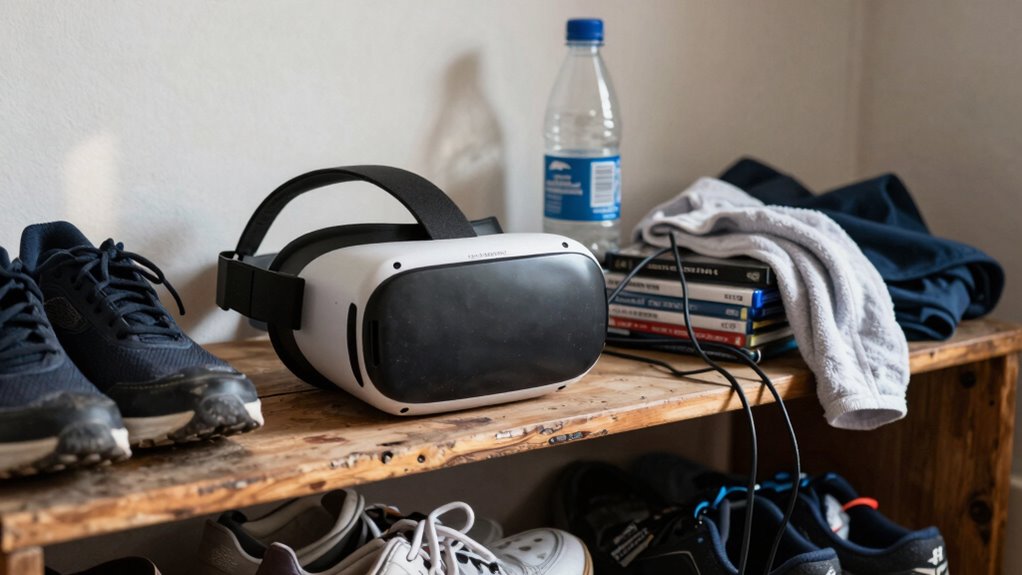

VR fitness routines often fail within a week because you might lose motivation as initial excitement wears off and progress becomes hard to see. Technical issues like discomfort, hardware lag, and setup problems can frustrate you and disrupt your flow. Environmental discomforts such as poor air quality or limited space also make it harder to stay committed. If you keep exploring, you’ll uncover ways to overcome these obstacles and stick with your routine longer.

Play games on Amazon Luna for your next adventure, included with Prime
- A rotating selection of games, no download needed
- Play on TV, laptop or phone
- Fast, free delivery for your gear, too
Key Takeaways
- Lack of tangible progress and external accountability diminishes motivation quickly.
- Equipment discomfort and technical issues cause frustration, leading to abandonment.
- Boredom from limited exercise variety reduces long-term engagement.
- Poor environment setup, like inadequate ventilation and space, hampers workout sustainability.
- Absence of clear progression and external encouragement decreases ongoing commitment.

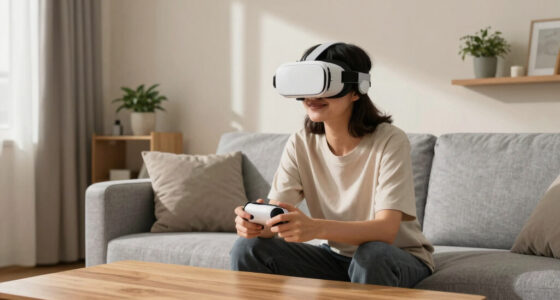
Despite the hype around virtual reality transforming fitness routines, many users find that VR workouts often fall short of expectations. You might start with enthusiasm, eager to plunge into immersive exercises, but quickly encounter hurdles that make sticking with it difficult. One common issue is motivation challenges. VR fitness promises excitement and novelty, but after a few days, that initial thrill fades. Without tangible progress or external accountability, it’s easy to lose interest. The virtual environment can sometimes feel disconnected from real-world goals, leading you to question whether it’s worth the effort. When the novelty wears off, maintaining the motivation to keep up the routine becomes a major struggle.
VR fitness often disappoints after initial excitement, as motivation wanes and virtual environments feel disconnected from real goals.
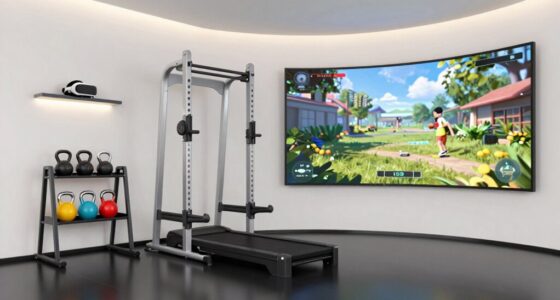
Another reason VR fitness routines tend to fail quickly is equipment limitations. Not every setup offers seamless experiences. You might find that your VR headset is uncomfortable after extended use, or that the sensors don’t track your movements accurately. Poor tracking can lead to frustration, making workouts feel awkward and unproductive. Additionally, many VR fitness programs require specific hardware, like high-end headsets or additional sensors, which can be expensive and cumbersome to set up. If your equipment isn’t reliable or compatible, it’s easy to lose confidence in the system and give up. You might also face physical constraints; limited space or inadequate room-scale tracking can restrict your movement, turning what should be an active workout into a frustrating experience. Inadequate hardware compatibility can severely impact the overall experience and discourage ongoing use. Moreover, the hardware’s limitations can cause lag or glitches during exercise, disrupting the flow and diminishing the immersive effect. When your movements aren’t accurately reflected in the game or app, it pulls you out of the experience and saps your motivation. You may also find that certain exercises are simply not well-supported or lack variety, leading to boredom after a few sessions. This lack of variety, combined with equipment issues, makes it harder to stay engaged and committed. Ensuring reliable equipment and proper setup can significantly improve the experience and help sustain your workout routine. Additionally, understanding the importance of air quality and ventilation can enhance comfort during longer VR sessions, making workouts more sustainable. Proper ventilation can also prevent discomfort caused by overheating or stuffiness, which are common during intense VR workouts. A well-ventilated space can also help reduce fatigue and increase your stamina over time. Furthermore, considering space requirements before starting can prevent interruptions and make your workouts more seamless.
Ultimately, the success of VR fitness routines depends on overcoming these challenges. You need reliable, comfortable equipment that accurately tracks your movements. But even with the best gear, motivation challenges remain. Without a clear sense of progression or external encouragement, it’s easy to lose interest. The immersive promise of VR can quickly fade into frustration if these fundamental issues aren’t addressed. That’s why many users abandon VR workouts within a week, realizing that initial excitement isn’t enough to sustain a long-term fitness habit.
Products Worth Considering

Apple iPad Air 13-inch (M4), 128GB, Wi-Fi 7, Space Gray

Apple iPad Air (2025) 13‑inch Wi‑Fi 256 GB – Space Gray (M3 chip)

Apple iPad Air 11-inch (M2), 512GB, Wi-Fi, Space Gray
As an affiliate, we earn on qualifying purchases.
Frequently Asked Questions
How Can Beginners Stay Motivated in VR Fitness?
To stay motivated in VR fitness, you should leverage gamification strategies to make workouts fun and rewarding. Set achievable goals and track your progress to see improvement. Additionally, engage with friends or join online communities for social accountability—working out with others keeps you committed. Remember, variety is key; switching routines prevents boredom and keeps your enthusiasm high, helping you stick with your VR fitness journey long-term.
What Are Common Technical Issues Faced During VR Workouts?
Like a ship facing stormy seas, you might encounter hardware calibration issues or software glitches during your VR workouts. These technical problems can interrupt your flow, causing frustration and loss of motivation. Ensuring your hardware is properly calibrated and keeping software updated helps prevent disruptions. When glitches occur, patience and troubleshooting become your compass, guiding you back to smooth sailing in your virtual fitness journey.
How Does Physical Space Affect VR Fitness Success?
Your physical space greatly impacts VR fitness success. A spacious room size allows you to move freely, reducing the risk of accidents and enhancing your workout experience. Make sure your space is compatible with your device, avoiding obstructions that can interfere with sensors or tracking. If your room is too small or cluttered, you’ll struggle to fully engage in VR routines, making consistency and progress difficult to achieve.
Are There Age Restrictions for VR Fitness Routines?
Age restrictions for VR fitness routines vary, but safety concerns are key. Typically, manufacturers recommend age limitations—often around 12 or 13 and up—to guarantee proper use and prevent injury. Younger users might lack the coordination or understanding of safe movements. Always check the specific VR system’s guidelines, and consult with a healthcare professional if you’re unsure. Prioritizing safety ensures your fitness journey stays fun and free from mishaps.
Can VR Fitness Replace Traditional Exercise Effectively?
Virtual reality can effectively supplement traditional exercise, but it might not fully replace it. With VR fitness tracking, you get engaging, immersive workouts that boost motivation and consistency. However, for complete fitness, consider combining VR sessions with outdoor or gym activities. VR offers an interactive way to stay active, but balancing it with other forms of exercise ensures you achieve well-rounded health and fitness goals.
Conclusion
If you want your VR fitness journey to stick, don’t let it become a fleeting flame. Keep your routines fresh and exciting, like a rollercoaster that never stops thrilling. Remember, consistency is your strongest ally—without it, your efforts are like a ship without a rudder, drifting aimlessly. Stay committed, adapt your workouts, and let VR be your trusty compass guiding you toward lasting health and fitness success.