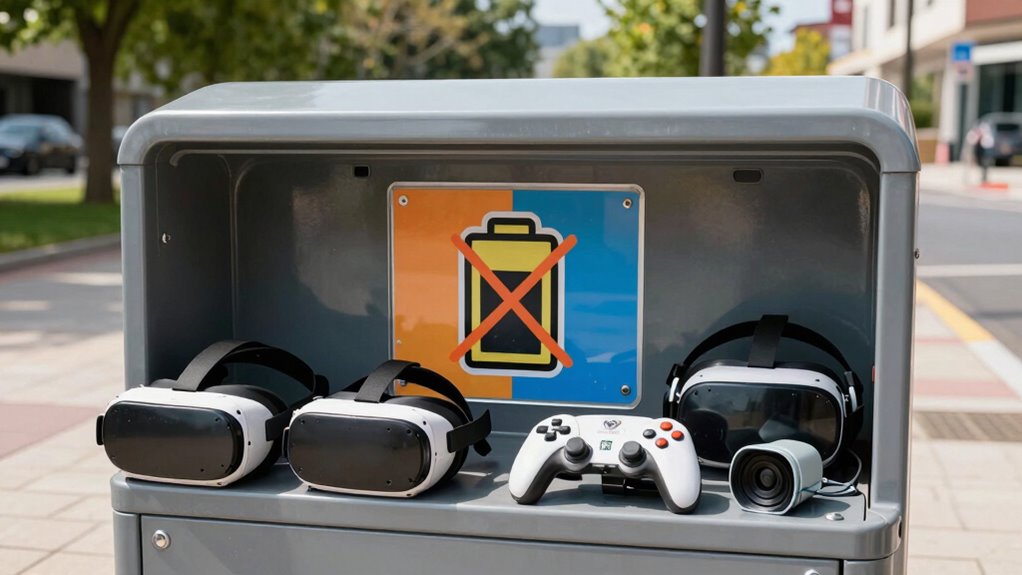

To safely dispose of old VR batteries and electronics in the U.S., you should recycle them at certified e-waste collection centers or local drop-off events. Make sure to tape battery terminals to prevent short-circuiting and check if the facility accepts VR batteries. Follow manufacturer instructions and comply with local regulations for responsible disposal. Doing so helps protect the environment and keeps you within legal standards—there’s more to know about ensuring you dispose of your gear properly.
Key Takeaways
- Recycle VR batteries at certified e-waste collection centers, following local regulations to ensure safe disposal.
- Remove batteries from VR devices if required, and tape terminals to prevent short-circuiting before recycling.
- Use local e-waste events or drop-off points designated for electronic waste disposal in your area.
- Consult manufacturer instructions and comply with federal, state, or local laws for proper disposal procedures.
- Prioritize recycling to recover valuable materials and prevent hazardous substances from harming the environment.
As virtual reality technology advances, many users find themselves with outdated VR batteries and electronics that need proper disposal. If you’re upgrading your VR gear or simply clearing out old equipment, it’s essential to handle these items responsibly. Improper disposal can lead to environmental harm, especially since VR batteries and electronics are classified as electronic waste. These materials contain hazardous substances like heavy metals and chemicals that can leach into soil and water if not managed correctly. By understanding how to dispose of these items properly, you help protect the environment and stay compliant with local laws.
One of the most effective ways to dispose of old VR batteries is through battery recycling programs. Battery recycling involves collecting used batteries and sending them to specialized facilities that safely extract valuable materials, such as lithium, cobalt, and nickel. These materials can then be reused in manufacturing new batteries or electronic components, reducing the need for mining raw resources. Many electronic waste recycling centers accept batteries from consumer electronics, including VR devices. Before recycling, ensure that you follow safety precautions—such as taping the battery terminals to prevent short-circuiting—and check whether your local recycling center accepts VR batteries specifically.
Electronic waste, or e-waste, is another vital aspect of responsible disposal. VR headsets, controllers, and accompanying electronics contain various components that can be harmful if discarded improperly. Instead of tossing your old VR equipment into the trash, look for certified e-waste recycling programs. These programs are designed to dismantle electronics safely, extracting recyclable parts and disposing of hazardous materials in accordance with environmental standards. Many cities and counties host e-waste collection events or have designated drop-off points at local recycling centers. Taking advantage of these services ensures your electronics are processed correctly, minimizing environmental risks.
When disposing of VR batteries and electronics, always check the manufacturer’s recommendations or local regulations. Some facilities might require you to remove batteries before recycling the main device, while others accept entire units. It’s also wise to back up any data and wipe personal information from devices before recycling. Additionally, understanding electronic waste disposal regulations helps ensure compliance and environmental safety. By doing so, you protect your privacy and make certain your old VR gear is disposed of securely.
Frequently Asked Questions
Are There Any Government Incentives for Recycling VR Batteries?
Yes, there are recycling incentives through government programs that encourage you to recycle VR batteries. Some states offer rebates, discounts, or tax credits when you participate in certified recycling initiatives. These programs aim to diminish hazardous waste and promote responsible disposal. Check local or state government websites for specific recycling incentives available in your area, and always use authorized recycling centers to guarantee proper handling of VR batteries.
How Long Does It Typically Take to Recycle Electronics Properly?
Recycling electronics typically takes anywhere from a few days to several weeks, depending on the complexity of the items and the recycling process. You should expect recycling timeframes to include collection, transportation, and the actual processing at facilities. To guarantee a smooth process, follow local guidelines and choose certified e-waste recyclers. By doing so, you help speed up the recycling process and contribute to environmental sustainability.
Can I Dispose of VR Batteries in Regular Household Trash?
You shouldn’t toss VR batteries in regular household trash. While it might seem convenient, improper disposal risks battery safety and environmental harm. Instead, take your old batteries to recycling centers that accept electronics. These centers are equipped to handle hazardous materials safely, preventing leaks or fires. Always follow proper disposal guidelines to protect yourself and the planet, ensuring your electronic waste is managed responsibly and sustainably.
Are There Specific Storage Guidelines Before Disposal?
You should store batteries separately from electronics to prevent leaks and potential hazards. Keep batteries in a cool, dry place, ideally in their original packaging or a non-conductive container. Avoid mixing different battery types, and make certain they’re not touching metal surfaces. Proper battery storage helps minimize risks before disposal and makes recycling easier, so always follow recommended guidelines for battery storage and electronics separation until you can take them to a designated recycling facility.
What Are the Environmental Impacts of Improper VR Electronics Disposal?
Improper disposal of VR electronics can lead to serious environmental impacts. Battery hazards, like leaking toxic chemicals, threaten soil and water quality, harming wildlife and human health. Electronic waste often contains hazardous materials that, when not properly recycled, contribute to pollution and resource depletion. By failing to dispose of VR electronics responsibly, you risk contaminating ecosystems and increasing electronic waste, which could otherwise be safely reused or recycled.
Conclusion
By properly disposing of your old VR batteries and electronics, you’re not just cleaning up—you’re protecting the planet from a disaster of epic proportions. Don’t let hazardous waste turn your home into a ticking time bomb. Instead, take action and follow safe disposal methods. Your small effort can prevent environmental catastrophe and preserve the world for future generations. Remember, the power to make a difference is in your hands—don’t underestimate its incredible impact.