
To protect your VR gear during holiday travel, keep it in a sturdy, padded case that fits snugly to prevent shifting. Avoid leaving it in extreme temperatures by storing it in a temperature-controlled environment, especially in cold cars or hot trunks. Wrap cables loosely, and keep devices in soft cloth or protective bags to prevent scratches. If you follow these tips, you can avoid damage from temperature swings and impacts, and discover more ways to keep your gear safe.
Key Takeaways
- Use insulated, padded cases to protect VR gear from extreme temperature fluctuations during transit.
- Keep gear in a climate-controlled environment until you’re ready to use it, avoiding storage in cold cars or hot trunks.
- Avoid leaving VR equipment in trunks or cars for extended periods, especially in extreme heat or cold.
- Store gear in shaded, cool areas within the vehicle if necessary, and avoid direct sunlight exposure.
- Upon arrival, inspect gear for condensation or damage before use to ensure safety and optimal performance.
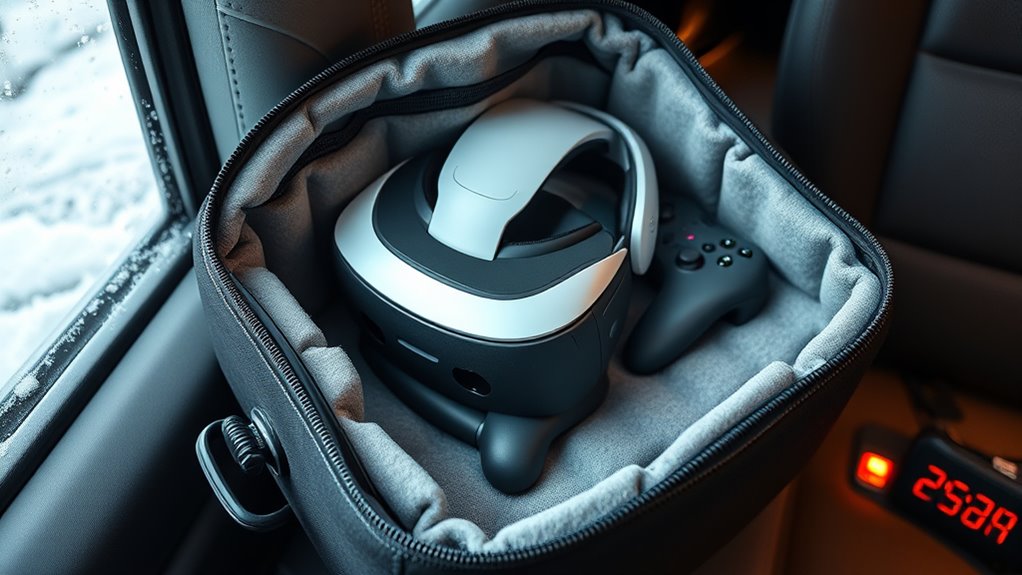
Traveling during the holidays can be exciting, but it also poses challenges for keeping your VR gear safe and organized. You want to ensure your valuable equipment arrives intact and ready to use, so understanding proper storage precautions and packing tips is essential. Whether you’re heading in a cold car or a hot trunk, knowing how to protect your VR gear from extreme temperatures and rough handling makes all the difference.
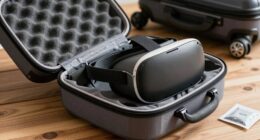
First, focus on storage precautions that prevent damage during transit. VR headsets and accessories are delicate, with sensitive lenses, cables, and electronic components. Avoid leaving your gear in places where it can be crushed or jostled excessively. Use a sturdy, padded case designed specifically for electronics or VR equipment. These cases often have foam inserts that keep your gear snug and prevent it from shifting. It’s also wise to avoid exposing your gear to extreme temperatures, as cold can cause condensation inside lenses or damage batteries, while heat can warp plastics and degrade electronic parts. If you’re traveling in a cold climate, keep your VR gear in a temperature-controlled environment until you’re ready to use it. Conversely, in hot conditions, try to keep it shaded and cool, avoiding direct sunlight.
Protect your VR gear with padded cases and avoid extreme temperatures during transit.
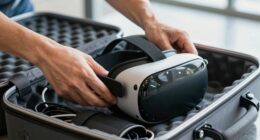
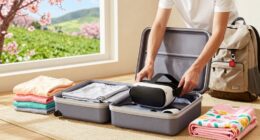
When it comes to packing tips, organization is key. Always clean and dry your VR gear before packing to prevent moisture accumulation. Wrap cables carefully to avoid internal stress, and coil them loosely to prevent kinks or tears. Place the headset in a protective bag or wrap it in a soft cloth to shield it from scratches. For controllers and accessories, use small pouches or compartments within your case. Remember, the goal is to minimize movement; a loose item can bump against others and cause damage. Secure all items so they don’t shift during transit. Label your case if you’re sharing space or traveling with others, so you can easily identify your gear and handle it with care. Additionally, consider battery safety during transport, as batteries are sensitive to temperature variations and mishandling.
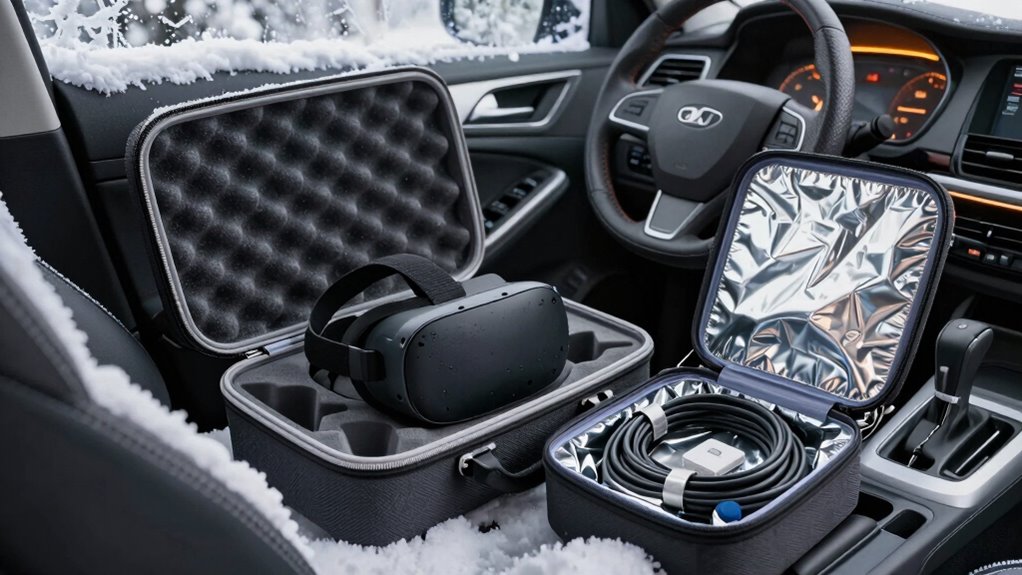
In addition, consider temperature fluctuations during travel. Avoid leaving your VR gear in a car trunk for extended periods, especially in extreme weather. Cold cars can cause cold spots that might affect delicate parts, while hot trunks can cook electronics and degrade batteries. If you must leave your gear in a vehicle, store it in the coolest, most shaded part available and keep it well-insulated. When you arrive at your destination, unpack and inspect your gear for any signs of damage or condensation before setting it up.
Frequently Asked Questions
Can VR Gear Damage Occur From Extreme Temperature Fluctuations?
Yes, your VR gear can suffer damage from extreme temperature fluctuations. These fluctuations impact its temperature sensitivity and can compromise hardware durability. When exposed to very cold or hot environments, batteries and internal components may malfunction or degrade faster. To protect your gear, avoid leaving it in hot trunks or cold cars, and store it in a climate-controlled space. This helps maintain its performance and extends its lifespan.
Are There Specific Storage Cases Recommended for Travel?
In the days of yore, folks used sturdy trunks, and now, you should opt for specific protective cases when traveling with VR gear. These cases are designed to shield your headset and accessories from extreme temperatures and impacts. Look for travel accessories that offer padded compartments and durable shells. Using a recommended protective case guarantees your VR gear stays safe, whether you’re on a snowy mountain or sunny roadside.
How Long Can VR Gear Safely Stay in a Hot Trunk?
You shouldn’t leave your VR gear in a hot trunk for more than a few hours. High temperatures cause battery degradation and material expansion, risking damage to your headset and controllers. Extended exposure to heat accelerates these issues, potentially ruining your equipment. If you must store it temporarily, try to keep it in a cooler, shaded spot or bring it inside promptly to avoid long-term harm.
Should I Turn off My VR Devices Before Storing?
You should turn off your VR devices before storing them. Doing so helps preserve the battery and prevents unnecessary calibration issues. When powered down, your device avoids potential damage from temperature fluctuations and reduces the risk of overheating or draining the battery. Make sure to store it in a cool, dry place and avoid leaving it in hot trunks or cold cars, which can impact calibration and overall device health.
Is There a Way to Prevent Moisture Buildup During Travel?
To prevent moisture buildup during travel, you’re fighting an epic battle against humidity control issues. Use silica gel packs or moisture-absorbing desiccants inside your VR gear case to trap excess humidity. Keep your devices in a sealed, airtight container if possible, and avoid exposing them to extreme heat or cold. These steps help moisture prevention, safeguarding your gear from potential damage caused by condensation, ensuring your VR setup stays dry and ready for action.
Conclusion
Just like a delicate ornament, your VR gear needs careful handling during holiday travel. I once packed mine into a hot trunk, only to find the lenses fogged and controllers unresponsive—like a frozen pond thawing suddenly. To keep your gear safe, follow these tips and avoid the heat or cold pitfalls. Think of your VR devices as treasures; treat them with care, and they’ll stay ready to teleport you to new worlds whenever you want.