
To plan a shared VR budget effectively, start by clarifying everyone’s needs and setting clear priorities. Research hardware options within your budget, focusing on reliable gear that offers good value. Communicate openly with your group to ensure consensus and prevent overspending. Break down costs for each component and plan for future upgrades. Proper safety and maintenance planning also help avoid costly mistakes. Keep these strategies in mind, and you’ll boost your chances of making satisfying, regret-free purchases.
Key Takeaways
- Establish a clear overall budget and allocate funds based on each user’s priority and usage needs.
- Research and compare hardware options to ensure compatibility and value, avoiding impulsive or unnecessary purchases.
- Communicate openly with all group members about spending limits, priorities, and decision-making processes.
- Prioritize essential components first, with future upgrades and accessories planned within the budget.
- Incorporate safety, maintenance, and replacement costs into the plan to prevent costly regrets later.
Creating a shared VR budget can seem overwhelming, but with careful planning, you can guarantee everyone’s needs are met without overspending. The key is to focus on effective budget allocation, making sure you invest wisely in VR hardware that suits your group’s interests and technical requirements. Start by identifying how many people will be sharing the VR setup and what their primary uses are—gaming, educational activities, or social experiences. This helps you prioritize hardware features and avoid unnecessary expenses. For example, if most users are casual gamers, investing in a mid-range headset with solid performance makes sense, rather than splurging on the top-tier models that might be overkill for their needs.
Prioritize hardware based on your group’s needs to maximize your shared VR budget effectively.
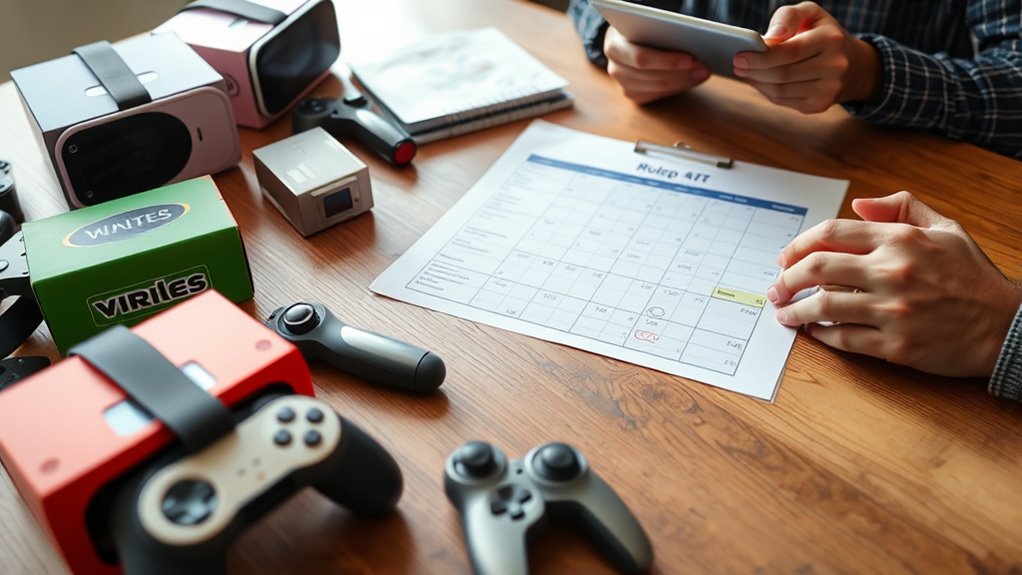
When you’re considering VR hardware, don’t just look at the price tag. Think about compatibility, durability, and ease of use, especially if multiple users will handle the equipment. Set a clear budget for the hardware, but remain flexible enough to make adjustments as you research options. It’s important to allocate your funds wisely, dividing your budget between essential components like headsets, controllers, sensors, and a capable PC or console if needed. Break down the costs for each item, and list potential options that fit within your budget range. This way, you avoid impulsive purchases and focus on acquiring reliable gear that offers good value.
Effective budget allocation also involves planning for accessories and future upgrades. Don’t forget to set aside some funds for replacement parts, cleaning supplies, or additional controllers if you expect multiple users. Consider whether you want to invest in accessories like VR mats, headphones, or protective covers, and include these in your overall plan. Thinking ahead prevents you from overspending on unnecessary extras initially, only to regret not having enough funds for essential upgrades or repairs down the line. Additionally, understanding the electrical safety considerations for powering and maintaining your VR equipment can help prevent costly issues and ensure a safe shared environment.
Finally, communicate openly with everyone involved about the budget and hardware choices. Transparency ensures all users understand the spending limits and helps prevent disagreements or impulsive buys. Keep in mind that a shared VR setup is a group investment, so balancing quality with affordability is vital. With thorough planning, clear budget allocation, and careful hardware selection, you can build a VR setup that everyone enjoys without regrets. This approach not only maximizes your spending power but also guarantees a seamless, enjoyable virtual experience for all users involved.
Frequently Asked Questions
How Do We Handle Differing VR Interests Among Friends?
To handle differing VR interests among friends, start by discussing everyone’s preferences and priorities. Focus on interest alignment by identifying shared goals, like exploring new VR experiences or investing in versatile VR equipment. Set a clear budget that balances everyone’s needs and comfort levels. Regularly communicate and revisit the plan, ensuring all voices are heard. This approach keeps everyone engaged, minimizes disagreements, and helps you build a shared VR setup everyone enjoys.
What’s the Best Way to Track Shared VR Expenses?
A penny saved is a penny earned—so tracking shared VR expenses is key. Use a simple app or spreadsheet to log costs, including VR headset compatibility and content sharing strategies. Make sure everyone updates expenses regularly and discusses any discrepancies openly. This way, you keep things transparent and avoid misunderstandings, ensuring your shared VR experience stays fun without financial surprises.
How Can We Ensure Fair Contribution From All Members?
To guarantee fair contribution from all members, establish clear rules for cost sharing early on. Use a transparent system like a shared expense tracker to monitor contributions, making adjustments as needed. Communicate openly about each person’s financial capacity and agree on proportional contributions if necessary. Regularly review your budget to maintain contribution fairness, preventing misunderstandings and ensuring everyone feels equitably involved in shared VR expenses.
What Should We Do if Someone Wants to Upgrade Later?
If someone wants to upgrade later, think of your shared VR budget as a living organism that adapts. You should set clear rules for future upgrades, like agreeing on upgrade timing and how costs are shared. Communicate openly about their needs, and decide if the group will split future expenses or adjust contributions. This way, everyone stays on the same page, avoiding surprises and ensuring fairness as your VR setup evolves.
How Do We Decide on the Initial VR Budget?
To decide on your initial VR budget, start by evaluating your group’s needs and desired experiences. Allocate funds for essential VR hardware like headsets, sensors, and controllers, prioritizing quality. Discuss everyone’s preferences and set a realistic budget allocation that covers these essentials without overspending. Keep some funds reserved for future upgrades or accessories, ensuring flexibility. This approach helps you avoid regrets and makes sure everyone’s VR experience is enjoyable.
Conclusion
By planning your shared VR budget carefully, you set the foundation for a smooth adventure ahead. Think of it as planting a seed; with patience and clear expectations, your investment will grow into endless immersive experiences. Remember, balancing wants and needs keeps the journey enjoyable without regrets. Keep your eyes on the horizon, and you’ll navigate the world of VR spending with confidence—ensuring your shared virtual adventures flourish like a well-tended garden.