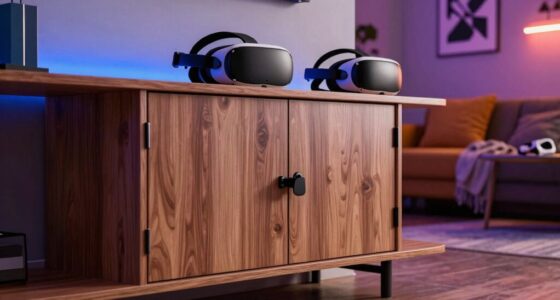
Meta Quest 3 and PlayStation VR2 appeal to gamers who want more than a phone-powered VR viewer, but they make different bets. Quest 3 runs games without another device, supports mixed reality and can connect to a gaming PC. PS VR2 plugs into a PlayStation 5 for a more console-focused experience, with OLED displays, eye tracking and headset feedback in supported games. The real decision is whether freedom and a wider range of uses matter more than PS5 integration and distinctive immersion features. Choose Quest 3 for a flexible first headset or PC VR access; choose PS VR2 if you already own a PS5 and want its strongest VR experiences.

Play games on Amazon Luna for your next adventure, included with Prime
- A rotating selection of games, no download needed
- Play on TV, laptop or phone
- Fast, free delivery for your gear, too

Meta Quest 3 512GB VR Headset with GOLF+
- ✔ Storage: 512 GB
- ✔ RAM: 8 GB
- ✔ Processor: Snapdragon XR2 Gen 2

Meta Quest 3S 256GB VR Headset with GOLF+
- ✔ Storage: 256 GB
- ✔ RAM: 8 GB
- ✔ Processor: Snapdragon XR2 Gen 2
Meta Quest 3S 128GB VR Headset with GOLF+
- ✔ Storage: 128 GB
- ✔ RAM: 8 GB
- ✔ Processor: Snapdragon XR2 Gen 2
At a Glance
| Criteria | Meta Quest 3 | PlayStation VR2 | Winner |
|---|---|---|---|
| Standalone play and setup | Runs games on the headset; wireless play without a console or PC | Requires a PS5 for console VR; PC use requires a compatible PC adapter and setup | A |
| Game library and platform reach | Quest catalog, mixed-reality apps and PC VR through a compatible connection | PS5 VR catalog plus PC VR with an adapter; fewer games designed specifically for PS VR2 | A |
| Visual experience | Pancake lenses provide a clear, compact image; LCD panels have less contrast than OLED | OLED panels offer deep blacks and strong contrast; fresnel lenses have a narrower clear area | B |
| Immersion features | Hand tracking, color passthrough and mixed reality; no eye tracking or headset rumble | Eye tracking, headset vibration and adaptive trigger support in compatible games | B |
| Comfort and practical use | Wireless freedom; battery life limits longer sessions and head fit varies | Single cable to PS5 avoids headset battery management but can restrict movement | Depends |
| Value and ownership cost | Higher upfront cost than some older standalone headsets; useful without other gaming hardware | Makes more sense when the buyer already owns a PS5 and wants its VR exclusives | Depends |
Meta Quest 3 512GB VR Headset with GOLF+
The Meta Quest 3 earns the top position because it is the only option here with a stated 2064 × 2208 resolution per eye and a refresh rate listed up to 120 Hz. Those are the clearest supplied advantages for games where fine detail and fluid motion matter. The 512GB capacity also gives us more room for a broad installed library than either Quest 3S configuration. All three headsets share the Snapdragon XR2 Gen 2 and standalone wireless play, so the Quest 3’s case rests mainly on its display and storage rather than a different processor tier. Its listed battery life of about 2.2 hours is limited, and the GOLF+ content requires setup and pairing with the Meta Horizon app to claim. Choose it if you want the strongest all-around gaming spec sheet in this comparison; the 3S models make more sense if the higher-resolution display is not a priority.
Pros:
- 2064 × 2208 resolution per eye is the highest listed here.
- Supports a listed refresh rate of up to 120 Hz.
- 512GB storage suits a larger installed library.
- Standalone wireless play with GOLF+ included.
Cons:
- Battery life is listed at approximately 2.2 hours.
- GOLF+ redemption requires Meta Horizon app setup and pairing.
Best for: Players who want the sharpest listed display, a higher refresh rate, and room for a larger game library.
Not ideal for: Players who prioritize longer sessions between charges or want to minimize setup steps for included content.
Bottom line: We rank the Quest 3 first for gaming because it combines the lineup’s highest stated per-eye resolution and refresh rate with 512GB of storage.
“We rank the Quest 3 first for gaming because it combines the lineup’s highest stated per-eye resolution and refresh rate with 512GB of storage.”
Meta Quest 3S 256GB VR Headset with GOLF+
The Quest 3S 256GB is the practical middle choice: it keeps the same Snapdragon XR2 Gen 2 platform as the Quest 3 and 128GB 3S, while providing twice the storage of the 128GB model. That extra capacity can matter as we add games, especially when we want to leave more of a library installed. Its supplied per-eye resolution is 1832 × 1920, below the Quest 3’s 2064 × 2208, so we should not choose it expecting the more detailed image or the Quest 3’s listed 120 Hz refresh rate. It remains a standalone wireless headset with color passthrough, and this package includes GOLF+, credits, and a three-month catalog trial. The listed battery life is only a little over two hours, and claiming GOLF+ requires app pairing. Compared with the 128GB 3S, this is the better fit for players who expect their library to grow; compared with the Quest 3, it gives up display detail.
Pros:
- 256GB storage offers more room than the 128GB Quest 3S.
- Uses the same Snapdragon XR2 Gen 2 and 8GB RAM listed for the other models.
- Full-color passthrough cameras support mixed reality experiences.
- Includes GOLF+, 1,800 in-game credits, and a three-month catalog trial.
Cons:
- 1832 × 1920 per eye is lower than the Quest 3’s listed resolution.
- Battery life is listed as just over two hours.
- GOLF+ requires pairing with the Meta Horizon app to redeem.
Best for: Players who want a standalone headset with more room for games than the 128GB option, but do not need the Quest 3 display specifications.
Not ideal for: Players who want the highest listed resolution and refresh rate, or who keep only a very small selection of games installed.
Bottom line: We recommend the 256GB Quest 3S for players who want a roomier game library and can accept the lower listed display resolution than the Quest 3.
“We recommend the 256GB Quest 3S for players who want a roomier game library and can accept the lower listed display resolution than the Quest 3.”
Meta Quest 3S 128GB VR Headset with GOLF+
The Quest 3S 128GB covers the core appeal of this lineup: standalone wireless gaming, color passthrough, and the same Snapdragon XR2 Gen 2 processor found in the pricier-spec Quest 3 listing. Its supplied 1832 × 1920 per-eye resolution matches the 256GB Quest 3S, so choosing the larger 3S configuration does not buy a sharper listed image. The distinction is capacity: 128GB is more suited to a selective collection, while the 256GB version leaves more room to keep titles installed. It also includes GOLF+ and a three-month game catalog trial, which can help new players explore different types of experiences. The tradeoffs are a listed 60 Hz refresh rate and 2.5-hour battery life; the Quest 3 has a higher listed refresh rate and sharper display. We would choose this one for an uncomplicated start, not for the broadest library or the most demanding visual target.
Pros:
- Standalone wireless design avoids a required PC connection for play.
- Same listed per-eye resolution as the 256GB Quest 3S.
- Includes GOLF+ with credits and a three-month game catalog trial.
- Snapdragon XR2 Gen 2 processor and 8GB RAM.
Cons:
- 128GB offers the least storage in this comparison.
- The listed 60 Hz refresh rate is below the Quest 3’s up-to-120 Hz specification.
- Battery life is listed at 2.5 hours.
Best for: First-time VR players who want standalone gaming, included GOLF+ content, and a smaller game collection.
Not ideal for: Players who expect to install many games at once or want the highest listed refresh rate and resolution in this group.
Bottom line: We see the 128GB Quest 3S as the entry pick for a focused library, with the 256GB version the sensible step up when storage matters.
“We see the 128GB Quest 3S as the entry pick for a focused library, with the 256GB version the sensible step up when storage matters.”
As an Amazon Associate we earn from qualifying purchases.
Key Differences
The biggest practical gap is independence. Quest 3 is ready to play without a console, and its wireless design makes it easy to move between rooms or share with other people. It also doubles as a mixed-reality device and can access PC VR when paired with a capable computer. PS VR2 depends on a PS5 for its console experience; connecting it to a PC is possible with the official adapter, but requires compatible hardware and does not carry over every PS5 feature. For someone buying a first headset, Quest 3 asks for less commitment to one gaming platform.
PS VR2 counters with a more focused kind of immersion. Its OLED screens create darker blacks and richer contrast, and supported titles can use eye tracking, headset vibration and adaptive triggers. Those features can make a game feel more immediate, but only when a title supports them. Quest 3’s sharper-feeling pancake optics and broad standalone library suit varied play, while its LCD display cannot match OLED black levels. Value follows the same split: Quest 3 is the more versatile purchase, whereas PS VR2 can be the better upgrade for an existing PS5 owner who will play its best VR games.
Detailed Comparison
Standalone play and setup (Meta Quest 3 wins — major)
Quest 3 wins by a major margin for convenience: install a game and play without another device, with no cable to the headset during ordinary use. PS VR2 requires a PS5 for its main use, and a PC setup requires an adapter and compatible equipment. That makes Quest 3 simpler for casual sessions, travel around the home and first-time VR buyers.Game library and platform reach (Meta Quest 3 wins — moderate)
Quest 3 wins by a moderate margin for breadth. It has a substantial standalone catalog and can access PC VR with a suitable computer, spanning more than one hardware ecosystem. PS VR2 offers a strong selection of PS5 VR games, including notable exclusives, and PC access expands its reach, but the PS5 catalog is smaller than the overall Quest ecosystem. Pick by the games you actually want: catalog size alone does not make a headset a better fit.Visual experience (PlayStation VR2 wins — moderate)
PS VR2 wins for contrast: its OLED screens deliver deep blacks that benefit dark scenes and atmospheric games. Quest 3’s pancake lenses keep more of the view clear as the eyes move and its LCD image is bright, but blacks look less convincing. This is a moderate difference rather than a universal PS VR2 win; lens clarity and display contrast affect different parts of the experience.Immersion features (PlayStation VR2 wins — moderate)
PS VR2 wins by a moderate margin for supported games, thanks to eye tracking, headset vibration and adaptive triggers. These features add tactile and gaze-based effects that Quest 3 does not match in the same way. Quest 3 instead offers hand tracking and color passthrough for mixed-reality uses. For conventional VR gaming, PS VR2 has the richer set of specialized effects; for interactive mixed reality, Quest 3 is the more capable choice.Comfort and practical use (moderate difference)
There is no universal winner. Quest 3’s wireless play avoids a tether, which helps with movement, but its battery puts a limit on long sessions and comfort depends on head shape and any strap changes. PS VR2 has a cable to the console, yet it does not depend on headset battery life during play. A player who moves around a lot may prefer Quest 3; someone settled near a PS5 may prefer the wired arrangement.Value and ownership cost (major difference)
The better value depends on what hardware and games you already own. Quest 3 offers more uses per purchase because it plays standalone, supports mixed reality and can serve as a PC VR headset. PS VR2 is easier to justify for a PS5 owner who will play its exclusive or best-supported titles; buying a PS5 as well changes the total cost substantially. Paying for PS VR2 makes sense when those PS5 games and OLED contrast are priorities.Meta Quest 3: Pros and Cons
Pros:
- Standalone wireless gaming with no console required
- Broad catalog with mixed-reality apps and optional PC VR
- Pancake lenses keep a large part of the view clear
- Useful beyond gaming for media and mixed reality
Cons:
- LCD display cannot produce OLED-level black levels
- Battery life can interrupt longer play sessions
- Headset fit and comfort vary, and some users may want a different strap
PlayStation VR2: Pros and Cons
Pros:
- OLED contrast works especially well in dark games
- Eye tracking, headset vibration and adaptive triggers add supported effects
- Strong fit for PS5 owners seeking console VR
- Can access PC VR with a compatible adapter and setup
Cons:
- Needs a PS5 for its primary console experience
- Cable limits freedom of movement compared with standalone wireless play
- Smaller PS5 VR catalog than the broader Quest ecosystem
- Some signature features are unavailable when used with a PC
Who Should Choose What
Choose Meta Quest 3 if:
- You want your first headset to work without buying a console or gaming PC.
- Wireless movement, mixed reality or playing in different rooms matters to you.
- You want access to standalone VR now and the option of PC VR later.
Choose PlayStation VR2 if:
- You already own a PS5 and want to play its VR exclusives or strongest supported titles.
- Deep OLED contrast matters more to you than a fully wireless setup.
- You prefer a headset that draws on the PS5 rather than handling standalone battery life.
Skip both if: Skip both if you do not have room for safe movement, are sensitive to VR motion, or cannot name games you want to play; try a short demo before spending.
Value for Money
Quest 3 is better value for most first-time buyers because one purchase provides standalone games, mixed-reality experiences and an optional path into PC VR. That flexibility matters most when you do not already own gaming hardware. PS VR2’s value improves sharply if you already have a PS5: you can focus your spending on the headset and games, and its OLED display and controller effects may be worth the premium for players who will use them. If buying both PS VR2 and a PS5, pay more only when the specific PS5 VR catalog is a major draw. A lower headline price does not help if the games you want are elsewhere.
Final Verdict
For most gamers choosing one headset without a strong platform preference, choose Meta Quest 3. It is easier to start with, works wirelessly on its own and gives you more room to change how you use VR over time. Choose PlayStation VR2 if you already own a PS5, know you want its VR games and value OLED contrast and supported eye-tracking effects more than wireless freedom. The deciding factor is your existing setup and the games you plan to play: Quest 3 is the safer all-around purchase; PS VR2 is the more compelling focused upgrade for the committed PS5 player.
Frequently Asked Questions
Which headset is better for someone buying VR for the first time?
Quest 3 is usually the easier first headset because it runs games without a console or PC. Check that you are comfortable with VR before buying either, since motion sensitivity and fit vary from person to person.
Can PS VR2 play games without a PlayStation 5?
Not as a standalone headset. You can connect PS VR2 to a compatible PC with the official adapter, but you need a capable computer and setup, and PC use does not include all PS5 features.
Does Quest 3 have better graphics than PS VR2?
Neither wins every visual comparison. PS VR2’s OLED display has stronger black levels and contrast; Quest 3’s pancake optics keep a broad viewing area clear. The image also depends on the game and whether it runs on the headset, PS5 or a PC.
Is PS VR2 worth buying if I already own a PS5?
It can be, if you want the PS5 VR games and will use the headset regularly. Its OLED display and supported controller and eye-tracking features add value for those players. If you mainly want a broad standalone catalog or wireless play, Quest 3 is a stronger fit.
Can both headsets connect to a gaming PC?
Yes, with different setups. Quest 3 can connect to a compatible PC for PC VR, while PS VR2 requires a compatible PC and official adapter. Feature support differs, so check compatibility for the games and hardware you plan to use.
Black Friday Picks

Kindle Paperwhite (16 GB) – 7 Glare-Free Display, Black
As an affiliate, we earn on qualifying purchases.