TL;DR

Play games on Amazon Luna for your next adventure, included with Prime
- A rotating selection of games, no download needed
- Play on TV, laptop or phone
- Fast, free delivery for your gear, too
Hermantown schools have begun implementing virtual reality classes for students. The program aims to improve engagement and educational experiences. Details on scope and future plans are still emerging.
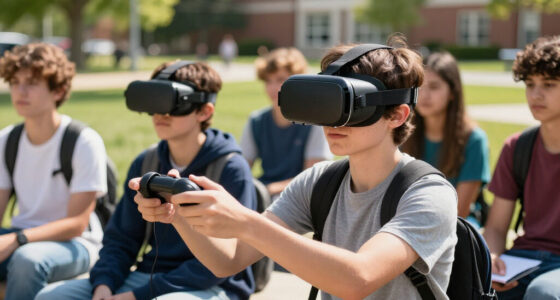
Hermantown schools have officially introduced virtual reality classes into their curriculum, becoming the first district in the region to do so. The initiative aims to enhance student engagement and provide immersive learning experiences, with pilot programs already underway. For example, some schools are exploring how virtual reality headsets can be used to improve educational outcomes.
According to district officials, the program involves the use of VR headsets and software tailored to various subjects, including science, history, and geography. The rollout began in select classrooms earlier this month, with plans for broader implementation across grades in the upcoming school year.
Sources confirm that the district has partnered with a local educational technology provider to supply the necessary equipment and training for teachers. Learn more about how virtual reality is transforming education here. The program is funded through a combination of district budget allocations and grants aimed at integrating innovative learning tools.
Teachers involved in the pilot report positive initial feedback, citing increased student participation and curiosity. However, officials emphasize that the program is still in early stages, and comprehensive data on its effectiveness will be collected over the coming months.
Virtual Reality Classes Come To Hermantown Schools
Hermantown has become the first district in the region to weave VR headsets and tailored software directly into its curriculum — a pilot aimed at boosting engagement and making complex subjects immersive for the next generation of learners.
First District in the Region
VR classes officially introduced into the curriculum, with pilot programs already underway in select classrooms.
Engagement & Learning
Teachers in the pilot cite increased student participation and curiosity in early feedback.
Announced March 2024
Broader rollout across grades planned for the upcoming school year.
Where VR Lands in the Curriculum
The program pairs VR headsets with software tailored to individual subjects. Three areas anchor the pilot phase, with expansion contingent on early results and teacher feedback.
Immersive Labs
Virtual experiments let students manipulate models and environments that are costly, dangerous, or impossible to replicate in a traditional classroom.
Walking the Past
Historical sites and events rendered in VR give experiential learners a first-person window into eras that textbooks can only describe.
Virtual Fieldwork
Headsets transport classrooms across terrain and ecosystems, making abstract maps and landforms tangible and explorable.
From Pilot to District-Wide
The rollout follows a deliberate evaluation path. Officials stress the program is in early stages, with comprehensive effectiveness data collected over the coming months.
Select Classrooms
Rollout began earlier this month in chosen pilot rooms, with equipment supplied by a local ed-tech partner.
Teacher Training
Partner provides training; further sessions and community feedback will shape implementation.
Data Collection
Performance and engagement data monitored closely across the next academic year.
Formal Review
End-of-year review decides district-wide expansion or a refined approach.
What We Know vs. What’s Emerging
Confidence levels in the details reported so far. Scale reflects how firmly each element is confirmed by district officials and sources.
* Illustrative confidence scale based on reported source detail — not measured data.
Background, Open Questions & Context
Hermantown’s move sits inside a broader national trend of districts experimenting with immersive learning — with mixed prior results.
Why Now
- Recent advances in VR hardware and software have lowered key barriers.
- Ed-tech trends increasingly favor experiential, personalized learning.
- Prior pilots elsewhere showed mixed outcomes, hinging on implementation quality and teacher training.
- Hermantown’s early adoption reflects a proactive posture toward educational innovation.
What Remains Open
- Long-term classroom adoption numbers are not yet defined.
- Success metrics and measurement methods are still being established.
- Cost-effectiveness and sustainability without grants remain unproven.
- Integration into standard curricula long-term is undecided.
How the Program Is Built
The full traceability chain behind Hermantown’s VR initiative.
Key Questions
The essentials, answered from district statements and reporting.
Q — Which subjects are covered?
Science, history, and geography anchor the pilot, with expansion to other subjects planned based on initial success and feedback.
Q — Are all students participating?
No. The pilot is limited to select classrooms, with broader implementation planned for the next school year.
Q — What equipment is used?
A local educational technology provider supplies VR headsets and classroom-tailored software, along with teacher training.
Q — How is it funded?
A combination of district budget allocations and grants aimed at enhancing educational technology.
Q — When will expansion be decided?
A formal review is scheduled at the end of this school year; expansion decisions follow those findings.
Q — What happens next?
Close monitoring of performance and engagement data, additional teacher training, and community feedback shape the path forward.
Potential Impact on Student Engagement and Learning
The introduction of virtual reality classes in Hermantown schools represents a significant step toward integrating advanced technology into education. If successful, it could serve as a model for other districts seeking to modernize their curricula and improve student outcomes. The immersive nature of VR has the potential to make complex subjects more accessible and engaging, especially for visual and experiential learners.
Moreover, this initiative aligns with broader trends in educational technology, which increasingly emphasize experiential and personalized learning. The district’s move could influence future investments in digital tools, shaping how education evolves in the region.
virtual reality headsets for education
As an affiliate, we earn on qualifying purchases.
As an affiliate, we earn on qualifying purchases.
Background and Regional Trends in Educational Technology
While virtual reality has been explored in educational settings for several years, widespread adoption has been limited due to costs and technical challenges. Hermantown’s move to implement VR classes is part of a growing trend among school districts nationwide to experiment with immersive learning tools.
Previous pilot projects in other districts have shown mixed results, often depending on implementation quality and teacher training. The focus on early adoption by Hermantown reflects a proactive approach to staying ahead in educational innovation, leveraging recent advances in VR hardware and software.
There is no indication yet whether the district’s program will expand beyond initial classrooms or how it will be integrated into standard curricula long-term.
educational VR software for schools
As an affiliate, we earn on qualifying purchases.
As an affiliate, we earn on qualifying purchases.
Unconfirmed Details About Program Scope and Effectiveness
It is not yet clear how many classrooms will fully adopt VR technology in the long term or how the district will measure the program’s success. Data on student learning outcomes and engagement levels over time are still being collected, and the full impact remains to be seen.
Additionally, questions remain about the cost-effectiveness of the program and whether it will be sustainable without ongoing external funding or grants.
VR headsets for classroom learning
As an affiliate, we earn on qualifying purchases.
As an affiliate, we earn on qualifying purchases.
Next Steps in Program Expansion and Evaluation
The district plans to monitor the pilot program closely over the next academic year, collecting data on student performance and engagement. Based on these findings, officials will decide whether to expand VR classes district-wide or refine their approach.
Further teacher training sessions and community feedback will also shape future implementation. The district has scheduled a follow-up review for the end of the current school year to assess progress and determine next steps.
As an affiliate, we earn on qualifying purchases.
Key Questions
What subjects are covered by the virtual reality classes?
The VR program currently includes science, history, and geography, with plans to expand to other subjects based on initial success and feedback.
Are all students participating in VR classes?
No, the program is currently limited to select classrooms as part of a pilot phase, with broader implementation planned for the next school year.
What equipment is used for the VR classes?
The district has partnered with a local educational technology provider to supply VR headsets and software tailored for classroom use.
How is the district funding this initiative?
The program is funded through district budget allocations and grants aimed at enhancing educational technology.
When will the district decide on expanding VR classes?
A formal review is scheduled at the end of this school year, after which decisions regarding expansion will be made.
Source: rss
Fall Picks
fall essentials
As an affiliate, we earn on qualifying purchases.