
TL;DR

Play games on Amazon Luna for your next adventure, included with Prime
- A rotating selection of games, no download needed
- Play on TV, laptop or phone
- Fast, free delivery for your gear, too
Canon showcased a prototype of a pocket-sized, high-quality handheld mixed reality device, along with innovative waveguide optics and a new XR collaboration software suite at AWE. These developments indicate ongoing efforts to expand enterprise XR tools, though the device is not yet commercially available.
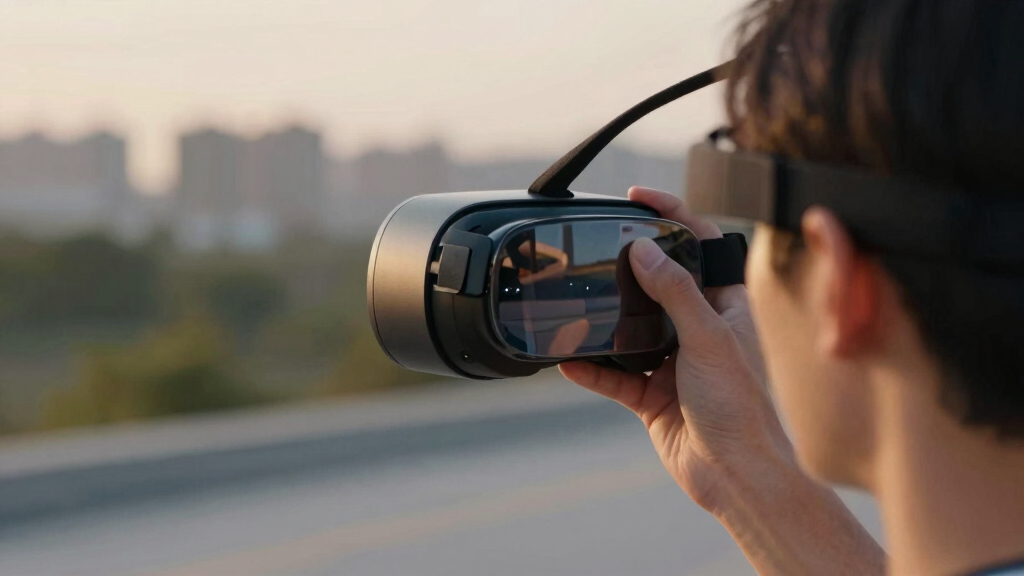
Canon unveiled a concept model of a portable, high-image-quality mixed reality device at the Augmented World Expo (AWE) this week, marking a significant step in its XR product development. The device, described as a ‘pocket-size’ tethered MR headset, is currently under development and not yet available for purchase, but Canon is actively seeking partners for potential commercialization. This announcement highlights Canon’s ongoing efforts to expand its enterprise XR offerings and innovate in AR hardware.
Canon’s concept handheld MR device aims to deliver high-definition visuals in a compact form factor, with the company emphasizing its seamless compatibility with XR applications. While specific technical specifications have not been disclosed, Canon indicated the device is designed for enterprise use, potentially targeting industries requiring portable mixed reality solutions.
In addition to the MR device, Canon introduced a high-efficiency waveguide for augmented reality glasses. The waveguide prototype features a 30-degree field of view, with optical coupling efficiency exceeding 15,000 nits per lumen and over 85% transmittance. Canon demonstrated two configurations: one with a microLED display and another with microOLED, suggesting a focus on lightweight, less immersive AR glasses rather than fully immersive headsets.
Furthermore, Canon announced the upcoming release of MREAL Collaborator, a new XR software designed for manufacturing and design professionals. The software, which will offer a free trial starting in early July, is compliant with OpenXR standards, facilitating cross-device sharing and remote collaboration. Canon states the platform is intended to enable users without specialized 3D graphics expertise to manipulate spatial data easily.
Potential Impact on Enterprise XR Market
The introduction of a portable MR device and advanced waveguide optics by Canon signals a push toward more accessible, lightweight XR hardware for enterprise applications. If brought to market, the device could offer industries such as manufacturing, design, and remote collaboration a new level of portability and high-quality visuals, expanding XR adoption beyond traditional headsets.
Canon’s focus on collaboration software also suggests an increasing emphasis on remote, cross-platform workflows in enterprise XR, aligning with industry trends toward virtual collaboration and digital twin applications. These developments could influence competitors and accelerate innovation in the XR hardware and software space.
Products Worth Considering

Jackery Explorer 1000 v2 Portable Power Station, 1070Wh, 1500W

Amazon Kindle Paperwhite (2024, 16 GB) – 7-inch Glare-Free Display, Black

Jackery Explorer 300 Portable Power Station with SolarSaga 100W Solar Panel
As an affiliate, we earn on qualifying purchases.
Canon’s XR Development History and Industry Trends
Canon has been involved in XR hardware development for several years, notably through its MREAL mixed reality headsets, primarily aimed at enterprise clients. Its recent innovations at AWE reflect an ongoing effort to refine and miniaturize XR hardware, responding to market demand for portable, high-quality mixed reality solutions. The company’s focus on waveguide optics aligns with broader industry trends toward lightweight AR glasses with practical FOVs and high brightness, suitable for enterprise use cases.
While Canon’s handheld MR device remains in prototype stage, similar devices are already popular in Japan’s enterprise sector, indicating a potential market opportunity if the product reaches commercialization. The company’s emphasis on software interoperability via OpenXR also positions it to integrate smoothly into existing XR ecosystems.
“Canon’s new handheld MR device aims to combine portability with high-quality visuals, which could revolutionize enterprise XR workflows.”
— an anonymous researcher
Unconfirmed Technical Specs and Market Readiness
Details regarding the final technical specifications, such as resolution, weight, and battery life of the handheld MR device, remain undisclosed. It is also unclear when the device might be commercially available, as Canon has only stated it is in development and seeking partners. Additionally, the market response and potential adoption outside Japan are still uncertain.
Next Steps for Canon’s XR Innovation Roadmap
Canon plans to continue development of the handheld MR device and seek industry partners to facilitate its potential commercialization. The company will also release a free trial of MREAL Collaborator in early July, aiming to gather user feedback and expand its XR software ecosystem. Further updates on device specifications and availability are expected in the coming months.
Key Questions
When will Canon’s handheld MR device be available for purchase?
Canon has not announced a specific release date; the device is currently in development and seeking partners, so availability remains uncertain.
What are the key features of Canon’s new waveguide optics?
The waveguides offer a 30-degree field of view, with optical coupling efficiency over 15,000 nits per lumen and over 85% transmittance, suitable for lightweight AR glasses.
How does Canon’s XR collaboration software support enterprise users?
The software, MREAL Collaborator, allows users without specialized 3D graphics skills to manipulate spatial data easily and supports cross-device sharing via OpenXR, facilitating remote collaboration.
Is Canon’s handheld MR device intended for consumer use?
No, Canon’s focus appears to be on enterprise applications, and the device remains in prototype stage with no announced consumer plans.
Source: Road to VR