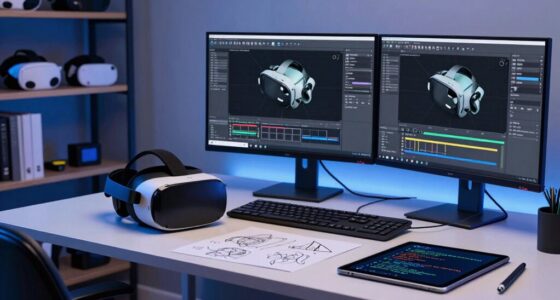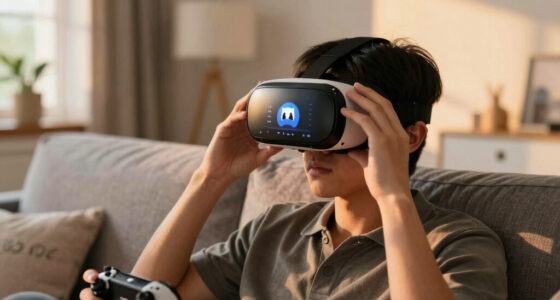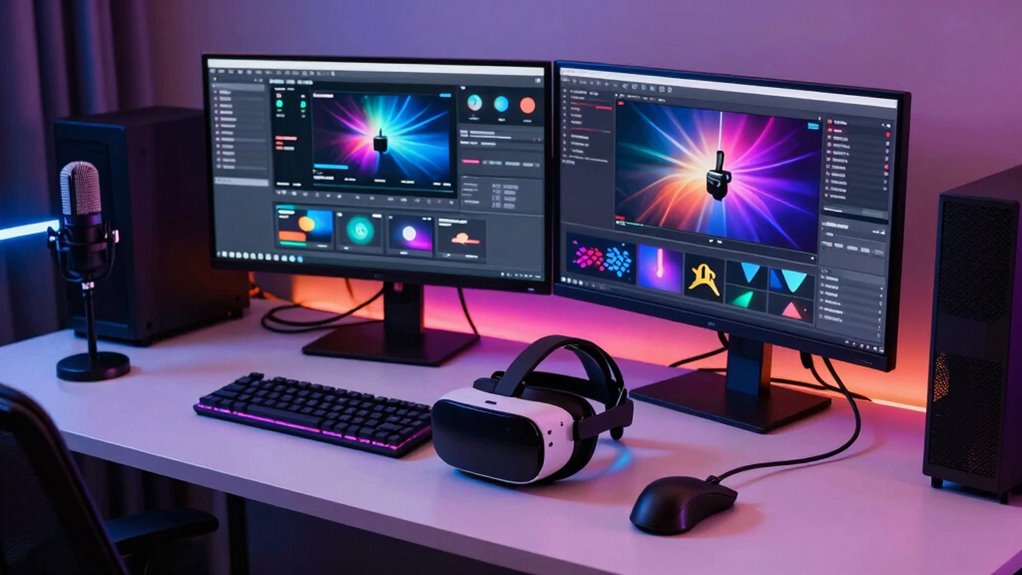

When you stream or record VR content, your setup priorities shift from just visual quality to creating a fully immersive experience. You need to include sensory features like haptic feedback and spatial audio to make the experience believable and engaging for viewers. This means upgrading controllers, audio hardware, and environment setup. By focusing on these elements, you guarantee your content feels authentic and mesmerizing. Keep exploring to learn how to optimize every aspect of your VR setup for streaming.

Play games on Amazon Luna for your next adventure, included with Prime
- A rotating selection of games, no download needed
- Play on TV, laptop or phone
- Fast, free delivery for your gear, too
Key Takeaways
- Streaming and recording require seamless capture and transmission of sensory data, shifting focus from visual clarity to sensory integration.
- High-quality haptic feedback enhances realism and engagement during recorded or streamed experiences.
- Spatial audio is critical for creating immersive soundscapes that accurately convey environment and source localization.
- Hardware upgrades now prioritize sensory devices like advanced controllers and audio systems for authentic experiences.
- Overall setup emphasizes authentic sensory immersion, making VR content more captivating and professional for audiences.
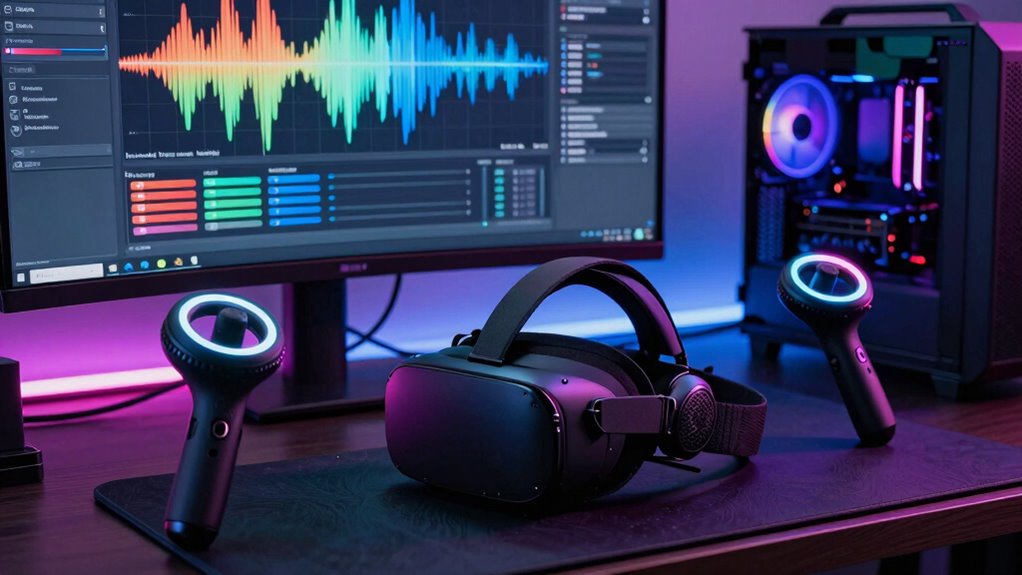
Streaming and recording become integral parts of the virtual reality experience, they’re shifting the way you prioritize your VR setup. No longer are you just focused on the headset’s visual fidelity and comfort; now, you need to consider how well your system captures and transmits your experience. Haptic feedback and spatial audio have become essential elements because they greatly enhance immersion and social interaction. When you’re streaming gameplay or recording sessions, these features make your content more engaging and authentic, so you naturally start to emphasize their quality and integration.
Haptic feedback, which provides tactile sensations synced with visual or audio cues, has moved from a luxury to a necessity. If your goal is to create content that feels real and visceral, you want your VR controllers and haptic devices to deliver precise, responsive feedback. This makes interactions more believable and helps viewers or listeners feel like they’re right there with you. As you record, you’ll notice that high-quality haptic feedback not only improves your personal experience but also boosts the overall production value, making your streams more compelling and your recordings more immersive. Additionally, the compatibility of hardware with various VR platforms influences how seamlessly these features integrate into your setup.
High-quality haptic feedback enhances immersion, making interactions more believable and boosting your content’s realism.
Similarly, spatial audio plays a pivotal role in how you set up your VR environment for streaming and recording. Good spatial audio creates a 3D soundscape that accurately mimics real-world acoustics, allowing you to pinpoint the origin of sounds and voices. When you’re streaming multiplayer games or capturing VR experiences for later viewing, spatial audio ensures your audience perceives the environment as natural and three-dimensional. This adds depth and realism, making your content stand out. You might find yourself investing in high-quality headphones and audio interfaces that support spatial audio, ensuring that every whisper, footstep, or environmental sound is crystal clear and properly placed. Additionally, understanding the importance of audio hardware helps you optimize your setup for maximum sound clarity.
All these considerations lead you to reassess your priorities beyond just the visual aspects of VR. You’re now contemplating how to optimize your setup for audio and tactile feedback, knowing that these elements directly impact your content’s authenticity. You might upgrade your controllers, invest in better audio hardware, or tweak your room acoustics. Your focus shifts from solely achieving visual clarity to creating an all-encompassing sensory experience that’s ready for streaming or recording. Additionally, understanding the importance of content quality helps you make informed decisions about your hardware investments to maximize viewer engagement. Recognizing the importance of high-fidelity audio ensures your content remains immersive and professional, further elevating your VR experience. This comprehensive approach ultimately enhances the overall immersive quality of your VR sessions, making them more captivating for your audience.
Products Worth Considering

Bose SoundLink Flex Bluetooth Speaker (2nd Gen) – Portable Outdoor Speaker with Hi‑Fi Audio, Waterproof and Dustproof, USB‑C, Up to 12 Hours

LG UltraGear 27GX704A-B 27-inch QHD OLED Gaming Monitor

LG UltraGear 34GX90SA-W 34-inch WQHD Curved OLED Gaming Monitor
As an affiliate, we earn on qualifying purchases.
Frequently Asked Questions
How Do Streaming and Recording Impact VR Hardware Choices?
Streaming and recording influence your VR hardware choices because you need hardware with excellent hardware compatibility to handle additional devices like capture cards and microphones. Also, you must consider bandwidth requirements, ensuring your internet connection can support high-quality streams and recordings without lag or quality loss. Prioritizing powerful GPUs, ample RAM, and reliable network setups helps you deliver smooth, high-quality VR experiences while recording or streaming simultaneously.
What Safety Considerations Are Affected by Streaming VR Content?
When streaming VR content, safety considerations like privacy concerns become vital, as your gameplay is visible to others and potentially recorded. You need to be mindful of sensitive information and personal boundaries. Content moderation also plays a role, guaranteeing that what you share complies with platform rules to prevent harmful or inappropriate material from being broadcast. Prioritizing these factors helps protect your privacy and guarantees a safe, responsible streaming environment.
How Does Streaming Influence VR User Comfort and Ergonomics?
Streaming can impact your VR experience by emphasizing user comfort and ergonomic design. You might worry about added weight or awkward positioning, but with proper adjustments, these concerns lessen. Streaming setups often encourage better ergonomic practices, like adjustable mounts and balanced headsets. This helps prevent fatigue. So, by prioritizing ergonomic design, you enjoy longer, more comfortable sessions, making streaming a seamless part of your VR adventures.
Are There Specific Software Tools for Optimized VR Streaming?
Yes, you can find software tools that optimize VR streaming by integrating virtual cameras and streaming overlays. Programs like OBS Studio and Streamlabs allow you to add virtual cameras, providing flexible viewpoints and enhanced visuals. These tools let you customize overlays to display stats or chat, making your stream more engaging. Using these features, you can improve your VR streaming setup, ensuring a smoother, more professional experience for viewers.
How Does Streaming Affect VR Content Quality and Latency?
Streaming in VR is like trying to juggle fireballs—your bandwidth limitations and content compression can cause sparks of lag and dips in quality. As you stream, high bandwidth guarantees smooth motion, but compression may blur details, increasing latency. You need to balance quality and performance, prioritizing stable bandwidth and efficient compression to keep your virtual experience immersive and responsive without sacrificing clarity or causing motion sickness.
Conclusion
As you adjust your VR setup for streaming and recording, the old priorities fade into the background. Now, every cable, sensor, and space must align perfectly—yet the true challenge lies ahead. With each tweak, you’re on the brink of uncovering a seamless experience, but the final piece remains elusive. Will you find it in time? The future of your immersive adventures depends on what you do next—daring, precise, and just out of reach.