

To set rules for VR use without causing conflicts, start by understanding your child’s interests and needs. establish clear, age-appropriate guidelines, and involve them in creating these rules for better buy-in. Create a consistent routine with specific times and limits, and use positive reinforcement to encourage responsible behavior. Regularly monitor and adjust rules as they grow, and keep open communication about safety. If you keep these strategies in mind, you’ll find it easier to manage VR time smoothly and effectively.

Play games on Amazon Luna for your next adventure, included with Prime
- A rotating selection of games, no download needed
- Play on TV, laptop or phone
- Fast, free delivery for your gear, too
Key Takeaways
- Establish clear, consistent, and age-appropriate rules with visual schedules to set expectations calmly.
- Involve children in creating rules to foster ownership and reduce resistance.
- Set specific routines and use timers to promote responsible usage without conflict.
- Ensure a safe environment and educate kids about safety and content boundaries.
- Maintain open communication and regularly review rules to adapt as children grow.
Understanding Your Child’s VR Interests and Needs
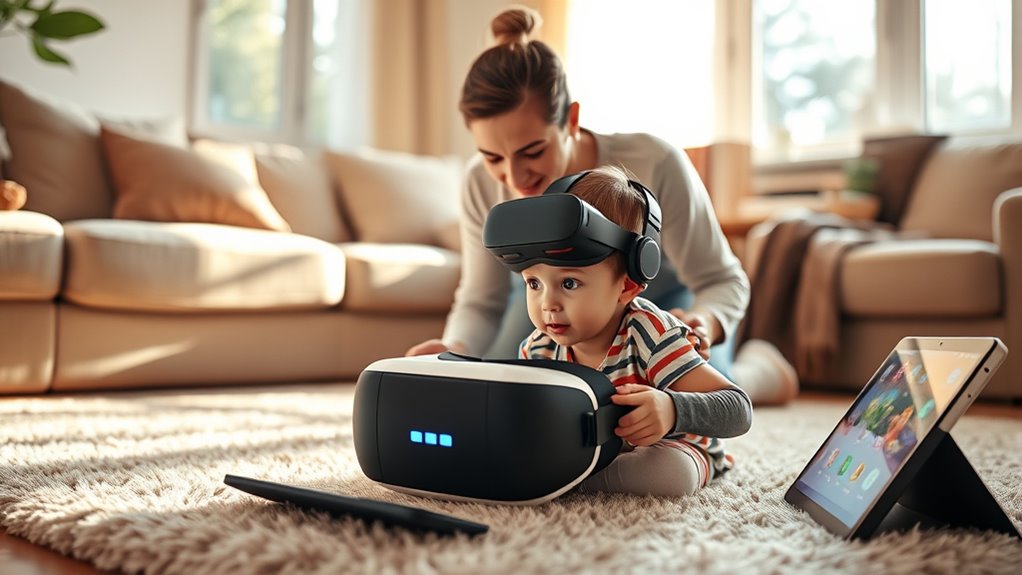
Understanding your child’s VR interests and needs begins with paying close attention to what excites them and how they interact with virtual environments. Notice which types of games or experiences they gravitate toward—are they drawn to creative building, educational content, or action-packed adventures? Observe their reactions during VR sessions—do they seem engaged, overwhelmed, or restless? Knowing what motivates and stimulates them helps you tailor their VR experience to be both enjoyable and appropriate. Also, consider how long they prefer to stay immersed and whether they’re easily distracted or focused. Recognizing visual fidelity and how it impacts their immersion can further guide your choices. Being aware of developmental needs during VR use helps you support healthy boundaries and growth. Additionally, understanding how sensory input influences their comfort can assist in creating a safe VR environment. Paying attention to sensory sensitivities can help prevent overstimulation and ensure a positive experience. Incorporating age-appropriate content and ensuring it aligns with their interests can promote a more positive experience. By paying close attention, you gain insight into their preferences and developmental needs, enabling you to guide their VR use wisely and ensure it complements their growth.
Setting Clear and Age-Appropriate Boundaries

Establishing clear and age-appropriate boundaries for your child’s VR use is essential to guarantee a safe and positive experience. Start by setting time limits based on your child’s age and attention span, ensuring VR doesn’t interfere with other activities. Clearly define which types of content are acceptable, avoiding violent or inappropriate material. Make sure your child understands the importance of taking regular breaks to prevent eye strain and discomfort. Use simple, consistent rules, such as no VR before homework or chores are completed. Communicate these boundaries openly, explaining why they matter for safety and well-being. Regularly revisit and adjust boundaries as your child grows, maintaining a balance between freedom and guidance. Incorporating safe content practices helps ensure a responsible VR experience. This approach helps your child enjoy VR responsibly without feeling restricted. Additionally, staying informed about battery reconditioning techniques can be beneficial for parents who manage devices used during VR sessions, offering a sustainable way to maintain equipment. Being aware of smart home technology can also help parents create a safer environment, such as using cameras or smart locks to monitor the child’s activity and ensure a secure space. Understanding device safety guidelines can further enhance your ability to set effective boundaries and protect your child during VR use. Moreover, familiarizing yourself with content moderation tools can help you better control what your child accesses during their virtual reality experiences.
Involving Kids in Rule-Making for Better Compliance

Involving kids in rule-making encourages them to take ownership of their VR habits and understand why boundaries are important. When kids help set rules, they feel respected and motivated to follow them. It also teaches responsibility and decision-making skills. To make this effective, consider these steps:
- Discuss the reasons behind boundaries so they see their importance.
- Ask for their input on what rules might work best.
- Negotiate compromises that satisfy both safety and fun.
- Review and adjust rules periodically, involving them in the process.
- Incorporate age-appropriate tools to help monitor and enforce VR usage, making the boundaries clearer and easier to manage. Using positive reinforcement can further encourage compliance and create a more cooperative environment. Establishing clear boundaries helps set expectations and reduces potential conflicts during rule discussions. Additionally, incorporating consistent routines can strengthen understanding and adherence to the established rules. Including educational content about safety related to VR can also enhance their awareness and responsible use.
Creating a Consistent Routine for VR Use

You can help your child build healthy habits by setting daily play times for VR. Clear boundaries make it easier for them to understand when it’s okay to use it and when to stop. Consistency in these routines encourages responsible and enjoyable VR experiences. Additionally, understanding electric bike horsepower can inform you about the power and safety features of different devices your child might be interested in. Knowing how home charging works can also help you set appropriate safety guidelines for any charging stations or devices they use, especially since many electronic devices now involve power management systems to ensure safe operation. Being aware of room‑size wattage guides can help you ensure the space is properly heated if you decide to incorporate electric heating solutions alongside VR activities. Moreover, establishing clear device usage boundaries helps reinforce safe and balanced device use within your child’s daily routine.
Set Daily Play Times
Setting daily play times helps create a predictable routine that benefits kids and parents alike. When you set specific times for VR, your child knows what to expect and feels more secure. To keep things consistent, consider these steps:
- Choose specific times each day—like after homework or before dinner.
- Limit play sessions to a reasonable duration, such as 30 minutes.
- Stick to the schedule, even on weekends, to build habits.
- Use timers or alarms to signal when VR time starts and ends.
- Incorporating routine consistency can further reinforce positive habits and reduce conflicts over screen time.
- Establishing clear boundaries helps your child understand limits and fosters responsible use.
- Consistent routines contribute to healthy habits that support your child’s overall development.
- Maintaining a steady schedule also helps prevent disruptions to other daily activities and responsibilities.
This consistency helps your child develop self-discipline and prevents overuse. Keeping a routine ensures VR stays a fun, controlled activity rather than a source of conflict.
Establish Clear Boundaries
Establishing clear boundaries around VR use helps reinforce the routine you’ve already set and guarantees your child understands what’s acceptable. Be specific about when, where, and for how long they can use VR. Consistency is key—stick to the rules even on weekends or special occasions. Use a visual chart or schedule to make expectations clear. To help you organize, here’s a simple example:
| Time of Day | Location | Duration |
|---|---|---|
| After homework | Living room | 30 minutes |
| Weekend mornings | Playroom | 45 minutes |
| During breaks | Bedroom | 15 minutes |
| Special occasions | Den | Up to 1 hour |
This structure helps your child know what to expect and reduces conflicts.
Using Positive Reinforcement to Encourage Responsible Behavior

Have you ever wondered how positive reinforcement can shape responsible behavior in kids using VR? It’s a powerful tool to encourage good habits and compliance while keeping the experience enjoyable. Here are four ways to do it effectively:
- Praise immediately when your child follows the rules, reinforcing their understanding.
- Use virtual rewards, like badges or levels, to motivate responsible actions.
- Offer tangible rewards outside of VR, such as stickers or extra playtime.
- Celebrate progress over perfection to build confidence and continued good behavior.
Monitoring and Adjusting Rules as Your Child Grows

As your child grows and their abilities develop, it’s important to revisit and adapt the rules you’ve set for VR use. Regularly check in to see how they’re engaging with the technology and whether their interests or skills have changed. Adjust time limits and content restrictions to match their maturity level, ensuring they stay safe while exploring new experiences. Keep an eye on their reactions and behavior during VR sessions to identify any issues early. As they demonstrate responsibility, consider gradually loosening restrictions to foster independence. Remember, maintaining open communication helps you understand their needs and concerns. By staying proactive and flexible, you help your child enjoy VR responsibly and safely as they grow.
Communicating Openly About Safety and Expectations

Talking openly with your child about safety and expectations sets the foundation for responsible VR use. When you communicate clearly, your child understands what’s acceptable and feels comfortable asking questions. To foster this openness:
- Share your concerns calmly and listen to their perspective.
- Explain the importance of taking breaks and avoiding risky behaviors.
- Set clear boundaries about what content is appropriate.
- Encourage them to speak up if they feel uncomfortable or unsure.
Frequently Asked Questions
How Can I Handle Resistance When Setting VR Rules?
When facing resistance while setting VR rules, stay calm and listen carefully. Explain the reasons behind the rules, emphasizing safety and fun. Involve your child in creating the guidelines, so they feel empowered rather than controlled. Offer choices within boundaries to encourage cooperation. Consistently enforce rules with patience, and praise good behavior. This approach helps your child understand the importance of rules without feeling like you’re fighting with them.
What Are Common Signs of VR Overuse in Kids?
A warning sign of VR overuse is when your child frequently complains of eye strain, headaches, or dizziness, which shows they might be pushing their limits. You might also notice them withdrawing from other activities or neglecting responsibilities. As the saying goes, “Too much of anything is good for nothing.” Keep an eye on their behavior, set clear limits, and encourage breaks to prevent overuse and keep VR fun and safe.
How Do I Balance VR Time With Other Activities?
You can balance VR time with other activities by setting clear, consistent limits and creating a daily schedule. Encourage your child to prioritize homework, outdoor play, and family time before or after VR sessions. Use timers to enforce boundaries and offer alternative activities that interest them. Communicate openly about why these limits matter, and involve your child in making the schedule to promote cooperation and balance.
What Are Age-Appropriate VR Content Options?
You should choose age-appropriate VR content by focusing on educational, creative, and gentle games designed for your child’s age. Look for titles with positive themes, simple controls, and clear instructions. Check reviews and ratings to guarantee safety and appropriateness. Avoid violent or overly intense experiences. Regularly monitor their play to ensure they stay within suitable content boundaries, fostering a safe and enjoyable VR experience.
How Can I Involve My Child in Safety Discussions?
You can involve your child in safety discussions by asking for their opinions and listening actively. Explain why safety rules matter in a way they understand, and encourage them to share their ideas for staying safe. Make it a collaborative effort, so they feel empowered and responsible. Regularly check in with them, and adjust rules together as they grow, fostering trust and open communication about VR safety.
Conclusion
So, you’ve set the rules, watched your kid’s VR adventures, and even involved them in the process—who knew parenting could be so interactive? Ironically, the more you try to control their virtual world, the more they’ll cherish it. But hey, by staying consistent and open, you might just keep the peace—and maybe even enjoy a few virtual adventures together. After all, a little balance keeps everyone happy, even in a digital universe.
Halloween Picks
halloween
As an affiliate, we earn on qualifying purchases.