Your room setup greatly affects your VR fitness quality because proper sensor calibration, good lighting, and a clear, spacious area improve tracking accuracy and safety. Unaligned sensors, bright or uneven lighting, or obstacles can cause lag, jitter, or false readings, disrupting your workout. Ensuring your environment is optimized helps you move freely and stay safe, making your sessions more enjoyable and effective. Keep exploring to discover how each setup detail makes a difference.

Play games on Amazon Luna for your next adventure, included with Prime
- A rotating selection of games, no download needed
- Play on TV, laptop or phone
- Fast, free delivery for your gear, too
Key Takeaways
- Proper sensor placement and calibration ensure accurate movement tracking, directly impacting workout precision.
- Consistent, diffused lighting prevents infrared sensor interference and tracking disruptions.
- A clutter-free, spacious room allows natural movement and reduces tripping hazards.
- Adequate ceiling height and secure flooring improve safety and accommodate dynamic exercises.
- An optimal environment minimizes technical glitches, enhancing overall VR fitness performance and motivation.
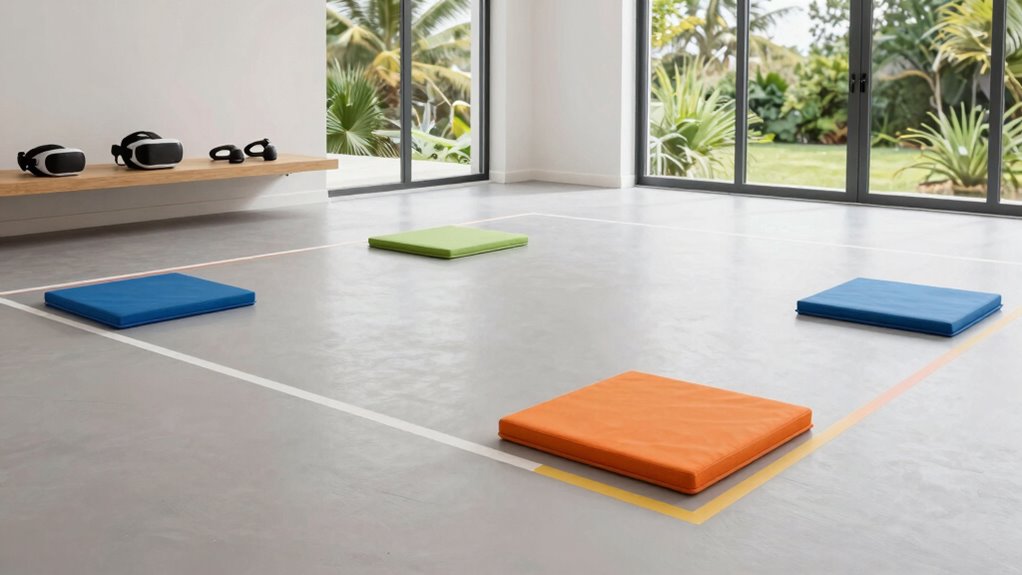
Setting up your space properly is vital for a safe and effective VR fitness experience. When your room isn’t well-prepared, it can impact how well your VR system tracks your movements, leading to frustration or even injuries. One of the most important steps is guaranteeing proper sensor calibration. Sensors or base stations need to be correctly positioned and calibrated to accurately detect your position and movements. If they’re misaligned or not calibrated correctly, you might notice lag or jitter, which disrupts the flow of your workout. Take the time to follow your VR system’s calibration instructions, guaranteeing sensors are placed at ideal angles and distances. This careful positioning is crucial for accurate tracking, ensuring every movement is captured precisely. This way, your system can precisely track every squat, punch, or stretch you perform.
Proper sensor calibration ensures accurate tracking for a safe, effective VR fitness experience.
Lighting conditions also play an essential role in your VR setup. Bright, uneven lighting can interfere with sensors, especially those relying on infrared tracking. For example, sunlight streaming through windows or harsh overhead lights can cause false readings or tracking loss. To avoid this, aim for consistent, diffused lighting in your workout space. If you’re in a room with lots of natural light, consider using blackout curtains or shades during your workouts. If you’re using sensors that rely on infrared signals, guarantee there aren’t any reflective surfaces or objects that could bounce signals unpredictably. Maintaining stable lighting helps your sensors perform reliably, giving you a seamless experience that keeps you engaged and safe. Additionally, lighting consistency can prevent unnecessary disruptions during your workout sessions. Proper lighting setup is also important to reduce sensor interference, which can compromise your workout quality. Being mindful of ambient light sources can help prevent unexpected interruptions, ensuring your movements are tracked accurately.
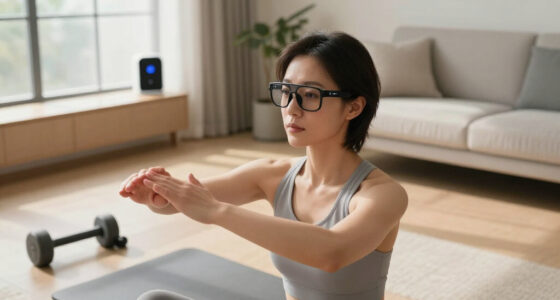
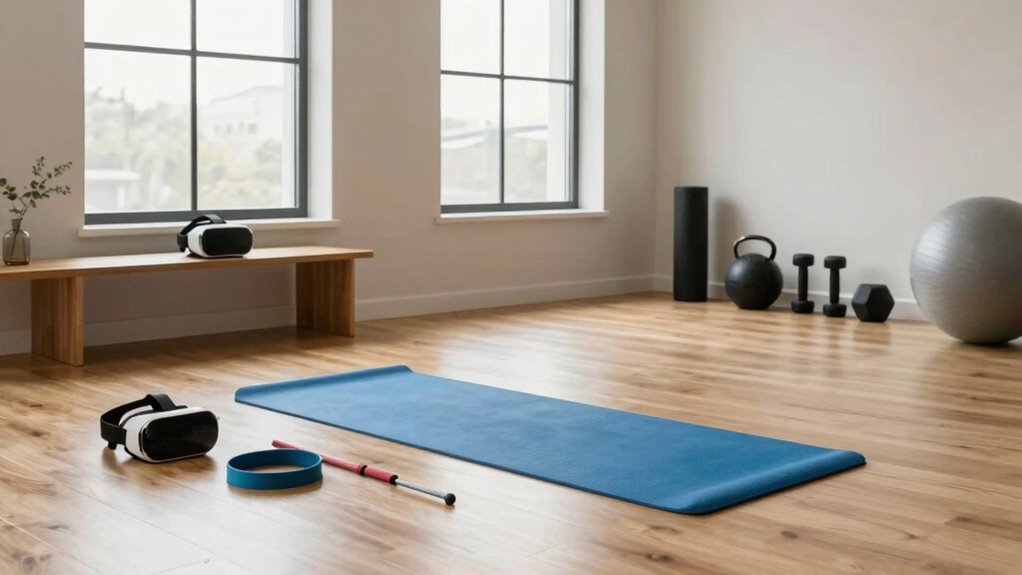
Your room’s physical setup impacts your movement range and safety, too. Clear the space of clutter, furniture, or anything you might trip over. The more open your area, the more freedom you’ll have to perform dynamic exercises without worry. Make sure your ceiling height allows for jumping or reaching overhead comfortably, and that your flooring provides enough grip so you don’t slip during high-intensity moves. A well-organized, unobstructed space not only prevents accidents but also enhances your ability to move naturally, making your workout both more effective and enjoyable. Additionally, proper room dimensions are crucial for avoiding restrictions in your movement and ensuring full range of motion during exercises.
Ultimately, your VR fitness success hinges on how well you prepare your environment. Proper sensor calibration guarantees accurate tracking, while ideal lighting conditions prevent technical glitches. A clutter-free, spacious area allows for unrestricted movement, maximizing safety and performance. Taking these steps might seem small, but they make a significant difference in your overall experience. When your room setup is perfect, you’ll find yourself more motivated, less frustrated, and able to focus entirely on your workout. Keep these factors in mind, and you’ll enjoy smoother, more engaging VR fitness sessions every time.
Products Worth Considering

Samsung 32-inch Odyssey OLED G8 (G80SH) 4K QD-OLED Gaming Monitor

Bose QuietComfort Wireless Noise-Cancelling Headphones, Petal Pink

DJI Osmo Mobile 7P Phone Gimbal with Mic Mini Transmitter, Infinity Black
As an affiliate, we earn on qualifying purchases.
Frequently Asked Questions
How Does Lighting Affect VR Fitness Performance?
Lighting impacts your VR fitness performance by influencing visibility and immersion. Ambient illumination that’s too bright or too dim can cause eye strain or reduce focus. The right color temperature enhances clarity, making it easier to see controllers and virtual objects. Ideally, you want balanced lighting that minimizes glare and shadows, so your movements stay precise and natural. Proper lighting setup guarantees you stay comfortable and engaged throughout your workout.
Can Room Size Impact VR Tracking Accuracy?
Your room size can substantially influence VR tracking accuracy, like trying to dance in a crowded room. If your space is too small, sensor calibration becomes tricky, and you’ll struggle with precise movements. Conversely, a larger play area boundaries give sensors room to work their magic, improving tracking and making your fitness experience smoother. Make sure your space matches your VR system’s recommended size for the best results.
What Safety Precautions Are Essential During VR Workouts?
During VR workouts, you should prioritize safety by ensuring your space is clear of obstacles and using safety mats to prevent falls. Keep an eye on your motion sensors to maintain accurate tracking, but also be mindful of your surroundings. Always warm up beforehand and stay aware of your limits. These precautions help prevent injuries, making your VR fitness sessions safer and more effective.
How Does Clutter Interfere With VR Gameplay?
Clutter causes distraction and hampers your VR gameplay by making it harder to focus on your movements. It also creates space limitations, increasing the risk of tripping or bumping into objects during active exercises. When your room is cluttered, you might not have enough clear area to move freely, which reduces your workout effectiveness and safety. Maintaining your space tidy guarantees smoother, more immersive VR fitness sessions.
Are There Optimal Room Temperatures for VR Fitness?
You should aim for a room temperature around 68-72°F to optimize your VR fitness experience. Proper temperature regulation keeps you comfortable and prevents overheating during intense workouts. Good ventilation efficiency is key, so make sure your space has adequate airflow to circulate fresh air and manage humidity. This balance helps you stay focused and energetic, ultimately enhancing your performance and enjoyment during VR fitness sessions.
Conclusion
So, next time you hit your VR fitness routine, remember that your room setup isn’t just about space—it’s about boosting your experience. Researchers suggest that a well-organized, open environment can improve movement accuracy and motivation, making workouts more effective. It’s not just theory; your surroundings truly influence your performance. Take the time to optimize your space, and you’ll likely see better results and enjoy your fitness journey even more. Your room really does make a difference.