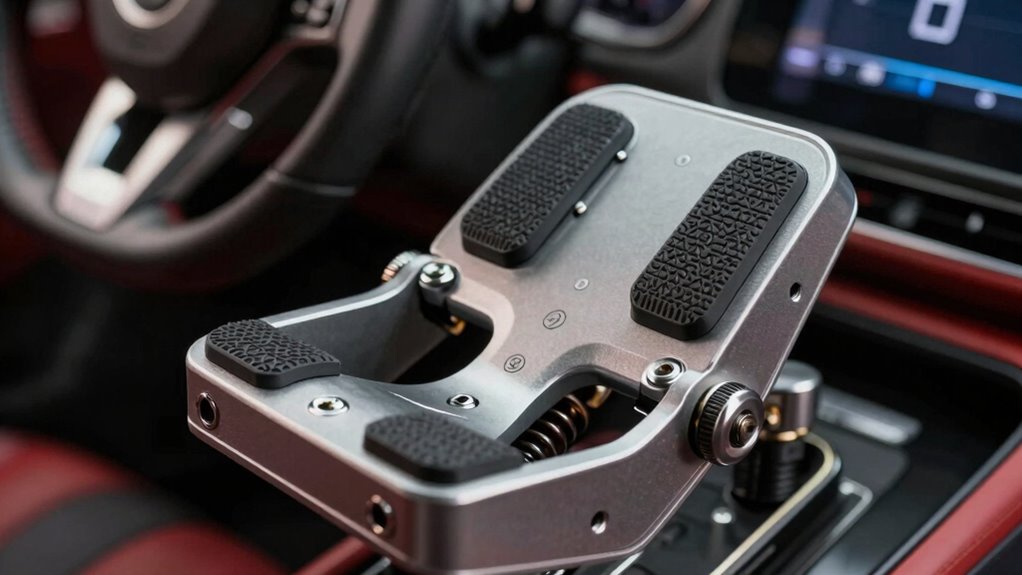

Load cell pedals matter more than many new sim racers realize because they provide realistic, consistent force feedback that improves control and precision. Unlike potentiometer pedals, load cells measure applied force more accurately, giving you smoother and more deliberate inputs. This leads to better lap times and a more authentic feel that bridges the gap between virtual and real driving. Keep going, and you’ll discover how upgrading your pedals can truly elevate your racing experience.
Key Takeaways
- Load cell pedals provide more realistic and consistent pedal feel, crucial for accurate control and improved lap times.
- They deliver reliable force feedback over time, maintaining sensitivity despite wear or manufacturing variances.
- Proper calibration ensures virtual pedal response matches real-world sensations, enhancing driving precision.
- Understanding force measurement technology helps optimize setup, troubleshoot issues, and stay competitive.
- Upgrading load cell components keeps racers ahead with better feedback, realism, and long-term performance benefits.
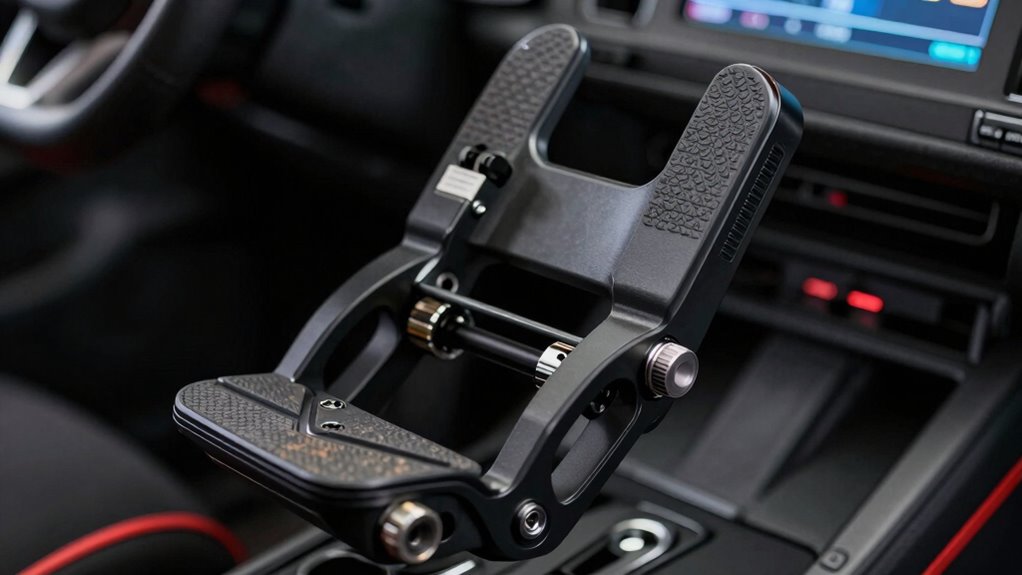
If you’re serious about improving your sim racing experience, load cell pedals can make a significant difference. Unlike traditional potentiometer-based pedals, load cell pedals use strain gauges to measure the force you apply, providing a more realistic and consistent feel. This heightened accuracy enhances your connection to the virtual car, making every brake and throttle input more precise. When you integrate load cell pedals, you’ll notice that your control over braking force becomes much more intuitive, allowing for smoother and more deliberate inputs that translate directly into better lap times.
Load cell pedals offer more realistic, precise control for improved sim racing performance and smoother inputs.
One of the biggest advantages of load cell pedals is their ability to deliver more consistent force feedback. With traditional pedals, the resistance can vary due to mechanical wear or manufacturing inconsistencies. Load cell pedals, however, maintain consistent sensitivity over time, so your pedal responses stay predictable and reliable. This consistency is essential, especially when it comes to practicing pedal techniques or pushing your limits in competitive racing. Plus, the realism they add helps bridge the gap between sim racing and real-world driving, making your training more effective.
A key aspect often overlooked by new sim racers is pedal calibration. Properly calibrating your load cell pedals ensures that the force you apply corresponds accurately to the virtual pedal’s response. When you calibrate correctly, you avoid issues like dead zones or overly sensitive inputs, which can throw off your timing and control. Calibration might involve setting the pedal’s zero point or adjusting the maximum force threshold, depending on your setup. Taking the time to fine-tune this calibration process results in a more natural feel, giving you confidence that your inputs will behave exactly as you expect during a race. Additionally, understanding the force measurement technology behind load cell pedals can help you optimize your setup for maximum performance. Recognizing the sensor accuracy and how it impacts pedal response can further enhance your control and consistency. Knowing how force sensing works can also help you troubleshoot and improve your overall setup for optimal results. Being familiar with the force measurement technology used in load cell pedals can also allow you to select the best components for your specific needs, ensuring long-term satisfaction.
Furthermore, staying informed about advancements in sensor technology can help you upgrade your setup over time and maintain a competitive edge.

MOZA CRP2 Load Cell Pedals Pressure Sensor Pedal for Sim Racing Driving Video Games
- Material: CNC Aerospace-grade Aluminum
- Heel Plate: Carbon Fiber
- Sensor: 200K Load Cell
As an affiliate, we earn on qualifying purchases.
As an affiliate, we earn on qualifying purchases.
Frequently Asked Questions
How Do Load Cell Pedals Improve Braking Precision?
Load cell pedals improve your braking precision by providing consistent brake sensitivity and realistic pedal feedback. With load cells, you can modulate pressure more accurately, feeling every nuance of your braking force. This allows you to apply just the right amount of pressure, reducing overshooting or under-braking. As a result, your control improves, making your braking smoother and more precise, which enhances overall lap times and driving confidence.
Are Load Cell Pedals Compatible With All Racing Simulators?
They say, “Know your tools,” and load cell pedals aren’t universally compatible. You might face compatibility issues with certain racing simulators, especially older or less common ones. Calibration challenges can also arise, requiring you to fine-tune settings for peak performance. Before buying, check the pedal’s compatibility list and confirm your software supports load cell technology. Doing so guarantees you get the most out of your investment.
What Maintenance Do Load Cell Pedals Require?
You need to regularly check your load cell pedals for wear and tear, especially on the pedal surface and sensor components. Calibration procedures are essential to guarantee accurate feedback; do them every few months or if you notice inconsistent response. Keep the pedals clean and free of dust, and inspect cables for damage. Proper maintenance extends their lifespan and keeps your racing experience precise and responsive.
Can Beginners Easily Adapt to Load Cell Pedal Systems?
Like a seasoned pilot adjusts their controls, you’ll find beginners can adapt to load cell pedal systems quickly. You just need to focus on sensor calibration and proper pedal mounting. The tactile feedback may feel strange at first, but with a little practice, you’ll gain confidence. The realistic resistance helps you develop better pedal control, making your racing experience more immersive and enjoyable from the very start.
Do Load Cell Pedals Increase Overall Racing Performance?
Yes, load cell pedals can boost your racing performance by improving braking consistency and pedal sensitivity. They provide a more realistic feel, allowing you to modulate braking pressure precisely. This consistency helps you brake more confidently and efficiently, especially during critical moments. As a result, your lap times can improve, and you gain better control over your vehicle, making load cell pedals a valuable upgrade for serious racers.

Logitech G920 Driving Force Racing Wheel and Pedals, Force Feedback + Logitech G Driving Force Shifter – Xbox Series X|S, Xbox One and PC, Mac – Black
- Realistic Racing Simulation Duo: Feel like driving a real race car
- Paired for Precision Control: Full control with wheel, pedals, and shifter
- Precise Gear Control: Helical gears reduce noise and vibration
As an affiliate, we earn on qualifying purchases.
As an affiliate, we earn on qualifying purchases.
Conclusion
Ultimately, embracing load cell pedals can subtly elevate your sim racing experience, like a gentle whisper guiding your every move. They may seem like a small detail, but their influence is quietly profound, helping you find that perfect harmony between control and finesse. As you grow more comfortable, you’ll notice how these pedals become an unspoken partner in your journey, turning each lap into a seamless dance of precision. Sometimes, the quiet touches make all the difference.

MOZA SRP2 Pedals Set of Load Cell Brake and Throttle for PC Racing Game
- High-precision load cell: 100kg capacity for accurate control
- Advanced angle sensor: 15-bit fusion technology for precision
- Customizable pedal setup: Adjust angle, position, and height
As an affiliate, we earn on qualifying purchases.
As an affiliate, we earn on qualifying purchases.

CNRAQR PC Racing Game USB Handbrake for 16Bit SIM for Racing Games, Compatible with G27 G29 G920 G923 T500 T300 Simulate Linear Handbrake(With Fixing Clip and Plate
- Compatibility: Supports G920, G923, G27, and more
- Easy Connection: Plug and play with Windows systems
- High-Quality Build: Made of durable low-carbon steel
As an affiliate, we earn on qualifying purchases.
As an affiliate, we earn on qualifying purchases.