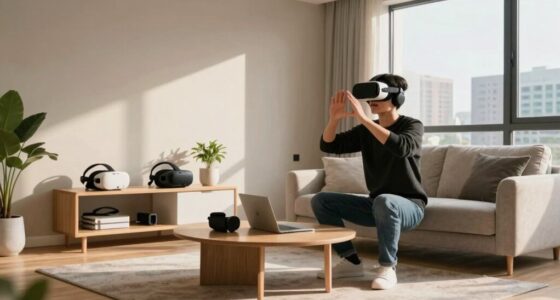
To protect your joints during VR fitness indoors, choose impact-absorbing flooring like rubber mats or foam tiles rather than hard surfaces like concrete or tile. These options provide cushioning to reduce joint stress and prevent injuries from high-impact movements. Guarantee your surface offers good grip and stability to avoid slips or falls during quick pivots or jumps. Maintaining a safe, even, and cushioned floor helps you stay comfortable and injury-free—keep exploring to learn more about creating the perfect workout environment.

Play games on Amazon Luna for your next adventure, included with Prime
- A rotating selection of games, no download needed
- Play on TV, laptop or phone
- Fast, free delivery for your gear, too
Key Takeaways
- Use impact-absorbing flooring like rubber mats or foam tiles to cushion joint impact during high-intensity VR workouts.
- Ensure the flooring provides good traction to prevent slips and falls during dynamic movements.
- Maintain a level, even surface to reduce the risk of missteps and twisting injuries.
- Combine proper flooring with supportive footwear to enhance stability and joint protection.
- Regularly inspect and secure flooring to prevent uneven surfaces and ensure ongoing safety during workouts.
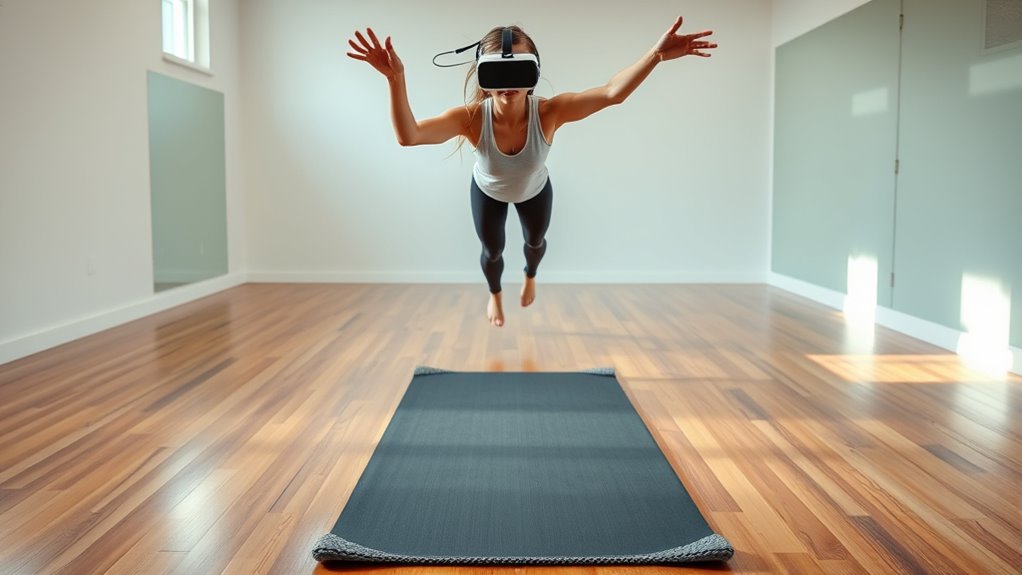
Virtual reality (VR) fitness is transforming how you work out by immersing you in engaging, interactive environments that motivate movement. As you put on your VR headset and step into a virtual world, you’re not just exercising—you’re experiencing a dynamic, often gamified workout that can keep you motivated for longer periods. But with this innovative approach comes a vital concern: workout safety. Since VR fitness often involves rapid movements, sudden changes in direction, and sometimes even jumping or lunging, protecting your joints becomes essential. The right flooring can make a significant difference, helping you avoid injuries and ensuring your workout remains safe and effective.
Choosing the proper indoor flooring for VR fitness isn’t just about comfort; it’s about safeguarding your joints from unnecessary stress. Hard surfaces like concrete or tile might seem stable, but they can increase the impact on your knees, ankles, and hips, especially during high-intensity or rapid movements in virtual environments. These surfaces don’t absorb shock well, leading to potential joint strain or injury over time. On the other hand, softer, impact-absorbing flooring options—such as rubber mats, foam tiles, or specialized gym flooring—offer better shock absorption, reducing the risk of joint pain and injury.
When considering flooring for VR workouts, it’s also important to think about stability and grip. You want a surface that provides enough traction so you don’t slip during sudden pivots or jumps. Slippery floors can compromise your workout safety, increasing the chance of falls or awkward landings that could harm your joints. Rubber flooring, for example, provides excellent grip while cushioning your steps, making it ideal for VR fitness routines that involve a lot of movement.
Additionally, the flooring should be level and even to prevent missteps that could lead to twisting or spraining a joint. Uneven surfaces or loose tiles can cause instability, especially when your focus is on the virtual environment rather than your footing. Installing a stable, cushioned flooring layer creates a safer zone, allowing you to move confidently and comfortably through your workout. Proper flooring also helps in reducing joint stress over time, especially important for those with pre-existing joint concerns or sensitivities.
Ultimately, prioritizing workout safety in your VR fitness setup means selecting flooring that balances impact absorption, grip, stability, and comfort. Doing so protects your joints from undue stress, helping you enjoy the benefits of immersive, engaging workouts without the worry of injury. With the right flooring, you can fully embrace virtual reality fitness, pushing yourself further while keeping your joints safe and healthy.
impact-absorbing rubber gym mats
As an affiliate, we earn on qualifying purchases.
As an affiliate, we earn on qualifying purchases.
Frequently Asked Questions
What Are the Best Flooring Options for High-Impact VR Workouts?
You should choose flooring with excellent shock absorption and slip resistance for high-impact VR workouts. Rubber flooring, especially interlocking mats, offers great shock absorption to protect your joints and reduces slips during vigorous movements. Cork flooring is another good option, providing natural shock absorption and slip resistance. Avoid hard surfaces like concrete or tile, which can increase joint strain and pose slipping hazards during intense VR sessions.
How Often Should I Replace My VR Flooring for Safety?
You should replace your VR flooring every 3 to 5 years, depending on usage. Regular flooring maintenance and safety inspections are essential to prevent accidents. Think of your floor like a tire; without proper care, it wears down, risking slips and injuries. Check for signs of damage, such as cracks or uneven surfaces, and replace promptly to ensure safety during your workouts. Staying proactive keeps your space safe and your joints protected.
Can Specific Flooring Types Improve VR Tracking Accuracy?
Yes, specific flooring types can improve your VR tracking accuracy. Choose floor materials compatible with your VR sensors, such as low-reflective, non-metallic surfaces, to prevent interference. Proper flooring installation techniques, like ensuring a level, slip-resistant surface, help maintain sensor alignment and stability. This reduces tracking errors, making your VR experience smoother and more precise, so you can focus on your workout or game without distractions.
Are There Any Eco-Friendly Flooring Alternatives for Indoor VR Spaces?
Think of your indoor VR space as a garden needing nurturing. Yes, eco-friendly materials like bamboo, cork, and recycled rubber serve as sustainable flooring options that protect your environment and joints. These sustainable flooring choices are gentle on your feet and the planet, making your VR experience more harmonious. By choosing eco-friendly materials, you turn your gaming area into a sanctuary that benefits both your health and the Earth.
How Do Different Flooring Materials Influence Noise Levels During VR Exercises?
Different flooring materials can markedly influence noise levels during VR exercises by providing sound insulation and vibration reduction. Carpeting and rubber mats absorb impact sounds, minimizing noise and vibrations that travel through floors. Vinyl and cork floors also offer effective sound insulation, reducing disruption for others nearby. Choosing these materials helps create a quieter environment, making your indoor VR workouts more comfortable and less disruptive, especially in shared or noise-sensitive spaces.
foam tiles for indoor workout flooring
As an affiliate, we earn on qualifying purchases.
As an affiliate, we earn on qualifying purchases.
Conclusion
To keep your joints safe during VR fitness, choosing the right flooring is essential. Studies show that proper flooring can reduce joint impact by up to 30%, making your workouts safer and more enjoyable. By selecting shock-absorbing materials and maintaining a clear, clutter-free space, you protect your body and enhance your performance. Investing in the right flooring ensures you can stay active indoors without risking long-term joint issues, so prioritize safety as you immerse yourself into immersive fitness adventures.
non-slip exercise flooring for VR fitness
As an affiliate, we earn on qualifying purchases.
As an affiliate, we earn on qualifying purchases.
cushioned workout mats for joint protection
As an affiliate, we earn on qualifying purchases.
As an affiliate, we earn on qualifying purchases.
Fall Picks
fall essentials
As an affiliate, we earn on qualifying purchases.