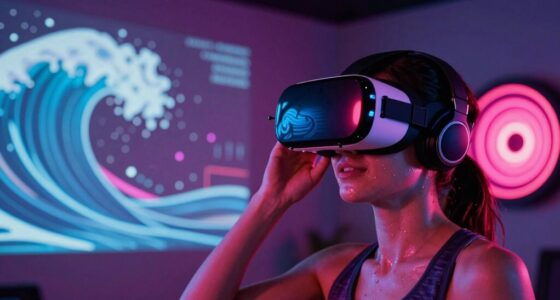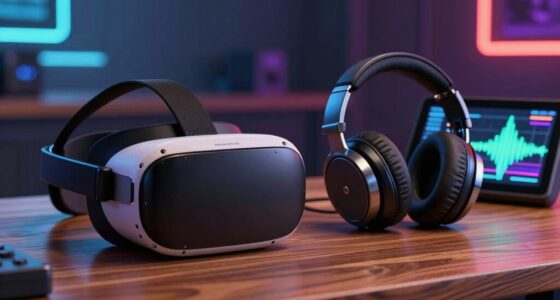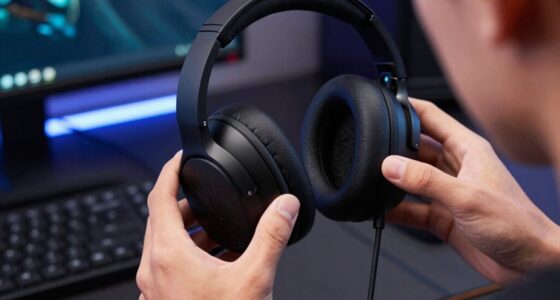

To spot audio latency in VR, notice if sounds lag behind visuals, such as lip movements or reactions, or if responses feel delayed during communication. Signs include audio cutouts, mismatched cues, or disorientation. To reduce it, check your hardware, update drivers, lower audio buffer sizes, and switch to wired headphones. Ensuring your system is optimized can make a big difference. Keep going to discover how to fine-tune your setup for the best experience.
Key Takeaways
- Detect audio latency by recording simultaneous input and output signals using software like Audacity or REAPER.
- Signs include delayed responses, lip-sync issues, and audio cutouts during VR sessions.
- Reduce latency by lowering audio buffer size and updating drivers for your headset, GPU, and CPU.
- Use wired headphones instead of wireless to minimize signal processing delays.
- Ensure hardware and software are optimized, with up-to-date firmware and compatible components, for smoother audio synchronization.

WESEARY Wireless Gaming Headset for PC, PS5, PS4, Switch & Mac, Dual-Mode 2.4GHz & Bluetooth Gaming Headphones with Microphone, Ultra-Low Latency, 3D Stereo Sound, Up to 45H Battery
3D Stereo Sound with Precise Audio Positioning: Powered by advanced dynamic drivers, this wireless headset for PC delivers…
As an affiliate, we earn on qualifying purchases.
As an affiliate, we earn on qualifying purchases.
Understanding Audio Latency in Virtual Reality
Understanding audio latency in virtual reality is essential because it directly affects your immersive experience. When there’s a delay between your actions or the environment and the sound you hear, it breaks the sense of presence. This delay can make virtual objects feel disconnected or out of sync, disrupting your engagement. Audio latency is measured in milliseconds, and even small delays can be noticeable. Factors like hardware processing speeds and software efficiency influence this latency. Recognizing how audio plays a crucial role in VR helps you understand why minimizing delays is vital for realism. When audio syncs perfectly with visuals and interactions, you stay more engaged and immersed. Reducing latency ensures your virtual environment feels natural, making your experience more enjoyable and convincing. Additionally, leveraging European cloud solutions can improve data processing speeds, further reducing audio latency in VR systems, especially when handling high-quality audio streams. Optimizing hardware components and software settings also plays a significant role in minimizing delays and enhancing overall VR performance. Incorporating advanced processing techniques can further help in reducing audio delays, providing a more seamless virtual experience. Moreover, understanding the reliable data transfer methods can help developers minimize latency and improve synchronization across devices.
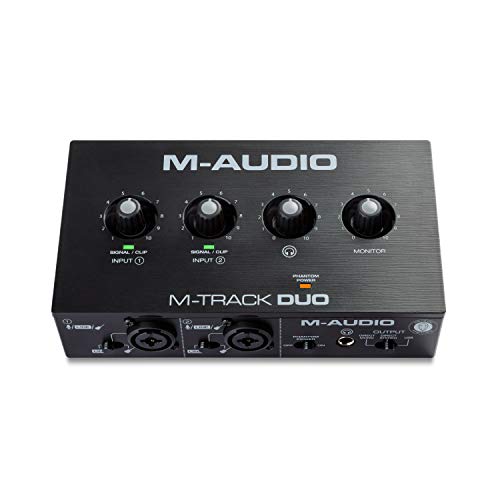
M-AUDIO M-Track Duo USB Audio Interface for Recording, Streaming and Podcasting with Dual XLR, Line and DI Inputs, plus a Software Suite Included
Podcast, Record, Live Stream, This Portable Audio Interface Covers it All – USB sound card for Mac or…
As an affiliate, we earn on qualifying purchases.
As an affiliate, we earn on qualifying purchases.
Common Causes of Audio Delay in VR Headsets
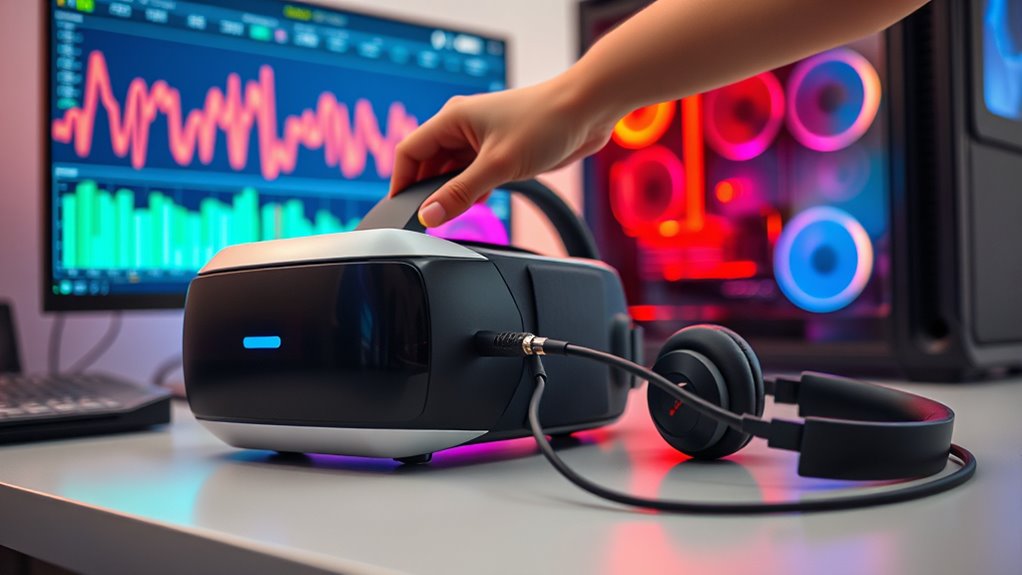
Several factors can cause audio delays in VR headsets, disrupting your immersive experience. One common issue is outdated or incompatible drivers, which slow down audio processing. Hardware limitations, like low-end GPUs or slow processors, can also create lag. Software bugs or poorly optimized VR applications may introduce delays. Bluetooth connections, especially with wireless headphones, often add latency due to signal processing. Additionally, incorrect audio settings or mismatched sample rates can cause synchronization problems. Vetted wave and wind interference can also contribute to audio latency issues, especially in environments with strong electromagnetic interference. Ensuring that your hardware meets the recommended specifications and using optimized drivers can help minimize these delays.

SARLAR VR Gaming Headphones for Quest 2/Quest 3 Increase VR Immersion, Custom Length Cable, Optimized Gaming Audio Driver, Memory Protein Ear Pads Noise Isolating and Other Accessories
✔ CUSTOM HEADPHONES – 3.5mm custom-length cable designed for the Oculus Quest 2 and Quest 3 gaming headset,…
As an affiliate, we earn on qualifying purchases.
As an affiliate, we earn on qualifying purchases.
Signs and Symptoms of Audio Lag During VR Sessions
You might notice your voice responds slowly or feels out of sync with your actions. Mismatched audio and visuals can make the experience feel unsettling or confusing. Disorienting sound delays are clear signs that audio lag is affecting your VR session. Being aware of Free Floating audio issues can help you identify and troubleshoot the problem effectively. Additionally, inconsistent audio timing or abrupt audio cutouts can indicate underlying audio latency problems that need addressing. Recognizing passive voice usage in your speech or scripts can also improve clarity during troubleshooting. It’s also helpful to understand how audio processing delays contribute to these issues and how to mitigate them. Understanding the sources of audio lag can guide you in pinpointing specific hardware or software factors involved.
Delayed Voice Responses
Delayed voice responses during VR sessions often become noticeable when your speech doesn’t sync with what others hear, creating a disjointed experience. You might find your words lag behind your mouth movements or hear yourself delayed. This can cause confusion, making conversations feel unnatural or frustrating. You may also notice that your voice sounds out of sync with your gestures or that your audio cuts in and out unexpectedly. Some signs include difficulty coordinating speech with actions, feeling disconnected from the conversation, or experiencing a sense of delay when speaking. These symptoms can happen suddenly or gradually worsen over time, disrupting the flow of your VR experience. Recognizing these signs early helps you troubleshoot and improve your audio setup for smoother communication. Additionally, understanding audio latency issues can help you identify the root causes and implement effective solutions. Being aware of how hardware performance impacts latency can also aid in optimizing your VR experience for clearer, more synchronized communication. Properly configuring your software and hardware settings can significantly reduce audio lag and improve overall VR interaction quality. Optimizing system performance and ensuring your device runs efficiently during VR sessions can further minimize delays by reducing processing bottlenecks.
Mismatched Audio-Visuals
When voice responses don’t match the visual cues from your avatar or environment, it signals a mismatch between audio and visuals during your VR sessions. You might notice that sounds seem out of sync with actions or lip movements, making conversations feel unnatural. For example, you might hear speech before the lips move or see gestures before hearing corresponding sounds. This mismatch creates a disjointed experience, pulling you out of immersion. You may also observe that environmental noises, like footsteps or object interactions, don’t align with what you see happening. These signs indicate your audio isn’t synchronized properly with the visuals, often caused by latency issues. Addressing these discrepancies improves realism and comfort, ensuring a seamless and engaging VR experience. Additionally, understanding how audio latency impacts system performance can help you troubleshoot and optimize your setup for smoother sessions. Recognizing the effects of latency on user experience can guide you in making effective adjustments to your hardware and software configurations. Being aware of audio-visual synchronization is crucial for maintaining immersion and reducing discomfort during extended VR use. To minimize the impact of audio lag, adjusting your hardware or software settings can significantly enhance your VR sessions. Implementing solutions like better hardware or optimized software settings can help reduce audio-visual delays, resulting in a more natural experience.
Disorienting Sound Delays
Disorienting sound delays can substantially disrupt your VR experience by causing noticeable lag between actions and audio cues. You might notice that sounds don’t match your movements or the environment’s events, creating confusion. This lag can make it hard to react naturally or feel immersed. Signs include audio suddenly cutting out, sounds arriving late, or a mismatch between what you see and hear. You may also experience dizziness or nausea, as your brain struggles to reconcile the delay. These symptoms break immersion and can lead to discomfort.
- Sounds lag behind your head movements
- Audio feels out of sync with visuals
- Sudden silence or missing sound cues
- Dizziness or disorientation
- Increased nausea during gameplay
![MixPad Free Multitrack Recording Studio and Music Mixing Software [Download]](https://m.media-amazon.com/images/I/71ltIxIuz1L._SL500_.jpg)
MixPad Free Multitrack Recording Studio and Music Mixing Software [Download]
Create a mix using audio, music and voice tracks and recordings.
As an affiliate, we earn on qualifying purchases.
As an affiliate, we earn on qualifying purchases.
Tools and Techniques to Detect Audio Latency

Detecting audio latency in VR requires precise tools and techniques that can measure delays accurately. You can use audio measurement software like REAPER or Audacity to analyze sound timing, recording both the input and output signals simultaneously. Specialized hardware, such as high-speed audio interfaces, helps reduce measurement errors. Additionally, employing test signals like sine waves or impulse sounds allows you to observe latency more clearly. Some VR developers use real-time monitoring tools that provide visual feedback on audio synchronization. It is crucial to perform these tests multiple times under different conditions to ensure consistent results. Accurate measurements can also help identify audio processing delays that may be caused by software or hardware limitations. By accurately measuring the delay, you can identify whether your audio system needs adjustments or hardware upgrades, ultimately helping to improve your VR experience. Incorporating navigation and mapping techniques can also assist in understanding how spatial audio interacts within your VR environment.
Impact of Audio Lag on VR Immersion and Comfort
When audio lag occurs in VR, it can break your sense of immersion and make the experience feel disconnected. You might also experience discomfort or disorientation, which can ruin your enjoyment or even cause motion sickness. Addressing these issues is key to creating a seamless, comfortable VR environment.
Immersion Disruption Risks
Audio lag in VR can considerably disrupt your sense of immersion, making the virtual environment feel disconnected and less believable. When sound is delayed, your brain struggles to link audio cues with visual actions, breaking the seamless experience you seek. This mismatch can cause you to feel less engaged and more aware of the technology around you. It may also lead to frustration, reducing your overall enjoyment. Additionally, persistent audio lag can diminish your sense of presence, making it harder to forget you’re in a simulated environment. These risks highlight how vital synced audio is for maintaining immersion. To avoid these issues, aim for minimal latency. Prioritize hardware and settings that optimize audio-visual synchronization for a smoother, more convincing VR experience.
- Reduced realism and believability
- Increased cognitive load
- Loss of emotional engagement
- Hindered spatial awareness
- Greater susceptibility to disorientation
Comfort and Disorientation
Audio lag not only hampers immersion but also considerably impacts your comfort during VR experiences. When sound isn’t synchronized with your visual cues, it creates a disorienting sensation that can make you feel off-balance or uneasy. This misalignment forces your brain to work harder to process conflicting information, leading to fatigue and discomfort over time. You might find yourself experiencing headaches or nausea, especially during longer sessions. The constant effort to reconcile delayed audio with real-time visuals can also cause anxiety or stress, reducing your overall enjoyment. To maintain comfort, it’s vital to minimize audio latency, ensuring sounds match your actions and environment seamlessly. Proper synchronization helps your brain stay engaged without strain, making your VR experience more natural and pleasurable.
Adjusting Settings to Minimize Audio Delay
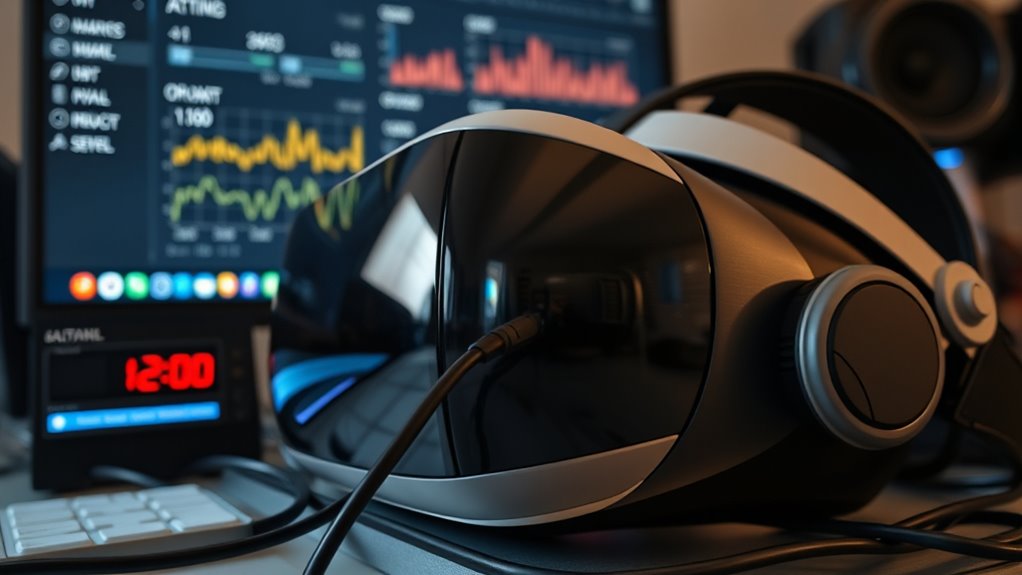
To reduce audio delay in VR, you need to carefully adjust your device’s settings. Start by lowering the audio buffer size in your VR software, which helps decrease latency. Check your headset’s audio output options and select the lowest latency setting available. Disable any audio processing features, like spatial audio enhancements, that may add delay. Make sure your device’s firmware and drivers are up-to-date for peak performance. Also, adjust the synchronization settings between audio and video if possible, to keep them aligned.
- Reduce buffer size in audio settings
- Turn off unnecessary audio effects
- Update firmware and drivers regularly
- Enable low-latency audio modes
- Adjust synchronization settings for alignment
Hardware Upgrades and Compatibility Tips
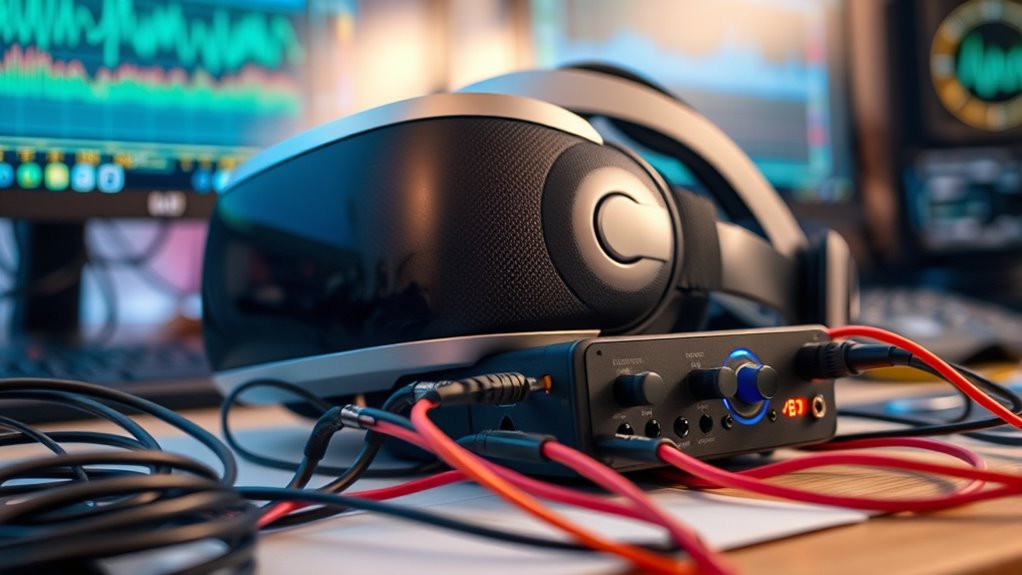
Upgrading your VR hardware can markedly reduce audio latency, especially if your current setup struggles to keep up with demanding applications. Start by investing in a powerful GPU and CPU to handle real-time processing smoothly. Confirm your headset is compatible with your PC or console, and look for models with low-latency audio output features. Using high-quality, wired headphones can also minimize delay compared to wireless options. Check for updated firmware and drivers for your hardware to improve performance and compatibility. Avoid mixing components from different generations unless confirmed to work well together, as mismatched hardware can introduce delays. Additionally, confirm your USB and HDMI ports support fast data transfer rates, reducing the chance of bottlenecks that cause audio lag. Proper hardware choices are key to a seamless VR experience.
Software Solutions and Updates for Better Syncing
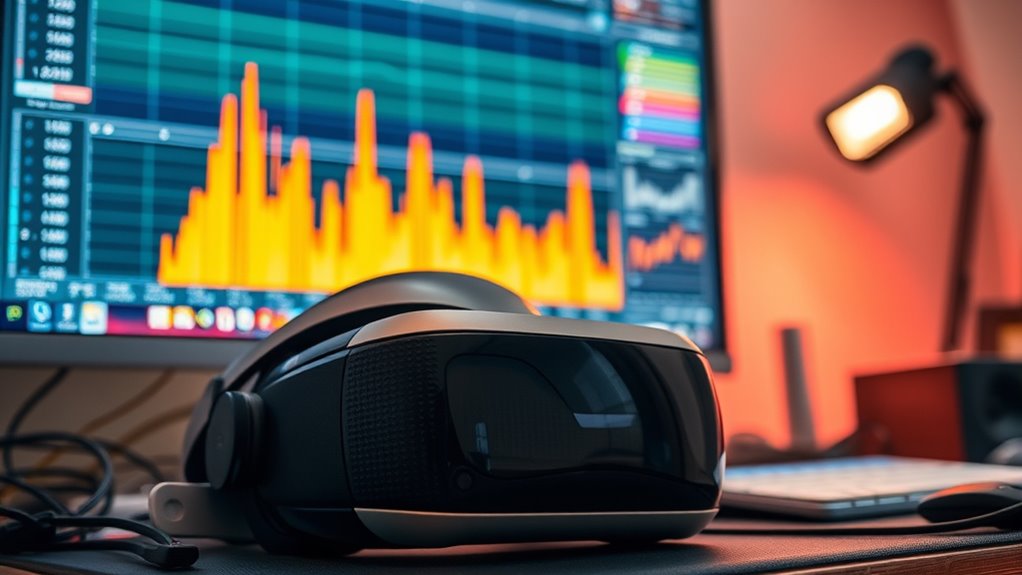
Making sure your software is up to date is one of the most effective ways to improve audio synchronization in VR. Developers often release updates that optimize performance, fix bugs, and improve latency. Make sure your VR platform, audio drivers, and relevant applications are current. You can also explore software tools designed to reduce latency, such as audio routing or synchronization utilities. Adjusting system settings for audio buffering and latency can make a noticeable difference. Regularly check for firmware updates for your VR headset and audio devices. Keep your graphics drivers updated, as they can indirectly impact overall system performance. Staying current helps ensure compatibility and leverages the latest improvements for a smoother, more synchronized VR experience.
- Update your VR platform and drivers regularly
- Use specialized latency reduction software
- Adjust audio buffer sizes in settings
- Enable exclusive mode for audio devices
- Monitor developer patches for known issues
Best Practices for Maintaining Low Audio Latency

Maintaining low audio latency in VR requires consistent attention to your setup and habits. Start by using high-quality, low-latency audio equipment designed for immersive environments. Ensure your drivers and firmware are always updated, as outdated software can introduce delays. Optimize your system’s performance by closing unnecessary background applications, which can interfere with audio processing. Keep your USB and audio cables short and well-connected to prevent signal degradation. Adjust your VR and audio settings to prioritize low latency, such as enabling “low latency mode” if available. Regularly monitor your system for overheating or resource bottlenecks, as these can increase latency. Staying vigilant with these practices helps guarantee your audio stays synchronized, providing a seamless and immersive VR experience.
Troubleshooting Persistent Audio Delay Issues

When you experience persistent audio delay issues in VR, the first step is to identify if the problem stems from your hardware, software, or settings. Once you pinpoint the cause, you can take targeted actions.
- Check for outdated audio drivers and update them immediately.
- Test different USB ports or audio outputs to rule out connection issues.
- Adjust your VR application’s audio buffer size and latency settings.
- Disable background apps that might be hogging system resources.
- Make sure your graphics card and CPU drivers are current, as they impact overall performance.
Frequently Asked Questions
Can External Audio Devices Affect VR Audio Latency?
Yes, external audio devices can influence VR audio latency. When you connect external microphones, headphones, or sound cards, they may introduce delays due to processing or connection issues. To minimize this, use high-quality, low-latency devices, make sure your drivers are updated, and avoid daisy-chaining multiple audio gear. Testing different setups helps identify and reduce delays, giving you a smoother VR experience.
How Does Room Acoustics Influence Perceived Audio Delay?
Room acoustics are like a echoing canyon, shaping how you perceive sound delays. Poor acoustics cause sound waves to bounce unpredictably, making audio seem out of sync with your actions. Hard surfaces reflect sound, increasing perceived delay, while soft materials absorb echoes, creating a clearer, more immediate experience. To improve this, add rugs, curtains, or acoustic panels to your space, reducing delays and creating a more immersive VR experience.
Are Wireless VR Headsets More Prone to Audio Lag?
Yes, wireless VR headsets are generally more prone to audio lag than wired ones. This is because wireless connections can introduce delays due to data transmission and potential interference. You might notice a slight delay between your actions and the audio feedback, especially in fast-paced games or experiences. To minimize this, guarantee your wireless connection is strong, use high-quality transmitters, and keep firmware updated for peak performance.
What Role Does GPU Performance Play in Audio Synchronization?
Your GPU performance is like the conductor of an orchestra, setting the rhythm for smooth audio sync. If your GPU struggles, it causes delays, making audio lag behind visuals. A powerful GPU processes data faster, reducing latency and keeping sound perfectly synchronized with your actions. When your GPU is up to the task, your VR experience feels natural, immersive, and free of distracting audio-visual disconnects.
Can Software Updates Improve Audio Latency Without Hardware Changes?
Yes, software updates can improve audio latency without hardware changes. Developers often optimize code, enhance drivers, and patch bugs that cause delays, resulting in smoother audio synchronization. Updating your VR software, drivers, and firmware regularly can reduce latency and improve your experience. Just make certain you’re using the latest versions, as these updates often include performance improvements that help align audio with visuals effectively.
Conclusion
Remember, in VR, seamless audio is key to immersion. By understanding the causes of latency and using the right tools, you can keep your experience smooth. Regular upgrades and best practices help prevent delays from spoiling your session. Don’t forget, a stitch in time saves nine—address issues early to avoid bigger frustrations later. Stay vigilant, and your virtual worlds will sound as good as they look.