
TL;DR

Play games on Amazon Luna for your next adventure, included with Prime
- A rotating selection of games, no download needed
- Play on TV, laptop or phone
- Fast, free delivery for your gear, too
Erika Woolsey believes virtual reality technology can significantly enhance ocean conservation efforts. She advocates for VR as a means to raise awareness and foster empathy for marine environments. Interest in this approach is rising, though specific implementations remain in development.
Marine scientist and advocate Erika Woolsey has publicly expressed her belief that virtual reality technology can serve as a powerful tool for ocean conservation. Woolsey, known for her work on environmental education and marine science, argues that VR can help bridge the gap between scientific understanding and public empathy, making marine issues more tangible and urgent. This development comes amid increasing interest in innovative methods to raise awareness about environmental challenges.
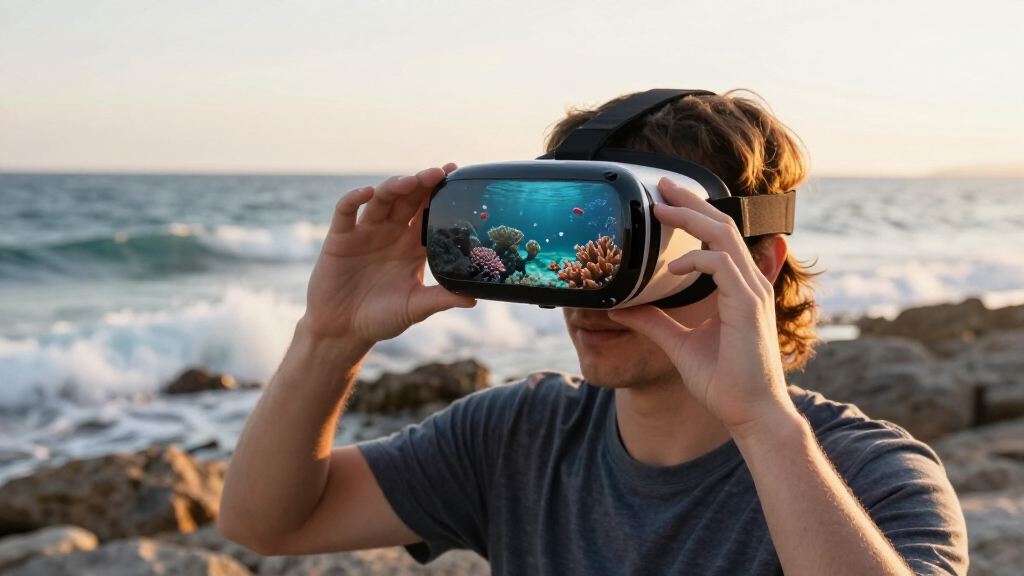
Woolsey’s advocacy centers on using immersive VR experiences to simulate underwater environments, allowing users to virtually explore coral reefs, deep-sea habitats, and marine ecosystems that are often out of reach for most people. She emphasizes that VR can evoke emotional responses and a sense of stewardship that traditional media may not achieve as effectively. Woolsey has collaborated with technologists and educators to develop prototypes of VR content aimed at schools, museums, and conservation campaigns.
While Woolsey’s ideas are gaining attention in environmental and tech circles, concrete projects are still in the early stages. She notes that the technology’s potential lies in its ability to foster empathy and understanding, which could translate into increased public support for marine protection policies. Woolsey also highlights that VR can be a valuable educational tool, especially for engaging younger audiences who are digital natives.
Experts in the field acknowledge the promise of VR but caution that widespread adoption faces challenges, including cost, accessibility, and the need for scientifically accurate content. Woolsey advocates for partnerships between conservation groups, technologists, and educators to overcome these hurdles and harness VR’s full potential for ocean advocacy.
Potential Impact of VR on Ocean Conservation Awareness
This approach could transform how the public perceives marine environments, shifting from distant, abstract issues to visceral, personal experiences. By making underwater ecosystems accessible virtually, Woolsey and her supporters believe VR can increase emotional investment and motivate conservation actions. If successful, this could lead to greater public support for policies aimed at protecting oceans and their biodiversity, which are currently under threat from climate change, pollution, and overfishing.
virtual reality ocean conservation educational kit
As an affiliate, we earn on qualifying purchases.
As an affiliate, we earn on qualifying purchases.
Growing Interest in Technology-Driven Environmental Advocacy
Interest in using virtual reality for environmental purposes is rising globally, with various initiatives exploring immersive experiences to promote conservation. The trend reflects a broader movement toward innovative engagement methods that leverage digital technology to address urgent ecological issues. Woolsey’s advocacy aligns with this pattern, though the specific application of VR for ocean conservation remains in early development phases.
Search interest in VR for environmental causes has spiked recently, driven by technological advancements and increased public awareness of ecological crises. However, it is important to note that the practical deployment of VR solutions for ocean conservation is still emerging, and many projects are experimental or in pilot stages.
immersive VR marine life experience headset
As an affiliate, we earn on qualifying purchases.
As an affiliate, we earn on qualifying purchases.
Unconfirmed Status of VR Conservation Projects
Currently, there are no large-scale VR projects led or endorsed by Woolsey that are publicly available. Most initiatives are in early development or pilot phases, with details about funding, partnerships, or content still emerging. The timeline for broader deployment and measurable impact remains uncertain.
VR coral reef exploration virtual reality
As an affiliate, we earn on qualifying purchases.
As an affiliate, we earn on qualifying purchases.
Next Steps for VR-Driven Ocean Conservation Initiatives
Woolsey and her team plan to test VR experiences in educational and conservation settings in the coming year. They aim to evaluate user engagement and emotional responses to improve content. Scaling efforts will depend on securing additional partnerships and funding, with ongoing technological advancements expected to facilitate wider adoption. Interest in VR for ocean conservation is expected to grow as these projects develop.
underwater VR simulation for environmental awareness
As an affiliate, we earn on qualifying purchases.
As an affiliate, we earn on qualifying purchases.
Key Questions
How can VR help in ocean conservation?
VR can create immersive experiences that allow people to virtually explore marine environments, fostering empathy and understanding that can motivate conservation actions.
Are there any existing VR projects focused on oceans?
Some prototypes and pilot projects exist, but large-scale, widely available VR ocean experiences are still in development.
What are the main challenges facing VR in conservation?
Challenges include high costs, limited accessibility, ensuring scientific accuracy, and creating engaging content that resonates emotionally.
Will VR replace traditional conservation methods?
VR is seen as a complementary tool that can enhance traditional education and advocacy efforts, not replace them.
Source: rss
Fall Picks
fall essentials
As an affiliate, we earn on qualifying purchases.