
TL;DR

Play games on Amazon Luna for your next adventure, included with Prime
- A rotating selection of games, no download needed
- Play on TV, laptop or phone
- Fast, free delivery for your gear, too
A headline-only report describes a test of new Transport for London virtual-reality training intended to address hate crime. No article details were available to confirm what the training involved, what the test found or whether it changes staff responses or crime outcomes.
A report has tested Transport for London’s new virtual-reality training on responding to hate crime, according to its headline, but the available details do not disclose the test’s findings. The development concerns whether immersive training can help transport staff respond to incidents; its effectiveness and any effect on hate crime remain unconfirmed.
The report’s headline frames the exercise as a test of whether virtual reality can help stop a hate crime. It identifies TfL as the organisation behind the training and says the article’s authors tried it. No description is available of the simulation, its scenarios, who took part or how the test was conducted.
There are also no reported results to establish whether participants learned to recognise incidents, intervene safely, support affected passengers or report what happened. The headline alone cannot show that the training prevents crimes or improves outcomes. No figures, participant feedback or evaluation method are available in the supplied material.
The distinction matters: trying a training programme is not the same as measuring its impact. Without details about the test or a comparison with other training, it is not possible to determine what the experience demonstrated, or whether TfL has evidence that the approach works beyond the exercise itself.
Can Virtual Reality Stop a Hate Crime?
A report says TfL’s new virtual reality training was tested. The available information leaves the central question open: what did the test show, and does the training change real-world responses?
A headline gives the outline, not the result
The supplied report material describes a test of TfL’s new VR training related to hate crime. It does not explain how the training works, who tried it or what happened during the test.
A TfL training test
The headline says the report’s authors tested new Transport for London training using virtual reality.
The experience itself
Scenarios, intended participants, training content, rollout plans and timing are not specified.
What the test showed
No results, evaluation method, participant feedback or direct TfL statements are available here.
Practice may help. Impact needs evidence.
A simulation could let transport staff practise decisions in a controlled setting. Whether it improves recognition, safe intervention, passenger support or reporting remains unverified.
What a test session can explore
How participants respond to a simulated situation, and whether the training is usable as an exercise.
What remains to be demonstrated
Changes in knowledge or conduct, stronger responses to real incidents, or fewer hate crime incidents.
The evidence chain TfL would need to show
Trying a programme is only one point in a longer path. Each step calls for its own information, and the supplied report details do not establish that the later steps have happened.
Describe the training
Scenarios, skills taught and intended staff groups.
Report the test
Who took part, what was measured and what they found.
Track staff response
Whether knowledge or behaviour changes beyond the simulation.
Assess real outcomes
Evidence about incident responses and crime outcomes over time.
The headline poses a question; it does not answer it
Reported in the available material
- ✓TfL has new virtual-reality training linked to hate crime, according to the headline.
- ✓The report’s authors say they tested the training.
- ?The test’s design, participants and findings are not provided.
Impact is not established
- ?No evidence here that the training prevents incidents or reduces their number.
- ?No evidence here that staff responses or passenger outcomes have improved.
- ?Audience, rollout status and any follow-up evaluation remain unspecified.
What readers need to know next
A fuller account from TfL or the report would make it possible to assess what was tested and what, if anything, the evidence supports.
What is the training about?
The headline links VR training to hate crime, but its scenarios and intended participants are not described.
What did the test find?
No results, participant feedback or evaluation method are included in the available information.
Has it been shown to prevent hate crime?
No. The material reports a test but provides no evidence of prevented incidents or changed outcomes.
Who will receive it, and when?
The staff groups, rollout status and timing are not specified.
Testing Staff Responses to Hate Crime
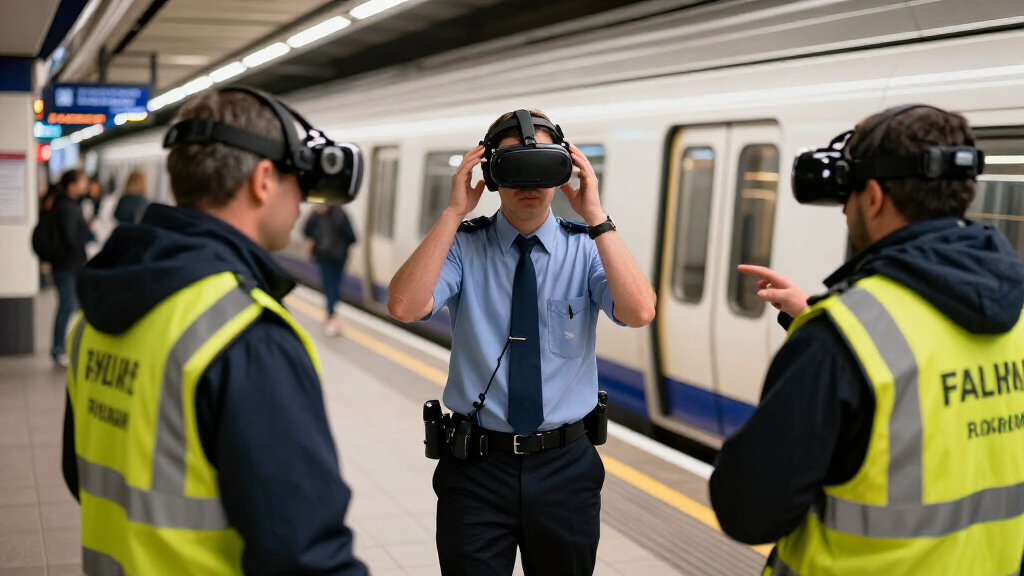
For passengers and transport staff, the practical question is whether training equips people to respond appropriately when someone is targeted. Virtual reality may provide a way to practise decisions in a simulated situation, but that possibility should not be confused with a demonstrated reduction in incidents. The available report details do not establish that outcome.
Any assessment of the programme’s public value would need to show what staff are taught and whether the training changes their knowledge or conduct in real situations. It would also matter whether TfL makes the training available widely and how it evaluates any results. None of those points is confirmed here, so the story raises a relevant test of the approach without resolving its effectiveness.
As an affiliate, we earn on qualifying purchases.
What the Headline Establishes
The only confirmed information available is the report headline: it describes a test of TfL’s new training using virtual reality and links the exercise to hate crime. It does not identify when the training was introduced, which TfL teams are intended to use it, or whether it is a pilot or part of a wider programme.
The headline poses a question about whether VR can stop a hate crime, but provides no basis for answering it. The article body, supporting documents and direct statements from TfL are not available in the supplied material. Accordingly, details about the training’s design, implementation and impact should not be inferred.
As an affiliate, we earn on qualifying purchases.
Training Results Still Unreported
Key details remain unknown: what participants experienced, how many people took part, what outcomes the test measured and what its results were. It is also unclear whether TfL has published an evaluation or plans to assess the programme over time. No direct statements or study findings are available to support claims about effectiveness.
There is no evidence in the available material that the training has stopped a hate crime, reduced the number of incidents or improved responses. Those are separate outcomes that would require evidence beyond a test session. The programme’s current status, intended audience and next steps are also unspecified.
immersive hate crime response training
As an affiliate, we earn on qualifying purchases.
As an affiliate, we earn on qualifying purchases.
Evidence Needed From TfL
The next useful information would be a full account of the test and TfL’s description of the training: its scenarios, intended participants, rollout plans and evaluation measures. If TfL reports results, readers would need to know how those results were collected and whether they reflect a simulated exercise, changes in staff knowledge or observed responses to real incidents.
Until those details are available, the development can be described as a test of new VR-based training, not as proof that virtual reality prevents hate crime. Its impact remains unverified, and the headline does not specify when further information or an evaluation will be released.
Source: rss
VR safety training for transport staff
As an affiliate, we earn on qualifying purchases.
As an affiliate, we earn on qualifying purchases.
Key Questions
What is TfL’s new training about?
The headline describes virtual-reality training related to hate crime. The available details do not explain its scenarios or intended participants.
What did the test find?
The test’s findings are not reported in the information available here. No results or participant feedback are provided.
Has the training been shown to prevent hate crime?
No. The headline says the training was tested, but there is no evidence here that it prevented incidents or changed outcomes.
Who will receive the training, and when?
The intended staff groups, rollout status and timing are not specified in the available material.
Source: rss
Halloween Picks
halloween
As an affiliate, we earn on qualifying purchases.