
TL;DR

Play games on Amazon Luna for your next adventure, included with Prime
- A rotating selection of games, no download needed
- Play on TV, laptop or phone
- Fast, free delivery for your gear, too
EssilorLuxottica and Applied Materials have announced a long-term partnership to accelerate the development of optical technologies for AR and smart glasses. The collaboration will focus on R&D at a dedicated Silicon Valley lab, aiming to enhance waveguides, adaptive lenses, and materials innovations. Details remain limited, but the partnership signals a significant step toward commercializing advanced AR eyewear.
EssilorLuxottica and Applied Materials have announced a long-term joint development agreement to accelerate the commercialization of next-generation optical systems for AR and AI-powered smart glasses.
The partnership involves collaboration on research and development at a dedicated lab on Applied Materials’ Silicon Valley campus, focusing on advanced optical technologies such as waveguides, adaptive lenses, and materials innovations. While specific project details are scarce, the collaboration aims to combine Applied Materials’ expertise in photonics and materials engineering with EssilorLuxottica’s experience in lenses and eyewear technology.
Both companies state that this partnership is designed to speed up the development and market readiness of innovative smart glasses, potentially creating new user experiences. The collaboration builds on EssilorLuxottica’s existing relationship with Meta, which has produced multiple generations of Ray-Ban Meta smart glasses and the Meta Ray-Ban Display, although it is not yet clear whether this new partnership indicates a move toward developing independent AR hardware.
Implications for the Future of AR Eyewear Development
This collaboration could significantly influence the future of AR and smart glasses by advancing optical technologies that enable lighter, more discreet, and more efficient devices. If successful, it may lead to commercially available AR glasses with improved waveguides, adaptive lenses, and energy efficiency, making AR more accessible and appealing to consumers.
The partnership also signals a strategic move by EssilorLuxottica to expand beyond its existing collaborations, potentially positioning itself as a key player in the hardware side of AR eyewear, alongside or independent of Meta and other tech giants. This could reshape competitive dynamics in the rapidly evolving AR market.
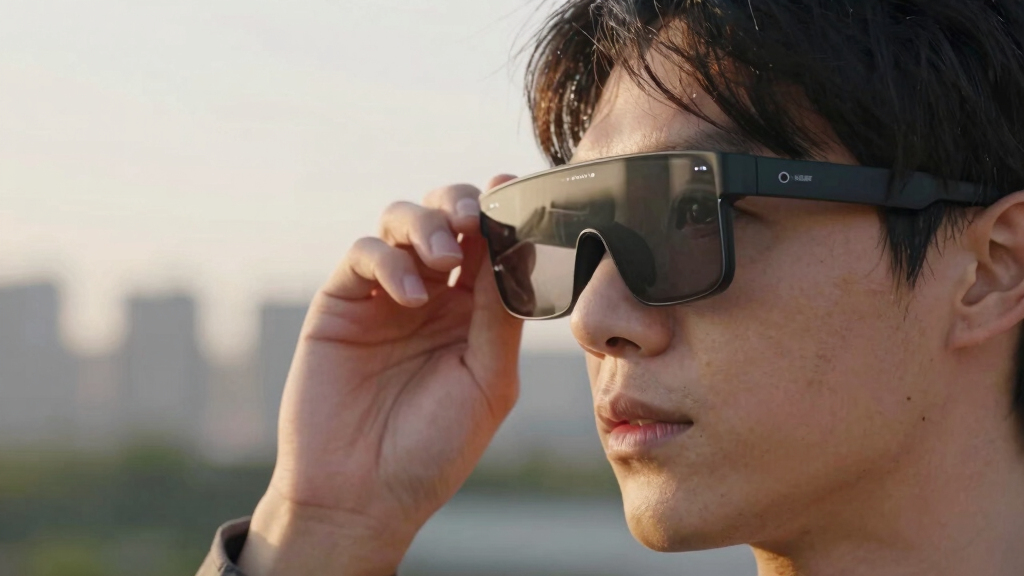
AR smart glasses with adaptive lenses
As an affiliate, we earn on qualifying purchases.
As an affiliate, we earn on qualifying purchases.
Background on AR Optical Technology Development
EssilorLuxottica has partnered with Meta over the past five years, releasing multiple generations of smart glasses, notably the Ray-Ban Meta series and the Meta Ray-Ban Display. The company’s focus has been on integrating AR displays into consumer eyewear, with ongoing efforts to improve optical performance and form factor.
Applied Materials, a leading semiconductor equipment manufacturer, has a strong track record in photonics and materials engineering, which are critical for developing advanced AR optics like waveguides and adaptive lenses. The collaboration follows a broader industry trend where tech and optics companies are investing heavily in next-gen AR hardware, with competitors like Google, Apple, and Snap also pursuing their own AR eyewear projects.
While details about the specific technologies under development are limited, the partnership underscores the importance of optical innovation in achieving practical, consumer-ready AR glasses, especially in terms of form factor, display quality, and energy efficiency.
“Designing, building and scaling next-generation smart glasses will require deep collaboration across the technology ecosystem.”
— an anonymous researcher
As an affiliate, we earn on qualifying purchases.
Unconfirmed Details About Technological Goals
It remains unclear what specific optical technologies will be prioritized or what the timeline for commercialization might be. The extent of EssilorLuxottica’s potential hardware developments outside of Meta is also uncertain, as is whether this partnership will lead to standalone AR products or enhance existing collaborations.
smart glasses with advanced optics
As an affiliate, we earn on qualifying purchases.
As an affiliate, we earn on qualifying purchases.
Next Steps in AR Optical Development and Market Entry
The collaboration will focus on R&D at the dedicated Silicon Valley lab, with potential milestones including prototype development and testing within the next 12-18 months. Industry observers will be watching for any announcements regarding new AR glasses or technological breakthroughs stemming from this partnership, especially as competitors accelerate their own AR hardware efforts.
As an affiliate, we earn on qualifying purchases.
Key Questions
Will this partnership lead to new AR glasses for consumers?
While the partnership aims to develop advanced optical systems, it is not yet confirmed whether it will result in new consumer AR glasses within a specific timeframe.
How does this collaboration compare to other AR development efforts?
This partnership emphasizes optical innovation, which is critical for AR hardware. It complements efforts by companies like Apple, Google, and Snap, but specific technological overlaps or competitive advantages are not yet clear.
Will EssilorLuxottica develop its own AR hardware separate from Meta?
This remains unconfirmed. The partnership with Meta is ongoing until 2030, but the new collaboration could suggest plans for independent hardware development.
What are waveguides, and why are they important for AR glasses?
Waveguides are optical components that transmit light through thin, transparent layers, enabling lightweight, discreet AR displays. They are crucial for creating glasses-like form factors while maintaining display quality.
When might we see commercial AR glasses with these new technologies?
Prototypes and testing phases are expected over the next 12-18 months, but commercial release timelines depend on technological breakthroughs and market readiness.
Source: Road to VR
Fall Picks
fall essentials
As an affiliate, we earn on qualifying purchases.


![Stepping Inside The Design: How VR Is Advancing USACE Projects [Image 5 Of 7]](https://vrgearguide.com/wp-content/uploads/2026/08/stepping-inside-the-design-how-vr-is-advancing-usace-projects-image-5-of-7-featured-1-560x300.jpg)