To build a long-term upgrade ladder for your VR gear and room setup, focus on choosing versatile, upgrade-friendly hardware like adaptable headsets and modular sensors. Prioritize ergonomic and comfortable equipment to prevent fatigue. Stay informed about software updates and future device compatibility, opting for open ecosystems. Gradually upgrade components to extend your system’s life, and plan your room layout for flexibility. Keep your setup fresh by making strategic, incremental improvements—more tips ahead can help you stay ahead of the curve.

Play games on Amazon Luna for your next adventure, included with Prime
- A rotating selection of games, no download needed
- Play on TV, laptop or phone
- Fast, free delivery for your gear, too
Key Takeaways
- Prioritize versatile, open-ecosystem hardware for compatibility and easier future upgrades.
- Plan incremental hardware updates, focusing on sensors, controllers, and accessories to extend longevity.
- Regularly monitor firmware, software updates, and compatibility to adapt your setup proactively.
- Design a flexible room layout with adjustable mounts and clutter-free space for easy modifications.
- Stay informed on emerging VR technologies and software requirements to align upgrades with evolving needs.
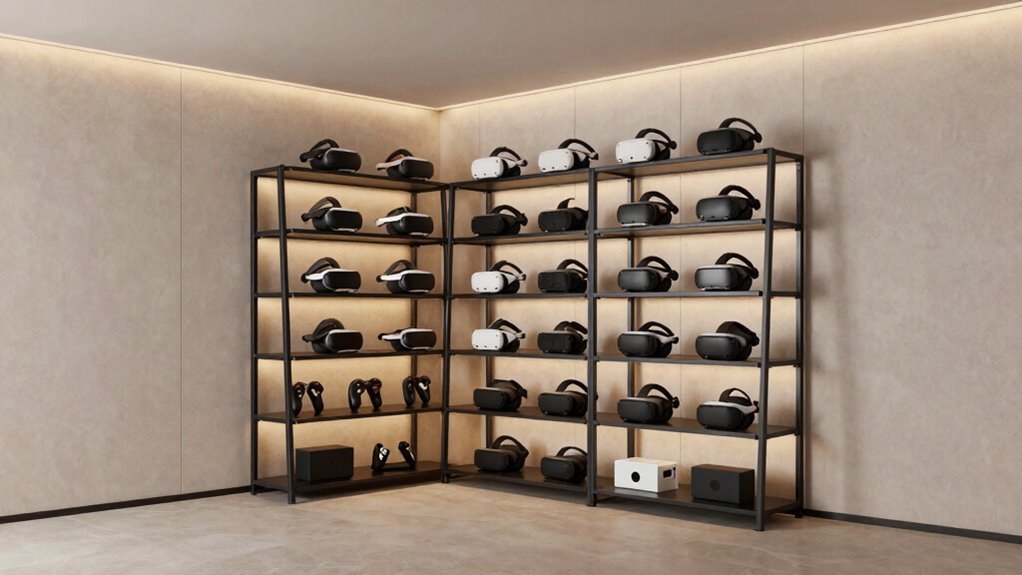
Creating a long-term upgrade ladder for your VR gear and room setup guarantees you stay current without constantly starting from scratch. When planning your upgrades, it’s crucial to focus on VR ergonomics—how comfortable and natural the equipment feels during extended use. Prioritize headsets with adjustable straps, lightweight builds, and balanced weight distribution to reduce fatigue. Consider controllers that fit comfortably in your hands and offer intuitive tracking, minimizing strain over time. Good VR ergonomics isn’t just about comfort; it also directly impacts immersion and enjoyment, making your experience more seamless and less fatiguing. As you plan upgrades, think about how new hardware integrates with your existing setup, especially regarding software compatibility. Ensuring your system can support future updates and new titles prevents bottlenecks that can require costly replacements down the line.
Start with a versatile headset that’s compatible with a broad range of software and hardware. This way, you won’t have to overhaul your entire system every time a new game or application launches. When selecting hardware, look for models with open ecosystems and frequent firmware updates, which tend to support a wider array of software. As your budget allows, gradually upgrade components such as sensors or base stations that improve tracking accuracy. These smaller, strategic upgrades extend your system’s lifespan and keep your experience top-notch. Don’t forget to consider your room setup; a flexible, clutter-free space allows for easier adjustments and better safety during gameplay. Incorporate adjustable mounting options for sensors so that you can adapt as your room evolves, maintaining optimal tracking and immersion. Additionally, staying informed about hardware compatibility and upcoming software releases helps you plan future upgrades more effectively. Keeping an eye on hardware longevity can help you make investments that last longer and avoid frequent replacements.
Furthermore, plan your upgrade path around the evolving landscape of VR software. Many developers release updates that require more powerful hardware or new features, so staying informed helps you anticipate what you’ll need next. Regularly check for firmware updates and compatibility notes from manufacturers to avoid surprises. As you add new gear, make sure the hardware and software are designed to work together smoothly, minimizing troubleshooting and maximizing fun. This proactive approach ensures your VR setup remains relevant, comfortable, and capable of supporting the latest experiences. Building a strategic upgrade ladder means you’re continuously enhancing your VR environment while avoiding unnecessary expenses and frustrations. By focusing on VR ergonomics and software compatibility, you create a sustainable, enjoyable setup that adapts seamlessly to the rapid advancements in virtual reality technology.
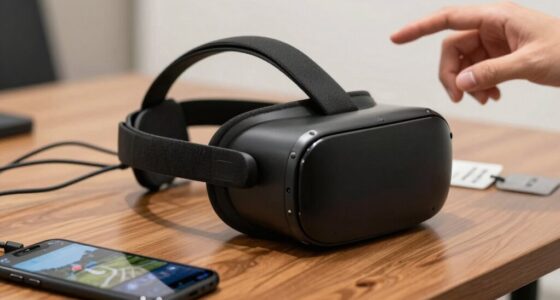
VR headset with adjustable straps
As an affiliate, we earn on qualifying purchases.
As an affiliate, we earn on qualifying purchases.
Frequently Asked Questions
What Is the Average Lifespan of VR Hardware Components?
The average lifespan of VR hardware components varies, but you can expect solid durability and good component longevity from most headsets and accessories for about 3 to 5 years. Hardware durability depends on usage and maintenance, so taking care of your gear can extend its life. Regular updates and cautious handling help guarantee your VR setup remains functional and enjoyable, maximizing your investment over the long term.
How Can I Future-Proof My VR Room Setup?
To future-proof your VR room setup, prioritize wireless freedom by choosing untethered headsets, giving you more movement and flexibility. Invest in ergonomic design for comfort during extended sessions, and select adjustable, modular hardware that can easily be upgraded or expanded. Stay informed about emerging tech trends, and maintain compatibility with upcoming VR standards, ensuring your setup remains relevant and immersive for years to come.
Are There Budget-Friendly Upgrade Options for VR Gear?
You can definitely find budget-friendly upgrade options for VR gear. Imagine enhancing your experience without breaking the bank—affordable alternatives like third-party accessories or refurbished headsets can make a real difference. Don’t overlook DIY solutions, such as customizing your space or creating homemade mounting solutions. These options not only save money but also let you tailor your setup to your needs, keeping your VR adventures fresh and exciting without overspending.
How Do I Manage Cable Clutter as My Setup Evolves?
To manage cable clutter as your setup evolves, prioritize wireless solutions whenever possible, like wireless VR headsets and adapters. For cables that remain, use cable management tools such as clips, sleeves, and under-desk trays to keep things organized. Regularly check and adjust your cable routes to prevent tangling. This approach guarantees a clean, safe, and immersive VR experience, even as your gear upgrades and room setup changes over time.
What Safety Considerations Should I Keep in Mind During Upgrades?
You should prioritize safety protocols by unplugging devices before upgrading and handling hardware carefully. Make certain all cables are secure to maintain hardware stability and prevent accidents. Use proper tools and follow manufacturer instructions for each upgrade. Keep your workspace organized to avoid tripping hazards. Regularly check for loose connections or damaged components. By staying vigilant and cautious, you minimize risks and keep your VR setup safe during upgrades.
modular VR sensors and base stations
As an affiliate, we earn on qualifying purchases.
As an affiliate, we earn on qualifying purchases.
Conclusion
Now that you’ve laid out your upgrade ladder, the real challenge begins—staying ahead of the latest tech and adapting your space. Will your current setup withstand future innovations? Or will you find yourself constantly rethinking your strategy? The journey to a perfect, long-term VR environment is ongoing, and every upgrade brings new possibilities. Keep your eyes open, stay curious, and prepare for surprises—because the next big leap in VR might be just around the corner.
As an affiliate, we earn on qualifying purchases.
As an affiliate, we earn on qualifying purchases.
Halloween Picks
halloween
As an affiliate, we earn on qualifying purchases.