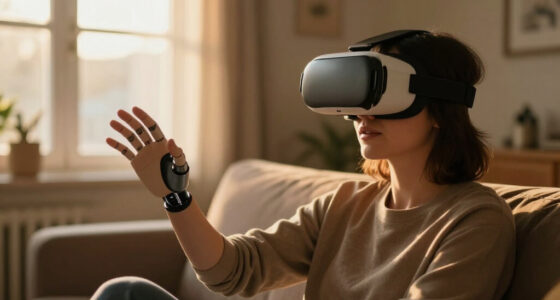
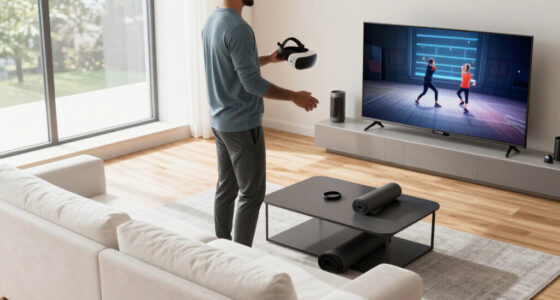
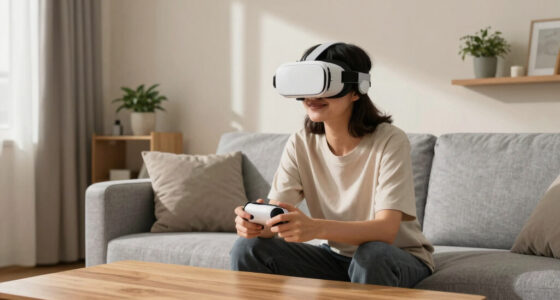
In VR fitness, recovery is more vital than you might think because immersive virtual environments push your body and mind harder than conventional workouts. The intensity can lead to physical overtraining and mental fatigue, increasing injury risk and burnout. Incorporating proper rest and holistic recovery helps you stay motivated, avoid injury, and improve progress. If you want to maximize your gains and stay safe, understanding why recovery is essential in VR fitness can make all the difference.
Listen free for 30 days with Audible
Thousands of audiobooks and originals — cancel anytime.
As an affiliate, we earn on qualifying purchases.
Key Takeaways
- VR environments amplify physical and mental exertion, increasing the need for effective recovery to prevent overtraining.
- Social interactions in VR demand mental and physical resources, requiring decompression to avoid burnout.
- Shorter VR workouts still necessitate recovery due to immersive intensity and potential for unexpected exertion.
- Holistic recovery practices support physical, mental, and social health, ensuring sustainable progress and engagement.
- Proper recovery maintains motivation, prevents injury, and enhances overall well-being in a demanding virtual fitness setting.
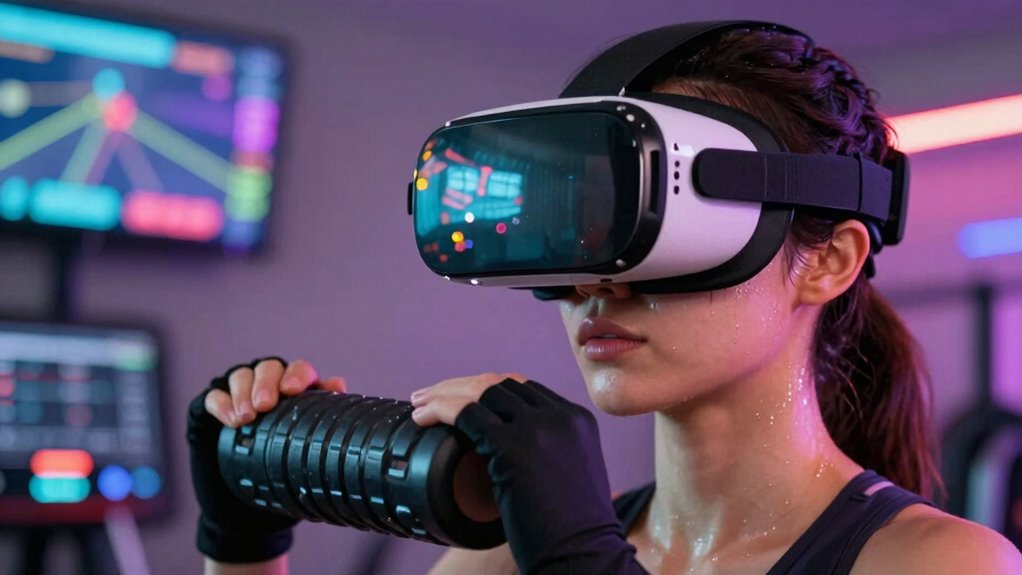
Recovery in VR fitness is essential for maximizing your progress and preventing injury as you immerse yourself in virtual workouts. Unlike traditional exercise, VR immerses you in engaging environments that can push you harder than you realize, making recovery an often overlooked but critical component of your routine. When you push your body and mind through intense VR sessions, you’re not just taxing your muscles; you’re also challenging your mental resilience. Virtual environments can heighten your focus and motivation, but they can also lead to mental fatigue if you don’t give yourself time to recover. Proper rest helps your brain process the virtual stimuli, reducing the risk of burnout and maintaining your enthusiasm for continued training.
Recovery in VR fitness is key to preventing injury, boosting progress, and maintaining mental resilience and motivation.
Equally important is the social interaction that VR fitness offers. Many VR platforms foster a sense of community, encouraging you to work out alongside friends or other users. While this social aspect boosts motivation and makes workouts more enjoyable, it also brings its own set of demands on your mental and physical resources. After a session filled with social engagement, your mind needs time to decompress and reset. Recovery allows you to absorb the positive effects of social interaction without becoming overwhelmed or overly stressed. It helps you maintain the balance between connection and personal well-being, ensuring that your virtual camaraderie remains a source of motivation rather than fatigue. Incorporating holistic health tips can further enhance your recovery process by addressing both physical and mental well-being.
You might think that because VR workouts are often shorter or more engaging than traditional routines, recovery isn’t as essential. But the immersive nature amplifies physical exertion and mental engagement simultaneously. Your body may not feel as tired as after a conventional workout, but that doesn’t mean recovery isn’t necessary. Over time, neglecting proper rest can lead to overtraining, which hampers progress and increases injury risk. Additionally, mental resilience takes a hit when you don’t allow your mind to recover from the virtual stimuli, leading to decreased focus and motivation. Recognizing the importance of biodiversity in your overall well-being can support your mental health and resilience, especially as you integrate virtual and real-world activities into your routine. Developing a balanced routine that includes recovery days can help prevent burnout and sustain your enthusiasm for VR fitness.
In VR fitness, recovery isn’t just about downtime; it’s about actively supporting your physical, mental, and social health. Taking time to rest, hydrate, stretch, and reflect ensures that your body adapts, your mind stays sharp, and your social interactions remain positive. This holistic approach to recovery helps you sustain your workouts, push your limits safely, and enjoy the virtual fitness experience without burnout. It also emphasizes the importance of mind-body connection in maintaining overall health and resilience. Ultimately, recognizing the importance of recovery ensures that your VR fitness journey is effective, enjoyable, and long-lasting.
As an affiliate, we earn on qualifying purchases.
Frequently Asked Questions
How Does Recovery Impact Long-Term VR Fitness Progress?
Recovery impacts your long-term VR fitness progress by allowing muscle repair and mental refresh. When you rest properly, your muscles heal and strengthen, preventing injury and boosting performance. A mental refresh helps you stay motivated and focused during workouts. Skipping recovery can lead to burnout and setbacks. By prioritizing recovery, you guarantee consistent progress, improve overall fitness, and enjoy a sustainable VR fitness journey.
What Are Signs of Overtraining in VR Workouts?
You might feel like your muscles are singing the blues or your mind’s caught in a fog—that’s overtraining showing its teeth. Signs include persistent muscle fatigue, mental exhaustion, and a lack of enthusiasm for your VR workouts. Your body’s warning flags wave high, signaling it’s time to pause and recover. Ignoring them risks burnout or injury, turning your fitness journey into a sinking ship. Listen closely, and give yourself the rest you deserve.
Can Recovery Prevent Vr-Induced Motion Sickness?
Recovery can definitely help prevent VR-induced motion sickness. When you give your body time to rest after virtual reality sessions, it reduces fatigue and sensory overload, which are common triggers for motion sickness. Proper recovery allows your inner ear and visual systems to readjust, minimizing discomfort. By incorporating rest days and listening to your body, you enhance your VR fitness experience and lower the chances of feeling nauseous during or after virtual reality workouts.
How Often Should I Schedule Rest Days in VR Fitness?
You should schedule rest days every 2-3 days to optimize recovery and prevent fatigue. Even if you feel fine, rest optimization is essential for sustained performance and safety. Incorporate hydration strategies during your rest days to help your muscles recover and reduce soreness. Remember, taking regular breaks isn’t a sign of weakness; it’s a smart way to keep your VR fitness routine effective and enjoyable over the long term.
What Recovery Techniques Are Best After Intense VR Sessions?
After intense VR sessions, you should focus on hydration strategies and breathing exercises. Drinking water helps replenish fluids lost during activity, speeding up recovery. Incorporate deep breathing exercises to relax muscles and reduce tension, improving oxygen flow and calming your mind. This combination helps your body recover faster, minimizes soreness, and prepares you for your next session. Remember, proper recovery enhances your overall VR fitness experience and prevents injury.
virtual reality workout recovery bands
As an affiliate, we earn on qualifying purchases.
As an affiliate, we earn on qualifying purchases.
Conclusion
Remember, recovery isn’t just a pause; it’s your passport to progress, your shield against injury, and your bridge to better performance. Embrace rest as much as effort, and let your body rebuild, refuel, and ready itself for the next challenge. In VR fitness, recovery is the silent partner guiding you through each victory and setback, shaping your journey. Prioritize it, respect it, and watch your strength, stamina, and resilience grow—step by step, breath by breath, victory by victory.
VR exercise mental fatigue relief tools
As an affiliate, we earn on qualifying purchases.
As an affiliate, we earn on qualifying purchases.
VR fitness post-workout massage device
As an affiliate, we earn on qualifying purchases.
As an affiliate, we earn on qualifying purchases.
Fall Picks
fall essentials
As an affiliate, we earn on qualifying purchases.