TL;DR

Play games on Amazon Luna for your next adventure, included with Prime
- A rotating selection of games, no download needed
- Play on TV, laptop or phone
- Fast, free delivery for your gear, too
A report headline says eye tracking could help virtual reality pain therapy adapt to individual needs. The available information does not identify a study, researchers, methods or results, so the proposal’s evidence and readiness for clinical use cannot be assessed.
Eye tracking could help virtual reality (VR) pain therapy adapt to individual needs, according to a report headline, suggesting a possible way to tailor treatment while a person is using a headset. The available report information does not identify a study, explain how the tracking would guide therapy or provide evidence that the approach has been tested.
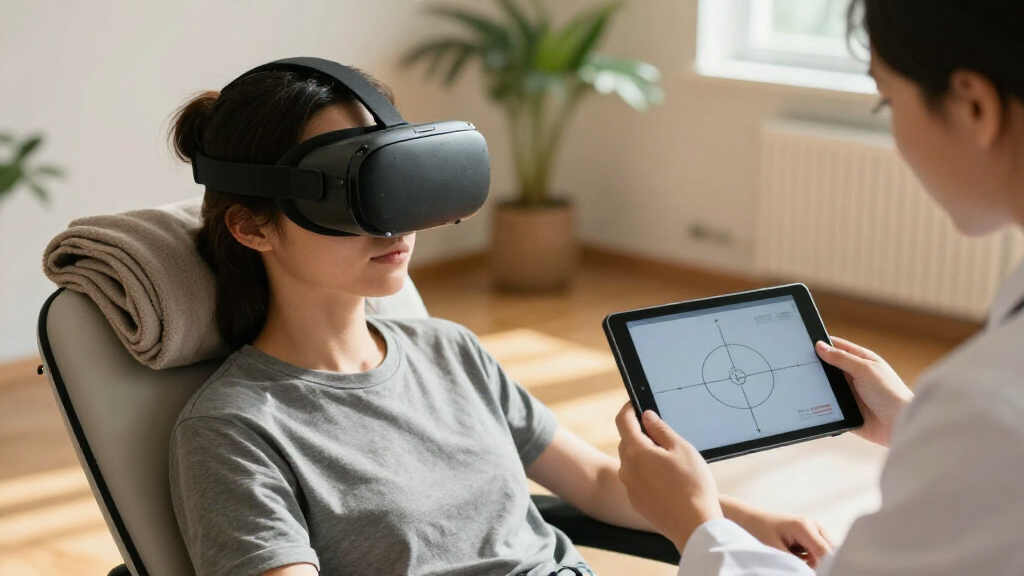
The reported development is a proposed link between eye movement measurements and adjustments to a VR pain-therapy experience. In principle, eye tracking could give a system information about where a person is looking while they use VR. The headline does not say what specific eye behaviors would be measured or what changes the therapy might make in response.
No researchers, institutions, clinical setting, study design, participant count or treatment outcomes are provided in the available material. It is therefore not possible to determine whether the idea comes from a completed experiment, an early-stage proposal or a broader discussion of possible future tools. There are also no reported comparisons with standard VR therapy or other pain treatments.
The headline uses cautious language: eye tracking could help personalize therapy. It does not establish that an eye-tracking system has improved pain relief, that the approach works for particular conditions or that it is available to patients. Those distinctions matter when interpreting a potential health technology as evidence of clinical benefit.
Virtual Reality · Pain Therapy · Evidence Check
Could Eye Tracking Personalize VR Pain Therapy?
A report headline suggests gaze data might help adapt a virtual reality session to individual needs. The available information names no study, researchers, methods or results, so clinical readiness cannot yet be assessed.
01 / The proposed link
From gaze to a more tailored session
In principle, eye tracking can tell a system where someone is looking during a headset experience. A therapy might then adjust in response—but the headline does not describe what it would measure or change.
Input
Eye movement
A headset may capture gaze, though no specific measure is named.
Interpretation
Meaning unknown
Gaze is not shown to reliably signal pain, discomfort or response.
Adjustment
Therapy changes
No trigger, adaptation or clinician review process is described.
Outcome
Benefit untested
No evidence is provided that adaptation improves care.
02 / Why personalization matters
Adaptation must improve outcomes
People can respond differently to the same intervention. A more relevant VR session could be useful in principle, but changing a virtual environment alone is not proof of better pain management.
Potential value
Respond to the individual
An adaptive session could better match a person’s engagement or preferences, if those signals are meaningful and useful.
Key test
Measure what matters
Evaluation should track pain, function, treatment tolerance and whether other care is needed.
Practical care
Check safety and access
Device needs, accessibility, cost, privacy safeguards and clinical oversight remain unspecified.
03 / Evidence status
The headline leaves the evidence unspecified
The available item contains a headline, but no original article body or supporting documentation. It cannot be linked from the supplied information to a named research team, publication or announced product.
There is no study design, participant count, clinical setting, treatment comparison or outcome data. The idea could be a proposal, an early experiment or a broader discussion; the report details do not say which.
Without those details, effectiveness, safety and availability for patients cannot be confirmed.
The bar reflects the limited information in the supplied report summary; it is not a rating of the underlying idea or any unprovided research.
04 / What would help judge it?
Evidence needed to move from idea to care
A full report or research paper would clarify who is developing the approach, how it works and whether it has been tested with patients.
Look for: pain and functional outcomes, how long effects last, a comparison with VR therapy without eye tracking or other care, and clear privacy protections.
Evidence checklist05 / Reader questions
What can be said today?
What is the reported development?
The headline describes eye tracking as a possible way to help VR pain therapy adapt to individual needs. It does not explain the system or establish that it has been tested.
Does eye tracking improve pain relief?
No results are provided. The report does not establish improvement in pain relief or any other treatment outcome.
How might it be used?
Gaze could potentially provide information during a VR session. The report does not say which movements would be measured or how therapy might change.
Is it available to patients?
No product, clinical service or launch plan is identified, so availability cannot be confirmed.
How Personalization Might Affect Therapy
People can respond differently to the same pain intervention, and a therapy that adapts to an individual’s responses could, in principle, make a VR session more relevant to that person. Eye tracking might provide one possible source of information about how someone engages with an experience. But the headline does not establish that gaze patterns reliably indicate pain, discomfort or treatment response.
For patients and clinicians, the key issue is whether any adaptation improves outcomes that matter, such as pain levels, function, treatment tolerance or the need for other care. A system changing a virtual environment is not itself proof of better pain management. Any clinical value would depend on evidence from testing, including whether the approach is safe, practical and beneficial compared with existing care.
The idea also raises questions about how personal data are handled. Eye-tracking systems collect information about a user’s gaze, and a healthcare application would need clear rules for data use, storage and access. No details about privacy safeguards or clinical oversight are available here, so these remain considerations rather than reported features of the proposal.
As an affiliate, we earn on qualifying purchases.
The Report Leaves the Evidence Unspecified
The available item contains only the headline, “Eye tracking could help virtual reality pain therapy adapt to individual needs.” It does not include the original article body or supporting documentation. As a result, the development cannot be connected to a named research team, publication or announced product from the information provided.
That limitation shapes what can responsibly be said about the topic. The headline describes a possible application of eye tracking in VR-based pain therapy, not a confirmed treatment breakthrough. Without a study description or results, readers cannot tell whether the concept has been tested with patients, whether it is intended for a specific type of pain, or whether it would be used under clinical supervision.
virtual reality pain therapy device
As an affiliate, we earn on qualifying purchases.
As an affiliate, we earn on qualifying purchases.
Key Study Details Are Missing
The most important unknown is whether the approach has been evaluated in a study. The available material gives no methods, sample size, measurements or results. It also does not explain how eye tracking would alter a therapy session, what signals would trigger a change or whether clinicians would review those changes.
It remains unclear which patients or pain conditions the idea may concern, how any benefit would be measured, and whether the approach would be compared with VR therapy without eye tracking or with other forms of care. No information is provided about device requirements, accessibility, cost, privacy protections or regulatory status. Until such details are available, claims about effectiveness or clinical readiness would go beyond the evidence supplied.
As an affiliate, we earn on qualifying purchases.
Evidence Needed to Judge the Idea
The next useful information would be the full report or a linked research paper identifying the people or institutions involved and explaining the work. If the idea has been tested, a study account should describe its participants, the eye-tracking measures, how therapy was adapted and the outcomes observed.
Any future claims of benefit would need to be weighed against study limitations and independent evidence. Readers should look for details on whether pain and functional outcomes improved, how long any effects lasted and whether the approach was compared with existing treatment. No next study, launch or publication date is given in the available report, so the timing of further information is unknown.
Source: rss
As an affiliate, we earn on qualifying purchases.
Key Questions
What is the reported development?
The headline describes eye tracking as a possible way to help VR pain therapy adapt to individual needs. The available information does not explain the system or establish that it has been tested.
Does eye tracking improve pain relief?
No results are provided, so the report does not establish that eye tracking improves pain relief or any other treatment outcome.
How might eye tracking be used in VR therapy?
It could potentially provide information about a user’s gaze while they are in a VR session. The report does not specify which eye movements would be measured or how they might change the therapy.
Is this therapy available to patients?
The available information does not identify a product, clinical service or launch plan. Availability cannot be confirmed.
What evidence is still needed?
Details about the research, participants, methods and outcomes are needed to assess whether the approach is effective, safe and suitable for clinical use.
Source: rss
Halloween Picks
halloween
As an affiliate, we earn on qualifying purchases.