
TL;DR

Play games on Amazon Luna for your next adventure, included with Prime
- A rotating selection of games, no download needed
- Play on TV, laptop or phone
- Fast, free delivery for your gear, too
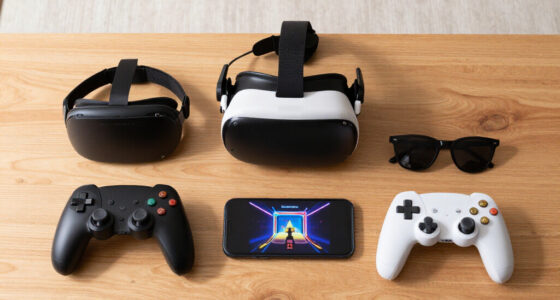
Recent industry data indicates a decline in VR headset sales, prompting questions about whether the previous boom has ended. The market’s future remains uncertain amid mixed signals from manufacturers and analysts.
Recent sales figures and industry reports suggest that the rapid growth of the VR headset market has slowed significantly, leading to debates over whether the previous boom has ended. This development matters because it could influence future investments, product development, and consumer interest in VR technology.
According to recent market research, global VR headset sales declined by approximately 15% in the third quarter of 2023 compared to the same period last year. Major manufacturers such as Meta, Sony, and HTC have reported lower-than-expected sales, with some citing market saturation and shifting consumer priorities. Industry analysts note that the growth rates seen during the 2020-2022 period have not continued into 2023, suggesting a possible plateau or decline.
Some industry insiders and analysts attribute the slowdown to several factors, including high hardware costs, limited content ecosystems, and increased competition from other entertainment and tech sectors. However, there are still ongoing product launches and technological advancements, indicating that the market has not completely contracted but is stabilizing or experiencing a pause.
Implications for the Future of VR Industry
The reported decline in sales and market interest raises questions about the sustainability of the VR headset industry’s recent growth. Investors, developers, and hardware makers may need to reassess their strategies, focusing on content creation, affordability, and new use cases. The slowdown could also influence the timeline for broader adoption of VR in sectors like education, training, and enterprise applications.
As an affiliate, we earn on qualifying purchases.
Market Trends and Industry Expectations Since 2020
The VR industry experienced a significant surge in consumer interest during 2020 and 2021, driven by the COVID-19 pandemic and the release of new headsets from major brands. Sales peaked in late 2021, with some reports indicating record numbers. However, by mid-2023, market analysts observed a slowdown, with some attributing it to market saturation and diminishing novelty effects. Despite this, some companies continue to invest in new hardware and content, suggesting that the industry may still have growth potential in niche areas.
“While we see a slowdown in sales, our focus remains on innovation and expanding the ecosystem to sustain long-term growth.”
— a representative from a leading VR manufacturer
As an affiliate, we earn on qualifying purchases.
Unclear Whether Market Decline Is Permanent
It remains uncertain whether the observed sales decline indicates a permanent end to the VR headset boom or a temporary market correction. Industry experts differ in their assessments, and broader economic factors could also influence future trends. Data for late 2023 and early 2024 will be crucial to determine the market’s trajectory.
VR headset with best content ecosystem
As an affiliate, we earn on qualifying purchases.
As an affiliate, we earn on qualifying purchases.
Upcoming Product Launches and Market Rebound Signals
Manufacturers are expected to introduce new VR headsets in late 2023 and early 2024, with improvements in hardware and content ecosystems. Market analysts will closely monitor sales figures and consumer engagement to gauge whether the industry is entering a new growth phase or continuing to stabilize. Additionally, advancements in AR and mixed reality may influence the overall VR landscape.
As an affiliate, we earn on qualifying purchases.
Key Questions
Has the VR headset market officially declined?
While recent sales data shows a decline, it is not yet clear whether this marks the end of the market’s growth or a temporary slowdown.
What factors are contributing to the slowdown?
High hardware costs, limited content ecosystems, and shifting consumer interests are among the main factors cited by analysts.
Are new VR headsets still being developed?
Yes, several companies plan to launch new VR hardware in late 2023 and 2024, indicating ongoing industry investment.
Could the VR market recover soon?
Recovery depends on technological innovations, content expansion, and consumer adoption, but it remains uncertain at this stage.
Source: rss
Columbus Day / Indigenous Peoples' Day Picks
long weekend sales
As an affiliate, we earn on qualifying purchases.