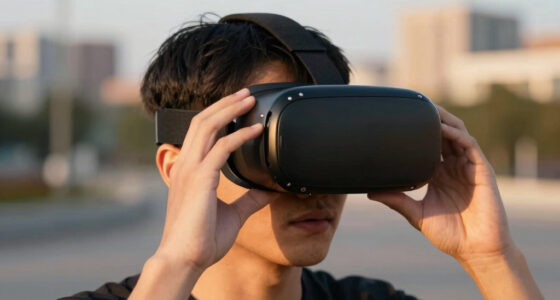
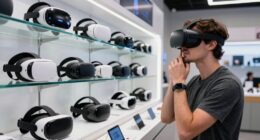
As eye tracking technology becomes more integrated into virtual reality, choosing the right headset can dramatically influence your experience. The HTC Vive Focus Vision stands out for its high-resolution mixed reality capabilities and robust tracking, making it ideal for immersive applications. The Meta Quest 3S offers untethered freedom with excellent graphics and a broad game library, perfect for casual and gaming users. Meanwhile, the Meta Quest Pro caters to professionals seeking high-fidelity mixed reality with advanced interaction features. Each of these options balances different tradeoffs—whether it’s setup complexity, cost, or portability—so understanding what aligns with your priorities is key.

Play games on Amazon Luna for your next adventure, included with Prime
- A rotating selection of games, no download needed
- Play on TV, laptop or phone
- Fast, free delivery for your gear, too
Complete the kit

Key Takeaways
- The HTC Vive Focus Vision excels in combined mixed reality and PC VR features with high-end visual and tracking capabilities.
- Meta Quest 3S offers wireless operation and a robust game ecosystem, but with limited storage and battery life considerations.
- The Meta Quest Pro targets professionals with advanced mixed reality features but comes with a higher price and account requirements.
- Setup complexity varies, with PC-compatible models requiring more technical setup, while standalone headsets prioritize ease of use.
- Eye tracking precision and additional sensors unlock new interaction possibilities but often increase costs.
| HTC Vive Focus Vision — Mixed Reality and PC VR Headset + Controllers |  | Best for immersive mixed reality and high-end PC VR | Display Resolution: 2448×2448 pixels per eye | Field of View: 120 degrees | RAM: 12GB | VIEW ON AMAZON | See Our Full Breakdown |
| Meta Quest 3S 128GB VR Headset with Gorilla Tag Bundle and 3-Month Horizon+ Trial |  | Best for untethered gaming and casual use | Storage: 128GB | Battery Life: 2+ hours | Memory: 8GB RAM | VIEW ON AMAZON | See Our Full Breakdown |
| HTC Vive Focus Vision Wired Bundle with Facial Tracker – VR Headset with DisplayPort PC Streaming Kit |  | Best for professional-grade PC VR streaming and detailed interactions | Display Resolution: 2448 x 2448 pixels per eye | Field of View: up to 120° | Refresh Rate: 90Hz | VIEW ON AMAZON | See Our Full Breakdown |
| Meta Quest 3 512GB VR Headset with Gorilla Tag Bundle and 3-Month Horizon+ Trial |  | Best for high-capacity wireless VR with premium graphics | Storage: 512GB | Display: 4K+ Infinite Display | Memory: 8GB RAM | VIEW ON AMAZON | See Our Full Breakdown |
| Meta Quest Pro | 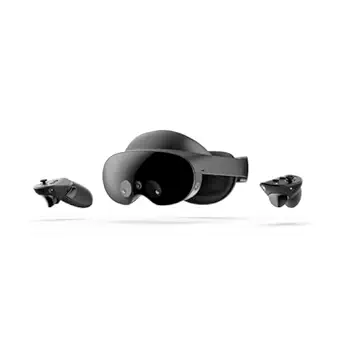 | Best for professional mixed reality and productivity | Storage: 256GB | RAM: 12GB | Sensors: 10 VR/MR sensors | VIEW ON AMAZON | See Our Full Breakdown |
| vr headsets with eye tracking | Storage |
|---|---|
| HTC Vive Focus Vision | — |
| Meta Quest 3S 128GB VR Headset | 128GB |
| HTC Vive Focus Vision Wired Bu | — |
| Meta Quest 3 512GB VR Headset | 512GB |
| Meta Quest Pro | 256GB |
More Details on Our Top Picks
HTC Vive Focus Vision — Mixed Reality and PC VR Headset + Controllers
The HTC Vive Focus Vision stands out for its ability to seamlessly blend mixed reality with PC VR, thanks to high-resolution displays and comprehensive tracking—including eye, face, hand, and body. Its 120-degree field of view and 5K display provide immersive visuals, making it ideal for detailed virtual environments. It supports both standalone and PC-connected experiences, but this versatility comes with a complex setup process that might intimidate beginners. The hot-swappable batteries extend gaming sessions, yet the overall cost can be high, especially with the need for a compatible PC or environment. Compared to the Meta Quest 3S, it offers more advanced interaction and visual fidelity but sacrifices portability and simplicity.
Pros:- High-resolution 5K display with immersive visuals
- Comprehensive eye, face, hand, and body tracking
- Hot-swappable batteries for longer sessions
- Supports standalone and PC VR experiences
Cons:- Complex setup process
- Higher price point
- Requires compatible PC or environment for full use
Best for: Users seeking a high-fidelity, versatile mixed reality experience with advanced tracking features.
Not ideal for: Casual users or those prioritizing ease of use and portability over technical complexity.
- Display Resolution:2448×2448 pixels per eye
- Field of View:120 degrees
- RAM:12GB
- Refresh Rate:90Hz
- Battery:Hot-swappable with reserve front battery
- Tracking:Eye, face, hand, and body tracking
Our verdict“A powerful choice for those wanting detailed mixed reality and advanced tracking, but with a steeper learning curve and cost.”
Meta Quest 3S 128GB VR Headset with Gorilla Tag Bundle and 3-Month Horizon+ Trial
The Meta Quest 3S offers a wire-free VR experience, making movement and setup straightforward. Its 128GB of storage supports a sizable game library, and the Snapdragon XR2 Gen 2 processor ensures enhanced graphics and faster load times. It includes a Gorilla Tag bundle and a 3-month Horizon+ trial, ideal for gamers looking for variety. However, its limited storage might be restrictive for extensive libraries, and the 2-hour battery life requires planning for longer sessions. Compared to PC-tethered options, it sacrifices some visual fidelity but gains portability and ease of use. For casual users or those new to VR, this pick balances performance with simplicity.
Pros:- Wireless, untethered VR with easy setup
- Enhanced graphics with Snapdragon XR2 Gen 2
- Includes exclusive game bundles and trials
- Portable and user-friendly
Cons:- Limited to 128GB storage
- Battery life of just over 2 hours
- Subscription required for full Horizon+ access after trial
Best for: Casual gamers who prioritize wireless freedom and a broad game library.
Not ideal for: Power users needing extended playtimes or extensive storage for large libraries.
- Storage:128GB
- Battery Life:2+ hours
- Memory:8GB RAM
- Processor:Snapdragon XR2 Gen 2
- Cameras:Dual RGB color cameras
Our verdict“An excellent choice for casual, mobile VR gaming, though storage and battery life are constraints for extended use.”
HTC Vive Focus Vision Wired Bundle with Facial Tracker – VR Headset with DisplayPort PC Streaming Kit
This wired Vive Focus Vision model enhances the wireless version with PC streaming support via DisplayPort, ideal for serious VR creators and developers. Its high-res 5K display, combined with facial, eye, and hand tracking, offers lifelike interactions suited for simulation, training, or content creation. The setup is more involved, requiring a compatible PC and network, which could deter casual users. Compared to standalone options, this model provides greater customization and performance but demands technical expertise and higher investment. It is best suited for professionals or advanced VR enthusiasts seeking comprehensive tracking and streaming capabilities.
Pros:- High-resolution 5K display with wide field of view
- Facial, eye, and body tracking for realistic interactions
- Supports PC VR streaming via DisplayPort
- Extended tracking options for detailed experiences
Cons:- Complex setup and technical requirements
- Higher cost due to advanced features
- Requires compatible PC and network infrastructure
Best for: VR developers, content creators, and professionals needing robust PC VR integration.
Not ideal for: Casual users or those wanting a simple, portable VR headset.
- Display Resolution:2448 x 2448 pixels per eye
- Field of View:up to 120°
- Refresh Rate:90Hz
- Tracking:Eye, face, hand, and body tracking
- Connectivity:DisplayPort, Ethernet, Wi-Fi
Our verdict“A premium choice for professionals who demand precise tracking and PC connectivity, but not suited for beginners.”
Meta Quest 3 512GB VR Headset with Gorilla Tag Bundle and 3-Month Horizon+ Trial
The Meta Quest 3 with 512GB storage provides a wireless, high-resolution VR experience tailored toward gamers and enthusiasts who want extensive content without tethering. Its 4K+ Infinite Display and Snapdragon XR2 Gen 2 processor deliver sharp visuals and smooth gameplay. The included Gorilla Tag bundle and Horizon+ trial expand entertainment options. However, the large storage is a plus, but battery life remains around 2 hours, which may limit longer sessions. This headset is ideal for users who prioritize mobility and high-quality graphics but are comfortable with initial setup and managing device updates.
Pros:- Wireless, immersive VR with high-resolution display
- Massive 512GB storage capacity
- Includes exclusive game bundles and a Horizon+ trial
- High processing power for demanding applications
Cons:- Battery life of about 2 hours
- Requires initial setup and firmware updates
- Cost may be prohibitive for some budgets
Best for: VR gamers and power users seeking maximum storage and high-fidelity graphics in a wireless format.
Not ideal for: Users needing longer battery life or a less complex setup process.
- Storage:512GB
- Display:4K+ Infinite Display
- Memory:8GB RAM
- Battery Life:2+ hours
- Processor:Snapdragon XR2 Gen 2
Our verdict“A top-tier wireless VR headset suited for dedicated gamers and enthusiasts demanding high storage and visual quality, with some tradeoffs in battery life.”
Meta Quest Pro
The Meta Quest Pro elevates VR into a professional tool with its high-resolution mixed reality passthrough, ergonomic design, and advanced sensors. It features 10 VR/MR sensors, making it suitable for enterprise applications, creative work, or social collaboration. Its design prioritizes comfort for extended use, and the powerful hardware supports multitasking. However, it requires a Meta account and is more expensive than consumer-focused models. Compared to the standalone Quest 3S, it offers more advanced mixed reality features but is less suited for casual gaming. This headset is best for users integrating VR into work or creative projects, not for casual entertainment.
Pros:- High-resolution mixed reality passthrough
- Ergonomic, comfortable design for long sessions
- Advanced sensors for precise tracking and interaction
- Ample storage and RAM for multitasking
Cons:- Requires a Meta account
- Higher price point
- Limited availability for certain user groups
Best for: Professionals, creators, and enterprise users seeking high-fidelity mixed reality tools.
Not ideal for: Casual users or those on a tight budget looking for simple gaming experiences.
- Storage:256GB
- RAM:12GB
- Sensors:10 VR/MR sensors
- Display Technology:Pancake lenses, quantum dot
- Connectivity:Meta account required
Our verdict“An excellent choice for professionals needing high-quality mixed reality capabilities, with a significant investment required.”
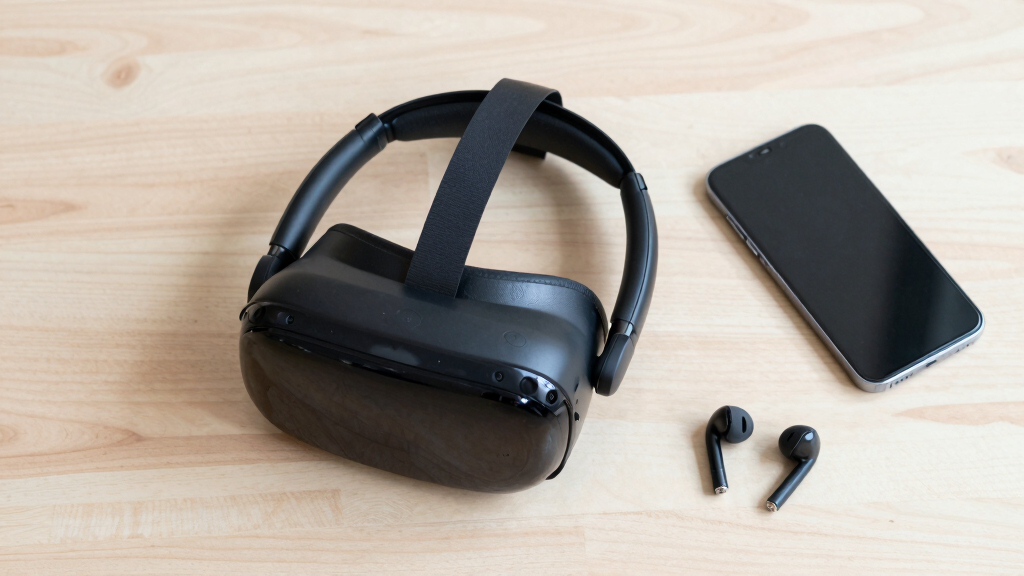
How We Picked
Our selection process focused on a combination of technical features, user versatility, and overall value. We prioritized headsets with integrated eye tracking, high-resolution displays, and versatile tracking capabilities for immersive experiences. Cost, setup complexity, and compatibility with different platforms also influenced rankings. We aimed to present options across different user needs—from casual gamers to professionals—highlighting both strengths and tradeoffs for well-rounded advice.
Factors to Consider When Choosing Vr Headsets With Eye Tracking
Choosing a VR headset with eye tracking depends on your intended use, whether gaming, professional work, or mixed reality applications. Key factors include display quality, tracking precision, setup complexity, portability, and price. Understanding what each headset offers helps align your needs with the right features, especially when eye tracking opens new interaction possibilities but adds to cost and setup considerations.Understanding Eye Tracking and Its Benefits
Eye tracking enhances immersion by enabling more natural interactions, foveated rendering for better graphics efficiency, and precise user behavior analysis. Not all headsets incorporate true eye tracking—some use basic gaze detection—so consider the level of accuracy needed for your use case, especially if developing or working professionally.
Standalone vs. PC-Connected VR Headsets
Standalone devices like the Meta Quest 3S and Quest Pro prioritize portability and ease of use, but often sacrifice some visual fidelity and tracking complexity compared to PC-tethered options like the HTC Vive Focus Vision. PC-connected headsets support higher-end graphics and more comprehensive tracking but require a dedicated setup, making them less portable.
Cost and Setup Considerations
High-end headsets with advanced eye tracking, facial, and body sensors tend to be more expensive and complex to set up, especially the wired models supporting PC streaming. Budget-friendly options may omit some features or limit tracking accuracy but are easier for casual users or newcomers.
Choosing Based on Your Use Case
If your focus is gaming and casual exploration, wireless headsets like the Meta Quest 3S offer great value. For professional or creative work requiring detailed interactions and streaming, wired options like the HTC Vive Focus Vision or Vive Focus with facial tracking provide more precision. Professionals seeking high-fidelity mixed reality should consider the Meta Quest Pro.
Frequently Asked Questions
What is eye tracking in VR, and why does it matter?
Eye tracking in VR monitors where users are looking, enabling more natural interactions, foveated rendering for better graphics, and data collection for analytics. This technology can significantly improve immersion and interaction quality, especially for applications like training, simulation, or detailed virtual environments.
Are headsets with eye tracking suitable for gaming?
Yes, many eye-tracking VR headsets enhance gaming by allowing gaze-based interactions, more accurate aiming, and personalized experiences. However, the level of integration varies, and some models focus more on professional or creative uses. For casual gaming, simpler eye-tracking features may suffice, but high-end models provide more precise control.
Do I need a powerful PC to use eye-tracking VR headsets?
Wired headsets with advanced eye tracking, facial, and body sensors often require a robust PC with high-end graphics and processing capabilities. Standalone models minimize this need but may have limited tracking fidelity or graphics performance. Your choice depends on your desired experience and setup complexity.
How difficult is it to set up VR headsets with eye tracking?
Setup complexity varies; standalone headsets are generally plug-and-play, while PC-connected models demand more technical work, including configuring sensors, network, and software. Advanced features like facial and eye tracking add steps, but manufacturers typically provide detailed guides. Expect a learning curve if you aim for full utilization.
Is eye tracking worth the extra cost?
For users interested in deeper immersion, realistic interactions, or professional applications, eye tracking offers tangible benefits that justify the extra expense. Casual users or those on a budget might find traditional headsets sufficient, but as the technology matures, its value becomes more apparent for enhanced VR experiences.
Conclusion
For gamers and casual users prioritizing portability and ease of use, the Meta Quest 3S offers excellent value with its wireless design and extensive game library. Professionals and content creators needing precise tracking and mixed reality features should consider the Meta Quest Pro for its advanced sensors and high-fidelity passthrough. Those seeking the highest visual fidelity and versatile tracking for custom setups may prefer the HTC Vive Focus Vision or wired variant, despite their complexity. Your choice hinges on balancing your technical comfort, budget, and primary use case.
Evergreen bestsellers Picks
bestsellers
As an affiliate, we earn on qualifying purchases.