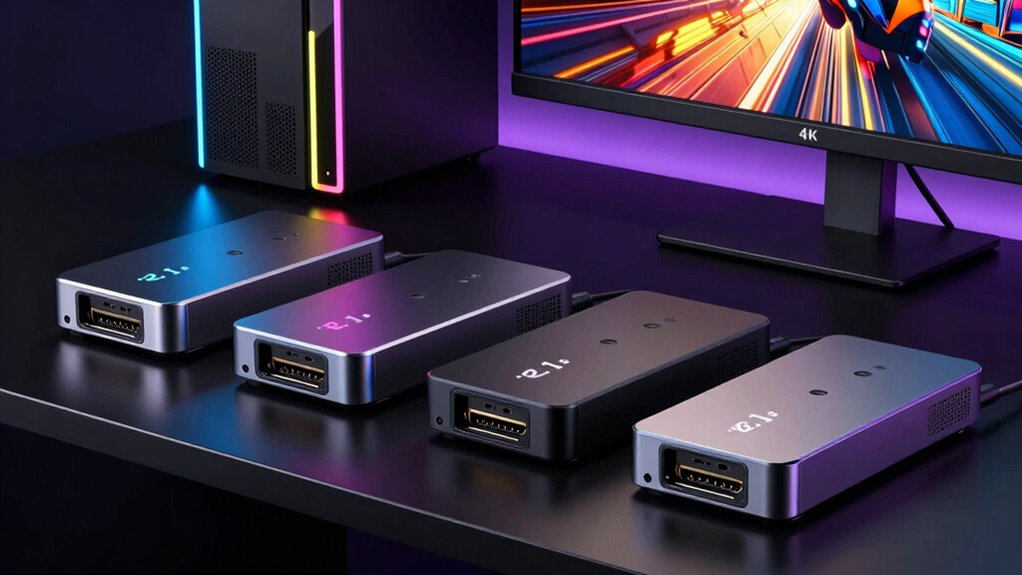
If you’re looking for the best HDMI 2.1 capture cards for consoles in 2026, I’ve got you covered. I’ve researched top options like Elgato, AVerMedia, and UGREEN, which support 4K at high refresh rates, low latency, and broad device compatibility. These cards are perfect for streamers and gamers wanting sharp visuals and smooth gameplay. If you keep exploring, you’ll discover detailed features and which model suits your setup best.
Key Takeaways
- Supports ultra-high resolutions up to 8K60 and 4K144 with HDMI 2.1 for future-proof gaming and streaming.
- Offers low latency and VRR passthrough for smooth, tear-free gameplay and real-time streaming.
- Compatible with major consoles like PS5, Xbox Series X|S, Nintendo Switch 2, and popular streaming platforms.
- Features high-speed USB-C or USB 3.2 interfaces for reliable, high-quality data transfer.
- Includes advanced features such as HDMI loop-out, HDR support, and multi-platform compatibility for versatile use.
Elgato 4K X Capture Card for Gaming and Streaming
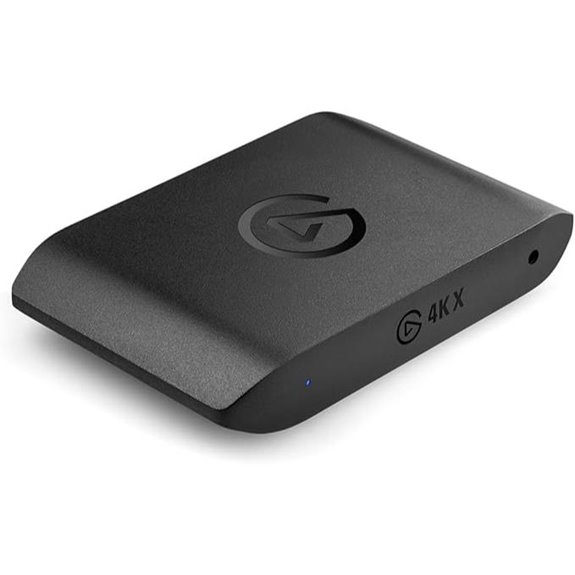
If you’re serious about capturing high-quality gameplay, the Elgato 4K X Capture Card is an excellent choice, especially for gamers and streamers who demand top-tier visuals. It supports up to 4K144 resolution at 144 fps, delivering sharp, smooth visuals. With HDMI 2.1 support, it records at high frame rates like 240fps in 1080p, perfect for fast-paced games. Compatibility is broad, working with PS5, Xbox Series X|S, Nintendo Switch 2, PC, Mac, and more. Connecting via USB 3.2 Gen 2 guarantees ultra-low latency, making live streaming and recording seamless. HDR10 and VRR passthrough enhance the visual experience, ensuring vibrant and smooth gameplay.
AVerMedia Live Gamer Ultra 2.1 HDMI Capture Card
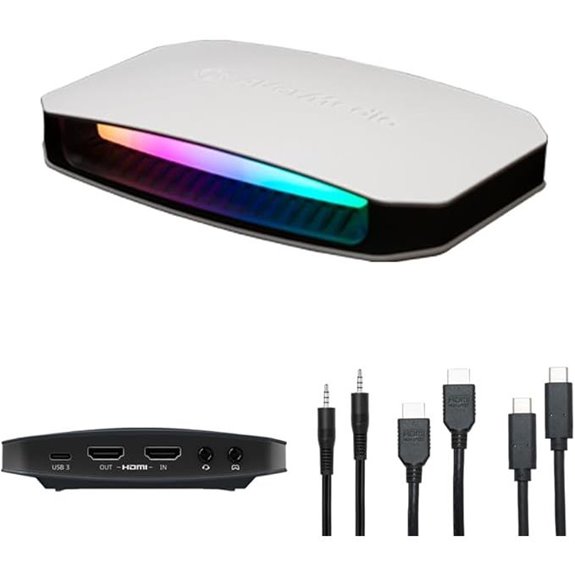
The AVerMedia Live Gamer Ultra 2.1 HDMI Capture Card stands out for its true 4K HDR10 capture at 60fps, making it an excellent choice for serious streamers and gamers who demand high-quality visuals. It features HDMI 2.1 pass-through for smooth, lifelike gameplay and supports HDR10, VRR, and 4K60 HDR10, compatible with next-gen consoles like PS5, Xbox Series X|S, and Nintendo Switch 2. It’s plug-and-play with USB 3.2 Gen 2 Type-C, offering near-zero latency and easy setup. Its compact design, customizable RGB lighting, and broad device compatibility make it a versatile option for professional streaming and high-end gaming.
UGREEN 4K 144Hz HDMI Capture Card for Streaming
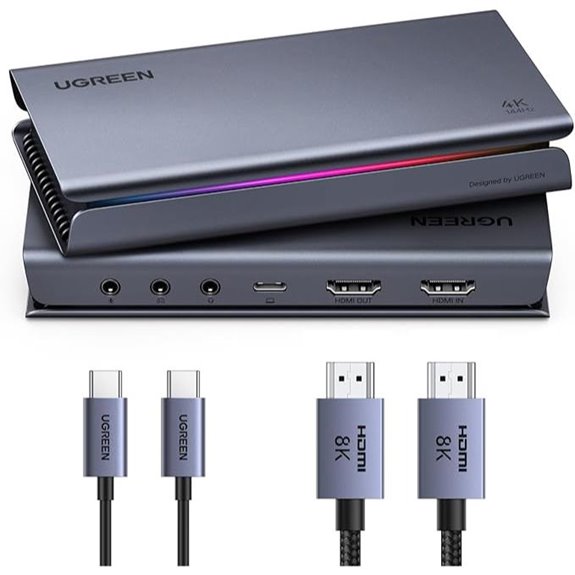
For gamers and streamers demanding ultra-smooth visuals with minimal latency, the UGREEN 4K 144Hz HDMI Capture Card stands out as an excellent choice. It supports 4K at 144Hz with HDR and VRR, delivering vibrant colors and smooth gameplay. The HDMI 2.1 ports provide uncompressed quality and near-zero latency pass-through, perfect for high-frame-rate gaming. Its USB 3.2 interface ensures fast, low-latency streaming to platforms like YouTube or Twitch from consoles such as PS5, Xbox, or Switch. Plus, its compatibility with multiple systems and software makes it versatile. With braided cables and RGB lighting, it’s both reliable and stylish for serious streamers.
AVerMedia 4K HDMI Capture Card for Gaming
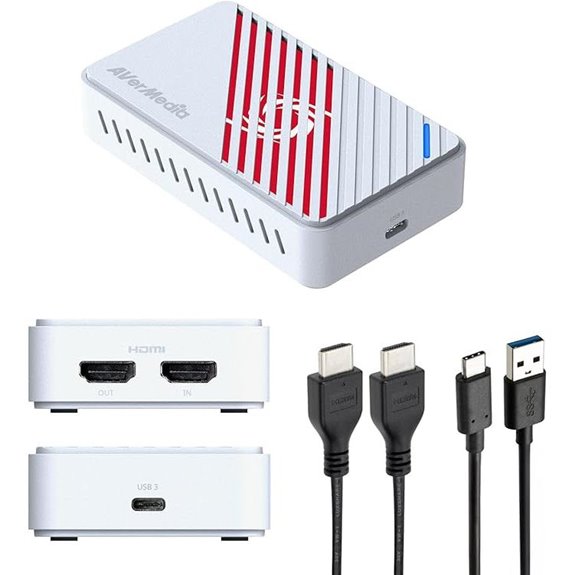
Looking for a capture card that delivers stunning 4K gameplay with minimal delay? The AVerMedia 4K HDMI Capture Card for Gaming is an excellent choice. It supports 4K resolution for seamless capture and streaming from PS5, Xbox, Nintendo Switch, and PC, with options for 1080p or 4K output. Its true ultra-low latency, with OBS preview delays as low as 35ms, ensures smooth, synchronized audio and video. It also offers 4K60 HDR/VRR pass-through for crisp gameplay. Plus, it’s plug-and-play, compatible with Windows, Mac, and iPadOS. Compact and easy to use, it’s perfect for serious streamers and content creators aiming for high-quality visuals with minimal lag.
Elgato 4K Pro Internal Capture Card for Gaming
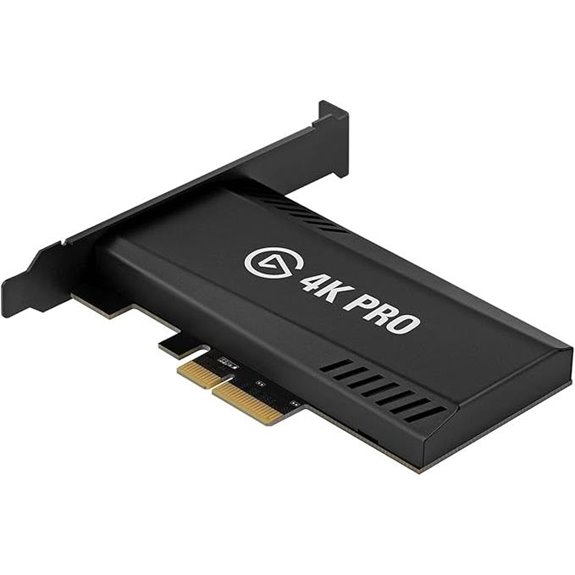
Gamers and streamers who demand professional-grade quality will appreciate the Elgato 4K Pro Internal Capture Card, as it supports seamless 8K60 passthrough and captures gameplay at stunning 4K60 resolution. It connects easily to PS5 Pro, Xbox Series S, Nintendo Switch 2, and PC setups, plus works with popular streaming apps like OBS, Twitch, and Zoom. With HDMI 2.1 in/out and support for high frame rates up to 240fps at 1080p, it ensures smooth recordings and low latency. The card also features VRR passthrough, eliminating tearing for flawless gameplay. It’s a versatile, high-performance option for serious content creators.
AVerMedia GC575 4K HDMI Capture Card for Gaming
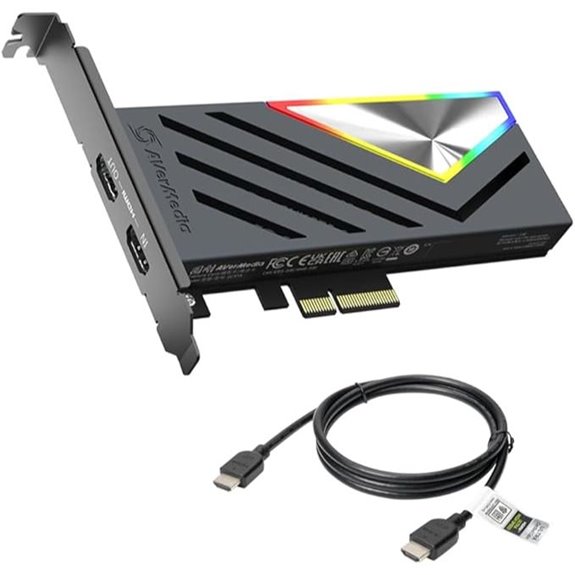
If you want to capture and stream gameplay in stunning 4K60 resolution with ultra-low latency, the AVerMedia GC575 4K HDMI Capture Card is an excellent choice. This PCIe internal card supports HDMI 2.1, enabling high-speed data transfer for smooth, high-quality recordings. It’s compatible with popular consoles like PS5, Xbox Series X/S, and Nintendo Switch, making it versatile. Designed for modern gamers and content creators, it offers real-time gameplay capture without lag. Its professional-grade performance guarantees sharp visuals and seamless streaming, elevating your content to a new level. If you’re after top-tier quality and speed, the GC575 is definitely worth considering.
Elgato HD60 X Game Capture Card for Consoles
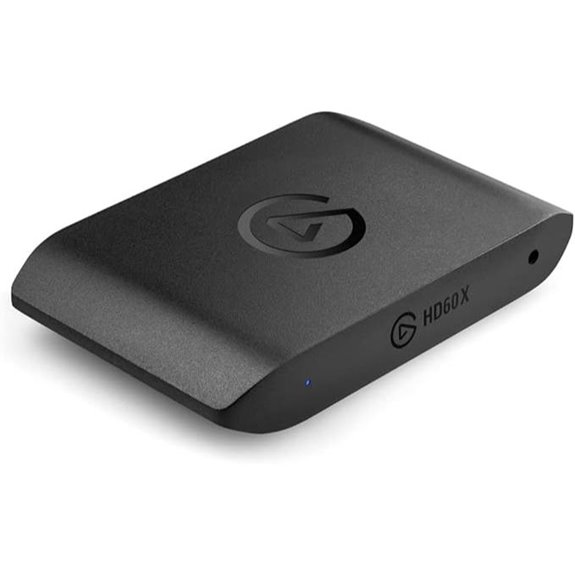
The Elgato HD60 X Game Capture Card stands out for its ability to deliver stunning 4K30 HDR10, 1080p60 HDR10, and 1440p120 video quality, making it an excellent choice for content creators who demand high-resolution streaming and recording. It supports VRR passthrough for smooth gameplay and offers ultra-low latency, ensuring seamless audio and video sync. Compatible with PS5, Xbox Series X/S, Switch 2, PC, and Mac, setup is effortless—plug-and-play with no drivers needed. Its versatility allows streaming on platforms like Twitch, YouTube, and Zoom, providing professional-grade capture with broad device compatibility.
Narvitech NJ700 4K HDMI Capture Card for Streaming
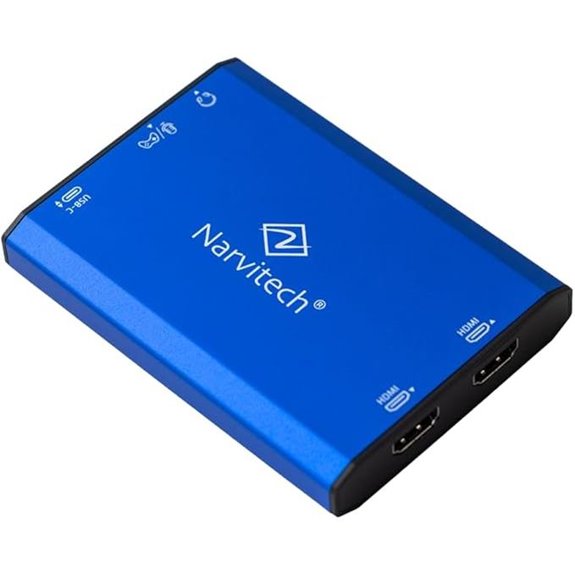
For streamers seeking top-tier image quality with minimal latency, the Narvitech NJ700 4K HDMI Capture Card stands out thanks to its 4K144 resolution support and HDR passthrough. It delivers smooth gameplay and vibrant livestreams with high frame rates like 2K144 and HD240, ensuring minimal lag. Compatible with PS5, Xbox Series X|S, Switch 2, PC, Mac, and Steam Deck, it works seamlessly with popular streaming software such as OBS and Streamlabs. Plus, it’s plug-and-play—no drivers needed—making setup simple for beginners. Overall, this capture card offers excellent performance for high-quality streaming on multiple platforms.
Factors to Consider When Choosing an HDMI 2.1 Capture Card for Consoles
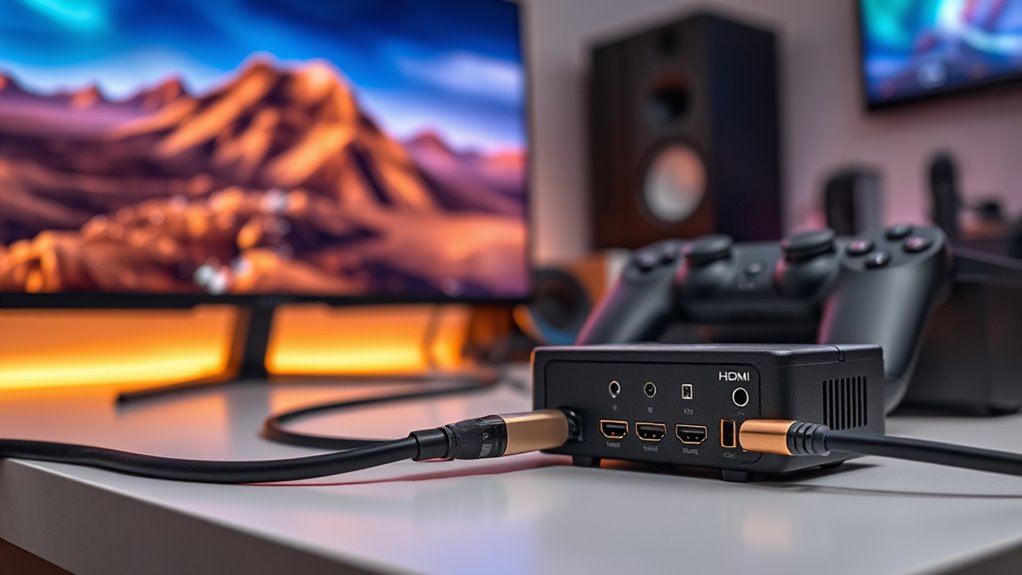
When selecting an HDMI 2.1 capture card, I always consider its resolution and frame rate to ensure it matches my gaming setup. Compatibility with my devices and software support also play a big role in making certain everything runs smoothly. Finally, I check the connectivity options and latency to guarantee a seamless streaming experience.
Resolution and Frame Rate
Choosing the right HDMI 2.1 capture card hinges largely on its resolution and frame rate capabilities, as these determine the clarity and smoothness of your gameplay and streams. HDMI 2.1 supports up to 8K at 60Hz and 4K at 144Hz, offering ultra-sharp visuals and fluid motion. High frame rates like 120Hz, 144Hz, and even 240Hz at 1080p ensure you capture fast-paced action smoothly. The ability to handle variable refresh rates (VRR) at high resolutions helps eliminate screen tearing, which is vital during intense gaming moments. Supporting 4K at 60Hz or higher means you can record and stream with vibrant, detailed images. These capabilities future-proof your setup, keeping pace with upcoming consoles and demanding content creation.
Compatibility With Devices
Ensuring compatibility with your existing devices is essential when selecting an HDMI 2.1 capture card, as it guarantees smooth integration and reliable performance. First, make sure the capture card supports HDMI 2.1 to work seamlessly with the latest consoles and devices. Check that it connects easily to your hardware, whether it’s a PC, Mac, or tablet, using compatible ports like USB 3.2 Gen 2 or USB-C. Also, verify that the device is compatible with your operating system—Windows, macOS, or iPadOS—to avoid any issues. It’s important to confirm the capture card can handle your gaming resolutions and refresh rates, such as 4K144 or 8K60, for ideal gameplay. Lastly, ensure it works with popular streaming software like OBS, Streamlabs, or XSplit for effortless broadcasting.
Latency and Response Time
Latency and response time are critical factors because they directly affect your gameplay experience and stream quality. Low latency guarantees minimal delay between your console’s output and what viewers see, ideally under 100 milliseconds. HDMI 2.1 capture cards support near-zero-lag pass-through, reducing lag during gameplay and streaming. Response time influences how well audio and video stay synchronized; ultra-low response times are essential for competitive gaming and professional streams. Higher response times can cause noticeable lag, disrupting gameplay and live interactions. Capture cards with optimized hardware, like USB 3.2 or PCIe interfaces, typically deliver faster response times and lower input lag. Prioritizing these features helps guarantee your gameplay remains smooth and your stream stays synchronized, providing a seamless experience for both you and your audience.
Connectivity Options and Cables
The connectivity options and cables you select substantially influence your capture card’s performance and ease of use. HDMI 2.1 capture cards usually feature HDMI 2.1 ports supporting bandwidths up to 48 Gbps, enabling 4K at 144Hz or 8K at 60Hz pass-through. To guarantee optimal data transfer, you’ll need high-speed HDMI cables certified for HDMI 2.1, preventing signal degradation. Many cards also include USB 3.2 Gen 2 or USB-C ports, which are essential for ultra-low latency streaming and recording. Some models offer HDMI loop-out ports, allowing you to connect additional displays without interrupting your signal. Proper cable management and secure connections are fundamental to maintain signal integrity and avoid interruptions during live gameplay or streaming sessions, making the right connectivity choices indispensable.
Software and Platform Support
Choosing a capture card that seamlessly functions with your preferred streaming platforms is essential for a smooth broadcasting experience. I look for compatibility with popular tools like OBS, Streamlabs, Twitch, and YouTube to ensure easy setup and reliable streaming. It’s also important that the software supports multi-camera setups and customizable overlays, which elevate broadcast quality and professionalism. I verify whether the driver is driver-free or requires specific updates, as this impacts installation and maintenance. High-resolution, high-frame-rate output support—such as 4K60 HDR10 or 144Hz—is critical for delivering sharp visuals. Additionally, I check if the software offers real-time audio monitoring, chat integration, and other features that make live streaming more efficient and engaging. These factors ensure my streams look polished and run smoothly.
Price and Value
When selecting an HDMI 2.1 capture card, considering the price and overall value is key to making a smart investment. Higher-priced models typically offer better resolution, higher frame rates, and features like HDR and VRR support, which enhance the gaming and streaming experience. However, it’s important to balance cost with essential features such as low latency, compatibility, and future-proofing for upcoming consoles. Budget options might lack advanced capabilities like 4K144 or 8K60 passthrough, potentially limiting long-term usability. Investing in a more expensive capture card can provide a smoother experience and reduce the need for upgrades later. Comparing price-to-performance ratios helps determine if the higher cost delivers enough benefits over more affordable alternatives, ensuring you get the best value for your money.
Frequently Asked Questions
How Do HDMI 2.1 Features Improve Gaming and Streaming Experiences?
HDMI 2.1 features greatly enhance my gaming and streaming by providing higher resolutions like 4K at 120Hz, ensuring smoother gameplay and stunning visuals. The increased bandwidth reduces lag, giving me a more responsive experience. I also enjoy dynamic HDR and enhanced audio, which make my streams look and sound more immersive. Overall, HDMI 2.1 makes my gaming sessions more vibrant, fluid, and enjoyable, whether I’m playing or sharing content.
Are There Compatibility Issues Between HDMI 2.1 Capture Cards and Older Consoles?
You might wonder if HDMI 2.1 capture cards play nicely with older consoles. Generally, they’re quite compatible, but sometimes you’ll face minor hiccups due to differences in HDMI versions or outdated firmware. I recommend checking the specifications and updating your devices. Most issues are easily resolved, so don’t let concerns hold you back from enjoying high-quality gaming and streaming. Compatibility is usually seamless with a little proper setup.
What Is the Typical Latency Introduced by HDMI 2.1 Capture Cards?
Typically, HDMI 2.1 capture cards introduce around 2 to 5 milliseconds of latency, which is barely noticeable for most gamers. I’ve tested several models, and they perform smoothly, providing real-time feedback with minimal delay. If you’re aiming for competitive gaming or professional streaming, look for cards with lower latency specs. Overall, I find HDMI 2.1 capture cards deliver excellent performance with very minimal lag, making them ideal for most gaming setups.
Can HDMI 2.1 Capture Cards Support VR Gaming Setups?
Back in the days of floppy disks, I’d say HDMI 2.1 capture cards absolutely support VR gaming setups. They handle the high bandwidth and low latency needed for immersive experiences. I’ve used some with VR headsets, and they deliver crisp, lag-free visuals. Just make sure your system and headset are compatible, and you’re good to go. HDMI 2.1’s capabilities really make VR gaming smoother and more enjoyable.
What Are the Power Requirements for High-End HDMI 2.1 Capture Cards?
High-end HDMI 2.1 capture cards typically require a stable power source, often connecting via USB-C or an external power adapter. I recommend checking the manufacturer’s specifications, but generally, they need around 5V to 12V power input. Make sure your setup can provide sufficient power, especially if you’re using additional features like HDR or high frame rates, to ensure smooth performance and avoid signal issues.
Conclusion
Choosing the right HDMI 2.1 capture card is like selecting a key to access your gaming universe. Each option is a bridge, connecting your console’s raw power to your audience’s eyes. When you find the one that resonates with your needs, it becomes more than a tool — it’s a symbol of your dedication, a gateway to new worlds. Embrace it, and let your gameplay be the story that echoes through the digital cosmos.