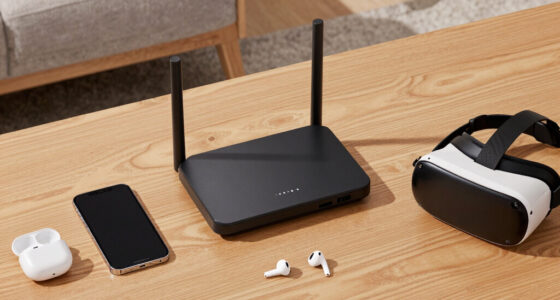
When selecting a CPU for VR streaming, performance, core count, and compatibility are key factors. The AMD Ryzen 7 5800X3D stands out as the best overall choice thanks to its powerful gaming and streaming capabilities. The Intel Core i9-14900KF offers top-tier processing power for demanding multitasking, while the Ryzen 5 5500 provides a budget-friendly option for casual streamers. The main tradeoffs involve balancing price versus performance and ensuring your system can handle the high demands of live VR content. Continue reading for a detailed breakdown of each option and what makes it suitable for different needs.

Play games on Amazon Luna for your next adventure, included with Prime
- A rotating selection of games, no download needed
- Play on TV, laptop or phone
- Fast, free delivery for your gear, too
Key Takeaways
- High core and thread counts are essential for smooth VR streaming, especially when multitasking or running demanding games.
- Top-tier CPUs like the Intel Core i9-14900KF deliver unmatched performance but come with higher costs and power consumption.
- Budget options like the Ryzen 5 5500 can suffice for less intensive streaming but may struggle with high-resolution VR content.
- Compatibility with existing hardware and future-proofing should influence your choice, especially regarding PCIe and motherboard support.
- The best CPU for VR streaming depends heavily on your specific setup and whether you prioritize gaming, streaming, or both simultaneously.


| cpu for vr streaming | Storage |
|---|---|
| AMD Ryzen 7 5800X3D 8-core | — |
| CyberPowerPC Gaming PC with In | 2TB PCIe 4.0 NVMe SSD |
| Gaming PC Desktop Computer wit | 1TB NVMe SSD |
| AMD Ryzen 5 9600X 6-Core Deskt | — |
| MSI Codex R2 Gaming Desktop PC | 1TB NVMe SSD |
| AMD Ryzen 5 5500 6-Core Deskto | — |
| Intel Core i9-14900KF 24-Core | — |
| Stormcraft Falcon Prebuilt RTX | 1TB NVMe SSD |
| AMD Ryzen 5 4500 6-Core | — |
| VIPRTECH Ghost 3.0 Gaming PC | 1TB SSD |
| CyberPowerPC Gamer Xtreme VR G | 500GB PCIe NVMe SSD |
| AMD Ryzen 7 9800X3D 8-Core | — |
More Details on Our Top Picks
AMD Ryzen 7 5800X3D 8-core, 16-Thread Desktop Processor with AMD 3D V-Cache Technology
The AMD Ryzen 7 5800X3D stands out for its exceptional gaming performance thanks to AMD’s 3D V-Cache technology, which enhances frame rates and reduces latency—both crucial for smooth VR streaming. Compared to the Intel Core i9-14900KF, it offers a more cost-effective balance of high clock speeds and cache, making it ideal for those focused on VR without overspending. Its 8 cores and 16 threads deliver reliable multitasking, though it requires a compatible motherboard and cooling solution, adding some setup complexity. This processor is perfect for dedicated VR streamers who want top-tier gaming performance without the extreme price of high-end CPUs. However, it does lack an included cooler, so a quality aftermarket cooler is necessary, which can add to the total build cost. If your priority is a high-performance CPU optimized for VR streaming on a reasonable budget, this makes a compelling choice.
Pros:- Exceptional gaming performance due to AMD’s 3D V-Cache technology
- High clock speed of 4.5 GHz for demanding tasks
- Supports PCIe 4.0 and DDR4-3200 for modern peripherals
Cons:- Cooler not included, requiring additional purchase
- Requires a compatible motherboard (X570 or B550)
Best for: VR streamers who prioritize gaming performance with efficient multitasking on a mid-range budget
Not ideal for: Users seeking a CPU with integrated graphics or minimal setup requirements, as it needs a separate cooler and motherboard
- Cores:8
- Threads:16
- Max Boost Clock:4.5 GHz
- Cache:100 MB
- Memory Support:DDR4-3200
- Socket:AM4
- PCIe Support:PCIe 4.0
Our verdict“This CPU is best suited for dedicated VR streamers who want top-tier gaming performance without the premium price of the highest-end chips.”
CyberPowerPC Gaming PC with Intel Core i9-14900KF and GeForce RTX 5070 12GB
This prebuilt system featuring the Intel Core i9-14900KF and RTX 5070 excels at VR streaming thanks to its top-tier CPU and graphics card combo. Compared with the MSI Codex R2, it offers more raw processing power and a more robust cooling setup, making it suitable for intensive multitasking and high-fidelity VR. Its 32GB DDR5 RAM and 2TB SSD ensure fast load times and smooth multitasking, which helps maintain stable streams during demanding VR sessions. The liquid cooling and customizable RGB also appeal to users who want a visually appealing setup. On the downside, the system’s high price and limited upgradeability may deter budget-conscious buyers or those planning future upgrades. This system makes the most sense for VR streamers who want a prebuilt powerhouse with fewer worries about compatibility and assembly, but at a premium cost.
Pros:- Unmatched processing power with the Intel Core i9-14900KF
- High-performance RTX 5070 graphics card for VR and gaming
- Fast DDR5 RAM and large SSD for quick load times
Cons:- Expensive compared to custom builds or mid-tier options
- Limited upgrade options due to proprietary design
Best for: Advanced VR streamers seeking a ready-to-go, high-performance gaming PC with premium components
Not ideal for: Budget-conscious users or those who prefer building their own system for future upgrades
- Processor:Intel Core i9-14900KF 3.2GHz 24 Cores
- Motherboard:Intel Z790 Chipset
- RAM:32GB DDR5
- Storage:2TB PCIe 4.0 NVMe SSD
- Graphics:NVIDIA GeForce RTX 5070 12GB
- Connectivity:Multiple USB ports, WiFi 5, Bluetooth 4.2
Our verdict“This system is ideal for dedicated VR streamers who want a prebuilt, high-end machine to handle intensive workloads with ease.”
Gaming PC Desktop Computer with RTX 4060 and Intel i7-11700F
This desktop with the RTX 4060 and Intel i7-11700F offers a balanced setup for VR streaming, especially for gamers who want solid performance without the highest-end components. Its 16GB DDR4 RAM and 1TB NVMe SSD provide fast load times, while the RGB fans help keep temperatures in check during extended VR sessions. Compared with the CyberPowerPC i9 system, it sacrifices some raw power but remains capable of running VR streams smoothly at 1080p or 1440p. The system’s affordability and decent specs make it appealing, but upgradeability may be limited, and it might struggle with future VR titles or ultra-high settings. It’s best for users who want a capable, ready-made VR streaming PC without breaking the bank.
Pros:- Strong GPU for smooth VR and gaming performance
- Good balance of CPU and RAM for multitasking
- Preloaded with Windows 11 Pro and RGB cooling fans
Cons:- Limited upgrade options in the future
- No mention of included peripherals or high-end cooling
Best for: Mid-tier VR streamers prioritizing performance for current games on a sensible budget
Not ideal for: Users aiming for 4K VR streaming or planning to upgrade frequently, due to limited future-proofing
- Graphics Card:NVIDIA GeForce RTX 4060
- Processor:Intel Core i7-11700F
- RAM:16GB DDR4
- Storage:1TB NVMe SSD
- Cooling:7 ARGB fans
- Operating System:Windows 11 Pro
Our verdict“This PC offers a reliable and cost-effective platform for VR streaming, especially at 1080p or 1440p, but isn’t built for demanding future titles.”
AMD Ryzen 5 9600X 6-Core Desktop Processor
The AMD Ryzen 5 9600X is a solid choice for budget-conscious VR streamers who want reliable performance without the high price tag of flagship CPUs. With a max boost of 5.4 GHz and 6 cores, it can handle most VR titles and streaming tasks effectively, better than entry-level options like the Ryzen 5 4500. However, it requires a compatible motherboard with PCIe 5.0 support and does not come with a cooler, adding to the total build cost. Compared to the Ryzen 7 5800X3D, it’s less powerful but still capable for mid-tier VR streaming, especially if paired with a decent GPU. It’s a good fit for users who want a cost-effective upgrade path and aren’t concerned with future-proofing for the most demanding titles.
Pros:- High boost clock of 5.4 GHz for responsive performance
- Unlocked for overclocking potential
- Supports DDR5-5600 memory for future upgrades
Cons:- Cooler not included, increasing initial cost
- Requires a compatible motherboard with PCIe 5.0
Best for: Budget-conscious VR streamers seeking a capable CPU for current titles and moderate streaming
Not ideal for: Those planning to run the latest AAA VR titles at ultra settings or future games demanding more cores
- Cores:6
- Threads:12
- Max Boost Frequency:5.4 GHz
- Cache:38 MB
- Memory Support:DDR5-5600
- Socket:AM5
- Overclocking:Unlocked
Our verdict“This CPU is a practical, budget-friendly option for VR streamers who want decent performance without overspending.”
MSI Codex R2 Gaming Desktop PC with NVIDIA GeForce RTX 5070 and Intel Core i5-14400F
The MSI Codex R2 combines a capable Intel Core i5-14400F and RTX 5070 to deliver solid VR streaming performance. Compared to the CyberPowerPC i9, it offers a more balanced upgrade path, with plenty of room for future component replacements. Its 32GB DDR5 RAM and 1TB NVMe SSD handle multitasking and fast game loads well, while the four-fan cooling system maintains stability during extended VR sessions. Although it doesn’t include peripherals or a high-end monitor, its upgradeability and Wi-Fi 6E support make it attractive for users who want a future-proof setup. The main tradeoff is that it might not match the raw power of more expensive prebuilt systems, but for those wanting flexibility at a reasonable price, this is a smart pick.
Pros:- Upgradeable components for future performance boosts
- Effective cooling system with four fans for long sessions
- Wi-Fi 6E ensures fast, low-latency connectivity
Cons:- Lacks included peripherals or high-end display
- Potentially higher price for entry-level gamers
Best for: VR streamers who want a system that can evolve with their needs and mid-range performance
Not ideal for: Users who need a compact or all-in-one solution, as the system is more traditional in design
- Graphics Card:NVIDIA GeForce RTX 5070 12GB
- Processor:Intel Core i5-14400F
- RAM:32GB DDR5
- Storage:1TB NVMe SSD
- Cooling:Four-fan air cooling system
- Wi-Fi:Wi-Fi 6E
Our verdict“This desktop balances current performance with future upgrade potential, making it suitable for evolving VR streaming needs.”
AMD Ryzen 5 5500 6-Core Desktop Processor with Wraith Stealth Cooler
The AMD Ryzen 5 5500 offers solid 6-core, 12-thread performance that can handle VR streaming tasks without breaking the bank. Compared to higher-end options like the Intel Core i9-14900KF, it doesn’t boast as many cores or the same raw power, but for most VR streaming setups, its performance is sufficient and more cost-effective. Its unlocked multiplier allows for overclocking, which can boost streaming stability when paired with a decent cooling solution. The included Wraith Stealth cooler is a plus for budget builds, but it limits overclocking potential and thermal headroom. This CPU is best suited for entry-level VR streamers who want decent performance without overspending, but those aiming for heavy multitasking or simultaneous gaming might need a more powerful CPU. It’s a good choice if you’re willing to pair it with a dedicated GPU and upgrade later.
Pros:- Affordable price point for entry-level VR streaming builds
- Unlocked for overclocking to improve performance
- Includes a Wraith Stealth cooler, reducing initial costs
Cons:- Requires a discrete GPU for VR performance and gaming
- Limited to DDR4-3200 memory support, restricting future upgrades
Best for: Budget-conscious VR streamers who want a reliable, upgrade-friendly CPU.
Not ideal for: Power users or streamers running multiple demanding applications simultaneously, due to its limited cores and bandwidth.
- Cores:6
- Threads:12
- Max Boost Clock:4.2 GHz
- Cache:19 MB
- Memory Support:DDR4-3200
- Cooler:Wraith Stealth
Our verdict“This CPU is ideal for newcomers or those on a tight budget who want decent VR streaming capabilities without high-end specs.”
Intel Core i9-14900KF 24-Core LGA1700 Desktop Processor, Unlocked, Up to 6GHz, PCIe 5.0, 3-Year Warranty
The Intel Core i9-14900KF stands out for its massive 24 cores and up to 6.0 GHz turbo, making it a powerhouse for VR streaming combined with demanding multitasking or simultaneous high-quality gaming. Unlike the Ryzen 5 5500, it offers unparalleled multi-core performance, ideal for streamers who also run intensive editing or rendering tasks. Its support for PCIe 5.0 and DDR5 memory provides future-proofing, though this means higher initial costs due to premium motherboards and cooling solutions. The high power consumption is a tradeoff for its raw speed, and it requires a compatible high-end motherboard. This CPU is best suited for professional streamers or content creators who want the absolute best and are prepared for the investment. Less suitable for casual or budget setups where performance gains won’t justify the higher price.
Pros:- Exceptional multi-core performance for multitasking and streaming
- Supports PCIe 5.0 and DDR5 for future upgrades
- Unlocked for overclocking with reliable 3-year warranty
Cons:- High power consumption and cooling requirements
- Requires expensive high-end motherboard and DDR5 RAM
Best for: Professional VR streamers and content creators who need maximum processing power.
Not ideal for: Budget or entry-level streamers who cannot justify the high cost and power requirements.
- Cores:24
- Threads:32
- Max Turbo Frequency:6.0 GHz
- Cache:36 MB
- Socket:LGA1700
- Memory Support:DDR5-5600
Our verdict“This CPU delivers unmatched performance for demanding VR streaming workflows, best for users with a high-performance budget.”
Stormcraft Falcon Prebuilt RTX 5070 Gaming PC, R7 7800X3D, 32GB DDR5, 1TB SSD
This prebuilt system pairs the AMD Ryzen 7 7800X3D with an RTX 5070, making it a robust choice for VR streaming, gaming, and content creation—especially compared to mid-tier systems like the VIPRTECH Ghost. Its 32GB DDR5 RAM and 1TB SSD ensure smooth multitasking and fast load times, essential for streaming and editing. The included cooling and power supply support overclocking and future upgrades, reducing the hassle of building from scratch. However, the premium price reflects its high-end components, and its large case may not fit every setup. This system is ideal for serious VR streamers who want a ready-to-go solution with performance that can handle demanding multitasking and high-quality VR. Less suitable for budget-conscious users or those looking for a simple upgrade.
Pros:- Powerful AMD Ryzen 7 7800X3D CPU with excellent gaming and streaming performance
- High-quality RTX 5070 GPU ideal for VR and AAA titles
- Fast DDR5 RAM and 1TB SSD for smooth multitasking and quick load times
Cons:- Premium price may be prohibitive for some users
- Large case size could be incompatible with limited space
Best for: Enthusiast VR streamers seeking a high-performance, turnkey system for gaming and content creation.
Not ideal for: Casual streamers or those on a tight budget who cannot justify the premium price.
- CPU:AMD Ryzen 7 7800X3D
- GPU:GeForce RTX 5070 12GB
- Memory:32GB DDR5 6000MHz
- Storage:1TB NVMe SSD
- Cooling:360mm AIO Liquid Cooler
- Power Supply:850W 80 Plus Gold
Our verdict“This prebuilt PC offers a compelling balance of performance and convenience for serious VR streamers and creators.”
AMD Ryzen 5 4500 6-Core, 12-Thread Unlocked Desktop Processor with Wraith Stealth Cooler
The AMD Ryzen 5 4500 offers a solid 6-core, 12-thread platform for entry-level VR streaming and gaming, especially if upgrading from older CPUs. While it shares a similar core count with the Ryzen 5 5500, its slightly lower clock speeds and lack of integrated graphics make it less appealing for performance-focused streamers. It requires a compatible Socket AM4 motherboard and a discrete GPU for VR, similar to the 5500, but lacks some of the newer platform features like DDR4-3200 support. Its unlocked multiplier allows overclocking, but thermal and power headroom are limited by its basic cooling solution. This CPU makes sense for budget upgrades but isn’t suited for heavy multitasking or professional content creation. It’s a good stepping stone for casual VR streamers aiming for modest setups.
Pros:- Good performance for basic VR streaming and gaming
- Unlocked for overclocking to squeeze out extra performance
- Includes a Wraith Stealth cooler for easy setup
Cons:- No integrated graphics, requiring a discrete GPU
- Limited support for newer memory and platform features
Best for: Upgrading gamers or streamers on a budget with existing AM4 systems.
Not ideal for: New builders or those seeking the highest streaming performance, due to its limited future-proofing and features.
- Cores:6
- Threads:12
- Speed:4.1 GHz
- Cache:8 MB
- Wattage:65W
- Cooler:Wraith Stealth
Our verdict“This CPU is suitable for budget upgrades and casual VR streaming, but it falls short for demanding multitasking or professional workflows.”
VIPRTECH Ghost 3.0 Gaming PC, Ryzen 7, RTX 4060 8GB, 16GB RAM, 1TB SSD, Onyx Black
The VIPRTECH Ghost 3.0 combines a Ryzen 7 CPU with an RTX 4060, making it a balanced choice for VR streaming, gaming, and creative work. While it’s less powerful than the RTX 5070 systems, it still offers strong performance for 1080p and some 1440p VR applications, outpacing lower-tier prebuilt options like the CyberPowerPC i5 setups. Its 16GB DDR4 RAM and 1TB SSD facilitate multitasking and quick load times, though it may face limitations in high-end multitasking or intensive editing. The system’s ready-to-use design and built-in cooling streamline setup, but its processor listing as Ryzen 7 3700X in some descriptions could cause confusion about performance level. It’s ideal for users wanting a prebuilt with good VR capabilities without the premium price of top-tier systems.
Pros:- Solid Ryzen 7 CPU performance for streaming and gaming
- Decent RTX 4060 GPU for VR and casual AAA titles
- Fast SSD and 16GB RAM for smooth multitasking
Cons:- Processor listing may cause confusion about exact specs
- Limited upgradeability compared to custom builds
Best for: Casual to mid-range VR streamers who want a prebuilt with good performance and quick setup.
Not ideal for: High-end streamers or those needing maximum future-proofing, due to its mid-tier GPU and processor.
- Processor:AMD Ryzen 7 3700X
- Graphics:RTX 4060 8GB
- RAM:16GB DDR4
- Storage:1TB SSD
- Cooling:120mm RGB Liquid Cooler
- Power Supply:600W Gold
Our verdict“This prebuilt strikes a good balance for casual and mid-level VR streamers seeking convenience and decent performance.”
CyberPowerPC Gamer Xtreme VR Gaming Desktop, Intel Core i5-12400F, GeForce RTX 3050 8GB, 16GB DDR4, 500GB NVMe SSD, Windows 11 Home, Black
This desktop stands out for delivering strong gaming and VR performance at a more accessible price point compared to high-end options like the RTX 5070-powered gaming PC. Its Intel Core i5-12400F offers solid multitasking and gaming capabilities, making it a reliable choice for VR streaming where frame stability matters. The NVIDIA RTX 3050 provides good visual quality for VR, though it may struggle with the highest settings or future titles. Compared to premium setups, its limited 500GB SSD could become a bottleneck for large VR libraries, but its straightforward build and included peripherals make it a practical pick for budget-conscious users. The potential for higher noise levels and limited storage are tradeoffs to consider.
Pros:- Excellent value with balanced specs for VR streaming
- Solid mid-range GPU capable of smooth VR visuals
- Includes Windows 11 Home and peripherals for ready-to-use setup
Cons:- Limited 500GB SSD may require external storage for large VR libraries
- Potentially noisy under heavy load due to air cooling
- No mention of expansion options for future upgrades
Best for: VR streamers who want strong performance without a steep price tag and are okay with moderate storage capacity.
Not ideal for: Power users planning to run demanding VR applications or large game libraries that require extensive storage and future upgrade flexibility.
- Processor:Intel Core i5-12400F 2.5GHz, 6 cores
- Motherboard:Intel B660 Chipset
- RAM:16GB DDR4
- Storage:500GB PCIe NVMe SSD
- Graphics Card:NVIDIA GeForce RTX 3050 8GB GDDR6
- Operating System:Windows 11 Home 64-bit
- Connectivity:Wi-Fi 802.11AC, Ethernet 10/100/1000
- Video Output:1x HDMI, 2x DisplayPort
- USB Ports:6 x USB 3.1, 2 x USB 2.0
Our verdict“This desktop is best suited for VR streamers seeking a cost-effective, reliable machine that handles current titles well but may need upgrades later.”
AMD Ryzen 7 9800X3D 8-Core, 16-Thread Desktop Processor
Compared with the Intel Core i5-12400F, the AMD Ryzen 7 9800X3D offers a higher core count and support for more intensive creative workflows, making it a standout for users who want a processor that can handle demanding VR streaming alongside multitasking. Its 8 cores and 16 threads, paired with high clock speeds up to 5.2GHz, provide substantial processing power for smooth, lag-free VR experiences. The large 96MB L3 cache enhances performance in cache-dependent tasks, though it requires a separate cooler, which adds to the setup complexity and cost. While the CPU itself is a clear upgrade for VR streaming, its higher wattage (140W) demands robust cooling solutions, and limited detailed warranty info may concern buyers seeking long-term reliability. It’s ideal for those planning to upgrade their entire system or build from scratch to maximize VR streaming performance.
Pros:- High core and thread count ensures smooth multitasking during streaming
- Supports high clock speeds up to 5.2GHz for responsive performance
- Large L3 cache improves performance in cache-heavy VR applications
Cons:- Requires purchase of an external cooler, increasing setup complexity and cost
- High power consumption (140W) necessitates a robust cooling solution
- Limited info on warranty and software support for long-term peace of mind
Best for: VR streamers who want a future-proof CPU that can handle both current and upcoming demanding VR titles and multitasking needs.
Not ideal for: Casual users or those with tight budgets who prefer prebuilt systems or minimal setup, as this processor requires additional cooling and compatible components.
- Processor Series:Ryzen 7
- Processor Speed:4.7 GHz
- Processor Socket:Socket AM5
- Secondary Cache:8 MB
- Wattage:140 watts
- Cache Memory Installed Size:8 MB
- Processor Count:8
- Processor Threads:16
- Cooling Method:External Cooler
Our verdict“This processor is ideal for VR streamers aiming to build or upgrade a system for demanding future titles and multitasking, accepting additional cooling and setup considerations.”

How We Picked
We evaluated each CPU based on performance benchmarks relevant to VR streaming, including multi-core processing power, single-threaded performance, and thermal efficiency. Compatibility with common VR hardware and ease of integration into gaming rigs were also considered. Price-to-performance ratio played a significant role, ensuring options are accessible for different budgets. The ranking emphasizes real-world usability for VR streamers, balancing raw power with reliability and future-proofing. Our goal was to identify CPUs that provide consistent, high-quality streaming without bottlenecks or excessive costs.Factors to Consider When Choosing Cpu For Vr Streaming
Choosing the right CPU for VR streaming involves considering several critical factors beyond raw specs. The key is to match your processor’s capabilities with your specific streaming and gaming needs while maintaining system stability and budget. Below are the most important considerations to help you make an informed decision.Core Count and Thread Performance
VR streaming is demanding on both single and multi-core performance. A higher core and thread count typically means smoother streams and better multitasking. For most serious VR streamers, a CPU with at least 8 cores and 16 threads strikes a good balance, though some high-end models push this even further. However, more cores often come with increased costs and power requirements, so assess your specific workload before overspending. Remember, some VR streaming tasks benefit more from high clock speeds than from core counts, so a balanced approach is best.
Single-Core Speed
While multi-core performance is vital for multitasking, VR applications and games often rely heavily on single-core speed. CPUs with higher clock rates can reduce latency and improve responsiveness, which directly impacts the quality of the VR experience. When choosing a CPU, ensure it has a good balance: high enough single-core performance to handle VR rendering smoothly, paired with sufficient cores for streaming and background tasks. Overclocking potential can also be a valuable feature for optimizing performance.
Compatibility and Future-Proofing
Not all CPUs are compatible with every motherboard or VR hardware. Check socket types (like LGA1700 or AM4), PCIe support, and RAM compatibility to avoid bottlenecks. Future-proofing involves selecting a CPU that supports upcoming standards, such as PCIe 5.0 or DDR5 RAM, which can extend the lifespan of your build. Budgeting for a slightly higher-tier CPU now can save money later by reducing the need for upgrades as VR and streaming demands evolve.
Power Consumption and Cooling
High-performance CPUs often generate significant heat and consume more power. Effective cooling solutions—like aftermarket air or liquid coolers—are essential to maintain stability during extended VR streaming sessions. Power efficiency isn’t just about saving electricity; it’s also about preventing thermal throttling that can reduce performance. Consider your case size and cooling options when selecting a CPU to ensure your system remains cool and quiet under load.
Price and Value
Balancing cost against performance is critical. While premium CPUs provide unmatched power, they may not be necessary unless you’re pushing high-end VR setups or multitasking heavily. Mid-range options like the Ryzen 5 series often deliver excellent value for casual or semi-professional streamers. Keep in mind that investing in a good CPU can also mean allocating funds for a quality motherboard, RAM, and GPU—components equally vital for a smooth VR experience.
Frequently Asked Questions
Can I use a lower-end CPU for VR streaming?
Using a lower-end CPU might be feasible for casual VR streaming, but it can introduce limitations such as increased latency, dropped frames, or stuttering. VR streaming requires balancing high frame rates with real-time processing, so a CPU with at least 6 cores and good single-thread performance is recommended. If your budget is tight, choose a mid-range processor that can handle multitasking without bottlenecking your GPU or VR headset. Upgrading later is possible, but starting with a capable CPU ensures smoother experiences from the outset.
How important is overclocking for VR streaming?
Overclocking can boost CPU performance, which is beneficial for VR streaming since it reduces latency and improves responsiveness. However, it also increases heat output and power consumption, demanding better cooling solutions. Not all CPUs are equally overclockable; high-end models like the i9-14900KF have significant overclocking headroom, whereas budget options may not support it. If you plan to overclock, ensure your motherboard and cooling system are compatible and capable of handling the increased load for sustained periods.
Should I prioritize single-core speed or multi-core performance?
Both are important, but for VR streaming, a balanced approach is best. High single-core speeds contribute to low latency and smooth rendering, while multiple cores support multitasking and background processes like encoding or running additional applications. If forced to choose, prioritize a CPU with strong single-core performance for real-time responsiveness, but ensure it also has enough cores to handle streaming and multitasking without bottlenecks. Many modern CPUs excel at both, so look for a well-rounded option.
Is a more expensive CPU always better for VR streaming?
Not necessarily. While higher-priced CPUs usually deliver better raw performance, they might be overkill for casual streaming or less demanding VR setups. For most users, mid-range CPUs offer excellent value, providing enough power for smooth streams without the premium cost. Investing in a high-end CPU makes sense if you’re running demanding VR applications, multitasking heavily, or planning to future-proof your system. Ultimately, the best choice depends on your specific needs and budget.
How does CPU choice affect VR headset compatibility?
Most modern VR headsets are compatible with a wide range of CPUs, but some high-performance headsets may benefit from a more powerful processor to handle high frame rates and complex rendering. Compatibility is more often dictated by the GPU and ports than the CPU itself, but a bottlenecked CPU can limit overall performance. Ensure your CPU meets or exceeds the requirements specified by your VR headset and that your motherboard supports the necessary features for optimal performance.
Conclusion
For most gamers and streamers, the AMD Ryzen 7 5800X3D offers a compelling balance of power and value, making it the best overall choice. If you want top-tier performance and are willing to invest, the Intel Core i9-14900KF stands out as the premium option. Budget-conscious users should consider the Ryzen 5 5500 for decent performance at a lower price point. Beginners or those building a new setup might prioritize compatibility and ease of use, making mid-range CPUs a smart starting point. For demanding multi-tasking or future-proofing, high-core-count processors like the i9 or Ryzen 7 series are worth considering.
Halloween Picks
halloween
As an affiliate, we earn on qualifying purchases.