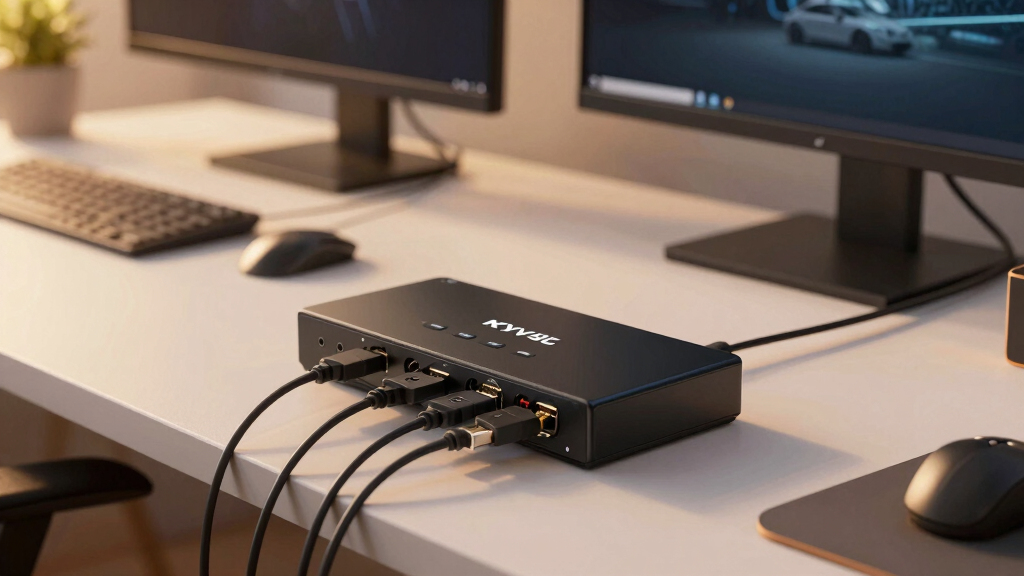
Choosing the best KVM switch for a creator desk involves balancing multiple factors: monitor count, resolution, refresh rate, and ease of switching. The UGREEN HDMI KVM Switch stands out as the top overall pick for its reliable performance and straightforward setup. For those needing higher resolution and more monitors, the UGREEN 8K@60Hz HDMI Displayport KVM Switch offers impressive specs. Creators often face tradeoffs between multi-monitor support, video quality, and budget, making it essential to understand what each model prioritizes. Continue reading for a detailed breakdown of the best options for different needs.
Key Takeaways
- The top picks excel in supporting multiple monitors with high resolutions and refresh rates, critical for creative workflows.
- Build quality and cable inclusion vary, influencing ease of setup and long-term durability.
- Higher resolution and refresh rate support often come with increased price tags, making budget balance a key factor.
- USB port availability and compatibility are vital for seamless device sharing, especially for peripherals like printers and external drives.
- Switching methods differ — some favor physical buttons, others remote or software controls — impacting convenience based on user preference.



More Details on Our Top Picks
UGREEN HDMI KVM Switch 2 Monitors 2 Computers 4K@60Hz, with 4 USB 3.0 Ports for 2 Computers Sharing 2 Monitors Keyboard Mouse Printer with 4 HDMI Cables, 2 USB Cables, Power Adapter and Controller
This UGREEN HDMI KVM switch stands out for its robust support of dual monitors at 4K@60Hz, making it ideal for creators who rely on high-resolution visuals. Compared to the MINIX K1, it offers more USB ports (4 vs. 3), which is crucial for managing multiple peripherals. The plug & play setup simplifies installation, but it lacks hotkey switching and EDID emulation, which might be a limitation for power users seeking seamless hotkey toggles or precise display control. Its support for HDR and HDMI 2.0 ensures vibrant, realistic images, perfect for detailed editing or media work. However, the need for a power adapter and cable length restrictions can be drawbacks in compact or cluttered setups. Overall, this switch makes the most sense for creators needing reliable dual 4K display management with extensive USB sharing.
Pros:- Supports 4K@60Hz resolution for crisp visuals
- Includes 4 USB 3.0 ports for extensive peripheral sharing
- Plug & play with no driver installation required
Cons:- No hotkey switching support for quick toggling
- Requires external power supply, adding to cable clutter
- EDID emulation not supported, which may impact display compatibility
Best for: creators with dual monitor setups who need high-resolution support and multiple USB peripherals
Not ideal for: users seeking hotkey-based switching or EDID emulation for precise display control
- Resolution Support:4K@60Hz
- USB Ports:4 USB 3.0
- Input/Output:2 HDMI, 2 USB C
- Switching Mode:Button and controller
- Power:Power adapter included
- Compatibility:Windows, MacOS, Linux
Bottom line: This switch is best suited for creators needing dependable dual 4K monitor control with multiple USB device sharing.
This UGREEN triple-monitor KVM switch excels in supporting ultra-high resolutions up to 8K@60Hz, making it ideal for content creators working with high-res video or detailed graphics. It surpasses the Dual Monitor options like the HDMI switch by providing support for three displays, but it requires both computers to support triple monitor output, which can be restrictive. The inclusion of DisplayPort 1.4 and HDMI 2.1 ports enables high frame rates and HDR, perfect for gaming or video editing. The switch supports both mirror and extend modes, giving flexibility for different workflows. Still, its dependency on compatible hardware and the need for short cables (within 2 meters) for 8K performance can limit versatility. This makes it suitable for professionals with high-end systems demanding maximum display fidelity across three screens.
Pros:- Supports 8K@60Hz resolution and HDR10+
- Tri-monitor support with both HDMI and DisplayPort
- Supports high refresh rates up to 240Hz for gaming and editing
Cons:- Requires both PCs to support triple monitor output
- Limited cable length for optimal 8K performance (within 2 meters)
- Not compatible with systems supporting fewer than 3 displays
Best for: content creators and professionals with high-end PCs supporting triple monitor output
Not ideal for: users with limited GPU support for multiple displays or those with longer cable runs
- Resolution Support:8K@60Hz, 4K@240Hz
- Display Ports:2 DisplayPort 1.4, 1 HDMI 2.1
- USB Ports:4 USB 3.0
- Switching Methods:Button and desktop controller
- Power:Power adapter included
- Compatibility:Windows, MacOS, Linux
Bottom line: This switch is designed for creators with high-end hardware needing triple 4K/8K monitor support at high refresh rates.
4K60Hz HDMI KVM Switch 1 Monitor 3 Computers, USB 3.0 3 Port KVM Switch – Control 3 Computers with 1 Monitor, Keyboard and Mouse, 4-Port USB 3.0 Hub
This 3-port HDMI KVM switch offers a straightforward solution for managing three computers on a single monitor at 4K@60Hz, making it suitable for creators with limited desk space. Compared to dual monitor setups like the UGREEN HDMI switch, this device simplifies connectivity with fewer cables and features a built-in USB hub. Its dual control options—push button and remote keypad—facilitate easy switching, but it does not support hotkeys or EDID emulation, which could be inconvenient for power users needing quick toggles or stable display output. The inclusion of a USB 3.0 hub adds value for peripheral sharing, but the lack of hotkey support limits rapid switching during intense workflows. This pick is ideal for creators who prioritize space-efficient multi-PC control over advanced hotkey features.
Pros:- Supports 4K@60Hz resolution for crisp visuals
- Includes a 4-port USB 3.0 hub for peripherals
- Remote keypad for easy switching from across the desk
Cons:- No hotkey toggles for quick switching
- Limited to a single monitor setup
- No EDID emulation for consistent display output
Best for: creators needing a simple, space-saving solution for managing three computers on a single monitor
Not ideal for: power users who require hotkey switching or EDID emulation for seamless multi-display management
- Resolution Support:4K@60Hz
- USB Ports:3 USB 3.0
- Input/Output:HDMI
- Switching Mode:Button and remote keypad
- Compatibility:Windows, Mac, Linux
- Additional Features:USB hub
Bottom line: This switch suits creators seeking a simple, reliable single-monitor multi-PC solution with peripheral sharing.
This 4-port HDMI KVM switch is designed for multi-PC setups, supporting 4 computers on a single 4K@60Hz monitor with a straightforward button switch. It provides a solid balance between capacity and ease of use, suitable for office environments or creators managing multiple systems. Its plug-and-play design simplifies setup, but it lacks hotkey support and EDID emulation, which can limit fluid workflows for power users. The inclusion of three USB 3.0 ports enhances peripheral sharing, although the physical button control might slow down rapid switching compared to hotkey alternatives. This device is best for those who prefer a simple, reliable multi-PC switch without needing advanced display or hotkey features.
Pros:- Supports 4K@60Hz resolution
- Includes 3 USB 3.0 ports for peripherals
- Easy button switching for hassle-free operation
Cons:- No hotkey toggles for rapid switching
- Limited to a maximum of 4 connected PCs
- Lacks EDID emulation for consistent display output
Best for: users managing multiple PCs in office or multi-system creator workflows
Not ideal for: those requiring hotkey switching or advanced display management
- Resolution Support:4K@60Hz
- USB Ports:3 USB 3.0
- Input/Output:HDMI
- Switching Method:Push button
- Number of Ports:4
- Compatibility:Windows, Mac, Linux
Bottom line: This switch offers a practical, multi-PC solution ideal for environments where simplicity and capacity are valued over hotkey control.
The MINIX K1 offers a sleek, compact solution for managing two computers via USB-C, supporting high-resolution 4K@120Hz HDR visuals, which is ideal for creators demanding smooth, vibrant displays. Its support for 100W PD charging simplifies power management, reducing desk clutter. Compared to larger multi-port switches, its dual USB-C input design makes it highly portable and suitable for space-constrained setups. However, it requires your devices’ USB-C ports to support video output, which may limit compatibility with some older or less versatile laptops. Its impressive refresh rate and HDR support make it excellent for video editing and high-frame-rate workflows, but it’s less suitable for multi-monitor setups or those needing extensive peripheral ports. Overall, this pick makes sense for creators prioritizing high-performance single-monitor control in a compact form.
Pros:- Supports 4K@120Hz HDR for ultra-smooth visuals
- Compact aluminum design fits small desks
- Delivers up to 100W PD charging for devices
Cons:- Limited to two computers and one monitor
- Requires USB-C ports to support video output
- No multi-monitor support or extensive ports
Best for: creators with high-end USB-C laptops needing a compact, high-refresh-rate monitor switch
Not ideal for: users with multiple monitors or systems without USB-C video output support
- Resolution Support:4K@120Hz HDR
- Power Delivery:100W
- Input Ports:2 USB-C
- Switching:Button
- Compatibility:Windows, Mac, Linux, Android
- Material:Aluminum
Bottom line: This high-performance USB-C KVM is ideal for creators with compatible USB-C devices seeking smooth, high-res control in a compact form.
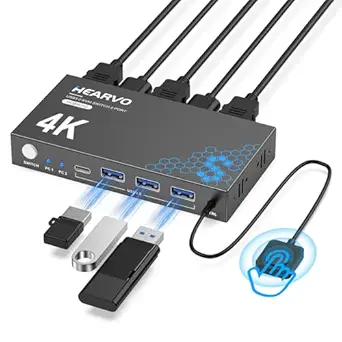
Hearvo USB 3.0 HDMI KVM Switch 1 Monitors 2 Computers, 4K@60Hz KVM Switches for 2 Computers Sharing Monitor Keyboard Mouse Hard Drives Printer, with EDID Adaptive, 2USB Cable and Controller -S7232H
This KVM switch stands out for its straightforward design that combines HDMI and USB switching into a compact package, making it ideal for creators who want a reliable, plug-and-play solution. Unlike the dual-monitor options, it focuses on a single display, which simplifies setup and ensures stable performance. Its support for 4K@60Hz and HDCP 2.2 guarantees high-quality visuals, while the adaptive EDID feature optimizes display settings automatically. The inclusion of a remote switch enhances convenience, especially if you prefer a tidy workspace. However, its limitation to 60Hz means gamers or those needing ultra-high refresh rates should look elsewhere. The model’s solid build and ease of use make it perfect for creators who prioritize stability and simplicity over multi-monitor configurations.
Pros:- Simple, reliable setup with plug-and-play operation
- Supports 4K@60Hz with HDCP 2.2 for crisp visuals
- Includes remote control for easy switching
- Automatic EDID adjustment ensures optimal display quality
Cons:- Limited to 60Hz refresh rate, not suitable for high-end gaming
- Designed for one monitor only, not ideal for multi-monitor workflows
Best for: Content creators and remote workers who want a dependable, easy-to-use dual-machine setup with 4K visuals and minimal fuss.
Not ideal for: Gamers or high-end video editors requiring higher refresh rates and more advanced multi-monitor arrangements.
- Resolution Support:4K@60Hz
- HDMI Ports:2
- USB Ports:4 (3 USB-A + 1 USB-C)
- Switching Method:Remote and Button
- Compatibility:Windows, Linux, Mac
- Power Supply:Bus-powered
Bottom line: This switch makes a strong case for creators seeking a straightforward, high-quality dual-machine connection with minimal setup complexity.
Dual Monitor KVM Switch HDMI Two Port 4K 60Hz KVM Switch for 2 Computers 2 Monitors with 4 USB 3.0 Ports Support Copy Extended Display and Desktop Control Including USB 3.0 Cable 15CM Longth
This dual-monitor KVM switch is tailored for creators who need to manage two computers across two screens, offering crisp 4K@60Hz visuals and flexible display modes. Compared with single-monitor options like the Hearvo, it supports extended and duplicate modes, making it ideal for multitasking, video editing, or multi-application workflows. Its four USB 3.0 ports facilitate quick data transfer for peripherals like printers, scanners, or external drives. The external 12V power adapter ensures stable operation for high-power USB devices, which is a plus over bus-powered models. Nonetheless, it requires that both computers support dual HDMI outputs and have at least two HDMI ports, which might exclude some setups. For creators working with multi-screen setups and needing a reliable, high-res connection, this switch is a compelling choice.
Pros:- Supports dual monitors with 4K@60Hz clarity
- Flexible display modes: extended and duplicate
- Four USB 3.0 ports for multiple peripherals
- External power supply ensures stable high-power device support
Cons:- Requires both computers to have dual HDMI output ports
- Setup complexity increases with dual-monitor configurations
Best for: Video editors and multi-tasking creators who rely on dual monitor setups and need to switch seamlessly between two computers.
Not ideal for: Single-monitor users or those with computers lacking dual HDMI outputs, as setup may be limited or require significant hardware compatibility.
- Resolution Support:4K@60Hz
- Monitor Connections:2 HDMI in, 2 HDMI out
- USB Ports:4 USB 3.0
- Switching Method:Panel button and external control
- Power:External 12V power supply
- Compatibility:Windows, Linux, Mac, supports dual HDMI output
Bottom line: This switch excels for creators who need high-resolution, multi-screen control with comprehensive peripheral support, assuming hardware compatibility.

How We Picked
I evaluated each KVM switch based on performance, compatibility, ease of use, build quality, and value for money. Devices that supported high resolutions like 4K and 8K, along with high refresh rates, ranked higher due to the demands of modern creator setups. USB port count and compatibility with various operating systems also played a key role, ensuring seamless peripheral sharing. I prioritized models that offered straightforward switching mechanisms, durable construction, and included essential cables. The ranking reflects a balance between these factors, ensuring options meet different creator needs while maintaining reliable performance.Factors to Consider When Choosing Best KVM Switches For Creator Desks
When selecting a KVM switch for a creator desk, it’s important to consider several factors that influence both performance and usability. Understanding these factors helps avoid common pitfalls and ensures the device fits your workflow and hardware setup. Here are key considerations to guide your purchase decision.Monitor and Video Support
Creators often need high-resolution displays with high refresh rates, especially for video editing, 3D work, or gaming. Look for KVM switches that support at least 4K@60Hz; for more demanding tasks, 8K@60Hz or 4K@120Hz are preferable. Keep in mind that supporting multiple monitors simultaneously requires specific hardware capabilities, and not all switches handle multiple outputs efficiently. Choosing a model with the right video standards ensures your workflow remains smooth without lag or quality loss.
Number of Monitors and Computers
Decide how many monitors and computers you need to connect. Some switches support dual monitors, which benefit creators managing complex timelines or multiple apps, while others support only a single display. Similarly, consider the number of computers you want to control — whether it’s two or more. Overspending on unnecessary ports can increase cost, but skimping might limit future expandability. Match the switch’s capacity to your current and near-future setup to avoid upgrading prematurely.
Switching Method and Usability
Switching ease is critical for a smooth workflow. Physical buttons, remote controls, or software-based switching each have pros and cons. Physical buttons provide instant toggling but can be inconvenient if placed out of reach. Remote controls add convenience but can be lost or malfunction. Software solutions offer automation but may introduce latency or compatibility issues. Consider your desk setup and preferences to choose a method that minimizes interruption during work.
Build Quality and Included Cables
Durability matters, especially if you frequently switch between setups. Look for models with sturdy construction and quality connectors to prevent wear. Additionally, check whether the switch includes essential cables; purchasing extra cables separately can add to the cost and inconvenience. A well-made switch with included cables simplifies setup and reduces the risk of signal degradation or connection failures over time.
Price and Future-Proofing
Pricing varies widely based on features like resolution support, monitor count, and build quality. Investing in a higher-priced model often means better longevity and performance, particularly for demanding creative tasks. However, ensure the switch’s specifications align with your current hardware to avoid paying for unnecessary features. Consider future needs—upgrading to a more capable switch later can be costly, so selecting a slightly more advanced model now may save money in the long run.
Frequently Asked Questions
Can a KVM switch support 4K at 120Hz?
Some high-end KVM switches do support 4K@120Hz, but they are less common and tend to be more expensive. When aiming for this resolution and refresh rate, check the product specifications carefully. Supporting 4K@120Hz requires significant bandwidth and advanced hardware, so not all models can handle it reliably. For creators needing ultra-smooth visuals, investing in a switch explicitly supporting these specs is essential.
Will a KVM switch slow down my computer or affect performance?
In most cases, a quality KVM switch introduces minimal latency, especially models designed for high-resolution video. However, cheaper or lower-quality switches might cause slight delays or degraded video quality, which can be noticeable during fast-paced editing or gaming. Choosing a reputable brand that supports your desired resolution and refresh rate reduces the risk of performance issues.
Is it better to get a switch with USB-C or HDMI only?
USB-C KVM switches offer the advantage of fewer cables and combined power, video, and data transfer in one port, making them ideal for modern creator setups. HDMI-only switches are more common and often more affordable but may require additional adapters if your devices rely on USB-C. Consider your current hardware connections and future needs when selecting between these options to simplify setup and reduce cable clutter.
Do I need a KVM switch with multiple USB ports?
Yes, if you plan to share peripherals like printers, external drives, or audio interfaces, a switch with multiple USB ports is beneficial. It reduces the number of cables and simplifies switching between devices. However, ensure the USB ports are compatible with your peripherals and support the necessary data transfer speeds for your workflow.
Should I prioritize resolution or compatibility with multiple monitors?
Balancing resolution support and multi-monitor compatibility depends on your specific needs. High resolutions like 8K or 4K@120Hz are excellent for detailed work but may limit the number of monitors supported simultaneously. Conversely, switches supporting multiple displays at lower resolutions can be more practical for multitasking. Clarify your primary tasks to choose a switch that offers the right mix of resolution and monitor count.
Conclusion
For creators seeking the best overall experience, the UGREEN HDMI KVM Switch offers reliable performance with straightforward setup. Those on a budget or just starting out will appreciate the 4K60Hz HDMI KVM Switch for its affordability and basic functionality. Power users or professionals requiring the highest resolutions and multiple monitors should consider the UGREEN 8K@60Hz HDMI Displayport KVM Switch or the Dual Monitor KVM Switch. Beginners or those with simple setups benefit from models with easy switching and plug-and-play features. Ultimately, your choice hinges on your specific hardware needs, workflow complexity, and budget constraints.