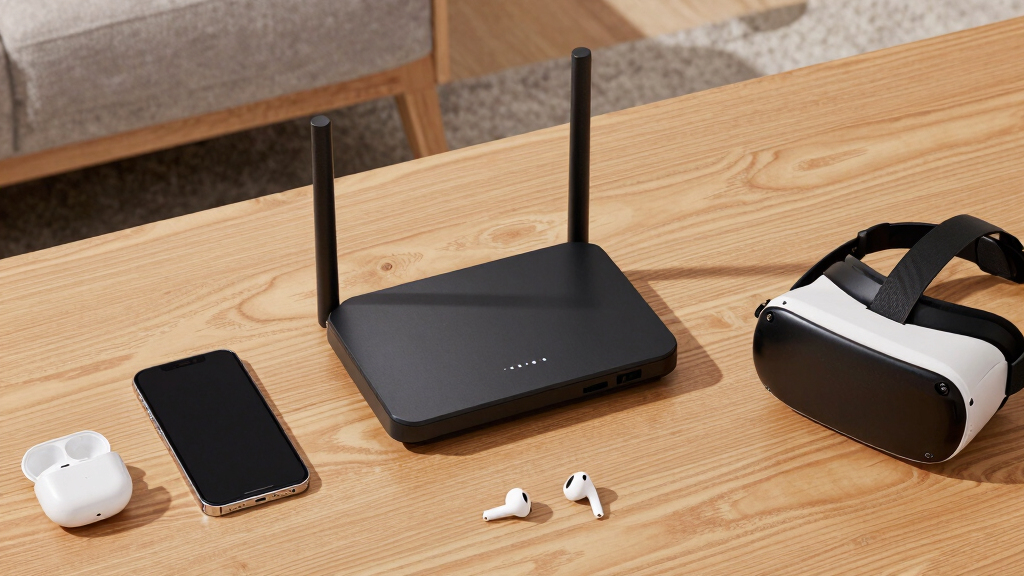
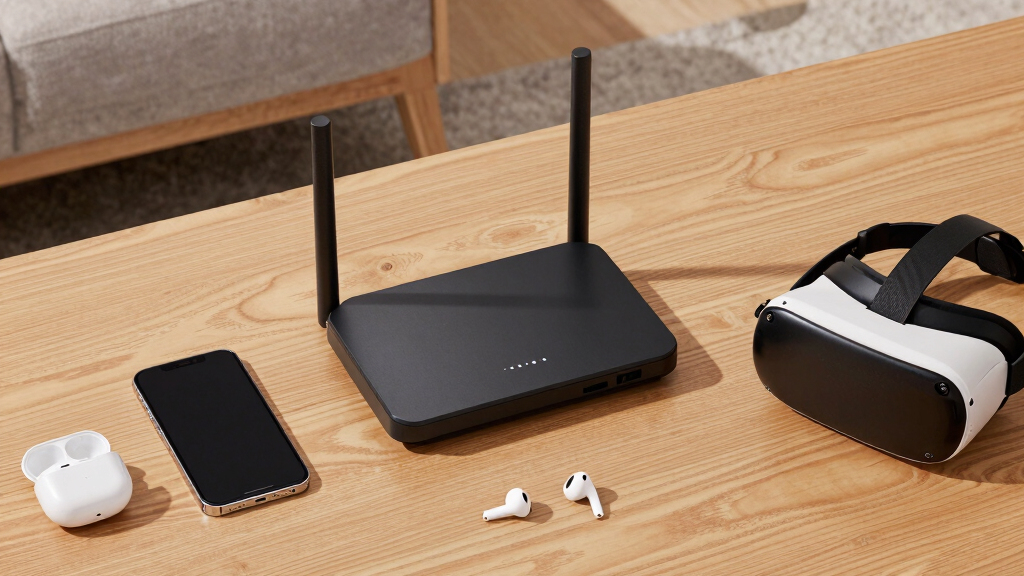
When it comes to VR streaming, a reliable, high-speed internet connection is essential for a seamless experience. The best access points for VR streaming can drastically reduce latency, prevent lag, and ensure a stable connection, especially in busy households or dense environments. The TP-Link Tri-Band BE19000 WiFi 7 Router stands out for its impressive speed and multi-gig ports, making it ideal for high-demand setups. Meanwhile, options like the PRISMXR VR Router and MSI Radix AXE6600 cater to users seeking flexibility and cutting-edge WiFi technologies. The main tradeoffs involve balancing speed, coverage, complexity, and price. Keep reading for a detailed breakdown of the top choices and what makes each one unique.
Key Takeaways
- Tri-Band WiFi 7 routers generally outperform dual-band options in high-density VR environments.
- Wired solutions like the HTC VIVE PC streaming kit offer lower latency but sacrifice convenience.
- WiFi 6 and WiFi 6E routers provide significant improvements over older standards for VR stability.
- Compatibility with VR headsets and wireless adapters is critical to avoid connectivity issues.
- Higher-priced models tend to offer better future-proofing with multi-gig ports and advanced features.


More Details on Our Top Picks
TP-Link Tri-Band BE19000 WiFi 7 Router (Archer BE800) | 12-Stream 19 Gbps | 2×10G + 4×2.5G Ports | LED Screen, 8 High-Performance Antennas | VPN, Easy Mesh, HomeShield, Private IoT, Free Expert Help
The TP-Link Archer BE800 stands out for its impressive combination of Wi-Fi 7 speeds, extensive wired port options, and advanced mesh capabilities. Its multi-link operation and 320 MHz channels deliver speeds up to 19 Gbps, making it ideal for ultra-high-definition streaming and immersive VR experiences. Compared with the MSI AXE6600, the BE800 offers more wired ports and broader smart home integration, though it comes with a larger footprint and higher price. The LED screen simplifies setup and management, providing real-time status updates. However, its complexity and premium price might be a barrier for casual users. This router is best suited for tech-savvy buyers seeking future-proof, high-capacity Wi-Fi for demanding VR streaming and large households.
Pros:- Exceptional Wi-Fi 7 speeds up to 19 Gbps for seamless VR streaming
- Multiple high-speed wired ports, including dual 10G ports
- Built-in LED screen for quick status monitoring and setup
- Supports easy mesh expansion for whole-home coverage
Cons:- High price point may be prohibitive for average consumers
- Large size could be inconvenient for limited spaces
- Complex setup for non-technical users
Best for: Power users and tech enthusiasts needing maximum bandwidth and extensive device support for VR streaming at home.
Not ideal for: Casual users or those with limited space who prefer simpler, more affordable routers without advanced features.
- Wi-Fi Speed:19 Gbps
- Ports:2×10G + 4×2.5G + USB 3.0
- Antenna:8 high-performance antennas
- Mesh Support:Yes, EasyMesh-compatible
- Security:TP-Link HomeShield
- Channels:320 MHz channels
- Design:LED screen, modern aesthetic
Bottom line: This router makes the most sense for advanced users aiming for the fastest, most reliable VR streaming experience with extensive network features.
HTC VIVE Wired PC Streaming Kit for VIVE Focus Vision VR Headset – DisplayPort Mode Compatible
This VIVE Wired PC Streaming Kit offers a visually lossless, high-bandwidth connection via DisplayPort, making it ideal for high-fidelity VR gaming and professional applications. It provides a 5-meter cable that ensures stability and freedom of movement, which is a significant advantage over wireless options like the PRISMXR Puppis S1 Lite. Unlike the S1 Lite, which relies on Wi-Fi 6, the VIVE kit’s wired connection guarantees low latency and consistent performance, especially important for fast-paced VR. The primary tradeoff is the cable length and restricted mobility. This pick is perfect for users prioritizing connection reliability and image clarity over wireless convenience.
Pros:- Visually lossless, high-bandwidth DisplayPort connection
- 5-meter cable provides excellent mobility and flexibility
- Maximizes graphics quality and response times
- Easy plug-and-play setup with compatible headsets
Cons:- Limited mobility due to cable length
- Requires physical connection to PC, reducing freedom of movement
- Not compatible with wireless or standalone VR headsets
Best for: VR gamers and professionals who need a stable, high-quality wired connection for PC VR streaming, especially in stationary setups.
Not ideal for: Casual players or those seeking wireless freedom, since the setup involves a lengthy cable and fixed position.
- Connection Type:DisplayPort
- Cable Length:5 meters
- Compatibility:VIVE Focus Vision
- Bandwidth:High, lossless
- Target Use:High-fidelity PC VR streaming
- Latency:Low
Bottom line: Best suited for stationary VR setups where connection stability and image fidelity are top priorities over wireless convenience.
PRISMXR VR Router Replace Link Cable Compatible with Meta Quest 3S/3/2/Pro/Switch2, PC-VR Streaming Air Link AX1500 WiFi6, Wireless Stable and Fast (Puppis S1 Lite)
The PRISMXR Puppis S1 Lite delivers a cost-effective, Wi-Fi 6-based wireless solution for PC VR streaming, providing speeds up to 1500 Mbps. Its dedicated router mode and broad device compatibility make it a compelling alternative to wired setups like the VIVE Kit, especially for users who value wireless freedom and simplicity. The built-in features like one-click stream check and performance optimization modes help ensure a lag-free, immersive experience. Compared with high-end Wi-Fi 7 routers, the Puppis S1 Lite is less powerful but offers excellent value for gamers on a budget or those with space constraints. Its main tradeoff is slightly lower maximum speeds and potential interference in dense Wi-Fi environments.
Pros:- Affordable Wi-Fi 6 router optimized for VR streaming
- Dedicated link mode improves stability
- Broad device compatibility, including Quest, Pico, and Switch
- One-click performance check and optimization
Cons:- Limited maximum speed compared to Wi-Fi 7 routers
- Potential interference issues in congested Wi-Fi areas
- Less advanced features than premium routers
Best for: Budget-conscious VR enthusiasts seeking a reliable, wireless streaming connection without sacrificing too much performance.
Not ideal for: Power users demanding the highest possible speeds or minimal latency, especially in very crowded Wi-Fi environments.
- Wi-Fi Standard:Wi-Fi 6
- Speed:Up to 1500 Mbps
- Compatibility:Quest 3/2/Pro, Pico 4/Ultra
- Frequency:Dual-band 2.4/5 GHz
- Ports:1×Ethernet
- Security:WPA3
- Coverage:Broad, depends on environment
Bottom line: This device makes a strong case for budget-conscious users who want dependable wireless VR performance without overspending.
TP-Link AC1200 Gigabit WiFi Router (Archer A6) – Dual Band MU-MIMO Wireless Internet Router, 4 x Antennas, OneMesh and AP Mode, Long Range Coverage
The TP-Link Archer A6 offers a reliable, affordable dual-band Wi-Fi 5 solution for VR streaming, especially suitable for smaller households or less demanding setups. Its combined speeds of 1200 Mbps (300 Mbps on 2.4 GHz and 900 Mbps on 5 GHz) are sufficient for HD and some 4K streaming, but may struggle with the highest resolutions or multiple VR headsets. Its MU-MIMO technology and broad coverage with four antennas make it better suited for medium-sized homes. Compared to Wi-Fi 6 options like the PRISMXR Puppis S1 Lite, it offers less future-proofing but at a significantly lower price. Its main tradeoff is lower maximum throughput and potential congestion when multiple high-bandwidth devices are in use.
Pros:- Affordable price for reliable dual-band Wi-Fi 5
- Supports MU-MIMO for concurrent device connections
- Long-range coverage with four external antennas
- Easy setup via Tether app
Cons:- Limited to Wi-Fi 5 speeds, less future-proof
- May experience congestion with multiple high-bandwidth devices
- Not optimized for the highest-quality VR streaming
Best for: Budget-conscious users needing a dependable, basic Wi-Fi 5 setup for VR streaming in small to medium homes.
Not ideal for: Enthusiasts or heavy VR users who require the latest Wi-Fi 6/7 technology for uninterrupted, high-resolution VR experiences.
- Wi-Fi Speed:1200 Mbps
- Bands:Dual-band 2.4/5 GHz
- Antenna:4 external antennas
- Security:WPA3
- Ports:4×Gigabit LAN
- Mesh Support:Yes, support via OneMesh
- Size:Compact, wall-mountable
Bottom line: This router is a good choice for entry-level VR streaming in smaller setups on a tight budget.
MSI Radix AXE6600 WiFi 6E Tri-Band Gaming Router, AI QoS, RGB, 1.8GHz Quad-Core Processor, MU-MIMO, Tri Band Gigabit Wireless, 8-Stream, High Speed Long Range Gaming Router
The MSI Radix AXE6600 combines gaming-grade features with advanced Wi-Fi 6E tri-band technology, making it an excellent choice for high-speed VR streaming and demanding multi-device environments. Its 8-stream MU-MIMO and support for the 6 GHz band deliver less interference and higher throughput, perfect for immersive VR experiences. The powerful 1.8 GHz quad-core processor and AI QoS optimize traffic prioritization, ensuring lag-free and smooth performance. Compared to Wi-Fi 5 routers like the Archer A6, it offers significantly higher speeds and reduced latency. The RGB lighting and gaming features are a bonus for aesthetic enthusiasts, though they add to the cost and power consumption. It’s best for serious gamers and VR enthusiasts who demand top-tier performance.
Pros:- Tri-band Wi-Fi 6E supports up to 6.6 Gbps total speed
- 8-stream MU-MIMO for optimal multi-device handling
- Powerful 1.8 GHz quad-core processor boosts performance
- Supports AI QoS for traffic prioritization
Cons:- Premium price may be too high for casual users
- RGB lighting increases power consumption and cost
- Overkill for basic VR streaming needs
Best for: High-end gamers and VR users requiring ultra-fast, low-latency Wi-Fi 6E for seamless immersive experiences.
Not ideal for: Casual users or those with limited budgets, since its features and price cater to demanding setups.
- Wi-Fi Speed:Up to 6.6 Gbps
- Bands:Tri-band 2.4 GHz, 5 GHz, 6 GHz
- Processor:1.8 GHz Quad-Core
- Streams:8-Stream MU-MIMO
- Technology:Wi-Fi 6E
- Features:AI QoS, RGB lighting
- Range:Extended, high speed
Bottom line: This router is ideal for gamers and VR enthusiasts who need the ultimate performance with minimal latency and interference.
TP-Link Archer BE24000 Quad-Band WiFi 7 Router (Archer BE900) with Dual 10 Gbps Multi-Gig Ethernet Ports and LED Touch Screen
This router stands out for its exceptional Wi-Fi 7 performance, offering speeds up to 24.4 Gbps across four bands. Compared with the Archer BE230, it delivers significantly higher throughput and a more robust antenna array, making it ideal for very large homes or demanding VR streaming setups. Its dual 10 Gbps ports and multiple Gigabit ports support extensive wired connections, while the easy-to-use touchscreen simplifies setup and management. However, its size and complexity might overwhelm casual users, and the premium price is a notable tradeoff. For those needing maximum coverage and speed, this pick makes the most sense, but it may be overkill for smaller spaces or casual streaming.
Pros:- Blazing fast Wi-Fi 7 speeds up to 24.4 Gbps
- Extensive coverage with 12 antennas and Beamforming
- Dual 10 Gbps Multi-Gig Ethernet ports for high-capacity wired connections
- Intuitive LED touchscreen for quick management
Cons:- High price point may be prohibitive for casual users
- Large size and complex setup could be intimidating for beginners
Best for: Tech-savvy users with large homes who demand ultra-fast, reliable VR streaming and extensive wired connections.
Not ideal for: Small apartments or users seeking a simple, budget-friendly router for occasional VR streaming.
- Wi-Fi Speed:up to 24.4 Gbps
- Antennas:12 internal high-performance antennas
- Ports:2× 10 Gbps dual ports, 4× 2.5 Gbps, 1× 1 Gbps
- Coverage:extensive for large homes
- Screen:LED touchscreen
- Wi-Fi Bands:Quad-band
Bottom line: Ideal for large, tech-savvy households needing maximum speed and coverage for VR streaming.
X-SUPER HOME VR Gunstock for Meta Quest 3S Quest 3 Quest 2 Quest Pro – Adjustable FPS Gaming Controller Accessories with Quick Magnetic Attachment Cheek Pad for Immersive VR Gameplay (Gunmetal Gray)
This gunstock accessory excels in transforming VR shooting into a more realistic experience, with adjustable length (11-14.5 inches) tailored to your playstyle. Compared to generic controllers, its magnetic quick-attach system ensures seamless switching between gameplay and reloading, while the leather cheek pad offers added stability and comfort. The included two-point sling enhances handling during intense sessions, making it perfect for FPS enthusiasts who value immersion. Its main tradeoff is the need for manual adjustments for different setups, which may be inconvenient for some users. For dedicated VR gamers seeking realism and ergonomic comfort, this pick offers a tangible upgrade, though casual players might find it overly specialized.
Pros:- Quick magnetic attachment for effortless controller swaps
- Highly adjustable for customization to fit different playstyles
- Realistic dimensions for immersive shooting experience
- Comfortable leather cheek pad improves stability
Cons:- Requires manual adjustments that may slow gameplay transitions
- Additional accessories increase cost and setup complexity
Best for: FPS-focused VR players who want a realistic, customizable grip with added comfort and handling.
Not ideal for: Casual VR users or those who prefer simple, plug-and-play controllers without extra setup.
- Adjustable Length:11-14.5 inches
- Attachment System:Magnetic quick-attach
- Material:Leather cheek pad
- Includes:Two-point sling
- Compatibility:Meta Quest 2/3/Quest Pro
Bottom line: Perfect for dedicated FPS VR gamers seeking realism and ergonomic control enhancements.
PRISMXR PC-VR Streaming Air Link Compatible with Meta Quest 3S/3/2 AX3000 WiFi6 VR Router, Replace Link Cable, Wireless Stable and Fast (AX3000)
This router is designed specifically for PC-VR streaming, supporting Air Link with speeds up to 3000 Mbps thanks to Wi-Fi 6 technology. Unlike more general routers like the TP-Link BE3600, it focuses on minimizing interference and maximizing stability with advanced beamforming and dual-core processing, making it ideal for smooth VR experiences. The PrismXR Desktop app simplifies setup and system optimization, which is a bonus for users seeking a plug-and-play solution. Its main drawback is that it’s less versatile outside of VR streaming, and the high performance comes with a higher price. For users prioritizing seamless, low-latency PC-VR gameplay, this router provides a dedicated, reliable connection that surpasses standard options.
Pros:- Supports ultra-fast 3000 Mbps Wi-Fi 6 speeds
- Optimized for minimal interference and stability
- Simplified setup via PrismXR Desktop App
- Supports multiple VR headsets including Quest and Pico
Cons:- Higher cost compared to standard routers
- Limited to VR streaming and related PC connections
Best for: PC gamers and VR streamers who want a stable, high-speed wireless connection for Air Link and PC-VR gameplay.
Not ideal for: Casual VR users who only occasionally stream or use standalone headsets without PC connection.
- Wi-Fi Speed:up to 3000 Mbps
- Technology:Wi-Fi 6
- Processor:Dual-core 1.3 GHz
- Compatibility:Meta Quest 2/3, Pico 4
- Features:Beamforming, EaseLink technology
Bottom line: A reliable, high-performance router tailored for PC-VR streaming enthusiasts seeking smooth, cable-free experiences.
TP-Link Dual-Band BE3600 Wi-Fi 7 Router Archer BE230
This router offers solid Wi-Fi 7 capabilities at a competitive price, supporting speeds up to 3.6 Gbps with dual-band connectivity. Compared with the more advanced BE24000, it provides a more affordable option with reliable performance for smaller or medium-sized homes. Its four antennas and beamforming technology help extend coverage, making it suitable for many VR streaming setups. The Tether app makes setup straightforward, and the built-in security features add peace of mind. The main tradeoff is its lower maximum speed and fewer ports, which could limit performance with multiple high-bandwidth devices. For users seeking a good balance of speed, coverage, and value, this model is a sensible choice for VR streaming in typical home environments.
Pros:- Supports Wi-Fi 7 with speeds up to 3.6 Gbps
- Affordable with good coverage and stability
- Easy setup via Tether app
- Includes security and parental controls
Cons:- Lower maximum throughput compared to premium models
- Limited ports for extensive wired connections
Best for: Home users needing reliable, fast Wi-Fi 7 for VR streaming without the high cost of top-tier routers.
Not ideal for: Large households with extensive wired networking needs or demanding multi-user VR setups.
- Wi-Fi Speed:up to 3.6 Gbps
- Antennas:4 high-gain antennas
- Ports:1× 2.5G, 3× 1G
- Coverage:up to 2000 sq ft
- Security:HomeShield
- Wi-Fi Bands:Dual-band
Bottom line: A highly capable, budget-friendly router suitable for most home VR streaming needs.
TP-Link Tri-Band BE15000 WiFi 7 Router Archer BE700
The Archer BE700 delivers impressive speeds of up to 15 Gbps on three bands, making it ideal for high-bandwidth VR streaming and gaming. Compared to the BE230, it offers higher overall throughput and an even more sophisticated antenna setup with six internal antennas, ensuring strong signals throughout the home. Its 10 Gbps port and multiple 1 Gbps ports support multi-gigabit wired connections, reducing lag during intensive VR sessions. The router’s advanced Wi-Fi 7 features like Multi-Link Operation and 320 MHz channels improve overall performance. However, its complexity and higher price may be unnecessary for casual users. This router is best suited for households with heavy streaming and gaming loads, where top-tier speed and stability are required.
Pros:- Supports speeds up to 15 Gbps across three bands
- Includes 10 Gbps multi-gig port and six internal antennas
- Advanced Wi-Fi 7 features like MLO and 320 MHz channels
- Excellent coverage and signal strength
Cons:- Premium price may be excessive for average users
- Complex setup could be challenging for novices
Best for: Power users and gamers needing multi-gigabit wired/wireless connections for demanding VR and 4K streaming.
Not ideal for: Light or infrequent VR users who do not require such high speeds or extensive wired options.
- Wi-Fi Speed:up to 15 Gbps
- Antennas:6 internal high-performance antennas
- Ports:1× 10 Gbps, 3× 1 Gbps
- Coverage:large, coverage suitable for whole homes
- Wi-Fi Bands:Tri-band
- Features:Multi-Link Operation, 320 MHz channels
Bottom line: Best suited for households with intensive VR, gaming, and streaming demands requiring maximum throughput.
How We Picked
Our evaluation focused on performance metrics crucial for VR streaming, including data transfer speeds, latency, and network stability. Usability played a role, with ease of setup and management factored into the ranking. Build quality and future-proofing, like multi-gig ports and WiFi standards, helped distinguish premium options. We also considered versatility—whether the access point supports wired, wireless, or hybrid setups—and value, balancing features against cost. Products were ranked based on how well they address typical VR streaming needs, especially in demanding or multi-user environments, ensuring the most relevant options are highlighted.
Factors to Consider When Choosing Best Access Points For VR Streaming
Choosing the best access point for VR streaming involves understanding several key factors that impact your experience. Not all routers are created equal, and the right choice depends on your setup, budget, and performance expectations. Here are the main considerations to keep in mind before purchasing.WiFi Standards and Speed
For VR streaming, the latest WiFi standards like WiFi 6 and WiFi 7 offer higher speeds and lower latency. These standards are better equipped to handle the data demands of high-resolution VR content, especially in multi-user households. However, upgrading to the newest tech often comes at a higher cost, so weigh the benefits of future-proofing against your current needs. Keep in mind that an older router might bottleneck your connection, causing lag or disconnections during VR sessions.
Coverage and Network Range
VR experiences require a stable connection with minimal interference. Routers with multiple high-gain antennas or mesh capabilities can improve coverage across large or multi-room setups. Avoid relying solely on a single, basic router if your play area spans multiple rooms or floors. Proper placement of the access point is equally important; placing it centrally and away from obstructions helps ensure consistent performance.
Wired vs Wireless Connections
While wireless setups offer convenience, wired connections—via Ethernet—provide the lowest latency and highest stability, which are critical for competitive or highly immersive VR. Many high-end routers include multi-gig ports to support wired connections easily. If you prefer wireless, look for features like MU-MIMO and beamforming to maximize stability. For the most demanding setups, combining wired and wireless connections often yields the best results.
Ease of Setup and Management
Some access points are straightforward to install and manage, with user-friendly apps and quick configuration wizards. Others, especially advanced models, may require more technical knowledge but offer greater customization. Consider your comfort with networking technology and whether you need features like parental controls, guest networks, or device prioritization. A user-friendly interface can save time and frustration, especially if you’re not a networking expert.
Price and Future-Proofing
Higher-priced routers often include more advanced features like multi-gig ports, WiFi 7 support, and extensive antenna arrays that can handle future VR upgrades. Cheaper models may suffice for casual use but could become inadequate as VR content demands increase. Evaluate how long you plan to keep your setup and whether investing in a premium model aligns with your long-term needs. Remember, a more capable router can support multiple devices and smart home tech alongside VR.
Frequently Asked Questions
Do I need a WiFi 7 router for VR streaming?
While WiFi 7 routers offer the latest speeds and lower latency, they are not strictly necessary for VR streaming. WiFi 6 and even high-quality WiFi 5 routers can provide sufficiently stable connections for most VR setups. However, if you want to future-proof your network and ensure the best possible performance with multiple devices or high-resolution VR content, investing in WiFi 7 is a smart choice. Consider your current device compatibility and budget before upgrading.
Is wired Ethernet better than WiFi for VR streaming?
Yes, a wired Ethernet connection typically offers the lowest latency and most reliable stability, which are essential for high-quality VR experiences. Wireless connections are more convenient but can be affected by interference, distance, and network congestion. For competitive gaming or highly immersive VR, a wired connection often makes a noticeable difference, especially in busy environments or when streaming high-bitrate content.
How many antennas should my access point have for VR?
The number of antennas impacts coverage and signal strength. Most high-performance routers for VR streaming feature at least four antennas, supporting beamforming and MU-MIMO to direct signals efficiently. More antennas generally mean better coverage and stability, especially in larger or multi-story homes. However, other factors like processor speed and firmware also influence overall performance, so focus on overall specs rather than antenna count alone.
Can a mesh network improve VR streaming?
Absolutely, mesh networks extend coverage seamlessly across larger areas, reducing dead zones and maintaining consistent speeds. They are especially useful in multi-room VR setups where a single router’s range might be insufficient. Mesh systems also simplify management, allowing you to control multiple nodes through a single app. They tend to be more expensive but offer a flexible, scalable solution for demanding VR environments.
What features should I prioritize if I want the best VR experience?
Prioritize routers with WiFi 6 or WiFi 7 support, multiple high-gain antennas, and multi-gig Ethernet ports for wired setups. Features like MU-MIMO, beamforming, and Quality of Service (QoS) help allocate bandwidth effectively to VR devices. Ease of setup and management can also save time, especially if you’re new to networking. Ultimately, balancing speed, coverage, and future-proofing will give you the smoothest VR streaming experience.
Conclusion
If you’re looking for the best overall balance of speed, coverage, and ease of use, the TP-Link Tri-Band BE19000 WiFi 7 Router is the top choice, especially for tech-savvy users who want future-proofing. For those on a budget but still demanding solid performance, the TP-Link AC1200 Archer A6 offers reliable dual-band WiFi with good range. Wired setups like the HTC VIVE PC Streaming Kit are ideal for competitive VR gaming, where latency is critical. Beginners or casual users should consider simpler mesh systems or routers with user-friendly management. For premium setups with maximum future compatibility, the TP-Link Archer BE24000 provides extensive features and high speeds. Ultimately, your choice depends on your specific environment, budget, and performance needs.






![Stepping Inside The Design: How VR Is Advancing USACE Projects [Image 5 Of 7]](https://vrgearguide.com/wp-content/uploads/2026/08/stepping-inside-the-design-how-vr-is-advancing-usace-projects-image-5-of-7-featured-260x140.jpg)