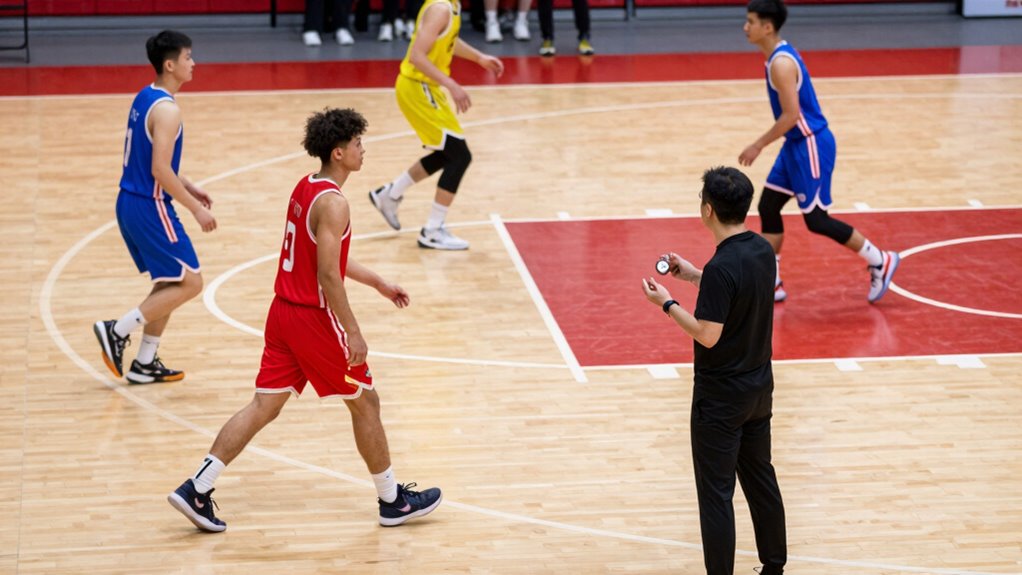

To rotate players smoothly while following the ‘one person at a time’ rule, use clear signals like verbal cues or visual indicators to anticipate turns. Plan your timing carefully to avoid rushing or boredom, and adjust based on how players respond. Maintain transparency and steady rhythm, ensuring everyone knows when it’s their turn. Staying attentive to natural flow and communication makes handovers seamless—if you want to master these moves, see how to optimize your rotation process.
Key Takeaways
- Use clear verbal cues or visual signals to indicate when it’s time for the next player to rotate.
- Schedule rotations at consistent intervals to maintain rhythm and prevent confusion.
- Observe players’ engagement levels and adjust timing to keep participation smooth and natural.
- Communicate expectations clearly to ensure each participant understands the rotation process.
- Align rotation timing with natural activity patterns for a seamless and enjoyable flow.

If you’ve ever tried to manage a busy line or juggle multiple tasks at once, you’ve probably realized that the ‘One Person at a Time’ rule is more than just a courtesy—it’s a practical way to guarantee quality and efficiency. When it comes to rotating players in a game or team setting, this principle helps maintain focus and prevents chaos. Player engagement hinges on clear, deliberate handovers; rushing or overlapping can cause confusion and diminish everyone’s experience. By adhering to proper rotation timing, you guarantee each player gets their moment to contribute without feeling rushed or sidelined.
Ensuring each player’s turn is clear and deliberate boosts focus, prevents chaos, and enhances overall team experience.
The key to smooth rotation is timing it right. If you rotate too quickly, players might feel lost or unprepared, which hurts engagement. Conversely, waiting too long can lead to boredom or frustration. When you plan rotation timing carefully, you keep the flow steady and predictable, encouraging players to stay engaged and involved. This balance helps maintain momentum and prevents downtime, keeping everyone attentive and motivated.
Implementing the ‘One Person at a Time’ rule also means communicating clearly. When it’s time to rotate, give players a brief cue—whether it’s a verbal signal, a visual indicator, or a timed prompt. This clarity helps players anticipate their turn, reducing confusion and ensuring a seamless handover. When each person knows exactly when they’ll be up next, they’re more likely to stay focused and engaged during their downtime, eager to re-engage when their turn arrives.
Timing isn’t just about minutes on a clock; it’s about understanding the rhythm of your game or activity. Watch how players respond to different rotation intervals and adjust accordingly. If you notice engagement dipping or players feeling rushed, tweak the timing. The goal is to create a smooth, predictable cycle that keeps everyone involved without feeling hurried or neglected. Over time, fine-tuning rotation timing creates a natural flow, making the process feel effortless and keeping player engagement high.
Additionally, being mindful of the overall environment and how the activity aligns with natural patterns can help optimize rotation timing. Recognizing these rhythms ensures a more harmonious and enjoyable experience for all participants. Ultimately, the ‘One Person at a Time’ rule isn’t just about fairness; it’s about optimizing the experience for everyone involved. When you master the art of rotation timing, you foster a more cohesive environment where players feel valued and engaged. Clear, deliberate handovers not only improve the quality of play but also build trust and enthusiasm among your team. By respecting this rule, you create a well-organized flow that maximizes both efficiency and enjoyment, ensuring that each player’s contribution is recognized and appreciated.
Frequently Asked Questions
How Do I Handle Disputes Over Who Goes Next?
When disputes over who goes next arise, emphasize player fairness and rotation fairness. Calmly listen to each person’s perspective, then clarify your rotation plan to make certain everyone understands it. If needed, implement a simple system like a rotating order or a timer to keep things transparent. Remind everyone that fairness benefits the whole group, and sticking to the plan helps avoid conflicts and keeps the game enjoyable for all.
What if a Player Refuses to Rotate Out?
If a player refuses to rotate out, remember that about 65% of team conflicts stem from perceived fairness issues. Address the situation with player accountability, calmly explaining the importance of rotation fairness for team success. Reinforce that everyone benefits from equal participation, and set clear expectations. If they still refuse, consider a one-on-one chat to understand their concerns and find a compromise, maintaining team harmony.
How Can I Encourage Players to Follow the Rule?
You can encourage players to follow the rule by using positive reinforcement, praising those who rotate properly. Peer pressure works well—highlight team members who set a good example, and gently remind others of the benefits of fair rotation. Keep communication clear and consistent, and create a team culture where everyone understands that following the rule helps everyone enjoy the game and improve together.
What Tools Can Help Manage Player Rotations?
Oh, what a surprise—your secret weapon is actually a magic wand! Sadly, it’s just smart rotation strategies paired with scheduling tools that save the day. Use apps like TeamSnap or Google Calendar to track who’s up next, ensuring fairness and flow. These tools streamline rotations, keep everyone on schedule, and help you avoid the chaos of last-minute changes, making your game run smoother than ever.
How Does This Rule Impact Game Pacing?
This rule impacts game pacing by requiring you to carefully plan turn order strategies, guaranteeing smooth player shifts. It helps maintain a steady rhythm, preventing delays or huddles. Using pace control techniques like clear signals or timers keeps the game flowing efficiently. By managing rotations well, you ensure everyone stays engaged, and the game doesn’t stall, creating an enjoyable experience for all participants.
Conclusion
Remember, following the ‘one person at a time’ rule isn’t just about fairness—it’s about avoiding chaos. Imagine a wild circus act, players tumbling over each other, juggling sneakers and squeaky toys, all because you didn’t rotate smoothly. Keep the flow steady, and your game stays organized. After all, nobody wants their team to look like a traffic jam on a busy highway—so take your time, rotate gracefully, and let the game run like a well-oiled machine.