
TL;DR

Play games on Amazon Luna for your next adventure, included with Prime
- A rotating selection of games, no download needed
- Play on TV, laptop or phone
- Fast, free delivery for your gear, too
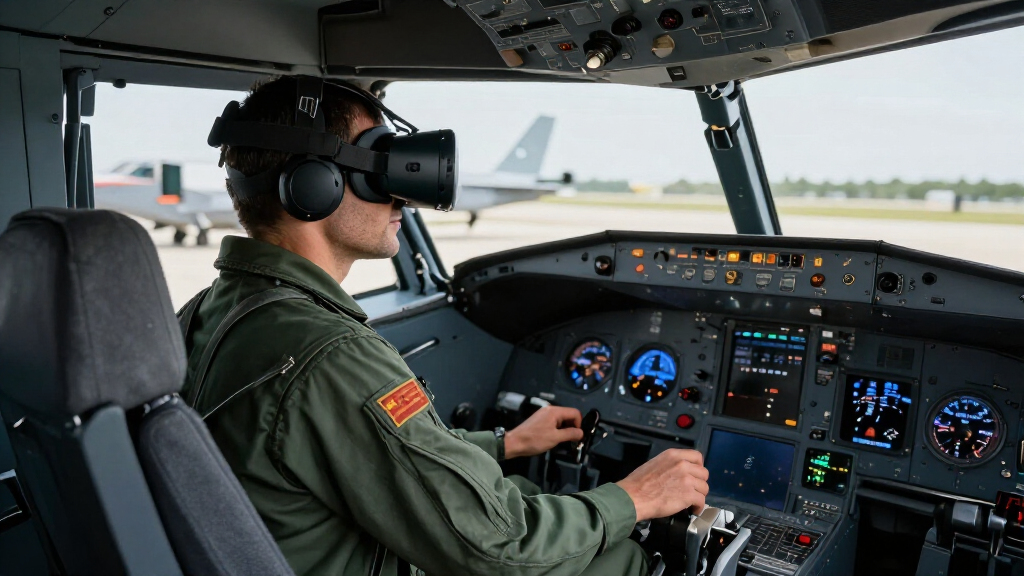
Army pilots are trying virtual reality as a possible way to help them stay alert during flight. The available report does not identify the pilots, describe the VR system or explain how its effect on alertness is being measured, so the effort’s results and scope remain unclear.
Army pilots are trying virtual reality as a possible aid to staying alert during flight, according to a headline about the effort. The report offers no details on the participating unit, the equipment, or whether the approach has been shown to improve alertness, leaving the scale and results of the work unknown.
The development described is an effort involving Army pilots and virtual reality (VR), with the stated aim of helping pilots remain alert while flying. The headline frames the technology as something pilots are trying, not as an established tool or a proven solution. No specific cockpit use, training procedure, or flight scenario is described.
There is also no information about how many pilots are involved, where or when the trials are taking place, or who is conducting them. The available account does not identify a VR headset or software, explain how the pilots use the technology, or say whether it is used during flight, before a mission, or in a training setting.
No results or measurements are supplied. It is not stated whether alertness is being assessed through pilot feedback, performance data, observation, or another method. Without those details, the report supports only the limited conclusion that Army pilots are trying VR for this purpose; it does not establish that the method works or is ready for routine use.
Aviation • Emerging Technology • October 2026
How Virtual Reality May Help Army Pilots Stay Alert In Flight
Army pilots are reportedly trying virtual reality (VR) as a possible aid to staying alert in flight. The available account gives no trial details or results, so the effort’s scope and effectiveness remain unknown.
01 / The development
A reported trial, with little detail
The headline says Army pilots are trying VR to help maintain alertness. It does not describe a named program, formal study, or earlier phase.
Known
The stated aim
Explore VR as a possible way to help pilots stay alert during flight.
Unspecified
How it is used
No headset, software, procedure, cockpit use, simulator setting, or training scenario is described.
Unproven
Whether it works
No findings show improved alertness, pilot performance, or flight safety.
02 / Why the distinction matters
From idea to evidence
A technology trial can have different purposes. Without the setting and measures, its practical meaning cannot be determined.
Try VR
The report indicates pilots are testing an approach.
Define the setting
It could involve preparation, training, a simulator, or another context.
Measure alertness
No assessment method, comparison, or workload finding is supplied.
Report results
Until results are shared, a safety benefit remains unconfirmed.
03 / What remains unknown
The missing pieces
The available account does not identify the people, equipment, timing, or evidence behind the effort.
Who is involved?
No aviation unit, participant count, researcher, or responsible organization is named.
Where and when?
No location, trial dates, or timeline are provided.
What technology?
The headset, software, and pilots’ interaction with the system are not described.
How is alertness measured?
No pilot feedback, performance data, observation method, or other measure is reported.
What happened?
There are no results, comparison group, or reported positive or negative experiences.
What comes next?
No continuation, evaluation, or expansion plan is stated.
04 / Reading the evidence
Keep the claim in proportion
Supported by the account
Army pilots are trying VR
The headline frames the technology as an effort with the stated aim of helping pilots stay alert in flight.
Not established
Effectiveness or readiness
There is no evidence here that VR prevents fatigue, improves flight performance, or is ready for routine use.
05 / Key questions
What readers can—and cannot—conclude
What are Army pilots trying?
Virtual reality as a possible aid to staying alert in flight, according to the available headline.
Has VR been shown to help?
No results are provided. Improved alertness or flight performance has not been established.
Is it used during actual flights?
The setting is not specified. It could be a simulator, training, preparation, or another context.
Which unit or system is involved?
Neither is identified. The participants, hardware, and software remain unknown.
Testing VR Against In-Flight Fatigue
Alertness matters in aviation because pilots must monitor instruments, follow procedures, and respond to changing conditions. A technology intended to help with alertness could be relevant to flight safety and pilot performance, but the report does not show that VR has improved either. Its significance at this stage is that the Army pilots are trying the approach, not that a safety benefit has been demonstrated.
The distinction between a trial and an effective intervention is important for readers. A VR system might be intended for preparation or training rather than use in an aircraft, and those applications would carry different implications. Since the available information does not explain the setting, the headline cannot establish whether VR is being considered as an operational aid, a training method, or something else.
Any assessment would also need to account for whether the technology supports attention without adding distraction or workload. The report provides no findings on these questions. Until further details emerge, the effort should be understood as an exploratory use of VR, with its practical value still unconfirmed.
Products Worth Considering

DJI Osmo Pocket 3 Vlogging Camera with 1-Inch CMOS Sensor and 4K Video

Sony WH-1000XM6 Wireless Noise-Canceling Over-Ear Headphones, Blue, Bundle

Bose Lifestyle Ultra Wireless Home Speaker
As an affiliate, we earn on qualifying purchases.
What the Headline Establishes
The available account is limited to a headline: Army pilots are trying VR to stay more alert in flight. It supplies no article body or supporting documentation, so there is no confirmed timeline, named program, or description of earlier phases. The wording indicates an attempt, but does not specify whether this is a formal study or an informal trial.
That limited framing constrains what can responsibly be said about the technology. VR can refer to different hardware and software, but no particular system is named here. Nor does the report say whether pilots wear a headset in a simulator or use VR in another setting. There is no basis to add details about the Army’s broader aviation programs or to attribute the effort to an individual or organization.
Trial Scope and Results Unknown
Key facts remain unavailable: when and where the effort is happening, which Army aviation unit is involved, how many pilots are participating, and what form of VR they are trying. The report also does not explain whether the technology is used during actual flight or in preparation and training.
There are no reported results, comparison group, or stated measures of alertness. It is therefore unclear whether the effort has produced any evidence of benefit, whether pilots have reported positive or negative experiences, or whether officials intend to expand the trial. No named spokesperson or researcher is quoted, and no direct statement about the program’s goals beyond the headline is available.
Awaiting Details From the Army
The next useful development would be a fuller account from the Army or the group running the effort, explaining the purpose, setting, and equipment involved. Information on how alertness is evaluated would help distinguish a technology demonstration from a study designed to measure an effect.
Until such details or findings are made public, the status remains a reported trial with no confirmed outcome. Readers should not treat the effort as proof that VR prevents fatigue or improves flight safety. Whether the Army plans to continue, evaluate, or expand the work is not stated.
Key Questions
What are Army pilots trying?
They are trying virtual reality as a possible way to help stay alert during flight, according to the available headline.
Has VR been shown to keep the pilots alert?
No results are provided. The report does not establish whether VR improves alertness or flight performance.
Is the VR used during actual flights?
That is not specified. The available information does not say whether the technology is used in an aircraft, a simulator, or another setting.
Which Army unit or VR system is involved?
Neither is identified. Details about the participating unit, pilots, hardware, and software are not available.
What happens next?
No next milestone or expansion plan is reported. Further details or trial results would be needed to clarify the effort’s scope and whether it has shown a benefit.
Source: news.google.com