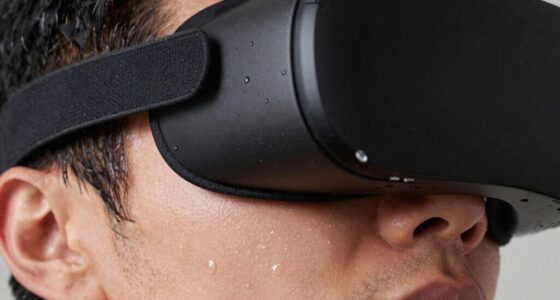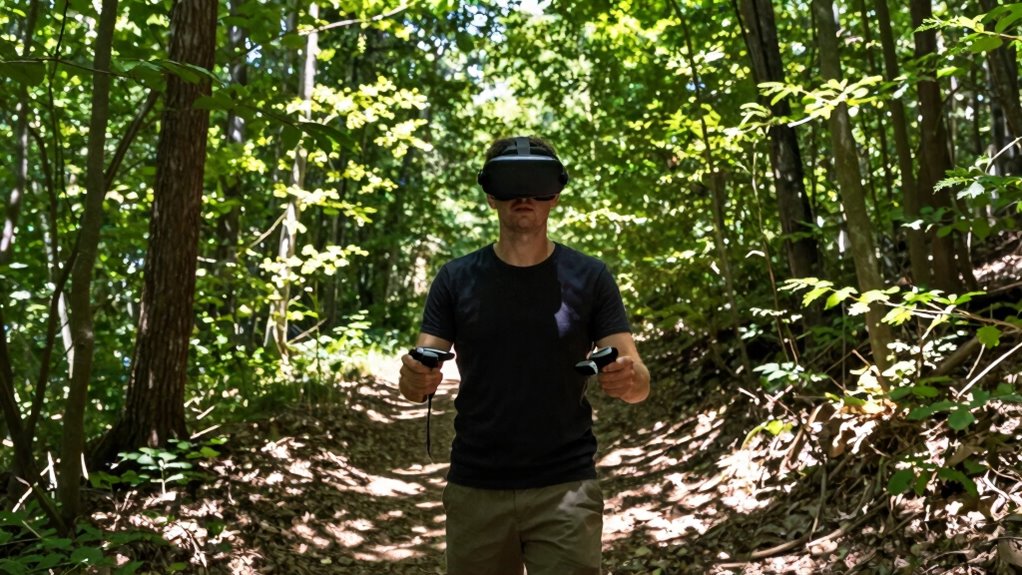

Outdoor VR is risky because it exposes your privacy to outsiders and can lead to hacking or data leaks. Environmental hazards like uneven ground, weather, and obstacles increase your chance of tripping or falling. Sensor performance also drops outside, making your experience unreliable and possibly causing disorientation. Plus, distractions like noise and other people boost the risk of accidents. Want to understand how these risks stack up and how to stay safe? Keep exploring for the details.
Key Takeaways
- Outdoor VR exposes users to environmental hazards like uneven terrain, obstacles, and weather, increasing injury risk.
- Privacy concerns arise from outdoor cameras, bystanders, and data leaks, compromising personal safety.
- Sensor accuracy is impaired outdoors by sunlight, dust, and reflections, reducing device reliability and immersion.
- Distractions such as noise and movement in outdoor settings can cause disorientation and accidents.
- Without proper safeguards, outdoor VR presents significant physical, digital, and environmental risks.
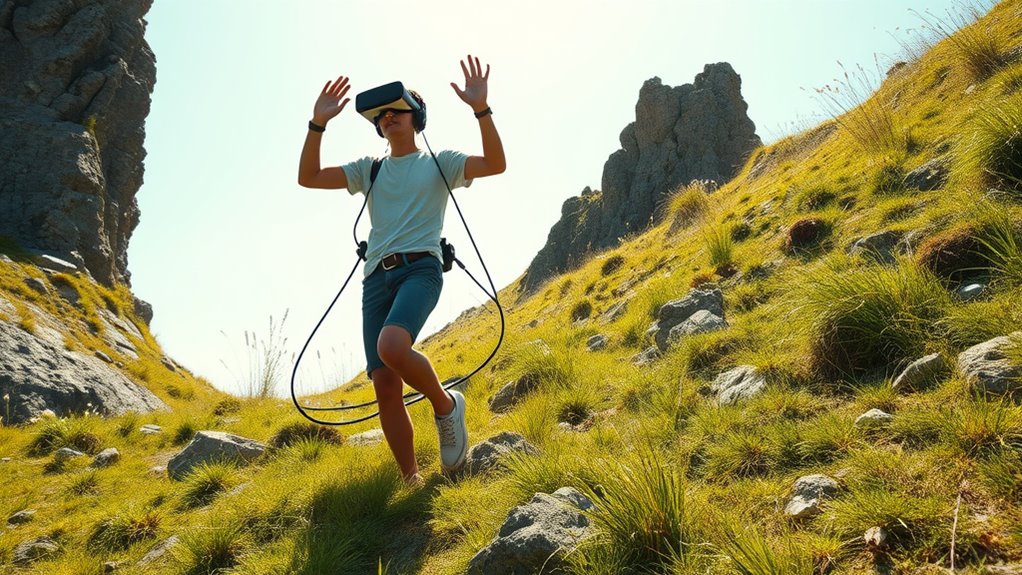
While the idea of experiencing virtual reality outdoors might sound appealing, it often leads to practical problems that outweigh the benefits. One major concern is privacy. When you step outside with a VR headset, you’re exposing yourself to a host of potential privacy issues. Many outdoor environments are monitored by cameras, security systems, or even other people who could inadvertently or deliberately capture your movements. Without strict safeguards, your personal data, location, and activity patterns could be compromised. This risk increases if the VR device connects to the internet, making it vulnerable to hacking or data breaches. You might think you’re just immersing yourself in a game or virtual environment, but your privacy can quickly become an afterthought in these uncontrolled settings.
Beyond privacy, environmental hazards pose a significant threat when you take VR outdoors. Unlike a controlled indoor space, outdoor environments are unpredictable. Uneven terrain, obstacles like rocks or roots, and unpredictable weather conditions make it easy to trip, fall, or injure yourself. Even a momentary distraction—like a gust of wind or a sudden noise—can cause you to lose focus and stumble. If you’re immersed in a virtual world, you may not notice real-world dangers around you, increasing the risk of accidents. Additionally, direct sunlight can interfere with the sensors or displays of your VR headset, causing discomfort or impairing your experience. Dust, dirt, or moisture can also damage delicate hardware components or cause malfunctions, especially if your device isn’t designed for outdoor use. Moreover, outdoor conditions can interfere with the sensor accuracy, leading to less reliable tracking and a compromised experience.
Furthermore, outdoor environments can introduce noise and visual distractions that break your immersion or cause safety issues. Instead of a seamless virtual experience, you’re likely to encounter loud sounds, moving vehicles, or other people that could startle or distract you. These distractions not only diminish the enjoyment but also heighten the risk of accidents. Many VR headsets rely on sensors to track your movements accurately, but outdoor conditions—like bright sunlight or reflective surfaces—can disrupt these sensors. This mismatch might lead to motion sickness or disorientation, further impairing your ability to navigate safely.
In short, the combination of privacy concerns and environmental hazards makes outdoor VR a risky proposition. While it may seem enticing to blend virtual worlds with the outdoors, the potential dangers far outweigh the benefits. Without proper safeguards, you’re exposing yourself to unnecessary risks—physically, digitally, and environmentally—that are best avoided by sticking to indoor VR experiences.
Frequently Asked Questions
Can Outdoor VR Be Safely Used With Proper Supervision?
Yes, outdoor VR can be used safely with proper supervision, but you should be aware of supervision challenges and the outdoor environment. Supervision helps prevent accidents and keeps users aware of their surroundings, but outdoor settings introduce unpredictable hazards like uneven terrain or obstacles. Make sure your supervisor stays vigilant, keeps a close eye on the user, and chooses a safe, controlled area to mitigate risks and ensure a safe experience.
Are There Any Weather Conditions That Make Outdoor VR Safer?
No, certain weather conditions can make outdoor VR safer by reducing environmental hazards and providing better visibility. Clear, calm days with mild temperatures minimize risks like rain, wind, or slippery surfaces that could cause accidents. However, you should still be cautious of weather considerations like sudden storms or intense sunlight, which can impair vision or damage equipment. Always check the forecast and guarantee a safe environment before using outdoor VR.
How Does Outdoor VR Affect Battery Life Compared to Indoor Use?
Outdoor VR usually causes increased battery drain compared to indoor use because of higher power consumption. When you’re outside, your device works harder to connect to stronger signals, handle fluctuating environmental factors, and maintain stable tracking, all of which spikes power consumption. This means your battery life shortens faster, so you need to carry extra power sources or accept shorter play sessions. Be prepared for quicker battery drain when taking VR outdoors.
Can Outdoor VR Headsets Handle Exposure to Dust and Dirt?
Imagine a knight’s armor, built for battle, yet even it faces dust intrusion and dirt resistance limits. Outdoor VR headsets aren’t typically designed to withstand exposure to dust and dirt; they can suffer damage or malfunction if dirt gets into sensitive components. While some models may offer basic dust resistance, you should still protect them with covers or find cleaner environments, as outdoor conditions often surpass their durability.
What Are the Legal Regulations for Outdoor VR Usage?
You need to check legal restrictions before using outdoor VR, as regulations vary by location. Some areas restrict VR use to permissible locations like private property or designated zones, while others may have bans altogether. Always guarantee you’re compliant with local laws to avoid fines or legal issues. It’s your responsibility to research and adhere to these rules, especially in public or unfamiliar outdoor settings.
Conclusion
So, while the idea of outdoor VR might seem exciting, it’s often a recipe for disaster. The risks to your safety and the potential for accidents are sky-high — it’s like trying to navigate a minefield blindfolded. Keep your adventures safe and your experiences immersive by sticking to controlled indoor environments. Remember, the thrill of exploration isn’t worth risking everything for a moment of excitement that could turn your world upside down in an instant.