
TL;DR

Play games on Amazon Luna for your next adventure, included with Prime
- A rotating selection of games, no download needed
- Play on TV, laptop or phone
- Fast, free delivery for your gear, too
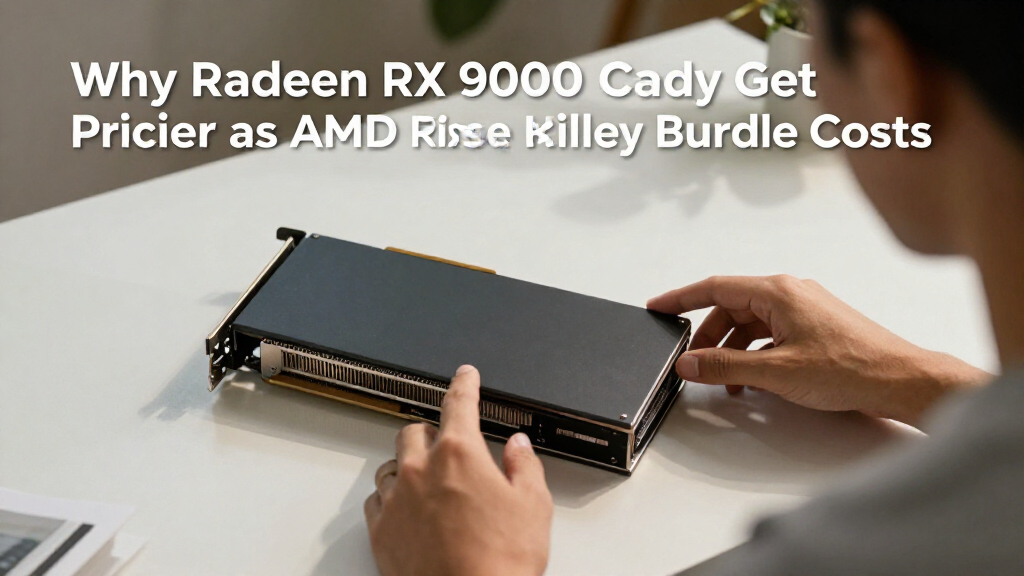
ChannelGate reportedly expects AMD to raise the price of GPU-and-GDDR6 memory bundles supplied to board partners in November 2026. The change could put upward pressure on Radeon prices, including RX 9000 cards, but no retail increase or percentage has been confirmed.
AMD is expected to raise the price of GPU-and-GDDR6 memory bundles supplied to its board partners in November 2026, according to supply-chain account ChannelGate, a change that could eventually make Radeon cards, including the RX 9000 series, more expensive. The reported adjustment is at the component-supply level; AMD has not confirmed a retail price increase, and the size of any change for shoppers is not established.
ChannelGate reported that AMD plans to increase prices for its GPU and GDDR6 memory sets in November. AMD supplies these bundled components to board partners, which add their own circuit boards and cooling systems before sending finished graphics cards through retail channels. If the reported higher component costs take effect, partners may face increased procurement costs for new cards.
The report also says GDDR6 memory prices rose by about 8% to 10% in the third quarter. That figure describes the reported change in memory pricing, not a confirmed increase in AMD’s bundle price or in the final price of a Radeon card. The report does not provide a specific new bundle price, a dollar amount per card or a retail price target.
Any impact at stores could arrive with a delay. The report says it may take a few weeks for higher component costs to show up in GPU pricing after board partners receive components at the new rates. The timing and extent would depend on how partners and retailers respond, as well as on existing inventory and other costs; those details have not been specified.
How Higher Costs Could Reach Radeon Buyers
GPU chips and memory represent a substantial part of a graphics card’s procurement cost, according to the report. That means a change to the components AMD sells to board partners can put pressure on the cost of a finished card, even though the board and cooler are added later. The reported adjustment could therefore affect what partners pay before a product reaches retailers.
For shoppers, the practical concern is that RX 9000 cards could become more expensive if partners or retailers pass along some or all of the added cost. But a supplier-price increase does not automatically produce an equal retail increase. The reported 8%–10% memory-price rise cannot be applied directly to a full graphics card: the card includes other components, and the report does not say how AMD will price the bundle or how manufacturers will handle the additional cost.
The possible timing also matters to buyers comparing prices. If the adjustment is implemented in November, the first effects may not be visible immediately. Any near-term purchase decision should be based on current local prices and stock rather than treating a retail increase as settled.
Products Worth Considering

Apple Watch SE 3 GPS 44mm Smartwatch

Amazon Kindle Paperwhite Signature Edition (12th Generation, 2024), 32 GB, Metallic Black

Bose SoundLink Flex (2nd Gen) Portable Bluetooth Speaker
As an affiliate, we earn on qualifying purchases.
AMD’s Bundle Comes Before Card Assembly
The reported price change concerns AMD’s GPU-and-memory bundle, not a completed retail graphics card. Board partners receive the core components, then add the PCB and cooler and prepare cards for sale. A change in what partners pay for the bundle can feed into their costs, but it does not dictate the final price on its own.
ChannelGate’s report, relayed by Wccftech, links the expected adjustment to higher GDDR6 costs. It identifies the Radeon RX 9000 series as a potential area of impact and says those cards are more available than previous-generation GPUs. Better availability could make the effects easier to see in the market if supply costs rise, but the report offers no model-by-model pricing or inventory figures.
“AMD is expected to increase the price of its GPU and GDDR6 memory set in November.”
— ChannelGate, as reported by Wccftech
Retail Prices and Pass-Through Remain Unknown
AMD has not confirmed the reported November adjustment in the information available here, and no official pricing notice from AMD or its board partners is cited. The report does not specify how much the GPU-and-memory bundle would cost after the change, which Radeon models would be affected, or whether every partner would receive the same terms.
It is also unclear how much of the reported memory-cost increase would be passed on to card makers and, in turn, to consumers. The 8%–10% figure refers to GDDR6 prices in the third quarter; it is not a forecast for the retail price of an RX 9000 card. Retail pricing may also vary by model, region, inventory and retailer. The source report does not give a confirmed effective date beyond November or quantify any expected change in store prices.
Watch for November Partner Pricing
The next useful confirmation would be an AMD announcement or pricing information from board partners showing whether the bundle adjustment has taken effect. Buyers and retailers will also be able to assess whether costs are reaching store listings by watching RX 9000 prices and availability in the weeks after partners receive components at any revised rates.
Until those details emerge, the reported increase should be treated as a possible cost pressure rather than a confirmed retail hike. The amount, model coverage and timing of any consumer-facing change remain open.
Source: Wccftech
Key Questions
Is AMD officially raising Radeon RX 9000 retail prices?
No retail price increase has been confirmed. ChannelGate reportedly expects AMD to raise the cost of GPU-and-GDDR6 bundles supplied to board partners in November 2026. Any change to store prices remains uncertain.
What costs are reportedly increasing?
The report concerns AMD’s GPU and GDDR6 memory bundles for board partners. It separately says GDDR6 memory prices rose by about 8% to 10% in the third quarter; that is not a stated retail GPU increase.
When could shoppers see an effect?
The report says it could take a few weeks for higher component costs to appear in GPU prices after partners receive components at the new rates. No specific retail date is confirmed.
Will every RX 9000 card become more expensive?
That is not known. The report names the Radeon RX 9000 series as potentially affected but provides no model-by-model details, price estimates or confirmation that every partner will pass along the added cost.
Source: Wccftech