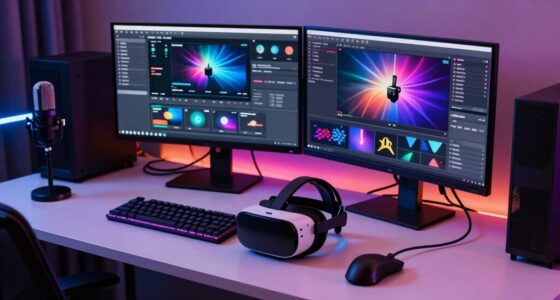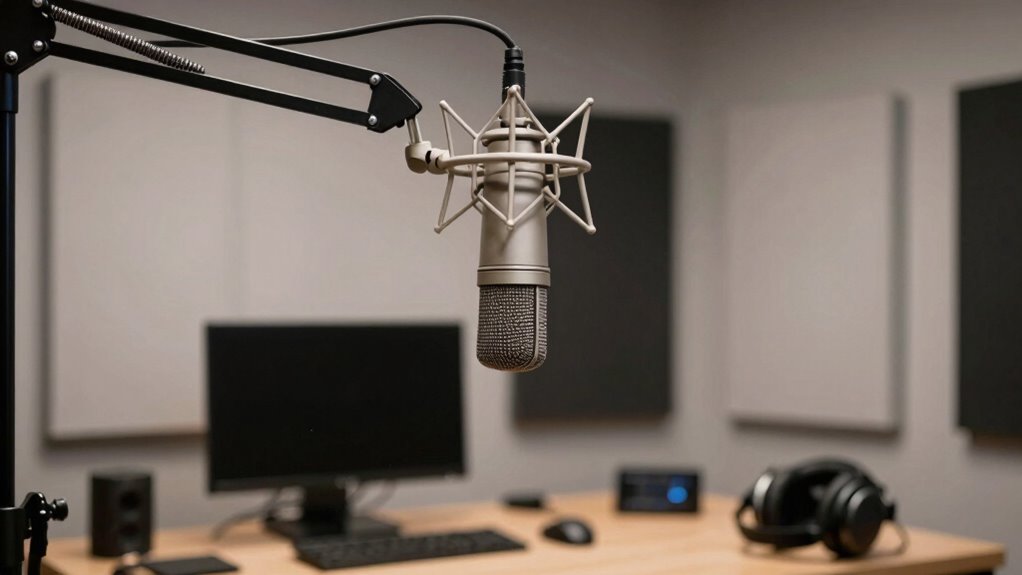
In VR creation, better audio discipline helps you maintain immersion and guarantee your environment feels realistic. If your sound levels are unbalanced, it can distract viewers and break the sense of presence. Proper management of sound hierarchy and calibration allows you to guide attention and improve spatial awareness. By controlling audio carefully, you create a more seamless experience and avoid confusion. Keep exploring, and you’ll discover ways to refine your audio skills for even more immersive VR projects.

Play games on Amazon Luna for your next adventure, included with Prime
- A rotating selection of games, no download needed
- Play on TV, laptop or phone
- Fast, free delivery for your gear, too
Key Takeaways
- Proper audio discipline ensures immersive experiences by maintaining balanced sound levels, reducing distractions.
- Consistent audio calibration preserves spatial awareness and accurate environmental interpretation.
- Managing sound hierarchy prevents auditory clutter, enhancing clarity and focus in VR environments.
- Good audio control improves workflow efficiency by avoiding misjudgments and reducing rework.
- Clear sound layering supports realistic spatial cues, essential for navigation and interaction in VR.
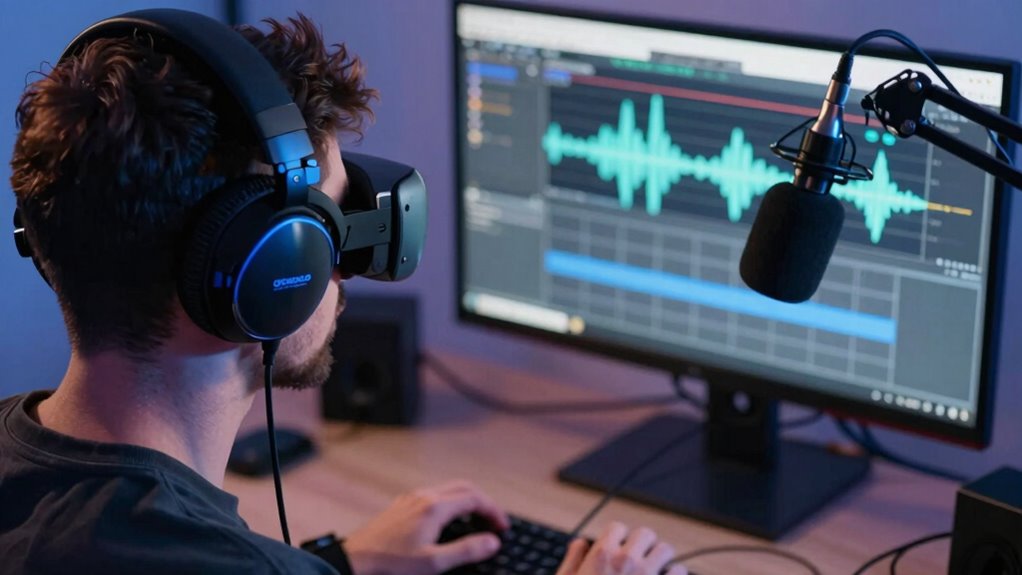
Have you ever struggled with managing audio levels while creating in VR? It’s a common challenge that can make or break your immersive experience. When audio feedback isn’t properly balanced, it can distract you or diminish the sense of presence you’re trying to build. Good audio discipline isn’t just about avoiding loud or jarring sounds; it’s about controlling how sounds influence your spatial awareness and overall workflow. If your audio levels fluctuate unpredictably, it becomes harder to focus, and your ability to judge distances or understand the environment diminishes. That’s why setting clear audio guidelines is vital for any creator aiming to produce high-quality VR content.
In VR, spatial awareness relies heavily on how well you can interpret sound cues. When your audio setup isn’t disciplined, sounds may seem disconnected or misleading, disrupting your immersion. For example, if background music or sound effects overpower critical audio feedback—like a subtle cue from your virtual tools—you might miss important interactions or misjudge spatial relationships. Maintaining consistent audio levels ensures that sounds come from their proper directions and distances, giving you a more accurate sense of space. This helps you navigate your environment confidently and respond to subtle changes, which is indispensable during detailed creation tasks. Proper audio management plays a crucial role in keeping the environment believable and your workflow smooth. Additionally, understanding the importance of spatial audio can significantly enhance your ability to interpret environmental cues accurately. Developing an awareness of auditory perception is also essential for refining your overall sound design skills.
Proper audio discipline also involves managing how sounds are layered and responded to within your setup. Too many overlapping sounds without a clear hierarchy can create confusion, while too few can make your environment feel empty or unnatural. Developing a consistent sound hierarchy helps you prioritize essential sounds and reduce auditory clutter. You need to develop a system where essential sounds are prioritized, so they cut through the noise without overwhelming the scene. This balance improves your spatial awareness and allows you to interpret audio cues quickly and accurately. When you have a clear understanding of what each sound represents, you can work more efficiently and avoid mistakes caused by auditory clutter. Regularly reviewing your audio calibration helps maintain this balance and ensures an optimal auditory experience.
Products Worth Considering

Bose SoundLink Flex Bluetooth Speaker (2nd Gen) – Portable Outdoor Speaker with Hi‑Fi Audio, Waterproof and Dustproof, USB‑C, Up to 12 Hours

LG UltraGear 32GS60QC-B 32-inch Curved QHD Gaming Monitor (180Hz, 1ms, 1000R, AMD FreeSync, HDR10)

LG UltraGear 34GX90SA-W 34-inch WQHD Curved OLED Gaming Monitor
As an affiliate, we earn on qualifying purchases.
Frequently Asked Questions
How Does Poor Audio Discipline Affect Viewer Engagement in VR?
Poor audio discipline causes listener distraction and fatigue, which directly lowers viewer engagement in VR. When audio isn’t well-balanced or contains sudden, jarring sounds, you might find your audience tuning out or feeling overwhelmed. This distraction hampers immersion, making it hard for viewers to focus on the content. To keep engagement high, you need to manage audio carefully, avoiding unnecessary noise and ensuring a smooth, comfortable listening experience.
What Are Common Mistakes Creators Make With VR Audio Setups?
Think of your VR audio setup like a symphony—misplaced microphones and poor calibration disrupt harmony. You often overlook proper audio calibration, leading to unbalanced sound, and place microphones randomly, causing inconsistent voice clarity. These mistakes distract viewers and break immersion. To improve, focus on precise audio calibration, position microphones carefully, and regularly test your setup. When your audio is in tune, your audience stays engaged and immersed in your virtual world.
Can Better Audio Improve Immersion Without Advanced Equipment?
Better audio can considerably improve immersion without needing advanced equipment by focusing on sound design and maintaining audio consistency. You can create immersive environments by carefully selecting and balancing sounds, ensuring they match the scene’s mood and perspective. Consistent audio cues help users feel grounded, making your VR experience more believable. Prioritizing good sound design and consistency enhances immersion naturally, even with basic gear, by engaging users’ senses more fully.
How Do Different VR Platforms Handle Audio Spatialization?
VR platforms handle audio spatialization like a skilled conductor directing an orchestra. They use audio calibration and binaural techniques to create immersive soundscapes. Oculus, HTC Vive, and PlayStation VR each have unique spatial audio systems that adapt to your position and head movements. This guarantees sounds appear from their true direction, enhancing realism. By mastering these differences, you can optimize your setup for the most convincing and engaging VR experience.
What Are Quick Tips for Troubleshooting Audio Issues in VR Recordings?
To troubleshoot audio issues in VR recordings, start by checking for background noise that might be picked up, and minimize it with proper environment control. Adjust your microphone placement—keep it close to your mouth and avoid drafts or electronics that cause interference. Test your audio settings and make certain your VR platform’s spatialization features are correctly configured. Recording in a quiet space and using quality microphones makes a big difference in clarity.
Conclusion
By adopting better audio discipline in your VR creator setup, you not only enhance immersion but also guarantee your audience stays engaged without distraction. Imagine a world where every sound feels natural and intentional, drawing viewers deeper into your experience. If you think about it, maintaining clean, well-balanced audio isn’t just a technical detail — it’s the backbone of compelling virtual worlds. Embrace disciplined audio practices, and you’ll elevate your VR creations to new heights.