TL;DR

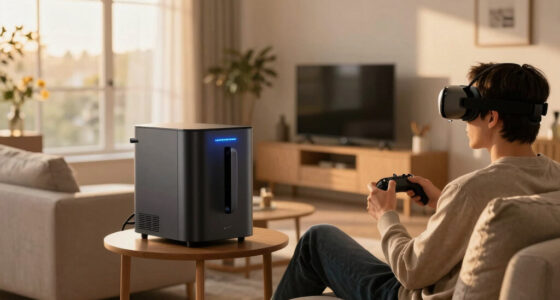
Play games on Amazon Luna for your next adventure, included with Prime
- A rotating selection of games, no download needed
- Play on TV, laptop or phone
- Fast, free delivery for your gear, too
Meta Quest 3 and Quest 3S are both powerful VR headsets, but they target different users. The Quest 3S offers a budget-friendly option with slight compromises, while the Quest 3 shines with top-tier features. Your choice depends on what you prioritize: performance or savings.
Imagine slipping into a virtual world so vivid, it feels almost real. Now, picture doing that with a headset that either costs a bit less or offers a slightly stripped-down experience. That’s the core dilemma facing VR fans in 2026: which Meta headset makes the most sense?
With both the Meta Quest 3 and the rumored Quest 3S on the table, your choice hinges on a few key factors—performance, price, and future-proofing. Let’s break down what these headsets are likely to offer, based on the latest trends and leaks, so you can pick the one that truly fits your VR journey.
Meta Quest 3 vs Meta Quest 3S: Which Should You Buy in 2026?
Both headsets run modern Meta Quest games well, but they do not feel the same on your face or through the lenses. Quest 3 is the premium pick for sharper optics, wider field of view, and mixed-reality depth sensing. Quest 3S is the value play: the same XR2 Gen 2 class performance with cheaper Fresnel optics and a lower entry price.
Meta Quest 3 vs Meta Quest 3S: Which Should You Buy in 2026?TL;DR: buy Quest 3 if clarity and comfort matter most; buy Quest 3S if you want the lowest-cost way into current Meta VR.
The short answer depends on what annoys you.
Performance is closer than the old rumor cycle suggested. The real divide is optical quality, price, and how long you expect to keep the headset.
You notice blur fast.
Pancake lenses, higher resolution, and wider field of view make menus, text, PC VR streaming, and detailed worlds feel cleaner.
You want VR under budget.
Quest 3S keeps the modern chip, controllers, app library, and color passthrough while cutting cost through Fresnel optics.
Value shifts with storage.
The 256GB Quest 3S narrows the price gap. If you need more storage and sharper lenses, Quest 3 becomes easier to justify.
The specs that change the experience.
Both headsets are capable in 2026. Quest 3 pulls ahead where optics, depth sensing, and premium feel affect daily use.
| Category | Meta Quest 3 | Meta Quest 3S | Buying impact |
|---|---|---|---|
| Display | ✓ 2064 x 2208 per eye | ~ 1832 x 1920 per eye | Quest 3 looks cleaner for text, distant detail, and high-fidelity games. |
| Optics | ✓ Pancake lenses | ✗ Fresnel lenses | Quest 3 has a larger sweet spot and less edge blur. |
| Processor | ✓ Snapdragon XR2 Gen 2, 8GB RAM | ✓ Snapdragon XR2 Gen 2, 8GB RAM | Game compatibility and core performance are broadly similar. |
| Mixed reality | ✓ Color passthrough plus hardware depth sensor | ~ Color passthrough with software depth | Quest 3 is better for room-aware MR and object placement. |
| Field of view | ✓ Around 110° horizontal | ~ Around 96° horizontal | Quest 3 feels less tunnel-like during movement-heavy VR. |
| Price | ~ Premium tier | ✓ Lower entry cost | Quest 3S wins for families, casual users, and first-time buyers. |
Where you will actually notice the difference.
Spec sheets matter, but headset satisfaction usually comes down to clarity, comfort, and whether the price still feels good after the first month.
Budget is the only clean 3S win.
Quest 3S is not weak; it is strategically cheaper. It gives you the same current-generation app base, but the lens downgrade is visible the moment you read small text or look away from the center.
Follow the priority chain to the right headset.
Start with your budget, then test your tolerance for lens blur. That one filter usually decides the purchase.
Set budget
Under roughly $350 points toward Quest 3S. More flexible budgets unlock Quest 3.
Check optics
If edge clarity matters, pancake lenses are the strongest reason to step up.
Name your use
Fitness and social VR are fine on 3S. Productivity, sim, and PC VR favor Quest 3.
Think storage
At 256GB, Quest 3S gets closer to Quest 3 pricing, so clarity gains matter more.
Buy once
Choose the headset you will still want after the novelty wears off.
Buy Quest 3
Best for serious VR: sharper visuals, better lenses, wider view, and stronger mixed-reality mapping make it the safer long-term choice.
Buy Quest 3S
Best for value: same modern chip, lower price, and enough power for most games, social apps, workouts, and family use.
The questions buyers ask before checkout.
Both headsets are strong. The right choice is less about raw power and more about how much optical quality you are willing to pay for.
Will Quest 3S support future games?
Mostly, yes. It shares the XR2 Gen 2 platform and 8GB RAM with Quest 3, though some visual settings and MR features may favor Quest 3.
Is Quest 3 worth the extra cost?
Yes, if you care about lenses. Pancake optics are the daily-use upgrade: clearer edges, easier reading, and less fiddling with fit.
Which is the safer 2026 buy?
Quest 3 for enthusiasts, Quest 3S for casual buyers. If this is your first headset, 3S is the friendlier entry point.
Key Takeaways
- The Meta Quest 3 offers sharper visuals and more processing power, ideal for demanding VR experiences.
- The Quest 3S aims to keep costs down with slightly reduced specs but still covers most casual and social VR needs.
- Comfort and battery life are significant factors; the Quest 3’s refined design and larger battery benefit long sessions.
- Software features will likely be similar, but the Quest 3’s advanced sensors enhance mixed reality use cases.
- Decide based on your budget and how serious you are about VR—both are strong choices in 2026, but serve different priorities.
As an affiliate, we earn on qualifying purchases.
What’s the real difference in hardware? Expect big gaps in display and power
The Meta Quest 3 is expected to sport a high-resolution display—probably around 2,000 x 2,040 pixels per eye—making worlds look sharp and crisp. Such a resolution is crucial because it directly impacts immersion; the higher the pixel count, the less you’ll notice screen door effects or pixelation, especially in detailed environments or close-up textures.
The Quest 3S, on the other hand, might settle for a slightly lower resolution, around 1,920 x 2,040 pixels. While this still offers decent clarity, it could result in a less immersive experience during close inspections or graphically intensive scenes. The difference becomes significant in applications where visual fidelity enhances realism, such as virtual design or high-end gaming.
This resolution gap reflects a tradeoff: the Quest 3’s sharper visuals can elevate your experience but may come at the cost of increased hardware complexity and price. Conversely, the 3S’s slightly lower resolution helps reduce costs and power consumption, which can translate into better affordability and longer battery life—though at the expense of visual sharpness.
In processing power, the Quest 3 likely packs a newer Snapdragon XR2 Gen 2 chip—offering smoother performance, better multitasking, and more complex graphics rendering. The 3S could use an earlier or lower-tier processor, which might struggle with the most demanding titles or multitasking-heavy applications. This means that while the 3S can handle current experiences comfortably, it may lag behind in future software updates or high-fidelity VR content, potentially limiting longevity.
Understanding these hardware differences helps you weigh whether you prioritize visual fidelity and performance or are willing to accept some compromises for a more budget-friendly device. The tradeoffs impact not just the immediate experience but also how well the headset will serve your VR needs as technology advances.
As an affiliate, we earn on qualifying purchases.
Comfort and design: Will one make you feel like you’re wearing a pillow?
Comfort matters immensely, especially during long VR sessions. A headset that feels heavy or causes discomfort can quickly ruin the experience, making you less likely to use it regularly or for extended periods. The design choices—materials, weight distribution, and padding—directly influence how enjoyable and sustainable your VR adventures are.
The Meta Quest 3 is expected to feature a more refined, ergonomic design, focusing on reducing weight and distributing pressure evenly across your face and head. This means less fatigue, fewer headaches, and greater immersion, as you can wear it for hours without discomfort. Such improvements are crucial for users who plan to engage in extended sessions, whether for gaming, virtual work, or social interactions.
The Quest 3S, to cut costs, might utilize slightly cheaper materials—think firmer padding or a heavier frame—potentially leading to increased pressure points or a bulkier feel. While this might be acceptable for casual use or shorter sessions, it could become uncomfortable over time, especially if the weight isn’t well balanced.
In essence, comfort isn’t just about feeling good; it directly affects how long you can enjoy VR without fatigue. A lightweight, well-designed headset like the expected Quest 3 can make a significant difference, encouraging more frequent use and reducing the physical strain that often discourages longer sessions. Conversely, a heavier or less ergonomic design might limit your VR experiences to shorter bursts, especially if discomfort sets in early.
Thus, your choice should consider how much time you intend to spend in VR and your sensitivity to discomfort. Investing in a more comfortable device can enhance your overall experience, making VR feel less like a chore and more like an exciting extension of your daily activities.
As an affiliate, we earn on qualifying purchases.
Battery life and convenience: How long can you stay immersed?
Battery performance is a critical factor because it determines how long you can enjoy immersive VR without interruption. Longer battery life allows for more extended sessions, reducing the need for frequent recharging and increasing overall convenience. This is especially important for users who want to enjoy VR during travel, long gaming marathons, or extended social interactions.
The Meta Quest 3 is rumored to feature a larger battery, potentially offering around 2-3 hours of continuous use. This increase in capacity means fewer breaks and more uninterrupted gameplay or experience time, which can be a decisive factor for serious users or those who value convenience. A longer battery life also allows you to plan longer sessions without constantly worrying about recharging, making VR more practical for daily use.
The Quest 3S might offer slightly less—about 1.5 to 2 hours—due to cost constraints and hardware choices aimed at reducing power consumption. While still sufficient for casual gaming or quick social interactions, this shorter duration could be limiting for those who want to immerse themselves for extended periods. It may also mean more frequent charging, which could interrupt your experience and reduce spontaneity.
Understanding these differences helps you plan your VR sessions better. If you’re someone who likes to lose themselves in long adventures or work sessions, the longer battery life of the Quest 3 provides a significant advantage. On the other hand, if your use is more casual or brief, the 3S’s battery life might be perfectly adequate, especially if it allows for a lighter, more affordable device.
Ultimately, battery life impacts not just how long you can stay immersed but also how flexible and convenient your VR experience can be. Longer-lasting devices encourage more spontaneous and prolonged use, making VR a seamless part of your entertainment or work routine.
As an affiliate, we earn on qualifying purchases.
Frequently Asked Questions
Will the Meta Quest 3S support future VR games and apps?
Yes, the Quest 3S will run most existing and upcoming Meta VR apps. However, its slightly lower specs might limit the most demanding titles or features, especially those requiring advanced sensors or higher resolution.Is the Meta Quest 3 worth the extra cost over the Quest 3S?
If you prioritize sharper visuals, smoother performance, and future-proofing, spending more on the Quest 3 makes sense. For casual use or tighter budgets, the Quest 3S still offers a very capable experience.How much should I expect to pay for each headset in 2026?
The Meta Quest 3 is projected around $499 at launch. The Quest 3S might be priced closer to $399 or less, reflecting its more modest specs but still delivering strong VR value.Are there any risks in choosing the cheaper Quest 3S?
The main risk is missing out on the latest hardware tech, like higher resolution or advanced mixed reality sensors. But for many casual users, the 3S still provides an immersive and enjoyable VR experience.Conclusion
In 2026, your VR choice boils down to what matters most. If you crave the best visuals, speed, and future-proof tech, the Meta Quest 3 is your best bet. Want solid VR with a friendlier price tag? The Quest 3S still opens up worlds of fun.
Imagine slipping into your virtual universe—now, pick the headset that makes that dream feel just right.
Evergreen bestsellers Picks
bestsellers
As an affiliate, we earn on qualifying purchases.