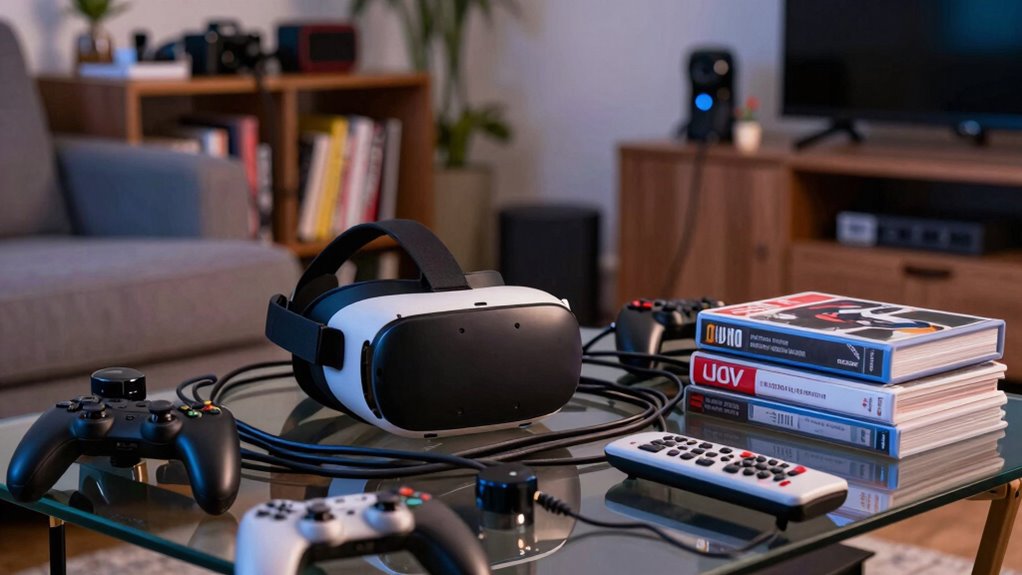
Organizing household VR accounts helps you prevent confusion and keeps everyone’s data safe. By creating dedicated profiles, you can easily switch between users while preserving individual preferences, progress, and settings. It also makes it simpler to manage content, set restrictions, and safeguard sensitive information. This way, you reduce frustration and avoid accidental data loss. Staying organized ensures smoother device use and privacy, and if you keep going, you’ll discover even more effective strategies for managing your VR setup.

Play games on Amazon Luna for your next adventure, included with Prime
- A rotating selection of games, no download needed
- Play on TV, laptop or phone
- Fast, free delivery for your gear, too
Key Takeaways
- Organized accounts prevent data mix-ups and protect personal privacy for each household member.
- Clear profiles enable seamless switching and preserve individual preferences and progress.
- Proper management simplifies setting parental controls and ensures access to age-appropriate content.
- Well-structured accounts reduce troubleshooting time and minimize risk of data loss.
- Organized VR usage promotes responsible digital habits and enhances overall household security.
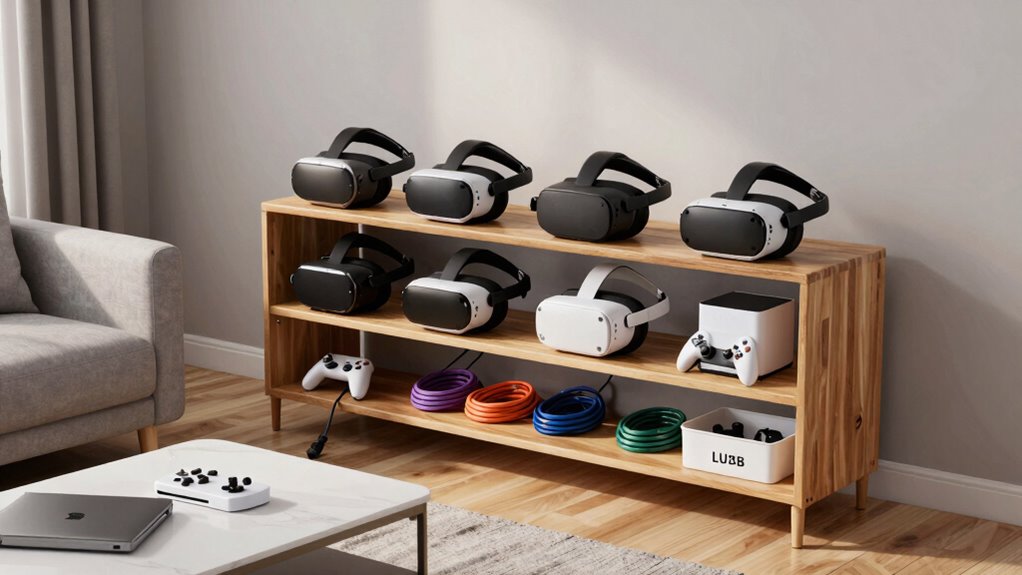
Managing multiple VR accounts within a household can quickly become chaotic without a clear organization system. When everyone in your home has their own virtual reality profile, it’s easy for settings, saved games, and preferences to get mixed up, leading to frustration and wasted time. Properly organizing these accounts helps maintain virtual reality privacy, ensuring each user’s data stays secure and private. Without a system, sensitive information—like personal avatars, purchase history, or progress—could inadvertently be accessible to others. This not only compromises privacy but also undermines trust among household members.
Shared device management becomes even more essential when multiple users share the same VR hardware. Without clear boundaries, it’s common to encounter issues like accidental game launches, overlapping settings, or lost progress. Implementing a straightforward organizational approach allows each person to have their own dedicated profile, which makes switching between users seamless. This way, everyone can pick up where they left off without interference, preserving individual virtual reality privacy and creating a smoother experience for the whole household. Establishing these account boundaries also helps prevent accidental data sharing or cross-contamination of personal information.
Effective household VR account organization also simplifies parental controls and content management. When accounts are properly structured, parents can easily set restrictions for younger users, ensuring they only access age-appropriate content. This not only promotes safer virtual experiences but also prevents accidental purchases or exposure to unsuitable material. Additionally, organized accounts make it easier to monitor usage, set time limits, and manage permissions—creating a safer and more controlled environment for kids and adults alike. Proper account organization can also help prevent data loss and ensure smoother troubleshooting when issues arise. A well-structured system can also assist in preventing unauthorized access and maintaining overall security.
From a practical standpoint, a well-structured system minimizes the risk of losing important data. When accounts are clearly labeled and managed, you avoid situations where saved progress, settings, or downloaded content get misplaced or overwritten. This saves you time and frustration, especially when trying to troubleshoot issues or restore previous states. Plus, it encourages responsible digital habits, teaching everyone in the household to respect each other’s virtual reality privacy and digital boundaries. Incorporating digital organization best practices can further enhance overall efficiency and security.
As an affiliate, we earn on qualifying purchases.
Frequently Asked Questions
How Many Users Can Share a Single Household VR Account?
You can usually share a household VR account with multiple user profiles, often up to 4 or more, depending on the platform. This setup allows each person to have their own personalized experience while managing the account efficiently. Proper account management helps keep everyone’s preferences, progress, and settings separate, avoiding confusion. It’s essential to understand your platform’s specific sharing limits and how to switch between profiles smoothly for a seamless VR experience.
What Security Measures Protect Shared Household VR Accounts?
To safeguard shared household VR accounts, you rely on strong privacy protocols and user authentication measures. These act as gentle guardians, ensuring only authorized users access the experience. You can also enable two-factor authentication and set individual profiles, adding layers of security. Regularly updating passwords and monitoring activity further keeps your shared space protected, giving everyone peace of mind while enjoying immersive virtual worlds together.
Can Household VR Accounts Have Customized Settings for Each User?
Yes, household VR accounts can have customized settings for each user. You can create personalized profiles that store individual preferences, app choices, and saved progress. Privacy controls let you manage what each user can see or access, ensuring everyone’s experience is tailored and secure. This setup helps family members enjoy the VR environment comfortably, and it keeps personal data protected while maintaining easy access for everyone.
How Do I Transfer a Household VR Account to a New Device?
Sure, just pretend you’re a VR wizard and magically transfer your account. First, guarantee your new device passes the Virtual reality calibration tests and is compatible. Then, log into your account on the new device and follow the prompts to sync your settings. It’s a bit like moving houses—except instead of boxes, you’re transferring virtual worlds. Voila, your VR universe is now happily residing on the new device!
Are There Age Restrictions for Different Users on the Same Household Account?
Yes, there are age restrictions for different users on the same household VR account. You can set up separate user profiles with parental controls to manage what each person accesses. Parental controls help restrict content based on age, ensuring younger users don’t see inappropriate material. This setup keeps everyone safe and compliant with age guidelines, making shared accounts more organized and secure for all household members.
As an affiliate, we earn on qualifying purchases.
Conclusion
Keeping your household VR accounts organized isn’t just convenient—it’s essential. Did you know that the average household has over 10 different VR apps and profiles? Without proper organization, managing these can become overwhelming and lead to accidental data loss or privacy issues. By streamlining your accounts, you guarantee a smoother, safer experience for everyone. So take a few minutes today to tidy up your VR setup—you’ll thank yourself every time you embark on your next virtual adventure.
As an affiliate, we earn on qualifying purchases.
As an affiliate, we earn on qualifying purchases.
Fall Picks
fall essentials
As an affiliate, we earn on qualifying purchases.