
TL;DR

Play games on Amazon Luna for your next adventure, included with Prime
- A rotating selection of games, no download needed
- Play on TV, laptop or phone
- Fast, free delivery for your gear, too
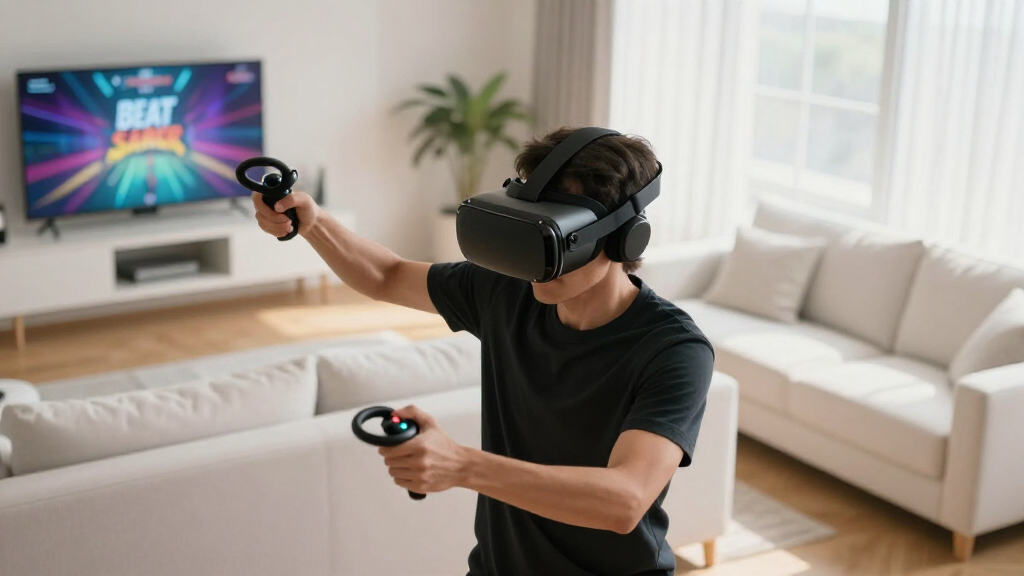
Meta has permanently cut the price of Beat Saber from $30 to $20, the first price change since its 2019 launch. This move may hint at a shift toward a free-to-play model amid changing market dynamics.
Meta has quietly slashed the price of Beat Saber to $20 on Quest, SteamVR, and PSVR 2, marking the first price reduction since the game’s 2019 launch. The move, confirmed by Meta, is permanent and comes after the game’s significant growth in content and sales, making it one of the best-selling VR titles of all time. This development is notable because Beat Saber has maintained its initial $30 price point for over six years, despite substantial content expansions.
Since its debut in 2019, Beat Saber has never gone on sale or been discounted, even as it added features like multiplayer modes, new difficulty maps, and a library of over 60 tracks, plus more than 250 paid DLC tracks. The game has generated over $200 million in sales as of early 2025, and its value has only increased with content updates. The price cut was spotted by UploadVR and confirmed by Meta, who stated it is a permanent reduction.
Industry analysts and industry observers suggest that the move could signal Meta’s interest in testing a shift toward a free-to-play model for Beat Saber. This theory is based on the game’s stagnating position on the sales charts, where free-to-play titles are increasingly dominant on Quest, and the potential for increased revenue through in-game monetization rather than upfront sales. The move comes amid broader market trends, where other titles like Pistol Whip increased their prices after significant updates, contrasting with Beat Saber’s unchanged pricing for years.
Experts note that the game’s continued growth in content and popularity makes a price reduction a strategic move, possibly to boost user engagement or prepare for future monetization changes. However, it remains uncertain whether this price cut will effectively lead to a transition to free-to-play or result in increased long-term revenue for Meta.
Beat Saber’s first price cut in seven years
Meta has permanently lowered the hit rhythm game from $30 to $20 across Quest, SteamVR and PSVR 2. The confirmed cut is simple; what it means for Beat Saber’s future is the intriguing part.
Seven years at one price
Beat Saber accumulated multiplayer, new maps, modes and a much larger music library while holding its original $30 price. The March 2026 reduction breaks that unusually stable run.
Launch at $30
The standalone release establishes Beat Saber as VR’s defining rhythm title.
Content compounds
Multiplayer, new difficulties, modes and hundreds of optional tracks expand the package.
$200M milestone
Reported lifetime game sales underline its position among VR’s commercial giants.
Permanent $20 price
Quest, SteamVR and PSVR 2 receive the title’s first lasting price reduction.
Three signals behind the cut
Meta has not publicly supplied a detailed strategic rationale. These are the strongest market-based explanations—not confirmed future plans.
Lower the barrier
A $20 headline price makes a mature title easier to add alongside the cost of a headset, accessories and music packs.
Free games own attention
Free-to-play titles increasingly dominate Quest discovery, making a $30 upfront purchase harder to sustain on charts.
DLC changes the math
A larger player base can create more opportunities for music-pack sales, even when the base game earns less per copy.
A bridge toward free-to-play?
Possibly—but the evidence stops short of confirmation. The reduction may test demand at a lower price, defend Beat Saber’s chart position, increase DLC customers, or prepare players for a different revenue model. Meta has announced no free-to-play transition.
What each strategy would change
The confirmed $20 model sits between the old premium approach and a hypothetical free-to-play future.
| Strategic factor | Old $30 model | New $20 model | Possible free-to-play |
|---|---|---|---|
| Low entry barrier | ✗ Higher friction | ✓ Improved | ✓ Maximum reach |
| Revenue at acquisition | ✓ Strongest | ~ Reduced | ✗ None |
| Reliance on DLC spending | ~ Moderate | ~ Higher | ✗ Critical |
| Potential player growth | ✗ Mature | ✓ Renewed | ✓ Largest |
| Current status | ✗ Replaced | ✓ Confirmed | ~ Speculation |
The monetization chain
The strategic bet is straightforward: sacrifice some upfront revenue in exchange for more players, more engagement and potentially more recurring purchases.
$30 becomes $20
Easier first purchase
Potential audience growth
Music-pack opportunity
Is the cut permanent?
Yes. Meta says the $20 price applies permanently across Quest, SteamVR and PSVR 2.
Why reduce it now?
Meta has not given a specific public explanation. Competitive pressure and monetization testing remain informed theories.
Will it become free-to-play?
No transition has been announced. The price cut could be a precursor, but it could also remain a standalone adjustment.
What changes for owners?
Existing ownership is unaffected. The immediate benefit goes to new buyers entering at the lower price.
A price cut with a much bigger subtext
The fact: Beat Saber now costs $20. The signal: Meta is willing to trade upfront margin for accessibility after years of price stability. The unknown: whether this is merely a competitive reset—or the first visible step toward free-to-play.
Potential Shift Toward Free-to-Play Monetization
The price cut indicates that Meta may be testing new monetization strategies for Beat Saber, which could significantly impact its revenue model. Moving to free-to-play could lower barriers for new players, increase user engagement, and open new revenue streams through DLC and in-game purchases. However, such a shift also carries risks, including potential revenue decline if players do not spend as much on DLC after the change. This move could influence how other VR titles approach monetization in the future, especially as free-to-play models become more prevalent on the Quest platform.
As an affiliate, we earn on qualifying purchases.
Beat Saber’s Market Position and Content Growth Since 2019
Since its launch in 2019, Beat Saber has become one of the best-selling VR games, with over $200 million in sales by early 2025. Its success prompted Meta to acquire the developer less than a year after release. Unlike many titles, Beat Saber maintained its original $30 price point despite numerous updates, including multiplayer, new game modes, and a library of over 60 tracks, alongside hundreds of paid DLCs. The game’s consistent pricing and content expansion have contributed to its strong market position, though recent sales charts show a decline in its ranking, with free-to-play titles gaining ground on Quest.
Prior to this price adjustment, other VR titles, such as Pistol Whip, increased their prices after adding significant content, demonstrating a different approach to post-launch pricing. The current market trend suggests a potential shift in monetization strategies for popular VR titles, with Meta possibly exploring new models for Beat Saber.
“The price of Beat Saber is now permanently reduced to $20 across all platforms.”
— a Meta spokesperson

Pimax Crystal Super VR Headset, 3840×3840 per Eye, Ultrawide, 140° FOV, Eye- Tracking, Ultra-Sharp for Flight & Racing Simulators & Gaming, DP Connection with PC
- High-Resolution Per Eye: 3840×3840 pixels with local dimming
- Exceptional Visual Clarity: 50 PPD with aspherical lenses
- Ultra-Wide Field of View: 140° for immersive experience
As an affiliate, we earn on qualifying purchases.
As an affiliate, we earn on qualifying purchases.
Unclear Impact of Price Cut on Revenue and Strategy
It is not yet confirmed whether Meta’s price reduction will lead to a shift toward a free-to-play model or if it is simply a response to market pressures. The long-term impact on Beat Saber’s revenue and user engagement remains uncertain, and the company has not publicly detailed future monetization plans. Additionally, whether this move signals broader changes in Meta’s VR game strategy is still unclear.
As an affiliate, we earn on qualifying purchases.
Next Steps for Meta and Beat Saber’s Market Strategy
Meta is likely to monitor the game’s performance following the price change, assessing whether it boosts user numbers and in-game spending. The company may also announce future updates or monetization plans in the coming months. Industry observers will be watching for signs of whether this price cut is a precursor to a free-to-play transition or a standalone adjustment to maintain competitiveness.
As an affiliate, we earn on qualifying purchases.
Key Questions
Is the price cut permanent?
Yes, Meta confirmed that the $20 price reduction for Beat Saber is permanent across all platforms.
Why did Meta reduce the price now?
Officially, Meta has not provided a specific reason. Industry speculation suggests it may be testing new monetization strategies or responding to market trends where free-to-play titles are gaining popularity.
Will the game become free-to-play?
It is not confirmed. The price cut could be a step toward a free-to-play model, but Meta has not announced any plans to change the game’s monetization approach.
How has Beat Saber performed commercially?
Beat Saber has sold over $200 million worth of copies as of early 2025 and remains one of the top-selling VR games, though its sales ranking has declined recently.
Could this price change affect existing players?
Since the change is a permanent price reduction, new players will benefit from lower entry costs, but current owners are unaffected.
Source: Road to VR
Evergreen bestsellers Picks
bestsellers
As an affiliate, we earn on qualifying purchases.