TL;DR

Play games on Amazon Luna for your next adventure, included with Prime
- A rotating selection of games, no download needed
- Play on TV, laptop or phone
- Fast, free delivery for your gear, too
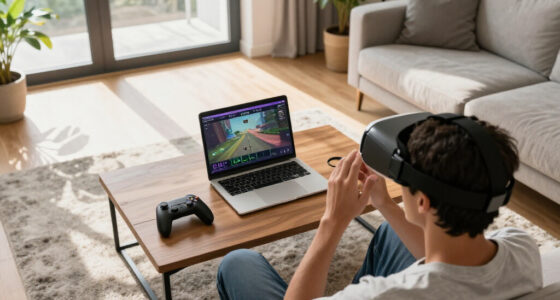
AI and VR are increasingly integrated into job interview processes, offering immersive simulations and data-driven assessments. This development aims to improve hiring accuracy and fairness, with confirmed implementations reported by multiple companies.
Multiple companies are now using artificial intelligence and virtual reality to optimize job interviews, aiming to improve candidate assessment and reduce bias, according to recent reports.
Recent developments indicate that AI-powered interview platforms are analyzing candidate responses in real-time, providing recruiters with detailed insights into skills and personality traits. Simultaneously, VR simulations are being employed to create immersive interview scenarios, allowing candidates to demonstrate practical skills in a controlled environment. These technologies are reported to be in use by several organizations across different industries, with some platforms verified for performance on devices like the Steam Deck.
Experts note that AI can help standardize evaluations and minimize unconscious bias, while VR offers a more realistic assessment of job-related skills and behavior. However, the extent of adoption varies, and some companies are still in pilot phases or testing stages.
Impact of AI and VR on Hiring Practices
This shift to AI and VR in interviews could significantly change hiring dynamics by increasing objectivity and efficiency. For candidates, it promises a more engaging and fair evaluation process. For employers, it offers tools to better identify suitable talent and reduce human biases. Nonetheless, concerns about data privacy, algorithmic fairness, and accessibility remain, making ongoing oversight crucial.
Products Worth Considering

EcoFlow Delta 3 Max Portable Power Station with 220W Solar Panel, 2048Wh

Anker SOLIX C300 DC Portable Power Station with 60W Solar Panel, 288Wh, 300W

Apple AirPods Pro 3 Wireless Earbuds with Active Noise Cancellation
As an affiliate, we earn on qualifying purchases.
Recent Advancements in Interview Technologies
The integration of AI and VR into recruitment is part of a broader trend toward digital transformation in HR. Over the past few years, companies have experimented with video interviews and automated screening, but the recent focus on immersive and data-driven tools marks a new phase. Pilot programs have shown promising results, with some platforms verified for performance on devices like the Steam Deck, though widespread adoption is still emerging.
“AI and VR are providing more nuanced insights into candidate suitability, potentially transforming traditional interview methods.”
— an anonymous researcher
Unconfirmed Extent of Widespread Adoption
It is not yet clear how widely AI and VR are being adopted across industries or the long-term effectiveness of these tools in improving hiring outcomes. Some reports indicate pilot projects, but comprehensive data on success rates and user acceptance remain limited.
Future Developments in AI and VR Hiring Tools
Expect ongoing testing and gradual expansion of AI and VR in recruitment processes. Companies will likely refine these tools based on user feedback and technological advancements, with potential regulatory considerations emerging around data privacy and fairness. Monitoring industry adoption and performance metrics will be key in assessing long-term impact.
Key Questions
How do AI and VR improve the interview process?
AI provides data-driven insights into candidate responses and traits, while VR creates immersive scenarios to assess practical skills, making evaluations more objective and realistic.
Are these technologies accessible to all candidates?
Accessibility varies; some platforms require specific hardware or internet capabilities, which may limit participation for some candidates.
Data privacy and security are major concerns, as these tools collect sensitive personal information that must be protected under regulations like GDPR.
Will AI and VR replace traditional interviews?
It is unlikely they will fully replace traditional methods but are expected to complement and enhance existing hiring practices.
When will these technologies become standard in hiring?
Widespread adoption may take several years, depending on technological improvements, regulatory developments, and industry acceptance.
Source: rss