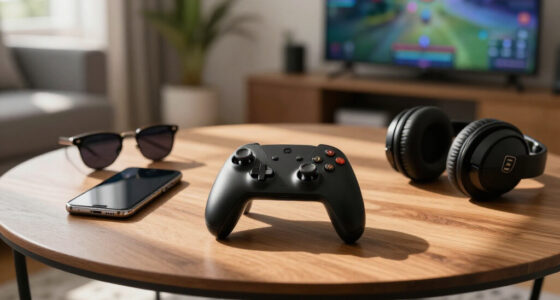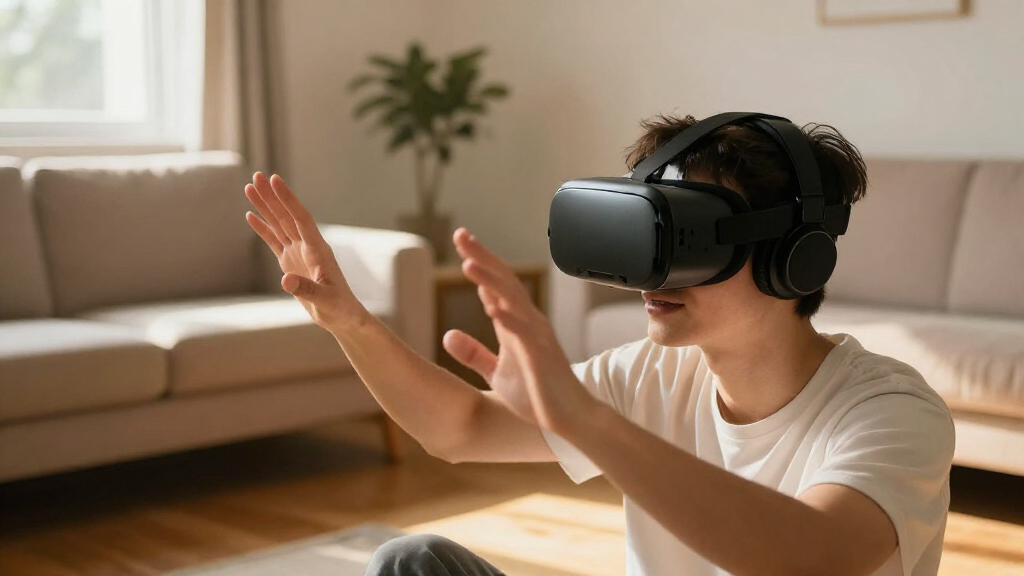
Wireless VR headphones vary widely: some are low-latency earbuds for standalone headsets, while others are Bluetooth headphones built into phone-based VR viewers. My best overall pick is the Globvanx V2 Wireless Gaming Earbuds, whose 2.4GHz USB-C dongle gives VR-focused buyers a more direct connection option than Bluetooth alone. The PowerA Wireless Earbuds are a headset-specific alternative for Quest 3 and 3S owners, while the AMVR earphones suit Quest 2 users willing to trade wireless freedom for a wired, noise-isolating fit. The main tradeoffs are connection compatibility, audio delay, comfort under a head strap, and whether you need headphones at all or a complete phone VR viewer. Read on for how each option fits a different setup and which compromises matter most.

Play games on Amazon Luna for your next adventure, included with Prime
- A rotating selection of games, no download needed
- Play on TV, laptop or phone
- Fast, free delivery for your gear, too
Complete the kit

Key Takeaways
- The Globvanx V2 stands out for connection flexibility: its 2.4GHz USB-C dongle targets lower-latency gaming use, while Bluetooth 5.4 offers a second connection route; buyers still need to check headset port and compatibility.
- Quest-specific earbuds and general gaming earbuds serve different buyers: PowerA is aimed at Quest 3 and 3S, while Globvanx and Middle Rabbit are broader gaming-earbud choices that may require more setup checks.
- Not every item in this roundup is truly wireless: AMVR and SARLAR are wired options, included as alternatives for buyers who prioritize a stable connection or headset-specific fit over cable-free use.
- Phone VR viewers bundle audio with the headset: the Smartphone VR Headset and TiCCoonuts combine a phone holder with Bluetooth headphones, but they are a different category from earbuds made for standalone VR systems.
- The product list reveals a compatibility-first decision: choosing for Quest 2, Quest 3/3S, or a smartphone matters more than choosing by the word “wireless” alone.
| AMVR Noise-Isolating In-Ear Earphones for Meta Quest 2, with Silicone Holders |  | Best Quest 2 Wired Fit | Compatibility: Meta Quest 2; not compatible with Quest 3 | Driver size: 10 mm | Driver type: Neodymium magnet | VIEW LATEST PRICE | See Our Full Breakdown |
| Smartphone VR Headset with Bluetooth Headphones |  | Best Foldable Phone-VR Starter | Phone compatibility: Most 4.7–7.0-inch iOS and Android smartphones | Field of view: 110 degrees | Lens diameter: 55 mm | VIEW LATEST PRICE | See Our Full Breakdown |
| Globvanx V2 Wireless Gaming Earbuds with 2.4GHz USB-C Dongle and Bluetooth 5.4 |  | Best Multi-Device Wireless Pick | Connectivity: Bluetooth 5.4 and 2.4GHz USB-C dongle | Listed latency: Less than 20 ms | Compatibility: Meta Quest 3S, Quest 3, Quest 2, PS5, PS4, PC, Switch, and Steam Deck | VIEW LATEST PRICE | See Our Full Breakdown |
| PowerA Wireless Earbuds for Meta Quest 3 and 3S |  | Best Quest 3 and 3S Match | Compatibility: Meta Quest 3 and 3S; Bluetooth-compatible devices | Connection: Wireless USB-C adapter and Bluetooth | Driver size: 12 mm | VIEW LATEST PRICE | See Our Full Breakdown |
| VR Headset with Wireless Headphones for Compatible iPhone and Android Phones |  | Best Phone-Headset Display Spec | Phone compatibility: iOS and Android smartphones, generally 4.7–7.0 inches | Field of view: 110 degrees | Lens size: 55 mm | VIEW LATEST PRICE | See Our Full Breakdown |
| SARLAR Wired VR Gaming Headphones for Meta Quest 2 and Quest 3 |  | Best for Dedicated Quest Audio | Compatibility: Meta Quest 2 and Quest 3 | Connectivity: Wired | Connector: 3.5 mm jack | VIEW LATEST PRICE | See Our Full Breakdown |
| Middle Rabbit SW5 Wireless Gaming Earbuds with Microphone |  | Best for Low-Latency Wireless Flexibility | Type: Wireless in-ear gaming earbuds | Connectivity: 2.4 GHz dongle and Bluetooth 5.4 | Audio latency: 20 milliseconds | VIEW LATEST PRICE | See Our Full Breakdown |
| TiCCoonuts 3D VR Headset with Foldable Bluetooth Headphones, Black |  | Best All-in-One for Smartphone VR | Compatible devices: 4.7–6.5-inch smartphones | Connectivity: Bluetooth | Field of view: 120 degrees | VIEW LATEST PRICE | See Our Full Breakdown |
| wireless VR headphone | Connectivity | Compatibility | Driver size | Weight |
|---|---|---|---|---|
| AMVR Noise-Isolating In-Ear Ea | — | Meta Quest 2; not compatible with Quest 3 | 10 mm | — |
| Smartphone VR Headset with Blu | — | — | — | 0.8 lb |
| Globvanx V2 Wireless Gaming Ea | Bluetooth 5.4 and 2.4GHz USB-C dongle | Meta Quest 3S, Quest 3, Quest 2, PS5, PS4, PC, Switch, and Steam Deck | 11 mm | — |
| PowerA Wireless Earbuds for Me | — | Meta Quest 3 and 3S; Bluetooth-compatible devices | 12 mm | 4.1 ounces |
| VR Headset with Wireless Headp | Bluetooth | — | — | 0.8 lb |
| SARLAR Wired VR Gaming Headpho | Wired | Meta Quest 2 and Quest 3 | 45 mm | — |
| Middle Rabbit SW5 Wireless Gam | 2.4 GHz dongle and Bluetooth 5.4 | — | — | — |
| TiCCoonuts 3D VR Headset with | Bluetooth | — | — | 12 ounces |
More Details on Our Top Picks
AMVR Noise-Isolating In-Ear Earphones for Meta Quest 2, with Silicone Holders
Purpose-built Quest 2 fit gives these AMVR earphones a clear role in a wireless-headphone roundup: they are a wired alternative for players who prioritize a stable, headset-specific setup over freedom from cables. The directional 3D audio and three ear-tip sizes support immersive play and a more personalized seal, while silicone holders give the earbuds a place to sit when they are not in use. Their short, unequal cables are intended to reduce snagging around the headset, though they still mean a physical connection unlike the Globvanx V2 or PowerA wireless earbuds. Choose AMVR if you own a Quest 2 and want simple earbuds without charging; skip them if you need wireless movement or plan to use Quest 3, which is explicitly unsupported.
Pros:- Designed specifically for Meta Quest 2 and supports directional 3D audio.
- Three ear-tip sizes allow a more tailored in-ear fit.
- Silicone holders provide a way to store the earbuds.
- Unequal cable lengths are designed to reduce snagging around the headset.
Cons:- Wired connection does not provide the cable-free movement of the Globvanx V2 or PowerA earbuds.
- Not compatible with Meta Quest 3.
- Different cable lengths for the left and right earbuds may feel awkward to some users.
Best for: Meta Quest 2 owners who want a headset-specific in-ear fit and do not mind a cable.
Not ideal for: Quest 3 owners or players who want to move without managing wires.
- Compatibility:Meta Quest 2; not compatible with Quest 3
- Driver size:10 mm
- Driver type:Neodymium magnet
- Audio:Directional 3D sound
- Ear-tip sizes:Small, medium, and large
- Cable lengths:9.3 in left; 18.3 in right
- Materials:Aluminum alloy and TPE
- Included:Earphones, 2 silicone holders, and 6 silicone ear caps
Our verdict“Choose AMVR for a simple, Quest 2-specific wired setup, but look to PowerA or Globvanx if wireless audio is the priority.”
Smartphone VR Headset with Bluetooth Headphones
This is a complete smartphone-based VR headset, not an audio accessory for a standalone Meta headset. Its Bluetooth headphones and foldable body make it a portable way to watch 3D movies or try phone-based VR, while the 110-degree field of view and 55 mm lenses shape the viewing experience. Compared with the B0FFZ9NZBH headset in this lineup, this model lists a 60 Hz refresh rate rather than 90 Hz, so buyers choosing between the two should weigh the stated display rate alongside phone fit. The main limitation is compatibility: it needs a suitable iOS or Android phone and excludes several large iPhone and Samsung models. I would pick it for casual phone VR, not for Quest owners seeking dedicated wireless headphones.
Pros:- Bluetooth headphones provide wireless audio for phone-based VR content.
- 110-degree field of view and 55 mm lenses support an immersive viewing setup.
- Foldable design and 0.8 lb weight suit storage and transport.
- Breathable facial cover and soft leather fabric are designed for wear comfort.
Cons:- Requires a compatible smartphone and is not a standalone VR audio solution.
- Several listed iPhone and Samsung Galaxy models are unsupported.
- Its listed 60 Hz refresh rate is lower than the 90 Hz specification of the B0FFZ9NZBH phone headset.
Best for: First-time smartphone VR users with a supported 4.7–7.0-inch iOS or Android phone who want a foldable viewing headset.
Not ideal for: Meta Quest owners or buyers with one of the explicitly excluded large iPhone or Samsung models.
- Phone compatibility:Most 4.7–7.0-inch iOS and Android smartphones
- Field of view:110 degrees
- Lens diameter:55 mm
- Headphone connection:Bluetooth
- Headphone diaphragm:50 mm
- Resolution:1920 × 1080 per eye
- Refresh rate:60 Hz
- Weight:0.8 lb
Our verdict“Pick this foldable headset for casual phone-based VR if your phone fits, but choose a dedicated Quest earbud set for standalone VR.”
Globvanx V2 Wireless Gaming Earbuds with 2.4GHz USB-C Dongle and Bluetooth 5.4
The dual-connection setup makes the Globvanx V2 the flexible choice for households using more than one gaming device: its 2.4GHz USB-C dongle is listed for Quest headsets and other supported systems, while Bluetooth 5.4 serves compatible devices. The claimed under-20 ms latency targets responsive game audio, a better fit for active play than the Bluetooth-only audio on the B0FFZ9NZBH phone headset. Its 11 mm drivers, ENC microphone, and IPX5 resistance also make it more versatile than the Quest 2-specific wired AMVR earphones. The tradeoffs are practical: battery life is listed at six hours, USB-A users need an adapter that is not included, and PS5 transmitter volume must be changed on the console. Check your headset’s port and connection support before choosing it.
Pros:- Offers both 2.4GHz USB-C dongle and Bluetooth 5.4 connectivity.
- Listed latency below 20 ms is aimed at responsive gaming audio.
- ENC microphone and IPX5 water resistance add utility beyond VR listening.
- Multiple silicone ear-tip sizes support fit adjustment.
Cons:- Listed battery life is six hours per charge.
- USB-A ports require an adapter that is not included.
- PS5 transmitter volume must be adjusted on the console rather than with the earbud controls.
Best for: VR players who switch among compatible Quest headsets, PC, handhelds, or consoles and want both dongle and Bluetooth connections.
Not ideal for: Buyers who need long sessions beyond the listed six-hour battery life or need direct USB-A connection without buying an adapter.
- Connectivity:Bluetooth 5.4 and 2.4GHz USB-C dongle
- Listed latency:Less than 20 ms
- Compatibility:Meta Quest 3S, Quest 3, Quest 2, PS5, PS4, PC, Switch, and Steam Deck
- Driver size:11 mm
- Microphone:Built-in ENC microphone
- Water resistance:IPX5
- Battery life:6 hours
- Charging time:2 hours
Our verdict“Choose Globvanx if you want one wireless earbud set for several compatible gaming systems and can work within its battery and adapter limits.”
PowerA Wireless Earbuds for Meta Quest 3 and 3S
For Quest 3 and 3S owners, PowerA offers the most directly headset-focused wireless package here: its included low-latency USB-C adapter is designed for those headsets, while Bluetooth pairing lets the earbuds serve compatible devices beyond VR. That makes it a more straightforward Quest 3 fit than the Globvanx V2, whose wider device list may appeal more to multi-platform gamers. PowerA adds three EQ modes, 12 mm drivers, and an over-ear design with swappable tips, giving buyers ways to tune sound and help keep the buds in place. Battery life reaches up to 10 hours per earbud charge, with up to 12 additional hours from the case. The adapter occupies the headset’s USB-C port, and the earbuds still need charging between sessions.
Pros:- Included wireless USB-C adapter is designed for low-latency Quest 3 and 3S audio.
- Bluetooth supports use with compatible non-VR devices.
- Dynamic, Balanced, and FPS EQ modes allow sound-profile changes.
- Over-ear design and three interchangeable tips help support a secure fit.
Cons:- The wireless adapter occupies the headset’s USB-C port during use.
- Earbuds provide up to 10 hours per charge, so long sessions may require recharging.
- The listed Meta headset compatibility is Quest 3 and 3S, not Quest 2.
Best for: Meta Quest 3 and 3S players who want a headset-oriented wireless adapter, adjustable sound profiles, and a secure over-ear fit.
Not ideal for: Quest 2 owners, buyers who need the headset USB-C port free while listening, or players seeking a set-and-forget option without charging breaks.
- Compatibility:Meta Quest 3 and 3S; Bluetooth-compatible devices
- Connection:Wireless USB-C adapter and Bluetooth
- Driver size:12 mm
- EQ modes:Dynamic, Balanced, and FPS
- Earbud battery life:Up to 10 hours
- Charging case:Up to 12 additional hours
- Fit:Over-ear design with 3 swappable tips
- Weight:4.1 ounces
Our verdict“Choose PowerA for a Quest 3 or 3S-focused wireless setup with EQ choices, but favor Globvanx for broader listed device compatibility.”
VR Headset with Wireless Headphones for Compatible iPhone and Android Phones
This foldable headset suits buyers who want phone-based VR with Bluetooth headphones in one portable unit, rather than earbuds for a standalone headset. It shares the 110-degree field of view and 55 mm lenses of the other smartphone headset here, but lists a 90 Hz refresh rate compared with 60 Hz for the B0FSZ9HXVJ. That makes this the stronger paper choice for buyers comparing display specifications, though both depend on a compatible phone and neither replaces dedicated Quest audio gear such as the PowerA earbuds. Its aspheric lenses, adjustable headband, and 0.8 lb weight support a portable setup. The key drawback is phone fit: several large iPhone and Samsung Galaxy models are excluded, so confirm compatibility before buying.
Pros:- Bluetooth-connected headphones include 50 mm drivers.
- 110-degree field of view and 55 mm lenses support phone-based immersive viewing.
- Listed 90 Hz refresh rate is higher than the 60 Hz specification of the B0FSZ9HXVJ.
- Foldable, 0.8 lb design and adjustable headband suit storage and fit adjustment.
Cons:- Requires a compatible smartphone rather than operating as a standalone headset.
- Several specified iPhone and Samsung Galaxy models are incompatible.
- Bluetooth headphone audio does not provide the listed low-latency USB-C dongle connection offered by Globvanx or PowerA.
Best for: Phone-VR users with a supported iPhone or Android device who want a foldable headset and Bluetooth audio, with a listed 90 Hz display rate.
Not ideal for: Quest owners, users with an excluded large iPhone or Samsung Galaxy phone, or anyone seeking a VR headset that works without a smartphone.
- Phone compatibility:iOS and Android smartphones, generally 4.7–7.0 inches
- Field of view:110 degrees
- Lens size:55 mm
- Headphone driver size:50 mm
- Connectivity:Bluetooth
- Maximum display resolution:1920 × 1080 per eye
- Display refresh rate:90 Hz
- Weight:0.8 lb
Our verdict“Choose this model over the B0FSZ9HXVJ if its listed 90 Hz refresh rate and your phone’s fit match your priorities.”
SARLAR Wired VR Gaming Headphones for Meta Quest 2 and Quest 3
The SARLAR is the clearest fit for Quest owners who want over-ear coverage rather than wireless earbuds. Its 45 mm drivers are designed for gaming audio, while the protein ear pads help reduce outside noise—a useful tradeoff when you want a more enclosed listening experience. Compared with the Middle Rabbit SW5, it skips wireless freedom, dual-device connectivity, and app controls, but avoids relying on a battery or wireless link. The 3.5 mm connection and stated Quest 2 and Quest 3 compatibility keep its purpose focused rather than universal. An extended cable and included carrying case add practical value, though the cable can catch or tug during movement. Choose it for seated or less active play; skip it if unrestricted movement is your priority.
Pros:- 45 mm drivers are designed for gaming audio.
- Protein ear pads are designed to isolate outside noise.
- Lightweight build and adjustable headband support a more comfortable fit.
- Includes an extended cable, carrying case, lens cover, tie, and cleaning cloth.
Cons:- The wired connection can restrict movement or snag during active play.
- Compatibility is focused on Meta Quest 2 and Quest 3.
Best for: Meta Quest 2 and Quest 3 players who prefer lightweight over-ear headphones for seated or low-movement gaming.
Not ideal for: Players who move around freely, want wireless audio, or need headphones for devices beyond the listed Quest models.
- Compatibility:Meta Quest 2 and Quest 3
- Connectivity:Wired
- Connector:3.5 mm jack
- Driver size:45 mm
- Ear pad material:Protein
- Headband:Adjustable
- Included accessories:Extended cable, VR lens cover, Velcro tie, microfiber cleaning cloth, carrying case
Our verdict“Choose the SARLAR if you want dedicated over-ear Quest audio and can accept a cable in place of wireless freedom.”
Middle Rabbit SW5 Wireless Gaming Earbuds with Microphone
The SW5 is the most flexible audio pick here for players who want wireless VR headphones that can also serve a PC or console setup. Its 2.4 GHz dongle is listed with 20 ms audio latency, and Bluetooth 5.4 allows simultaneous connection to two devices—useful when switching between game audio and another paired device. Compared with the wired SARLAR, the SW5 gives you more freedom to move and adds four microphones, ANC, EQ modes, and app controls. Those features bring more setup and charging needs, however, and the plastic enclosure may feel less substantial than an over-ear headset. The listing also gives no specific water-resistance rating, so I would not treat that claim as protection for wet conditions. This is a stronger match for multi-device players than for buyers seeking a simple, wired Quest-only solution.
Pros:- 2.4 GHz dongle connection is listed with 20 ms audio latency.
- Bluetooth 5.4 and the dongle support simultaneous two-device connectivity.
- Four built-in microphones and active noise cancellation add communication and noise-control options.
- App provides EQ modes, customizable controls, and firmware updates.
Cons:- Plastic enclosure may feel less substantial than an over-ear headset.
- The listing does not specify a water-resistance rating.
- Wireless earbuds require charging and may not suit buyers who prefer over-ear coverage.
Best for: VR players who also game on PC or console and want low-latency wireless earbuds with microphone and app features.
Not ideal for: Buyers who prefer over-ear headphones, want a simple plug-in setup, or need a clearly specified water-resistance rating.
- Type:Wireless in-ear gaming earbuds
- Connectivity:2.4 GHz dongle and Bluetooth 5.4
- Audio latency:20 milliseconds
- Microphones:4 built-in microphones
- Noise control:Active noise cancellation
- Compatible devices:Desktops, gaming consoles, laptops, Oculus Quest 2, Meta 3, PS5, PS4
- Included items:2.4 GHz dongle, charging case, eartip, USB adapter, user manual
- Warranty:1 year
Our verdict“Pick the SW5 if you want wireless VR earbuds that can also connect to a second gaming or personal device.”
TiCCoonuts 3D VR Headset with Foldable Bluetooth Headphones, Black
The TiCCoonuts is a different kind of pick: it combines a smartphone VR viewer with foldable Bluetooth headphones instead of pairing audio gear with a standalone headset. That makes it suited to phone-based 3D movies and games, with adjustable focal settings and straps for dialing in the viewing fit. Compared with the Middle Rabbit SW5, its headphones are built into the headset, so there is no separate earbud case or dongle to manage; the tradeoff is that the headset depends on a compatible phone and is not presented as an accessory for Quest. The listed 120-degree field of view and 90 Hz refresh rate describe the headset, but the phone remains part of the experience. Its 4.7–6.5-inch phone limit also rules out devices outside that size range.
Pros:- Foldable Bluetooth headphones are built into the headset.
- Adjustable focal settings help accommodate different visual requirements.
- Adjustable straps allow a customizable fit.
- Supports a range of iPhone and Android smartphones within the listed size range.
Cons:- Requires a compatible smartphone to use.
- Phone compatibility is limited to devices between 4.7 and 6.5 inches.
- It is a phone-based VR headset, not a dedicated audio upgrade for Meta Quest.
Best for: First-time smartphone VR users who want a single headset with built-in Bluetooth headphones for compatible iPhone or Android phones.
Not ideal for: Standalone headset owners or smartphone users whose devices fall outside the 4.7–6.5-inch compatibility range.
- Compatible devices:4.7–6.5-inch smartphones
- Connectivity:Bluetooth
- Field of view:120 degrees
- Resolution:1920 × 1080 per eye
- Refresh rate:90 Hz
- Sensors:Gyroscope, accelerometer
- Dimensions:4.5 × 8 × 9.99 inches
- Weight:12 ounces
Our verdict“Choose the TiCCoonuts if you want an all-in-one phone VR headset with integrated wireless headphones rather than audio for a standalone VR system.”
How We Picked
I ranked these options around the needs that shape a VR audio purchase: connection method and likely latency, compatibility with the named headset or phone setup, comfort and cable management, and whether the product solves an audio-only need or bundles a viewer. A USB-C 2.4GHz dongle can be appealing for responsive game audio, but only when the headset supports the connection; Bluetooth is more flexible across devices, though it may introduce delay or require pairing steps.
The ranking gives priority to products with a clear VR use case and a connection approach that matches it. That puts the Globvanx V2 first as a wireless gaming-earbud option, followed by the Quest-focused PowerA earbuds and the general-purpose Middle Rabbit set. Phone VR viewers rank as complete but more specialized packages, while AMVR and SARLAR remain useful wired alternatives rather than wireless picks. I also account for meaningful drawbacks: a product can be a sensible choice for one headset and a poor fit for another.
| wireless VR headphone | Compatibility |
|---|---|
| AMVR Noise-Isolating In-Ear Ea | Meta Quest 2; not compatible with Quest 3 |
| Smartphone VR Headset with Blu | — |
| Globvanx V2 Wireless Gaming Ea | Meta Quest 3S, Quest 3, Quest 2, PS5, PS4, PC, Switch, and Steam Deck |
| PowerA Wireless Earbuds for Me | Meta Quest 3 and 3S; Bluetooth-compatible devices |
| VR Headset with Wireless Headp | — |
| SARLAR Wired VR Gaming Headpho | Meta Quest 2 and Quest 3 |
| Middle Rabbit SW5 Wireless Gam | — |
| TiCCoonuts 3D VR Headset with | — |
Factors to Consider When Choosing Wireless VR Headphones
Before choosing, I would match the audio connection to the headset and play style rather than treating all wireless VR headphones as interchangeable. These factors can prevent the most common mismatch: buying a headset accessory that cannot connect to your device or that adds distracting audio delay.
Match the connection to your headset
Start by checking what your VR system can accept: Bluetooth, USB-C audio, a wireless dongle, or a standard headphone jack. A dongle-based earbud set may offer a gaming-focused connection, but a USB-C port alone does not guarantee that every headset supports the required audio mode. Bluetooth is widely familiar, yet pairing behavior and latency can differ between headset models and software versions. Phone viewers add another variable because audio may connect to the phone rather than the viewer itself. Confirm the exact device compatibility before buying, and check whether the headset’s port remains available for charging. This small check can matter more than choosing between two similar-looking earbuds.
Treat latency as a gameplay factor
Audio delay is easiest to notice when a sound should line up with a visual event, such as a beat, impact, or movement cue. For rhythm and action games, a gaming-oriented 2.4GHz connection may be a better fit than ordinary Bluetooth, provided the required dongle works with the headset. For films, menus, and slower experiences, a little delay may be less bothersome. Do not assume every product labeled wireless has the same signal path or timing. Check whether the headset can use the connection method you want without extra adapters. If timing matters most, wired audio remains a practical fallback, even though it gives up cable-free movement.
Check fit with the head strap, not just your ears
VR comfort depends on the complete setup: earbuds, glasses, facial interface, and head strap all compete for space. Bulky earbuds or headphones can press against a strap when you turn your head or lean back, even if they feel comfortable when worn alone. In-ear designs reduce the space around the head, but a secure tip fit matters during active play. Built-in headphones on a phone viewer can be convenient, though their position may offer less adjustment than separate earbuds. Look for a return option if fit is uncertain, and check whether the product includes different ear tips or a retention feature. A comfortable fit also helps keep audio consistent as the headset shifts during play.
Separate audio accessories from phone VR bundles
A VR viewer with built-in Bluetooth headphones is not a direct substitute for earbuds designed for Quest or another standalone headset. Phone viewers rely on a compatible smartphone for the display and often provide a more basic VR experience than dedicated systems. Their bundled audio can reduce the number of separate items to buy, but it also ties the headphones to the viewer’s fit and phone placement. If you already own a Quest, a phone headset bundle is unlikely to solve your audio needs. If you are building a phone-based setup from scratch, check phone dimensions, controls, and app support as well as audio. This distinction prevents a bundle from looking like a bargain for the wrong kind of VR.
Decide whether wireless convenience is worth the tradeoff
Wireless earbuds reduce cable snags and make it easier to move around, but they add charging, pairing, and battery management to a session. A wired pair can be ready whenever the headset is ready and may avoid wireless delay, though its cable needs careful routing so it does not catch on the strap or controller. If you play in short sessions, battery limits may be minor; for longer sessions, charging habits become part of the decision. Also check whether a wireless model can connect to multiple devices and how easily it switches between them. Paying more makes sense when a particular connection or headset fit solves a recurring problem. It makes less sense when the added features are incompatible with your setup or unnecessary for your games.
Frequently Asked Questions
Can I use Bluetooth earbuds with any VR headset?
No; support depends on the headset, its software, and the earbuds’ connection method. Some headsets support Bluetooth audio directly, while others may require a compatible dongle or wired connection. Even when pairing works, Bluetooth can add noticeable delay in rhythm or action games. Check the headset maker’s audio guidance and the earbud’s compatibility details before buying. If you need one reliable connection for a specific headset, a model designed for that system may be easier to set up.
Are wireless earbuds a better choice than wired VR headphones?
Wireless earbuds are more convenient when a cable would snag or restrict movement, but they need charging and may introduce pairing or latency issues. Wired options such as the AMVR and SARLAR picks avoid battery management and can offer a straightforward connection when the headset supports them. The tradeoff is cable routing: a loose wire can distract or catch during active play. I would favor wireless for freedom of movement and wired for a simple, dependable audio path. Game type and headset compatibility should decide the choice.
Will the Globvanx V2 USB-C dongle work with my Quest headset?
Do not assume compatibility just because the headset has a USB-C port. The headset must support the dongle’s audio function, and the port may also be needed for charging or other accessories. Check current compatibility information for your exact Quest model and confirm whether setup requires extra software or permissions. The Globvanx V2’s 2.4GHz connection is its distinguishing feature, but it is only useful when your device can use it. If compatibility is unclear, a headset-specific accessory or a wired option with a confirmed connection may be safer.
Should I buy a phone VR headset with built-in headphones or separate earbuds?
Choose a phone VR bundle if you are building a smartphone-based setup and want the viewer and audio in one package. Separate earbuds make more sense if you already own a compatible phone viewer or want audio that can move between devices. Bundled headphones may be convenient, but they can limit fit adjustments and do not automatically work as an accessory for a standalone headset such as Quest. Check smartphone size support, app compatibility, and how the viewer holds the phone before focusing on audio features. For a Quest owner, a dedicated headset accessory is usually the more relevant category.
What matters more for VR earbuds: low latency or noise isolation?
That depends on what you play and where you play. Low latency matters most when sound cues need to match motion or on-screen events, while noise isolation can help in a busy room or shared space. Strong isolation can also make it harder to hear people nearby, so it may not suit every home or play area. A gaming-focused wireless connection can help with timing, while in-ear fit and tips shape isolation. If you mainly watch videos or use slower experiences, comfort and compatibility may matter more than chasing the lowest possible delay.
Conclusion
For most buyers seeking wireless VR headphones, I would start with the Globvanx V2 as the best overall pick, provided its dongle is compatible with the headset. The PowerA earbuds are the more focused choice for Quest 3 and 3S owners, while Middle Rabbit is a general gaming-earbud alternative for shoppers who want a different wireless option. The best value depends on your setup: AMVR may suit Quest 2 owners who accept a cable, and the phone VR bundles make more sense for beginners building a smartphone-based kit than for standalone-headset owners. For a premium-style use case, choose the option whose connection and fit solve a real need rather than paying for features your headset cannot use. If you prioritize a steady, uncomplicated connection over wireless freedom, SARLAR is the wired alternative; if you want an all-in-one phone viewer, compare the Smartphone VR Headset and TiCCoonuts against your phone’s size and compatibility before deciding.