
TL;DR
Play games included with Prime
Start a Prime free trial and play with Amazon Luna on your devices.
Start playingAs an affiliate, we earn on qualifying purchases.
Hamburg’s data protection authority has determined that using Meta’s Ray-Ban smart glasses in public may breach GDPR. Wearers could be held liable for covert recordings and data processing without proper consent. The ruling raises concerns over privacy and legal compliance for users.
Hamburg’s data protection authority has found that Meta’s Ray-Ban Meta AI glasses may violate European privacy laws, specifically the GDPR, by enabling covert recordings and biometric data collection. The investigation reveals that wearers could be held legally responsible for data processing, especially when recording in public spaces without proper consent. This development marks a significant legal challenge for users of these devices, as regulators scrutinize their privacy implications.
Following an in-depth analysis, Hamburg’s data protection officer Thomas Fuchs concluded that the design and default settings of the first-generation Meta Ray-Ban glasses do not comply with GDPR requirements. The investigation involved dismantling the device and examining its data traffic, revealing that while live data transfer remains encrypted, the internal app stores an SQLite database with structures suggestive of facial recognition capabilities. Although no biometric matching has been observed in practice, the structure indicates that automated person matching could be implemented in the future.
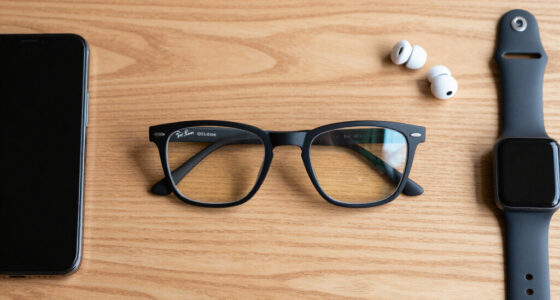
The regulator also noted that Meta responded covertly to security researchers who managed to briefly activate facial recognition functions, raising concerns about the company’s preparedness to process biometric data. The glasses’ external appearance closely resembles traditional Wayfarer sunglasses, making it difficult for passers-by to recognize they are being recorded by cameras and microphones. The signal light intended to alert others to active recordings is often ineffective, especially in daylight, and can be bypassed with simple manipulations like foils or caps.
According to the report, these features violate the European Privacy-by-Design principles, enabling covert surveillance that conflicts with GDPR. The authority emphasizes that users become fully responsible data processors when recording or sharing images of third parties in public, as the household exemption does not apply outside private environments. This shifts liability onto individual wearers, who must ensure lawful data collection, including obtaining consent or demonstrating legitimate interests, which is nearly impossible in everyday scenarios.
The GDPR Trap: Why Ray-Ban Meta Wearers Can Be Held Liable
Hamburg’s data protection authority has determined that using Meta’s Ray-Ban smart glasses in public may breach the GDPR. Wearers could be held liable for covert recordings and data processing without proper consent — turning everyday users into legally responsible data controllers.
What Regulators Discovered Inside the Device
Data protection officer Thomas Fuchs ordered the glasses dismantled and their data traffic examined. The analysis surfaced three core compliance failures rooted in the device’s design and default settings.
SQLite Database Hints at Facial Recognition
The internal app stores an SQLite database whose structures are suggestive of facial recognition capability. While no biometric matching has been observed in practice, the architecture indicates automated person matching could be implemented in the future.
Covert-Looking Wayfarer Design
The glasses closely resemble traditional sunglasses, making it nearly impossible for passers-by to recognize they are being recorded by cameras and microphones — a direct clash with European Privacy-by-Design principles.
Ineffective, Bypassable Signal Light
The capture-indicator LED is often invisible in daylight and can be defeated with simple manipulations such as foils or caps, enabling fully covert surveillance that conflicts with the GDPR.
How Wearers Become Data Controllers
The household exemption applies only in private environments. The moment a wearer records or shares images of third parties in public, the law considers them fully responsible data processors.
Public Recording
Wearer captures audio, video, or potentially biometric data of passers-by outside a private setting.
Exemption Lost
The GDPR household exemption no longer applies — the wearer is now a legal data controller.
Duty to Prove Lawfulness
Consent or legitimate interest must be demonstrated for every recorded person.
Personal Liability
In everyday scenarios, obtaining consent is nearly impossible — the legal risk sits with the wearer.
Ray-Ban Meta vs. GDPR Requirements
| GDPR Requirement | Ray-Ban Meta Status | Regulator’s Assessment |
|---|---|---|
| Visible recording indicator | ✗ FAIL | Signal light ineffective in daylight; bypassed with foils or caps. |
| Privacy by Design | ✗ FAIL | Wayfarer disguise enables covert surveillance by design. |
| Biometric data safeguards | ~ CONCERN | SQLite structures suggest latent facial recognition capability. |
| Data transfer encryption | ✓ PASS | Live data transfer was confirmed to remain encrypted. |
| Lawful basis for recording | ✗ FAIL | Consent from passers-by is unobtainable in public spaces. |
| Transparency to researchers | ~ MIXED | Meta responded covertly to researchers who activated facial recognition. |
Where Legal Exposure Is Highest for Wearers
What Remains Unclear About Future Liability
While Hamburg’s report clarifies the legal framework, enforcement actions and court precedents are still developing. These open questions will determine how the GDPR trap tightens in practice.
How Will Courts Interpret Liability?
Proving informed consent in public settings is difficult, and it is uncertain how judges will weigh the device’s covert design against individual responsibility.
Will Meta Change the Design?
Future software updates and design changes could alter the device’s compliance status, but no specifics are known — and no biometric matching has been observed in practice yet.
Will New Laws Target Wearables?
Policymakers may introduce legislation explicitly addressing biometric and covert-recording functionalities in wearables, aiming to clarify user responsibilities.
What Comes Next From Regulators?
Expect increased scrutiny of wearable devices, potential fines, mandated design modifications, and test cases exploring the boundaries of individual liability.
From Teardown to Legal Trap
Legal Liability for Wearers Under GDPR
This investigation underscores that users of Meta’s Ray-Ban smart glasses could face legal liability under the GDPR for covertly recording or processing personal data in public spaces. As the device’s design and default settings do not meet privacy standards, wearers are considered data controllers and processors, responsible for lawful data handling. The ruling highlights the growing regulatory scrutiny of wearable technology and raises questions about the safety of using such devices without proper safeguards. For consumers, this means potential legal risks, especially if they do not take steps to ensure compliance, such as obtaining explicit consent from third parties or disabling features that enable biometric recognition.
Regulators’ concerns point to broader issues of transparency, security, and privacy in the deployment of AI-enabled wearables. The findings could lead to stricter enforcement actions, user education efforts, or even bans on certain functionalities, impacting the commercial viability and user acceptance of smart glasses. For policymakers, the case exemplifies the challenge of balancing innovation with privacy rights in an increasingly connected world.
privacy screen protector for smart glasses
As an affiliate, we earn on qualifying purchases.
As an affiliate, we earn on qualifying purchases.
Background on GDPR and Wearable Devices
The GDPR, enacted in 2018, establishes strict rules for processing personal data within the European Union, emphasizing transparency, consent, and data minimization. Wearable devices like smart glasses pose unique challenges because they can continuously record audio, video, and biometric data without obvious indicators. Previous debates have centered on privacy risks, especially regarding covert surveillance and biometric recognition capabilities.
Meta’s Ray-Ban Meta AI glasses, released in 2023, integrate AI features, cameras, and microphones in a form that closely resembles traditional sunglasses, making them discreet and potentially problematic from a privacy perspective. While Meta has marketed them as stylish and functional, regulators have expressed concern over their capacity to capture and process personal data surreptitiously. The Hamburg investigation builds on this ongoing debate, highlighting the device’s technical vulnerabilities and regulatory shortcomings.
Prior to this, calls for bans or stricter regulation have been made by politicians and authorities, but jurisdictional challenges and the devices’ novelty have limited immediate legal action. Hamburg’s detailed analysis and public report mark a significant step toward clarifying legal responsibilities for users of such technology.
“The default settings and design of Meta’s smart glasses do not meet GDPR standards, especially regarding covert recording and biometric data processing.”
— Thomas Fuchs, Hamburg’s data protection officer
smart glasses with privacy features
As an affiliate, we earn on qualifying purchases.
As an affiliate, we earn on qualifying purchases.
Unclear Aspects of Future Liability and Regulation
It remains uncertain how courts will interpret individual liability in practice, especially given the device’s covert design and the difficulty in proving informed consent in public settings. While regulators have clarified the legal framework, enforcement actions and legal precedents are still developing. Additionally, Meta’s future software updates and design changes could alter the device’s compliance status, but specifics are not yet known.
It is also unclear how widespread adoption of these glasses will be before regulatory measures are enforced or whether new legislation will explicitly address such devices. The extent to which users will be held liable for unintentional or inadvertent recordings in everyday situations remains an open question, as does the scope of liability for third-party data processing.
anti-covert recording glasses cover
As an affiliate, we earn on qualifying purchases.
As an affiliate, we earn on qualifying purchases.
Next Steps in Regulation and User Guidance
Regulators are expected to increase scrutiny of wearable devices like Meta’s smart glasses, potentially issuing fines or mandating design modifications to ensure GDPR compliance. Legal cases may also emerge testing the boundaries of individual liability, especially in cases of covert recording. Meanwhile, Meta and other manufacturers might revise default settings or improve transparency features to mitigate legal risks.
For users, the key next step is understanding the legal risks involved and adjusting device settings accordingly. Policymakers may also introduce new legislation explicitly addressing biometric and covert recording functionalities in wearables, aiming to clarify responsibilities and prevent privacy violations.
Overall, the evolving regulatory landscape will shape how smart glasses are used and accepted in public, with ongoing debates about balancing innovation and privacy rights.
As an affiliate, we earn on qualifying purchases.
Key Questions
Can I be held legally liable for using Meta’s Ray-Ban glasses in public?
Yes, according to Hamburg’s data protection authority, users could be considered responsible data processors under GDPR if they record or process personal data without proper consent, especially in public spaces.
What specific GDPR violations are associated with these glasses?
The main concerns involve covert recording, biometric data collection without transparency, and the lack of effective indicators to signal active recordings, all of which conflict with GDPR principles.
Are there ways to legally use these glasses in public?
Legally, users need to obtain explicit consent from individuals being recorded or demonstrate a legitimate interest, which is difficult in everyday public scenarios. Disabling AI features or modifying default settings can reduce risks but do not eliminate liability.
Will Meta change the design or default settings based on this report?
It is not yet clear whether Meta will implement significant changes. The company responded covertly to security findings, but future updates may address privacy concerns.
What happens if I record someone unknowingly with these glasses?
Under GDPR, recording individuals without their knowledge in public can lead to liability, especially if the recordings are shared or processed further. Users are responsible for ensuring lawful data collection.
Source: fediverse
Fall yard work Picks
leaf blowers
As an affiliate, we earn on qualifying purchases.