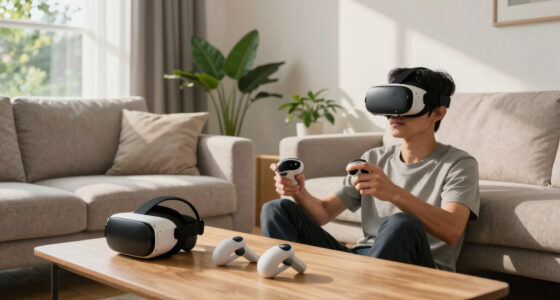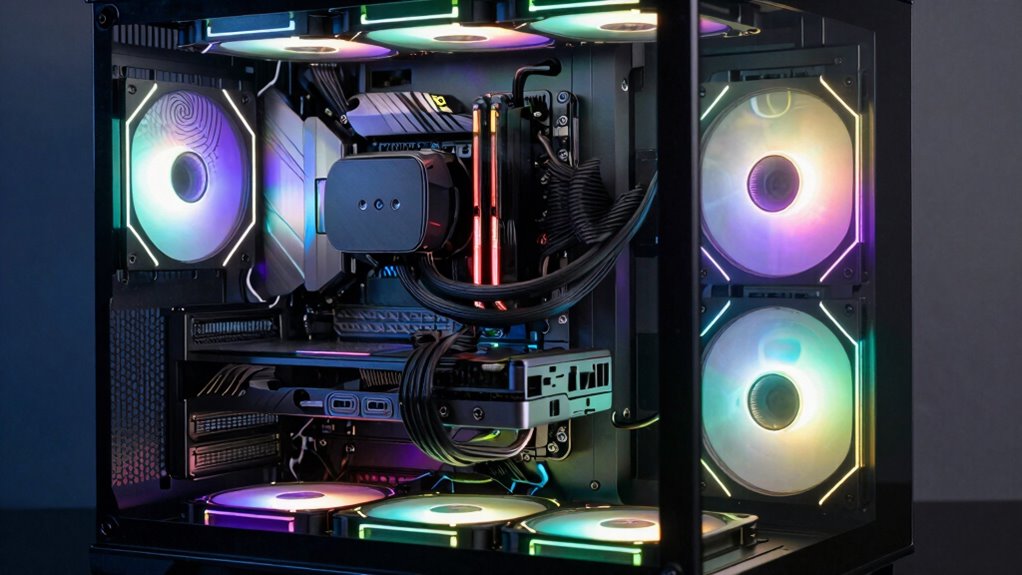
A good VR PC case needs features that a normal gaming case doesn’t, like seamless wireless connectivity support for VR headsets and peripherals, helping you avoid tangled cables and interference. It also requires advanced cooling systems to keep high-performance hardware stable during long sessions, along with ergonomic designs that accommodate larger headsets and peripherals comfortably. Prioritizing these aspects guarantees your VR setup runs smoothly and comfortably—if you want to know more, there’s plenty to explore.

Play games on Amazon Luna for your next adventure, included with Prime
- A rotating selection of games, no download needed
- Play on TV, laptop or phone
- Fast, free delivery for your gear, too
Key Takeaways
- Enhanced wireless connectivity support with accessible USB and HDMI ports for seamless VR device integration.
- Superior cooling and ventilation systems to handle high-performance VR hardware and prolonged gaming sessions.
- Modular and spacious interior design for easy upgrades and accommodating larger VR GPUs and cooling solutions.
- Ergonomic and aesthetic design tailored for comfortable long-term VR use and immersive setups.
- Reliability features like thermal management to prevent overheating and ensure consistent, stable VR performance.
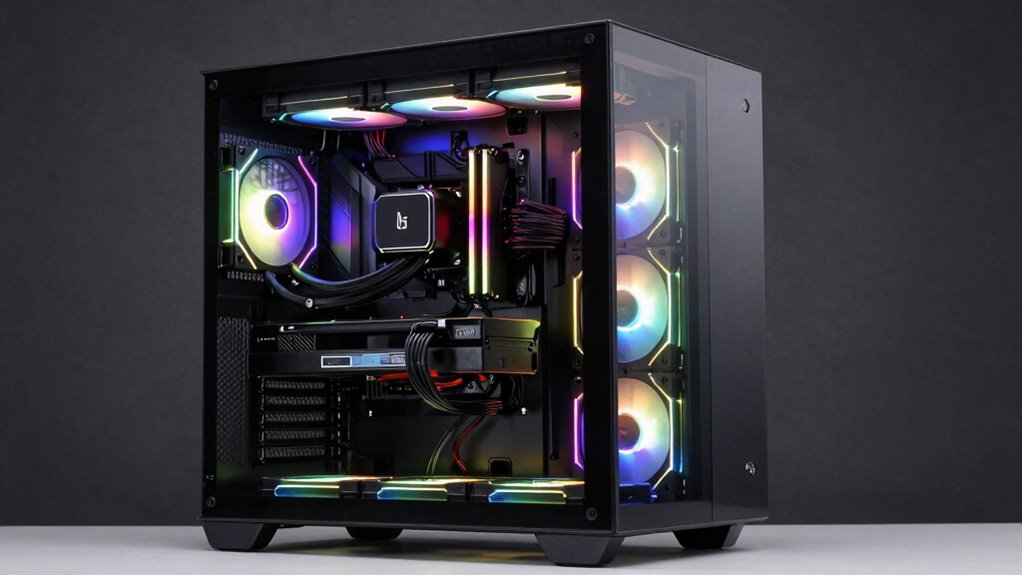
Are you looking to build a PC that seamlessly integrates with your virtual reality setup? If so, you need a VR PC case designed specifically with VR in mind. Unlike standard gaming cases, a VR case must prioritize certain features to guarantee a smooth, immersive experience. One of the most critical aspects is wireless connectivity. Since VR headsets often rely on wireless connections for freedom of movement, your case should support easy access to USB and HDMI ports for wireless transmitters or receivers. Some cases come with built-in hubs or extra ports to facilitate quick and stable connections, reducing lag or interference. This setup minimizes the hassle of tangled cables and enhances your overall VR experience. A case that emphasizes wireless connectivity also often features better ventilation options to keep these wireless devices cool during extended gaming sessions. Additionally, ensuring compatibility with future upgrades allows your system to adapt as VR technology advances. Cooling efficiency is another essential factor that sets a VR case apart from traditional gaming cases. VR gaming tends to generate more heat because of the high-performance components needed to render immersive environments smoothly. You need a case that offers advanced airflow, with support for multiple fans or liquid cooling systems. Good VR cases are designed with optimized airflow paths, ensuring that heat is quickly dissipated from your GPU, CPU, and other components. Overheating can lead to performance drops, which you definitely want to avoid in VR, where latency and frame rate stability are fundamental. Additionally, VR cases often feature larger interior spaces or modular designs, making it easier to install and maintain cooling systems. This focus on cooling efficiency helps maintain consistent performance during demanding VR sessions, keeping your hardware cool and quiet. Moreover, a well-designed interior layout can facilitate easier upgrades and maintenance, ensuring your VR setup remains efficient over time. A robust cooling system is crucial for preventing thermal throttling and prolonging hardware lifespan. Beyond these technical features, a VR-specific case often incorporates a sleek, minimalistic design that accommodates larger headsets and additional peripherals comfortably. It’s also built to support future upgrades, with enough space for bigger GPUs or additional cooling options. When choosing a case, you should consider how well it balances airflow, cable management, and overall size, making sure it fits comfortably in your gaming setup. While a standard gaming case might suffice for regular gaming, a VR PC case demands more thoughtful design choices to support wireless connectivity, cooling efficiency, and the unique demands of virtual reality. Proper ergonomic design can also significantly enhance comfort during extended VR sessions. In the end, investing in the right case makes a significant difference in delivering a smooth, immersive VR experience without the usual technical headaches.
Products Worth Considering
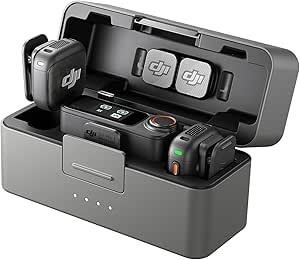
DJI Mic 3 Wireless Microphone (2 Transmitters, 1 Receiver, Charging Case)

Bose QuietComfort Ultra Wireless Noise-Cancelling Over-Ear Headphones with Spatial Audio, White Smoke

Samsung Odyssey G55C 32-Inch QHD Curved Gaming Monitor
As an affiliate, we earn on qualifying purchases.
Frequently Asked Questions
How Does VR Case Airflow Differ From Standard Gaming Cases?
You’ll find VR case airflow differs mainly in prioritizing cooling efficiency for VR headset compatibility. VR setups generate more heat, so you should optimize airflow with better intake and exhaust options. Unlike standard gaming cases, VR cases often have additional vents or fans to keep components cool during extended sessions. This guarantees your VR experience stays smooth and your hardware remains cool, preventing overheating and performance drops.
Are Specific Materials Better for VR PC Case Durability?
You should prioritize materials with high durability, like steel or aluminum, for your VR PC case, as they resist wear and impact better than plastic. These materials also add to the case weight, making it sturdier and more stable during intense use. Lightweight options might be easier to handle, but they often compromise on durability. So, balancing material strength and weight helps guarantee your VR setup stays protected and long-lasting.
What Size of VR PC Case Fits Most VR Hardware Setups?
Think of your VR PC case as a versatile suit tailored for your gear. Most VR hardware setups fit comfortably in mid-tower cases, offering the perfect balance of size and flexibility. These cases support various VR hardware compatibility and allow room for future upgrades. Avoid small cases that might cramp your setup or large ones that become cumbersome. Choose a mid-tower to guarantee your VR experience stays smooth and adaptable.
How Important Is Cable Management in VR PC Cases?
Cable management is essential in VR PC cases because it affects both cable aesthetics and airflow. You want neat, organized cables to prevent clutter and guarantee smooth connections. Pay attention to power supply placement, as it impacts how easily you can route cables cleanly. Good cable management reduces strain on ports, improves airflow, and creates a cleaner, more professional look, making your VR experience more enjoyable and hassle-free.
Can a Regular Gaming Case Be Modified for VR Use?
Absolutely, you can modify a regular gaming case for VR use, turning it into a bespoke masterpiece with custom cooling and aesthetic customization. Just remember, it’s like remodeling a mansion for a lighthouse—possible, but you’ll need to invest some effort. Upgrade airflow, add better cooling solutions, and personalize the looks. With patience, your modified case can rival a dedicated VR setup, making your gaming experience truly one-of-a-kind.
Conclusion
When choosing a VR PC case, you need more than just good airflow and aesthetics—you require ample space for VR hardware and easy accessibility for setup. Imagine a case that accommodates larger headsets and multiple sensors without cramming your workspace. Did you know that over 60% of VR enthusiasts report frustrations with setup due to inadequate case design? Investing in the right case means smoother, more immersive VR experiences, making your virtual adventures seamless and enjoyable.