Among these standalone VR headsets, I’d put the Meta Quest 3 512GB first for its balance of current-generation gaming, mixed reality, and storage. The Meta Quest 3S is a more accessible entry point, while the HTC VIVE Focus Vision suits buyers who want mixed reality and a path to PC VR. The main tradeoffs are display clarity, comfort, library access, and whether a headset works independently or depends on a PC. Older Quest and HTC models may fit narrower needs, but age and support deserve careful attention. Read on for the full breakdown and a guide to choosing the right headset for how you plan to play.

Play games on Amazon Luna for your next adventure, included with Prime
- A rotating selection of games, no download needed
- Play on TV, laptop or phone
- Fast, free delivery for your gear, too
Complete the kit


Key Takeaways
- Meta Quest 3 512GB leads the group because it combines standalone play, mixed reality features, and more storage than the listed Quest 3S models.
- Quest 3S prioritizes accessibility over optics: it offers a current Quest platform, but its display and lens design are a step down from Quest 3.
- HTC VIVE Focus Vision is the PC-flexible specialist, while the Focus Plus is an older standalone option with a narrower case for purchase.
- Meta Quest Pro’s premium positioning does not automatically make it the best gaming choice; buyers should weigh its mixed-reality focus and age against newer Quest options.
- Rift S is not standalone, and renewed Quest 2 listings require extra care around battery condition, included accessories, and software support.
| HTC VIVE Focus Vision Wired Bundle XR Headset |  | Best for PC VR Expansion | Resolution: 2448 × 2448 pixels per eye | Field of view: Up to 120 degrees | Refresh rate: 90 Hz | VIEW LATEST PRICE | See Our Full Breakdown |
| Meta Quest 3 512GB VR Headset with Gorilla Tag Bundle and 3-Month Meta Horizon+ Trial |  | Best Overall Standalone Headset | Storage: 512 GB | Memory: 8 GB RAM | Processor: Qualcomm Snapdragon XR2 Gen 2 | VIEW LATEST PRICE | See Our Full Breakdown |
| Meta Quest 3S 128GB VR Headset with Gorilla Tag Bundle |  | Best for First-Time VR Buyers | Storage: 128 GB | RAM: 8 GB | Processor: Snapdragon XR2 Gen 2 | VIEW LATEST PRICE | See Our Full Breakdown |
| HTC Vive Focus Plus 6DoF Standalone VR Headset Bundle |  | Best for Enterprise-Style Standalone Use | Tracking: 6DoF; world-scale | Display: AMOLED | Resolution: 2880 × 1600 | VIEW LATEST PRICE | See Our Full Breakdown |
| Meta Quest 3S 128GB VR Headset (Renewed Premium) |  | Best Renewed Standalone Option | Condition: Renewed Premium | Storage: 128 GB | Processor: Snapdragon XR2 Gen 2 | VIEW LATEST PRICE | See Our Full Breakdown |
| HTC VIVE Focus Vision Mixed Reality and PC VR Headset with Controllers |  | Best for Standalone and PC VR Flexibility | Display: LCD, 2448 × 2448 pixels per eye | Field of view: Up to 120 degrees | Refresh rate: 90 Hz | VIEW LATEST PRICE | See Our Full Breakdown |
| Meta Quest Pro VR/MR Headset | 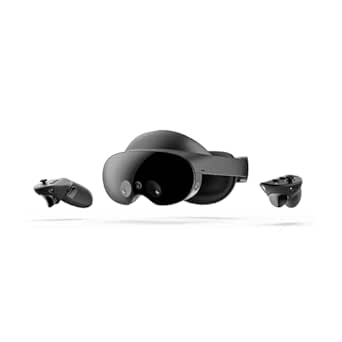 | Best for Mixed-Reality Collaboration | Platform: Standalone Meta Quest | Storage: 256 GB | Memory: 12 GB RAM | VIEW LATEST PRICE | See Our Full Breakdown |
| Oculus Rift S PC-Powered VR Gaming Headset |  | Best for PC VR, Not Standalone Use | Display: LCD, 2560 × 1440 resolution | Field of view: 110 degrees | Tracking: Oculus Insight inside-out tracking | VIEW LATEST PRICE | See Our Full Breakdown |
| Meta Quest 2 All-in-One VR Headset, 128 GB |  | Best for Accessible Wireless VR | Platform: Meta Quest | Storage: 128 GB | Display: LCD, 1832 × 1920 | VIEW LATEST PRICE | See Our Full Breakdown |
| Meta Quest 2 All-in-One VR Headset, 256 GB (Renewed) |  | Best for Larger Game Libraries | Condition: Renewed | Storage: 256 GB | Display: LCD, 1832 × 1920 pixels per eye | VIEW LATEST PRICE | See Our Full Breakdown |
| standalone VR headset | Field of view | Refresh rate | Storage | Connectivity |
|---|---|---|---|---|
| HTC VIVE Focus Vision Wired Bu | Up to 120 degrees | 90 Hz | — | DisplayPort, USB, Wi-Fi |
| Meta Quest 3 512GB VR Headset | — | Up to 120 Hz | 512 GB | Bluetooth, USB Type-C |
| Meta Quest 3S 128GB VR Headset | 110 degrees | 60 Hz | 128 GB | — |
| HTC Vive Focus Plus 6DoF Stand | 110 degrees | 90 Hz | 32 GB | USB Type-C |
| Meta Quest 3S 128GB VR Headset | 96 degrees | 90 Hz | 128 GB | — |
| HTC VIVE Focus Vision Mixed Re | Up to 120 degrees | 90 Hz | 128 GB, expandable up to 2 TB with MicroSD | DisplayPort, USB, and Wi-Fi |
| Meta Quest Pro VR/MR Headset | 106 degrees | — | 256 GB | — |
| Oculus Rift S PC-Powered VR Ga | 110 degrees | — | — | USB 3.0 and Bluetooth |
| Meta Quest 2 All-in-One VR Hea | — | 90 Hz | 128 GB | Wi-Fi and USB Type-C |
| Meta Quest 2 All-in-One VR Hea | 90 degrees | 90 Hz | 256 GB | Bluetooth |
More Details on Our Top Picks
HTC VIVE Focus Vision Wired Bundle XR Headset
The VIVE Focus Vision is the most flexible pick here for buyers who want standalone use but also plan to connect to a PC. Its DisplayPort streaming gives it a different role from the wireless-only Meta Quest 3 and Quest 3S: it can serve as a standalone headset while offering a wired PC VR path. The 2448 × 2448-per-eye display and field of view up to 120 degrees favor detailed, broad visuals, while eye and hand tracking add options for compatible applications. A hot-swappable battery and MicroSD expansion also help with longer sessions and large libraries. The tradeoff is setup complexity: PC streaming recommends wired Ethernet for the router, and some features depend on compatible equipment. I’d choose it for a mixed standalone-and-PC setup, not for the simplest plug-and-play experience.
Pros:- Supports standalone VR and DisplayPort-connected PC VR
- High resolution of 2448 × 2448 pixels per eye and field of view up to 120 degrees
- Built-in eye and hand tracking, with support for body trackers
- Hot-swappable battery and MicroSD expansion up to 2 TB
Cons:- PC streaming setup recommends a wired Ethernet connection to the Wi-Fi router
- Some tracking and streaming capabilities require compatible accessories or equipment
Best for: PC VR owners who also want a standalone headset, high-resolution visuals, expandable storage, and tracking features for compatible apps.
Not ideal for: Buyers seeking an uncomplicated, fully wireless setup or those without a compatible PC and network equipment for its PC streaming features.
- Resolution:2448 × 2448 pixels per eye
- Field of view:Up to 120 degrees
- Refresh rate:90 Hz
- Memory:12 GB RAM
- Expandable storage:Up to 2 TB via MicroSD card
- Connectivity:DisplayPort, USB, Wi-Fi
- Tracking:Eye and hand tracking; supports body trackers
- Battery:Hot-swappable main battery with reserve front battery
Our verdict“Choose the VIVE Focus Vision if you want one headset for standalone sessions and a more involved DisplayPort-connected PC VR setup.”
Meta Quest 3 512GB VR Headset with Gorilla Tag Bundle and 3-Month Meta Horizon+ Trial
The Meta Quest 3 512GB is my strongest all-around choice for buyers who want a standalone headset without giving up a capable mixed-reality mode. Its full-color passthrough brings digital content into view alongside the room, while the Snapdragon XR2 Gen 2 and 8 GB of RAM support current standalone games and apps. Compared with the Quest 3S, this model offers a higher per-eye resolution and refresh rates up to 120 Hz, which can make text and motion look clearer. The 512 GB capacity also gives frequent players more room than the 128 GB Quest 3S. The main compromise is session length: battery life is approximately 2.2 hours. I’d favor this over the HTC VIVE Focus Vision for easier wireless-focused use, but not for DisplayPort PC VR.
Pros:- Wireless standalone play with full-color passthrough
- Higher per-eye resolution and refresh-rate ceiling than the Quest 3S
- 512 GB storage for a larger installed library
- Bundle includes Gorilla Tag items and a three-month Meta Horizon+ trial
Cons:- Approximately 2.2 hours of battery life limits uninterrupted sessions
- Does not offer the VIVE Focus Vision’s DisplayPort streaming option
Best for: Standalone-first players who want mixed-reality passthrough, room for a sizable game library, and sharper visuals than the Quest 3S.
Not ideal for: Buyers who need long untethered sessions without recharging or want a headset with DisplayPort PC VR streaming.
- Storage:512 GB
- Memory:8 GB RAM
- Processor:Qualcomm Snapdragon XR2 Gen 2
- Resolution:2064 × 2208 pixels per eye
- Refresh rate:Up to 120 Hz
- Battery life:Approximately 2.2 hours
- Connectivity:Bluetooth, USB Type-C
- Operating system:Meta Horizon OS
Our verdict“Pick the Quest 3 512GB for a polished standalone and mixed-reality balance, provided its roughly 2.2-hour battery life suits your sessions.”
Meta Quest 3S 128GB VR Headset with Gorilla Tag Bundle
The Meta Quest 3S 128GB gives first-time VR buyers a self-contained way into gaming, workouts, and mixed reality, with no PC required. Its Snapdragon XR2 Gen 2 processor and 8 GB of RAM match the core platform figures of the Quest 3, while full-color passthrough lets users see their surroundings without removing the headset. The lower 1832 × 1920-per-eye resolution and 60 Hz refresh rate set it apart from the Quest 3, which reaches up to 120 Hz and has a sharper display. Those differences matter more for buyers who are sensitive to visual clarity or smooth motion than for someone prioritizing basic standalone access. Storage is just 128 GB, so a large game collection may need regular pruning. I’d pick it over the older Vive Focus Plus for a more current consumer gaming focus, but not for display performance.
Pros:- Standalone wireless use without a PC
- Snapdragon XR2 Gen 2 processor and 8 GB RAM
- Full-color passthrough with dual RGB cameras
- Bundle includes Gorilla Tag items and a three-month game-catalog trial
Cons:- 128 GB storage may constrain buyers who keep many games installed
- 60 Hz refresh rate is lower than the Quest 3’s up-to-120 Hz ceiling
- 1832 × 1920 resolution per eye is lower than the Quest 3
Best for: New VR users who want wireless gaming and mixed-reality basics, plus a bundled game-catalog trial, without needing a PC.
Not ideal for: Frequent players with large installed libraries or buyers who prioritize sharper resolution and higher refresh rates.
- Storage:128 GB
- RAM:8 GB
- Processor:Snapdragon XR2 Gen 2
- Display:LCD
- Resolution:1832 × 1920 per eye
- Refresh rate:60 Hz
- Field of view:110 degrees
- Battery life:2.5 hours
Our verdict“Choose the Quest 3S as a straightforward first standalone headset if you can accept its limited storage and lower display refresh rate.”
HTC Vive Focus Plus 6DoF Standalone VR Headset Bundle
The HTC Vive Focus Plus has a more specialized profile than the Meta Quest 3 and Quest 3S. Its world-scale 6DoF tracking, included motion controllers, gaze and hand tracking support, and glasses-friendly fit suit structured training or demonstrations where users need to move around a tracked space. The 2880 × 1600 AMOLED display and 90 Hz refresh rate give it a distinct display setup, but the product description leans toward commercial and enterprise use rather than a broad consumer game library. Its 32 GB of storage is also far below the Quest 3’s 512 GB, limiting room for content. I’d put it on the shortlist when its tracking and deployment profile match a specific use case; for everyday wireless gaming, the Quest 3S is the more natural fit.
Pros:- Standalone operation with world-scale 6DoF tracking
- 2880 × 1600 AMOLED display with a 90 Hz refresh rate
- Supports gaze and hand tracking
- Glasses-friendly fit and included controllers
Cons:- 32 GB storage is limited compared with the Quest 3’s 512 GB
- Product description emphasizes commercial and enterprise use
- Compatible-device information specifies a Windows 10 PC
Best for: Organizations and training teams seeking a standalone headset with world-scale tracking, included 6DoF controllers, and a fit that accommodates glasses.
Not ideal for: Consumer players seeking a large game library, substantial storage, or a headset clearly positioned for everyday home entertainment.
- Tracking:6DoF; world-scale
- Display:AMOLED
- Resolution:2880 × 1600
- Refresh rate:90 Hz
- Field of view:110 degrees
- Storage:32 GB
- Platform:Standalone; Android
- Connectivity:USB Type-C
Our verdict“Choose the Vive Focus Plus for a defined training or commercial use case, rather than as the default headset for consumer gaming.”
Meta Quest 3S 128GB VR Headset (Renewed Premium)
This Renewed Premium Quest 3S keeps the appeal of a compact, wireless standalone platform: Snapdragon XR2 Gen 2 processing, 8 GB of RAM, and full-color passthrough for mixed-reality apps. Against the new Quest 3S in this lineup, the listed specs give this version a 90 Hz refresh rate and up to three hours of battery life, rather than 60 Hz and 2.5 hours. Those figures may suit longer sessions, though the provided descriptions do not establish that the two bundles have identical configurations. Its 128 GB storage remains modest beside the Quest 3’s 512 GB, and this unit is renewed rather than new. I’d consider it for buyers specifically open to renewed hardware; those who want a new unit or more storage should look at the other Meta options.
Pros:- Wireless standalone use with Snapdragon XR2 Gen 2 and 8 GB RAM
- Dual RGB cameras provide full-color passthrough
- Listed refresh rate is 90 Hz, compared with 60 Hz for the other Quest 3S listing
- Up to three hours of battery life and a three-month game-catalog trial
Cons:- Renewed Premium condition may not suit buyers who want new hardware
- 128 GB storage is modest beside the Quest 3’s 512 GB
- Listed field of view is 96 degrees, narrower than the other Quest 3S listing’s 110 degrees
Best for: Standalone VR buyers who are comfortable choosing renewed hardware and want a Quest 3S platform with listed 90 Hz refresh and up-to-three-hour battery life.
Not ideal for: Buyers who require a new headset, need more than 128 GB of storage, or want the Quest 3’s higher per-eye resolution.
- Condition:Renewed Premium
- Storage:128 GB
- Processor:Snapdragon XR2 Gen 2
- Memory:8 GB RAM
- Display:LCD
- Resolution:2064 × 2208 pixels
- Refresh rate:90 Hz
- Field of view:96 degrees
- Battery life:Up to 3 hours
Our verdict“Consider this renewed Quest 3S if you accept renewed condition and value its listed 90 Hz refresh rate over the new Quest 3S listing’s 60 Hz specification.”
HTC VIVE Focus Vision Mixed Reality and PC VR Headset with Controllers
The VIVE Focus Vision is the most adaptable pick here for buyers who want a standalone headset but may also connect to a gaming PC. Its 2448 × 2448 resolution per eye and up-to-120-degree field of view offer a more expansive, detailed view than the Meta Quest 2 models in this group. Eye and hand tracking add options for compatible apps, while MicroSD expansion and a hot-swappable battery help with longer sessions. The tradeoff is that some capabilities depend on a PC or extra accessories; wireless PC streaming also calls for a wired Ethernet connection between the computer and router. Compared with the simpler Quest 2, this is a more technically flexible setup, but it asks more of the buyer and their space.
Pros:- Works as a standalone headset and supports PC VR, including DisplayPort streaming
- High per-eye resolution and a field of view up to 120 degrees
- Eye and hand tracking are built in, with support for compatible full-body trackers
- Hot-swappable battery and MicroSD expansion up to 2 TB
Cons:- Some capabilities require a PC, compatible accessories, or additional trackers
- Wireless PC VR streaming requires the PC to connect to the router by Ethernet
Best for: VR enthusiasts who want standalone play now and the option to connect to a Windows PC or add tracking accessories later
Not ideal for: Buyers seeking a simple, self-contained setup with no PC, router configuration, or additional tracking hardware
- Display:LCD, 2448 × 2448 pixels per eye
- Field of view:Up to 120 degrees
- Refresh rate:90 Hz
- Memory:12 GB RAM
- Storage:128 GB, expandable up to 2 TB with MicroSD
- Tracking:Eye and hand tracking; supports full-body trackers
- Connectivity:DisplayPort, USB, and Wi-Fi
- Audio:Open-back dual-driver 3D spatial audio; 3.5 mm audio jack
- Battery:Hot-swappable battery with reserve front battery
Our verdict“Choose the VIVE Focus Vision if you want a standalone headset with a clear path to more involved PC VR and tracking setups.”
Meta Quest Pro VR/MR Headset
The Meta Quest Pro is aimed at buyers who care as much about mixed-reality meetings and expressive avatars as they do about VR games. Its full-color passthrough brings the room into view, while eye and facial tracking can make avatar interactions feel more expressive than on the Quest 2. The pancake lenses and self-tracking Touch Pro controllers add to its work-and-creation focus, with controller tracking handled onboard rather than by external sensors. This specialized feature set is the reason to pick it over the more straightforward Quest 2, not a reason for every standalone buyer to choose it. The listed 879 g weight is a notable comfort concern, and the headset requires a Meta account. Buyers focused mainly on uncomplicated gaming may get more from a simpler model.
Pros:- Full-color passthrough supports mixed-reality use in a real room
- Eye and facial tracking can add expression to compatible avatars
- Self-tracking Touch Pro controllers include advanced haptics
- Pancake lenses and 256 GB storage
Cons:- Listed weight of 879 g may be uncomfortable during extended sessions
- Requires a Meta account
- Its collaboration and tracking features may be unnecessary for buyers mainly interested in basic VR gaming
Best for: Remote collaborators, creators, and VR users who specifically want full-color passthrough and eye or facial tracking
Not ideal for: Casual players prioritizing a lighter, simpler gaming headset or anyone unwilling to use a Meta account
- Platform:Standalone Meta Quest
- Storage:256 GB
- Memory:12 GB RAM
- Field of view:106 degrees
- Lens technology:Pancake
- Controllers:Touch Pro with self-tracking cameras and advanced haptics
- Sensors:10 VR/MR sensors
- Weight:879 g
- Age recommendation:13 and up
Our verdict“Pick the Quest Pro for mixed-reality collaboration and expressive tracking, rather than as the simplest choice for casual standalone gaming.”
Oculus Rift S PC-Powered VR Gaming Headset
The Oculus Rift S makes this list as a useful contrast, not as a standalone headset: it needs a compatible Windows PC to run. That connection gives PC-focused buyers access to a library of VR games and room-scale play through inside-out tracking, without external sensors around the room. Its Touch controllers support familiar hand input, and the 110-degree field of view is wider than the Meta Quest Pro’s listed 106 degrees. But the Rift S cannot offer the wireless, self-contained use of either Quest 2 model, and its PC requirement also means a suitable computer and cables are part of the setup. I’d choose it only for a buyer who already wants PC-powered VR; anyone shopping specifically for a standalone headset should choose a Quest model instead.
Pros:- Inside-out room-scale tracking does not require external sensors
- Oculus Touch controllers support hand and gesture input
- 110-degree field of view
- Access to a broad VR game library, including exclusives
Cons:- Requires a compatible Windows PC and is not standalone
- Requires a Facebook account to log in
- USB 3.0 and Bluetooth connections make setup less self-contained than a wireless Quest 2
Best for: Windows PC owners who want a dedicated wired gaming headset and room-scale tracking without external sensors
Not ideal for: Buyers who need wireless, standalone VR or do not have a compatible Windows PC
- Display:LCD, 2560 × 1440 resolution
- Field of view:110 degrees
- Tracking:Oculus Insight inside-out tracking
- Controllers:Oculus Touch
- Connectivity:USB 3.0 and Bluetooth
- Compatible device:Personal computer
- Operating system:Windows
- Dimensions:8.27 × 10.94 × 6.3 inches (D × W × H)
Our verdict“Choose the Rift S only if PC-powered VR is your priority; for play without a computer, pick one of the standalone Quest 2 options.”
Meta Quest 2 All-in-One VR Headset, 128 GB
The Meta Quest 2 128 GB is the straightforward standalone choice in this group: it runs without a PC or console and covers gaming, fitness, social apps, and entertainment. Its Touch controllers give buyers a familiar way to interact, while hand tracking offers another input option; casting can also let someone nearby follow the session on a compatible screen. Compared with the VIVE Focus Vision, the Quest 2 is less focused on advanced tracking and PC VR connections, but its simpler all-in-one setup better suits people who want to start playing without building out a system. The compromises are its 128 GB capacity and a display resolution below the VIVE’s per-eye figures. Buyers should also check age guidance for individual apps, since some experiences may be intended for mature audiences.
Pros:- Standalone wireless use requires no PC or console
- Includes two Touch controllers and supports hand tracking
- Supports gaming, fitness, social experiences, and entertainment
- Can cast the headset experience to a compatible screen
Cons:- 128 GB storage is less flexible than the VIVE Focus Vision’s MicroSD-expandable storage
- Lower listed display resolution than the VIVE Focus Vision
- Some experiences may be intended for mature audiences despite account age guidance of 10 and up
Best for: First-time VR buyers and families seeking a wireless headset for games, fitness, social apps, and shared viewing
Not ideal for: VR enthusiasts who need expandable storage, high-end tracking features, or the option to stream PC VR
- Platform:Meta Quest
- Storage:128 GB
- Display:LCD, 1832 × 1920
- Refresh rate:90 Hz
- Connectivity:Wi-Fi and USB Type-C
- Battery capacity:3640 mAh
- Included controllers:Two Touch controllers
- Audio:3D positional audio
- Input:Hand tracking
Our verdict“Choose this Quest 2 if you want a simple wireless entry into VR and do not need PC streaming or expandable storage.”
Meta Quest 2 All-in-One VR Headset, 256 GB (Renewed)
This renewed Quest 2 256 GB keeps the same standalone appeal as the 128 GB Quest 2 but gives buyers more room for installed games and apps. Its 1832 × 1920 resolution per eye and 90 Hz refresh rate match the core display details supplied here, while the included silicone grip covers and adjustable knuckle straps add a more secure controller hold during active play. Compared with the 128 GB version, storage is the meaningful advantage; this is not a newer or more advanced headset. The central tradeoff is its renewed condition and 90-day limited warranty, so buyers should be comfortable with a refurbished product rather than a new unit. Its listed connectivity is Bluetooth, unlike the 128 GB model’s Wi-Fi and USB Type-C specification, so check that the stated connections suit your needs.
Pros:- 256 GB storage provides more room than the 128 GB Quest 2
- Standalone Quest 2 platform with hand tracking and motion-sensing controllers
- 90 Hz refresh rate and 1832 × 1920 resolution per eye
- Silicone controller grip covers and adjustable knuckle straps are included
Cons:- Renewed condition may not suit buyers who want a new product
- Includes a 90-day limited warranty
- Listed connectivity is Bluetooth, with Wi-Fi and USB Type-C not specified in the supplied product data
Best for: Quest 2 buyers who want more onboard space for games and apps and are comfortable purchasing a renewed headset
Not ideal for: Buyers who require a new headset, a longer stated warranty, or clearly specified Wi-Fi and USB Type-C connectivity
- Condition:Renewed
- Storage:256 GB
- Display:LCD, 1832 × 1920 pixels per eye
- Refresh rate:90 Hz
- Field of view:90 degrees
- Connectivity:Bluetooth
- Included accessories:Controllers, silicone grip covers, adjustable knuckle straps
- Weight:1.8 pounds
- Warranty:90-day limited warranty
Our verdict“Choose this renewed model over the 128 GB Quest 2 if extra storage matters more to you than buying new.”

How We Picked
I ranked these headsets by how well they serve the specific promise of standalone VR: running useful experiences without requiring a PC or console. I weighed the headset’s platform and app access, display and lens experience, storage, comfort-related design, mixed-reality capabilities, and flexibility for optional PC use. I also considered whether the product’s age, renewed condition, or bundle contents could complicate ownership.
The ranking favors a strong all-around experience over a single standout feature. That puts the Quest 3 512GB ahead for its newer platform and broad use, with the Quest 3S offering a simpler entry point. The VIVE Focus Vision ranks well for buyers who value PC connectivity and mixed reality, but it is less of a straightforward pick for casual standalone gaming. Older models and the Rift S rank lower because their age, condition, or PC requirement limits their fit for this category.
| standalone VR headset | Display |
|---|---|
| HTC VIVE Focus Vision Wired Bu | — |
| Meta Quest 3 512GB VR Headset | — |
| Meta Quest 3S 128GB VR Headset | LCD |
| HTC Vive Focus Plus 6DoF Stand | AMOLED |
| Meta Quest 3S 128GB VR Headset | LCD |
| HTC VIVE Focus Vision Mixed Re | LCD, 2448 × 2448 pixels per eye |
| Meta Quest Pro VR/MR Headset | — |
| Oculus Rift S PC-Powered VR Ga | LCD, 2560 × 1440 resolution |
| Meta Quest 2 All-in-One VR Hea | LCD, 1832 × 1920 |
| Meta Quest 2 All-in-One VR Hea | LCD, 1832 × 1920 pixels per eye |
Factors to Consider When Choosing Standalone VR Headsets
Choosing a headset is about more than resolution or storage. I’d start with how you expect to use it, then check the software library, fit, and ownership details that can shape daily use long after setup.
Decide Whether Standalone Means PC-Free Every Time
A standalone headset should run its core experiences without a computer, but some models also offer optional PC VR. That distinction matters if you want a simple living-room setup now and access to PC titles later. Check whether PC play requires a cable, wireless streaming, a gaming PC, or extra configuration. A headset that supports PC VR is not automatically a better standalone device if its independent app selection does not suit you. Avoid buying a PC-dependent model such as Rift S when your goal is to play without a computer. Treat PC compatibility as a bonus only if you already have suitable hardware or plan to get it.
Match the Library to the People Who Will Use It
Before comparing hardware, list the games and apps you actually want, then check that they run on the headset and its current software platform. A large catalog is less useful if your must-have title is missing or if multiplayer depends on friends using another system. Families should check account setup, age guidance, and whether separate users can comfortably share the device. Bundles can add a game or service trial, but those extras should not outweigh the headset’s long-term library fit. Older models may still cover familiar experiences, yet app support can change over time. I’d favor a device whose software ecosystem fits your routine over one chosen for a feature you may rarely use.
Think About Optics and Fit Before Chasing Resolution
Resolution figures alone do not describe how clear a headset feels; lens design, the usable viewing area, and how well the device sits on your face also matter. A headset that needs frequent adjustment can make reading menus or playing longer sessions frustrating. If several people will share it, check how easily the fit can be adjusted and whether glasses or prescription inserts are supported. Try to assess the return policy or fit options before committing, since comfort is personal and difficult to infer from specifications. A clearer display may be worth paying for if you notice text, fine detail, or visual artifacts, while casual players may prefer a more accessible model. Do not assume a lighter-looking design will fit every face better.
Choose Storage for Your Habits, Not a Headline Number
Installed games and media use the headset’s internal storage, and some devices do not offer an easy way to expand it. A smaller capacity can work if you play a few titles at a time and are comfortable uninstalling and downloading again. Frequent players, households with multiple users, or people who keep large apps installed may benefit from more room. Downloads can take time and depend on your connection, so storage management is not always a trivial chore. Compare the capacity of the exact listing, since product names and bundles can obscure the configuration. I would not pay for more storage without a clear use for it, but I also would not assume every headset supports memory cards.
Treat Renewed and Older Headsets as Ownership Risks
Renewed headsets can be appealing, but the condition of the battery, lenses, straps, controllers, and charging accessories matters more than the label. Confirm what is included, what warranty applies, and how returns work before choosing a renewed unit over a new one. Battery wear can shorten sessions even when the headset otherwise appears clean. Older models also face a separate question: whether they still receive the software support and app access you need. Compare the full ownership picture rather than focusing only on the device itself. If you want fewer unknowns, a current model with clear support and complete accessories is usually the safer route.
Frequently Asked Questions
Can the Oculus Rift S be used without a gaming PC?
No. The Rift S is a PC-powered headset, so it does not meet the core standalone requirement by itself. It needs a compatible computer to run VR experiences, which adds setup and hardware requirements. If you want to play without a PC, look at the Quest models or a standalone-capable HTC headset instead. Choose Rift S only if you already have a suitable PC and specifically want a tethered PC VR setup.
Is the Quest 3 worth choosing over the Quest 3S if I mainly play games?
It depends on how much you value the viewing experience and extra storage. The Quest 3 is the stronger fit if clearer optics and room for more installed content matter to you. The Quest 3S keeps you on a newer Quest platform while making a more accessible entry point, but its display and lens design are less advanced. Check the requirements of the games you want and consider how often you switch between titles. If visual clarity is a priority, lean toward Quest 3; if you want to get started with fewer extras, Quest 3S may be enough.
Should I buy a renewed Quest 2 or a newer Quest 3S?
A renewed Quest 2 may suit someone seeking a lower-commitment way to access compatible VR experiences, but its age and condition add uncertainty. Ask about battery health, controller condition, included charging equipment, warranty, and return terms. The Quest 3S is a newer platform, which may make it a better choice for buyers who want a longer runway for current apps and support. Before selecting either, check that the games and features you want work on that exact model. I’d favor the 3S for a first headset unless the renewed Quest 2’s condition and support details are clear.
Is the HTC VIVE Focus Vision a good choice if I mostly want standalone games?
It can run standalone experiences, but its clearest distinction in this lineup is its mixed-reality and PC VR flexibility. If your priority is a straightforward game library and simple setup, the Quest options are more direct comparisons. The Focus Vision makes more sense if you specifically value its broader XR use or want to connect to a PC as well. Check the apps you plan to use and the setup requirements for any PC features before buying. Do not choose it just because it offers more modes; those modes matter only if you expect to use them.
What should I check before buying a headset bundle?
Confirm the exact headset model, storage capacity, included controllers, and whether the bundle’s game or trial can be redeemed in your region. A bundle may add useful content, but it does not change the headset’s display, comfort, or standalone capabilities. Check whether a subscription trial renews automatically and what steps are needed to cancel if you do not want ongoing service. For renewed listings, inspect return conditions and accessory details with extra care. Compare bundles by what you will genuinely use, not by the number of extras listed.
Conclusion
For most buyers, my best overall choice is the Meta Quest 3 512GB, thanks to its newer standalone platform, mixed-reality options, and room for more content. The best value and beginner pick is the Meta Quest 3S when you want an accessible way into current Quest experiences and can accept its more basic optics. For a best premium, PC-flexible option, I’d look at the HTC VIVE Focus Vision if mixed reality and PC VR are part of your plan; Meta Quest Pro is a more specialized alternative rather than my default gaming pick. Buyers focused on a lower-cost used device can consider a renewed Quest 2, but should verify condition and support first. Skip the Rift S if you need a true standalone headset, and choose the older Focus Plus only when its particular fit or setup suits a specific need.
Halloween Picks
halloween
As an affiliate, we earn on qualifying purchases.